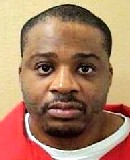
Mario Phillips
Murderer Robert Martines Perez
Murderer · USA · 1994
Name: Robert Martines Perez · Other name used in proceedings: Robert Martinez P…
15 victims
Robert Martines Perez
Murderer · USA · 1994
Name: Robert Martines Perez · Other name used in proceedings: Robert Martinez P…
15 victims
 Billy Frank Vickers
Murderer · USA · 1993
Billy Frank Vickers Vickers was executed by lethal injection in Texas on Januar…
14 victims
Billy Frank Vickers
Murderer · USA · 1993
Billy Frank Vickers Vickers was executed by lethal injection in Texas on Januar…
14 victims
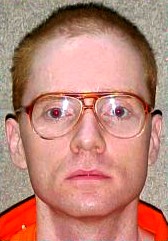 Robert Glen Jones
Murderer · USA · 1996
Defendant: Robert Glenn Jones (ADC#070566) · Co-defendant: Scott Nordstrom (ADC…
7 victims
Robert Glen Jones
Murderer · USA · 1996
Defendant: Robert Glenn Jones (ADC#070566) · Co-defendant: Scott Nordstrom (ADC…
7 victims
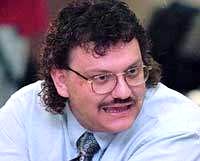 Orville Majors
Serial killer · USA · 1994
Orville Lynn Majors (born 24 April 1961) was a former licensed practical nurse…
6 victims
Orville Majors
Serial killer · USA · 1994
Orville Lynn Majors (born 24 April 1961) was a former licensed practical nurse…
6 victims
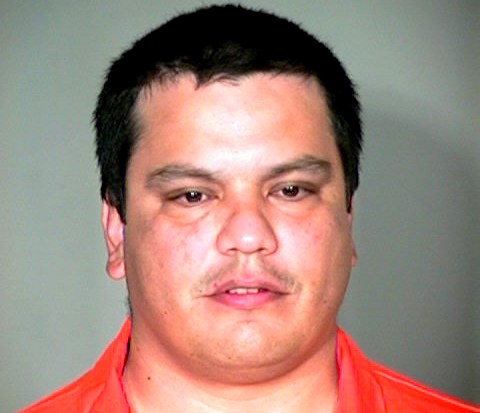 Alfonso Raymond Salazar
Murderer · USA · 1986
Alfonso Raymond Salazar Alfonso Raymond Salazar and Michael Davis entered the T…
1 victim
Alfonso Raymond Salazar
Murderer · USA · 1986
Alfonso Raymond Salazar Alfonso Raymond Salazar and Michael Davis entered the T…
1 victim
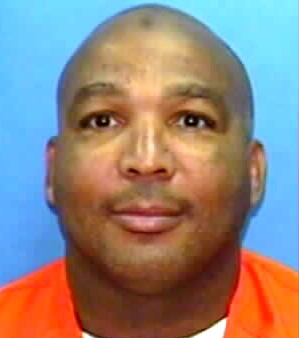 Bennie Eddie Demps
Murderer · USA · 1971
Bennie Eddie Demps was convicted of the September 7, 1976 stabbing death of Alf…
3 victims
Bennie Eddie Demps
Murderer · USA · 1971
Bennie Eddie Demps was convicted of the September 7, 1976 stabbing death of Alf…
3 victims
 Terri-Lynne McClintic
Murderer · Canada · 2009
Victoria Elizabeth Marie Stafford, an eight-year-old Canadian girl, was abducte…
1 victim
Terri-Lynne McClintic
Murderer · Canada · 2009
Victoria Elizabeth Marie Stafford, an eight-year-old Canadian girl, was abducte…
1 victim
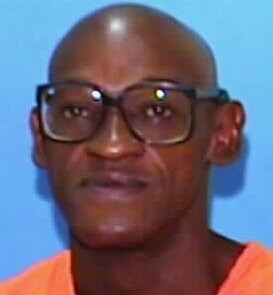 Jerry Haliburton
Murderer · USA · 1981
Jerry Haliburton was born on 09/19/54. The case occurred in the Fifteenth Judic…
1 victim
Jerry Haliburton
Murderer · USA · 1981
Jerry Haliburton was born on 09/19/54. The case occurred in the Fifteenth Judic…
1 victim
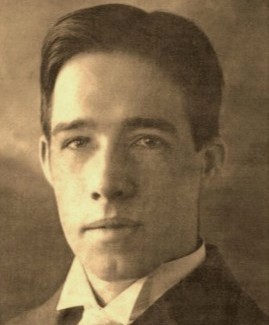 Chester Gillette
Murderer · USA · 1906
Defendant/Appellant: Chester Gillette · Victim: Grace Brown · Place of victim’s…
1 victim
Chester Gillette
Murderer · USA · 1906
Defendant/Appellant: Chester Gillette · Victim: Grace Brown · Place of victim’s…
1 victim
- Gender
- male
- Country
- USA
- Location
- Moore County, North Carolina, USA
- Date of birth
- 1968
- Age at first offence
- 35
- Characteristics
- robbery, drugs, alcohol, abuse
- Victim profile
- Eddie Ryals, 21, Carl Garrison Justice, 18, Harvey Darrell Hobson, 20, and Joseph Allen Harden, 19
- Method of murder
- Shooting - Stabbing with knife
- Date(s) of murder
- December 19, 2003
- Years active
- 2003
- Date of arrest
- Same day
- Status
-
Sentenced to death
Sentenced to death on October 17, 2007
Case overview
Mario Lynn Phillips was convicted of first-degree murder, kidnapping, assault, and robbery in connection with the killing of four people during a robbery at a trailer home in the Carolina Lakes mobile home park in Carthage in 2003. After an appeal, the North Carolina Supreme Court upheld the convictions and rejected his bid for a new trial, leaving him on North Carolina’s death row.
Timeline
- Dec. 19, 2003 — Mario Phillips learned his brother had been shot in the head in an unrelated incident; he went on a bender of alcohol, ecstasy, and marijuana and later participated in a robbery and killings at a trailer home in the Carolina Lakes Trailer Park in Carthage, during which Eddie Ryals, Carl Justice, Joseph Harden, and Daryl Hobson were killed and Amanda Cooke Varner survived.
- October 17, 2007 — A Moore County jury sentenced Mario Lynn Phillips to death for murdering four people.
- February 2010 — The North Carolina Supreme Court first heard Phillips’ appeal.
- June 27, 2011 — The North Carolina Supreme Court upheld the original conviction and rejected Phillips’ bid for a new trial; Mario Phillips remained on North Carolina’s death row after the last state-level appeal.
- March — The state Department of Correction sued the North Carolina Medical Board over its execution-related policy threatening physicians’ medical licenses.
- August — Superior Court Judge Donald Stephens ruled that the North Carolina Medical Board overstepped its authority when it adopted a policy threatening physicians for participating in executions.
- Last month — Attorneys for death-row inmates asked state officials to put off possible changes to North Carolina’s execution protocol in light of the U.S. Supreme Court’s recent decision addressing the constitutionality of lethal injections.
- Sept. 12 — Phillips’ trial testimony began, with hearings continuing through the daily appearances described in connection with sentencing.
The offence
On Dec. 19, 2003, Phillips learned his brother had been shot in the head in an unrelated incident. Convinced, wrongly, that his brother was dead, Phillips went on a bender of alcohol, ecstasy and marijuana. That morning, Phillips headed to his mother’s house in the Carolina Lakes Trailer Park in Carthage to give her the news about her son. He was accompanied by his girlfriend, Renee McLaughlin, and his friend Sean Ray.
After speaking to his mother, the trio went to the home of neighbor Daryl Hobson to buy marijuana. Hobson did not have any but took them to another home in the park where he thought there might be some.
Inside the trailer were Eddie Ryals, 21, and his girlfriend Amanda Cooke, 15, along with Carl Justice, 18, and Joseph Harden, 19. What was supposed to be a drug buy became an armed robbery.
According to court records, Phillips pulled a revolver from his waistband and shot Ryals twice, hitting him in the chest and stomach. Phillips also kicked Ryals and grabbed a shotgun and beat him in the face while demanding drugs and money. Phillips then kept shooting, hitting Justice and Harden. The wounds were fatal to both men.
Hobson and Cooke were then herded into the kitchen and ordered to lie down. Hobson died after he was stabbed in the chest and shot by Phillips at point-blank range in the neck. Phillips ordered Ray to kill Cooke. Cooke was able to get off the floor and struggled with Ray before Phillips shot her twice.
Ray then stabbed the girl a total of 22 times and cut her throat before the two men doused the trailer in gasoline and set it on fire. Cooke survived the attack and got out of the trailer as it caught fire. She got into the back of a truck, unaware she had been spotted by Phillips and Ray.
The men picked her up and threw her in the back of another truck on top of some bags of garbage and drove her to a trash dump in the trailer park. They left her in the truck as emergency personnel began to respond to the fire. Cooke ultimately survived and provided eyewitness testimony at Phillips’ trial as well as Ray’s.
The ordeal went on between 1 and 2 hours. Finally the house was set afire. Varner was bleeding from two gunshot wounds and 22 stab wounds and lived. She crawled out of the burning home to get help, testified that she was caught by Phillips, McLaughlin and Ray, and said they put her in a pickup and drove her to a burn pile. She testified she thought they would finish killing her there, but they abandoned her for dead after their truck got stuck and they heard firetrucks coming to put out the burning home.
Victims
Four people were killed in the robbery and killings:
- Eddie Ryals, 21
- Carl “C.J.” Justice Jr., 18
- Joseph Allen Harden, 19
- Daryl Hobson, 20
One other person survived:
- Amanda Cooke Varner (Amanda Cooke), 15, who was shot twice and stabbed 22 times.
Charges and convictions
Phillips was convicted on first-degree murder, kidnapping, assault and robbery charges stemming from a bloody drug robbery inside a Carthage area trailer home in 2003.
At sentencing, the record described additional convictions including:
- Attempted 1st-degree murder of Varner
- Assault with a deadly weapon with intent to kill, inflicting serious bodily injury on Varner
- 1st-degree kidnapping of Varner
- 1st-degree arson
- Robbery with a firearm of Ryals
Phillips admitted to the crimes. Defense attorneys argued he did not deserve the death penalty and said his ability to control his actions was impaired by the childhood of abuse, by drugs and alcohol in his system, by his low IQ and by rage and anguish from another, unrelated shooting.
Investigation and evidence presented at trial
The state’s case included eyewitness testimony. Cooke identified Phillips as the gunman and said Renee Yvette McLaughlin and Sean Maurice Ray assisted him in the crime.
The opinion also described evidence about Phillips’ coherence during questioning and noted that he changed a sentence in his signed confession. It also stated that multiple examples showed Phillips’ seeming coherent and in control during questioning.
The court also referenced trial testimony from the eyewitness and only survivor of the shootings, stating that at the time of the murders, Phillips’ “words were understandable and that ‘(h)e was fine,” and ‘he knew what he was doing.’”
Trial
Phillips was tried in Moore County, North Carolina. A Moore County jury handed up four death sentences in the trial of a man found guilty of killing four people in a December 2003 robbery. The jury took about four hours to decide the punishment of Mario Lynn Phillips, 35. The jury deliberated nearly 4 1/2 hours before sentencing him.
At sentencing, Phillips was formally given four death sentences by Judge James Webb. Phillips listened for a few moments and then drank water while the judge announced the punishments.
Phillips showed little reaction throughout the trial. He told the judge he was taking Prozac, an anti-depressant, and Haldol, a drug used to treat psychotic symptoms.
Defense attorneys tried to convince jurors that Phillips should not be convicted of first-degree murder because he was mentally ill, addicted to drugs at the time, and somehow thought his friends were responsible for shooting his brother in Fayetteville earlier that same day.
Phillips’ brother, Julian, was shot in the head that day in Fayetteville. After learning his brother was shot, Phillips went from Fayetteville to Moore County to tell his mother what happened, according to trial testimony. He was with McLaughlin and Ray. The three met Hobson at a trailer in Carolina Lakes then went to Ryals’ home nearby.
The eight people sat in the living room and talked for about 30 minutes. Phillips jumped up, pulled a revolver and started shooting and demanding drugs and money. According to testimony, Phillips shot and beat the victims, Ray stabbed the victims, and McLaughlin kept the victims under control while the other two searched the home.
Sentencing
On October 17, 2007, a Moore County jury sentenced Mario Lynn Phillips to death for murdering four people.
The jury sentenced Phillips to:
- Death for the murders of Eddie Lynn Ryals, Carl “C.J.” Justice Jr., Joseph Allen Harden and Daryl Hobson.
Phillips was also sentenced to a minimum of 54 years, 10 months in prison for:
- 1st-degree arson
Relatives of the victims expressed views on the death sentence:
- Harvey Hobson, father of Daryl, said: “I think they all 3 deserve the death sentence,” and added, “All 3 could have stopped at any time. Either one of them could have persuaded him not to do it, and they didn't and I think they ought to be put to death.”
- Belinda Hobson, Daryl’s stepmother, said: “There ain't no winners here,” and added, “Everybody has lost, including Mario's mother. And it's just sad that this happened and we can't turn back time. We'd love to have our kids back.”
Phillips’ mother, Bertie Phillips, attended every day of the trial and left the courtroom just before the sentence was announced; she leaned on a railing in the hall and said she was having trouble breathing. She declined an interview request after the sentencing.
A woman named Libby Barnes, who testified on Phillips’ behalf, said:
- “Mario's a victim, too, of the system. The system that failed him as a child”
- Barnes also said: “She said Phillips and one of his brothers grew up in horrible conditions of neglect and abuse as family members spent most of their time drinking and fighting.”
- Barnes added: “Not only did those children not have a bed to sleep in, a room to call their own, they had no where to get away from all this adult mayhem that was constantly going on,”
Phillips was described as one of three people to go to trial for the quadruple homicide, and he received four death sentences.
Other defendants referenced
Renee Yvette McLaughlin and Sean Maurice Ray were charged with helping Phillips commit the murders and robbery. They were awaiting trial.
In the described related sentencing outcomes:
- Ray received a life sentence.
- McLaughlin received 16 years for her involvement in the murders.
Appeals
Phillips appealed his 2007 first-degree murder convictions for killing four people during a robbery. The North Carolina Supreme Court upheld the original conviction and rejected Phillips’ bid for a new trial, finding no errors in the lower court’s rulings. Judge Barbara Jackson did not participate.
The Supreme Court first heard the appeal in February 2010. Barbara S. Blackman and Anne M. Gomez with the Office of the Appellate Defender represented Phillips at the hearing.
Barbara S. Blackman said in a phone interview after the hearing that the next step would be to try to secure a writ of certiorari from the U.S. Supreme Court. Blackman also said she felt there were enough issues with the ruling that could be addressed at the federal level. Blackman said:
- “I don’t believe the resolution was in accordance with U.S. constitutional law,”
One of the main arguments was whether Phillips had effective counsel. Blackman argued that the original trial lawyer should have stepped down and served as a defense witness to avoid a conflict of interest. The attorney was Bruce Cunningham of Southern Pines. The attorney spoke with the chief of police on the day of the murders and said he was told Phillips was “stoned out of his mind” at the time.
Blackman argued that Cunningham notified the court early on about the potential conflict and opted to instead stay, but Cunningham put Cameron Police Chief Gary McDonald on the stand and questioned him about the statement, introducing it into the record. McDonald testified that he did not remember saying that to Cunningham but did not deny he could have said it. The opinion stated:
“Accordingly, we see no reasonable probability that the jury would have reached a different verdict had attorney Cunningham withdrawn as counsel and testified to his recollection of Chief McDonald’s comment,”
The appeal also addressed whether Phillips was impaired due to drug and alcohol use at the time of his arrest and questioning and during the murders. The judges ruled against the argument, pointing to multiple examples of Phillips’ seeming coherent and in control during questioning and noting he even changed a sentence in his signed confession.
The opinion also stated that the eyewitness and only survivor testified that Phillips’ “words were understandable and that ‘(h)e was fine,” and ‘he knew what he was doing.’”
The judges also did not give much weight to trial testimony that Phillips tried to kill himself after the murders by overdosing on anti-depressants since if he had, it would have had no effect on his state of mind during the killings.
The judges said the evidence in the case did not need bolstering by having Cunningham testify, and the opinion again stated:
Blackman said she thought the court’s ruling about the conflict of interest would not hold up if looked at by the U.S. Supreme Court. Blackman also said:
- constitutional law,”
Outcome
The North Carolina Supreme Court upheld the original convictions and rejected Phillips’ request for a new trial, which meant Phillips remained on North Carolina’s death row after the last state-level appeal.
Aftermath and related death-penalty context
The state had not executed an inmate since 2006.
Questions about North Carolina’s death penalty put executions on hold. In August, Superior Court Judge Donald Stephens ruled that the North Carolina Medical Board overstepped its authority when it adopted a policy that threatened to punish physicians for participating in executions.
The state Department of Correction sued the board in March, saying no physicians were willing to attend an execution, which state policy requires, for fear of losing his or her medical license. Attorneys for death-row inmates asked state officials to put off possible changes to North Carolina’s execution protocol in light of the U.S. Supreme Court’s recent decision to address the constitutionality of lethal injections.

Spotted an error, or have more information about this case?