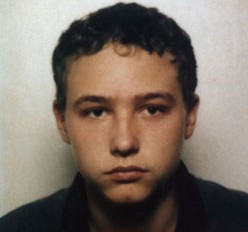
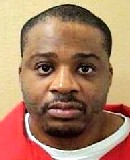
Joshua Phillips
Homicide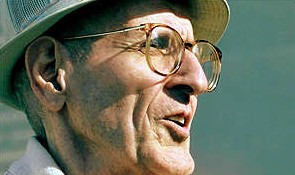 Jack Kevorkian
Homicide · USA · 1990
Jack Kevorkian (born May 26, 1928) was a controversial American pathologist. He…
130 victims
Jack Kevorkian
Homicide · USA · 1990
Jack Kevorkian (born May 26, 1928) was a controversial American pathologist. He…
130 victims
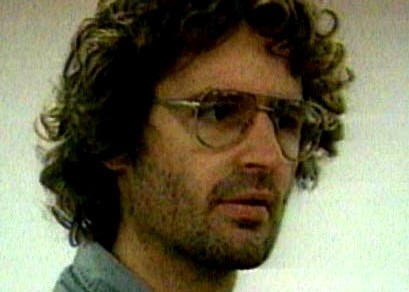 David Koresh
Homicide · USA · 1993
David Koresh (born Vernon Wayne Howell; August 17, 1959 – April 19, 1993) led t…
79 victims
David Koresh
Homicide · USA · 1993
David Koresh (born Vernon Wayne Howell; August 17, 1959 – April 19, 1993) led t…
79 victims
 Todd Hall
Homicide · USA · 1996
Todd Hall was described by neighbors as "mentally slow" and was said to have su…
9 victims
Todd Hall
Homicide · USA · 1996
Todd Hall was described by neighbors as "mentally slow" and was said to have su…
9 victims
 Joshua Jenkins
Homicide · USA · 1996
Joshua Jenkins was a 15-year-old American killer who killed five members of his…
5 victims
Joshua Jenkins
Homicide · USA · 1996
Joshua Jenkins was a 15-year-old American killer who killed five members of his…
5 victims
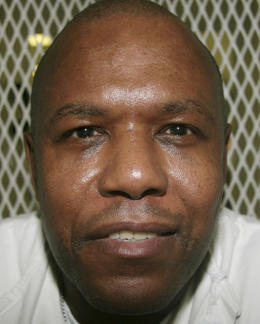 Larry Wayne Wooten
Murderer · USA · 1996
Defendant: Larry Wayne Wooten Status: Executed by lethal injection in Texas on…
2 victims
Larry Wayne Wooten
Murderer · USA · 1996
Defendant: Larry Wayne Wooten Status: Executed by lethal injection in Texas on…
2 victims
 John Charles Eichinger
Murderer · USA · 1999
John Charles Eichinger was convicted of murdering Jennifer Still, Heather Greav…
4 victims
John Charles Eichinger
Murderer · USA · 1999
John Charles Eichinger was convicted of murdering Jennifer Still, Heather Greav…
4 victims
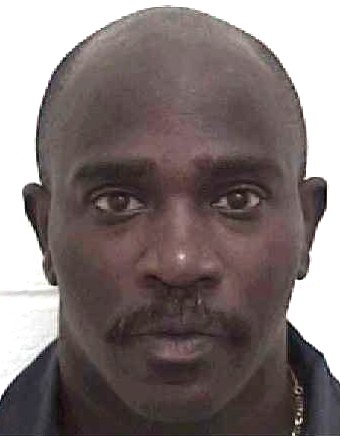 Keith Leroy Tharpe
Murderer · USA · 1990
Keith Leroy Tharpe, 39, was sentenced to death in January 1991 in Jones County…
1 victim
Keith Leroy Tharpe
Murderer · USA · 1990
Keith Leroy Tharpe, 39, was sentenced to death in January 1991 in Jones County…
1 victim
 John Warren Parsons
Murderer · USA · 2005
John Warren Parsons was from Chillicothe, Ohio. He was wanted as an FBI Ten Mos…
1 victim
John Warren Parsons
Murderer · USA · 2005
John Warren Parsons was from Chillicothe, Ohio. He was wanted as an FBI Ten Mos…
1 victim
- Gender
- male
- Country
- USA
- Location
- Jacksonville, Florida, USA
- Date of birth
- March 17, 1984
- Age at first offence
- 14
- Characteristics
- juvenile (14)
- Victim profile
- Maddie Clifton (female, 8)
- Method of murder
- Beating with a baseball bat - St abbing with knife
- Date(s) of murder
- November 3, 1998
- Years active
- 1998
- Date of arrest
- 7 days after
- Status
-
Life imprisonment
Sentenced to life in prison with no possibility of parole on August 26, 1999; conviction upheld on appeal by the Second District Court of Appeal on February 6, 2002
Case record: Joshua Phillips
Timeline
- November 3, 1998 — Maddie Clifton vanished from her Jacksonville, Fla., neighborhood.
- November 1998 — Maddie’s body was found under Joshua Phillips’s waterbed a week after she vanished.
- 1998 — Joshua Phillips was charged as an adult with murder.
- July 8, 1999 — A jury found Joshua Phillips guilty of first-degree murder.
- August 26, 1999 — Joshua Phillips was sentenced to life in prison with no possibility of parole.
- February 6, 2002 — A state appeals court upheld the life sentence.
- March 31, 2004 — CBS News reported on Josh Phillips’s incarceration.
- June 12, 2000 — CBS News reported on the search for Maddie.
Background
Joshua Phillips was a juvenile (14) when Maddie Clifton was killed. Josh’s mother, Missy, visited him weekly at the Marion Correctional Facility in Lowell, Fla., describing him as the little boy she had watched grow up. Missy said: “I love my son. I want to support him. I miss him,” to correspondent Peter Van Sant.
Maddie Clifton was 8 years old when she vanished from her Jacksonville, Fla., neighborhood in November 1998. Steve and Sheila Clifton learned what happened to their daughter a week later; Maddie had been right across the street. The Cliftons described the impact of Maddie’s death on their lives. Steve Clifton described her as a “dancer, basketball player, daughter and sister” whose “dream of becoming a drummer or eye doctor ended with her death.”
The offence
Maddie vanished after going out to play at around 5 p.m. on Nov. 3, 1998. She was a tomboy who especially liked basketball. Her sister Jessie told their mother, Sheila, that she had not been with Maddie and did not know where she was. Soon after, Sheila called 911 to report Maddie missing, and Steve and Sheila and their neighbors searched with flashlights that night.
Joshua Phillips told investigators that while playing baseball, he accidentally hit Maddie with a baseball, causing a big gash in her head. After Maddie began screaming, he panicked and hit her once or twice in the head to silence her. He then used a pocketknife to stab her twice in the throat. He said he later returned after hearing her moaning, and he stabbed her again. After confessing to the murder, Joshua was arrested and taken into custody. The body was found stuffed under Joshua’s waterbed.
A medical examiner testified in the trial that Maddie’s head had been bashed and that she had stab wounds in her neck. The autopsy showed that she was still alive when Phillips shoved her underneath his waterbed mattress.
During trial testimony and argument, the autopsy was described as showing that Maddie was beaten over the head and stabbed at least nine times in the chest and twice in the neck, based on Joshua’s story. State Attorney Harry Shorstein argued that Joshua’s story was unlikely and suggested the murder may have been sexually motivated. The reporting described that there was no blood on the ball, no blood in the yard, and no dirt on Maddie’s body or clothes. It also stated that Maddie’s pants and underpants were removed from her body and that Joshua had previously talked to Maddie and her sister about sex.
Joshua Phillips was found guilty of first-degree murder of Maddie Clifton. The jury convicted him of first-degree murder, and he was sentenced to life in prison with no possibility of parole.
Investigation
A week after Maddie vanished, Joshua’s mother noticed water on the floor at the end of Josh’s waterbed, which she thought might be causing the strange smell in his room. She pulled apart the baseboard to check under his bed and saw a foot. She ran out to a police officer and led him to her son’s room. Police later put up crime scene tape around the Phillips’ house.
Detectives knocked on the Cliftons’ door after the discovery. The Phillips met their son at the police station, where he had been brought from school for questioning. In the interrogation room, Steve Phillips told his son to tell the detectives the truth. With his father by his side, Joshua described what he claimed happened the day Maddie was killed.
Arrest
After confessing to the murder, Joshua Phillips was arrested and taken into custody.
Trial
Joshua Phillips was charged as an adult with murder and was tried as an adult.
The trial was held in Bartow due to intense media coverage of crime and strong community feelings that would have made it difficult to get an impartial jury in Jacksonville. One report described that the trial lasted two days because Joshua’s lawyers presented no witnesses or evidence; another report stated that there was a great deal of evidence, including the baseball bat, the knife and Josh’s tennis shoes, stained with Maddie’s blood, and that the most damning piece was Josh’s confession. In a surprise move criticized by many experienced defense lawyers, Joshua’s lawyer Richard Nichols decided not to call any witnesses, and the entire defense was a closing argument.
A jury returned after two hours with a verdict of first-degree murder. Joshua showed no emotion as the verdict was read. Maddie’s parents, Steve and Sheila Clifton, blinked back tears.
Defense attorney Richard Nichols argued earlier in the trial that Maddie’s murder wasn’t premeditated and urged the jury to convict Joshua of manslaughter. Nichols said:
“We're not here to act out of some form of vengeance,” defense attorney Richard Nichols said. “We're not here to act as a bunch of well-dressed vigilantes.”
State Attorney Harry Shorstein said:
“This case was open and shut,” Shorstein said, adding there was no clear motive for Maddie's death. “There aren't any great explanations.”
Nichols also said:
“The evidence shows us there was an accident that deteriorated into panic and then murder,” Nichols said.
Sentencing
Joshua Phillips was sentenced to life in prison with no possibility of parole on August 26, 1999.
An August 21, 1999 report described that Circuit Judge Charles Arnold imposed the mandatory life sentence after Phillips was convicted last month of first-degree murder of Maddie Clifton. Before sentencing, the Cliftons told him for the first time how the crime shattered their lives.
Steve Clifton addressed Joshua Phillips in court, saying:
“To Joshua Phillips we have but one thing to say. How dare you? How dare you take Maddie from us for no reason? She was a beautiful gift from God to us all, and your friend, and you brutally murdered her,” Steve Clifton said, turning to his 15-year-old neighbor awaiting his sentence in court. “May God rest your soul.”
The reporting described that Circuit Judge Charles Arnold’s life sentence was mandatory because Phillips had been convicted of first-degree murder. Richard Nichols stated he planned to appeal, saying he has 30 days.
The reporting described that before sentencing, Joshua expressed some remorse for the first time. Dan Phillips told the Cliftons:
“I have thought of your daughter very often,” he told the Cliftons. “Then, I think of my little brother. . . . When I look at him, I still see a baby.”
Joshua’s mother, Missy Phillips, said she believed action came from bilateral frontal lobe lesions and stated:
“I cannot undo what is done and there is not a day that passes that I don't think about Maddie and her family that loves her,” she said. “I'm sorry for their grief, but I cannot repair their heartbreak any more than I can repair our own.”
Ben Phillips addressed the court about an uncle previously convicted and described it as allowing him to serve his time and resume his life.
Steve Phillips accused Jacksonville police of perjury and accused State Attorney Harry Shorstein and his chief assistant, Jay Plotkin, of pursuing a first-degree murder conviction to further their political careers. Steve Phillips said:
“For the state to prosecute a 14-year-old for first-degree murder is ludicrous and obscene,” Steve Phillips said. “Mr. Shorstein and Mr. Plotkin should be ashamed of themselves in this manner. Their actions were carefully plotted for the press and to further their own political gains.”
The judge upheld decisions including denying Nichols’ request for a new trial and a motion to sentence Phillips as a juvenile, and upheld the decision not to allow a doctor's deposition in lieu of testimony. The judge praised Nichols, and called his defense admirable, and said those criticizing him “didn't know what they were talking about.”
Judge Charles Arnold spoke to Joshua’s actions, stating:
“I do not perceive you to be a child. Your monstrous act in causing the death of Maddie Clifton made you an adult. . . . I'm certain that on Judgment Day, you, Joshua Earl Phillips, will be given a far harsher sentence than I can impose,” Arnold said, quoting Christ's words from Luke 17: ”It would be better if a millstone were hung around your neck and that you were thrown into sea than to cause harm to a child.”
Appeals
A February 6, 2002 report said a state appeals court upheld the life sentence. It stated that the Second District Court of Appeal in Lakeland ruled that life in prison was not cruel or unusual punishment, given the brutality of the crime.
Judge Casanueva wrote in the court’s ruling:
“The court's task is only to measure the penalty imposed against constitutional standards,” Judge Casanueva wrote in the court's ruling. “Joshua Phillip's sentence for this crime cannot be said to be unusual punishment.”
State Attorney Harry Shorstein released a statement affirming the appeals court’s ruling, noting it was unanimous. Shorstein said:
“It's terrible to see a 14-year-old sentenced to life in prison with no possibility of parole,” Shorstein said. “On the other hand, it's an unbelievably tragic murder of a wonderful young girl.”
The reporting also stated that Assistant State Attorney Angela Corey told Channel 4 that Phillips’ lawyer could appeal to the Florida Supreme Court, perhaps claiming ineffective counsel at trial.
Other details
Joshua Phillips was described as living with his parents on a quiet street in Jacksonville, Fla. He had a C average in school. He liked to play with other kids in the neighborhood, including his across-the-street neighbor Maddie Clifton. At A. Philip Randolph Academies of Technology, where Joshua was a ninth grader, he was not a problem student; teachers said he did not stick out and that other kids liked him. One teacher was identified as Edwina Harris, who said:
“I don't know the monster; I knew the silly little boy in my class,” she said. She said he wasn't a loner and that other kids liked him. “He was funny,” Harris says. “He made them laugh.”
Maddie was described as liked by Joshua, and Steve Clifton said Maddie liked to play with Joshua, though he called Joshua a “monster” for killing his daughter.
Josh’s half brother Dan described him as a “happy kid” and said he liked to read, work on computers, and spend time with family members; Missy Phillips also described that she and others did not frequently do activities without Josh.
In sentencing-related reporting, Joshua’s parents hoped he would be convicted of second-degree murder or even manslaughter, which they said would make him eligible for release while still young. To help bolster Josh’s case, his attorney hired a psychologist. The psychologist, Tom Bowery, said Joshua told him he had not been anxious or depressed and that Joshua loved his parents. Bowery said:
“This is not what I would've seen as the typical kind of sociopathic, wanting to kill, wanting to maim, deriving-pleasure-from-the-pain-of-others kind of kid,” says Bowery. “I don't think that's true at all.”
Bowery said Josh was afraid of his father. Bowery said:
“He was very terrified of his father whenever two kinds of circumstances arose,” Bowery says of Josh. “Whenever he was afraid that he had done something wrong or whenever his father was angry at anyone,” Bowery adds.
The report stated that another neurologist hired by Joshua’s attorney found Josh had “bilateral frontal lobe lesions,” which can impair judgment and cause panic, but the judge did not allow this evidence to be presented in court.
In addition to the confession, prosecutors discussed a computer pornography issue: prosecutor Harry Shorstein said that in the half hour preceding the murder, Joshua was looking at violent pornographic Web sites on his home computer, and that this evidence was ruled inadmissible and not presented at trial. Shorstein believed the material could have triggered violence, particularly if the brain lesion impaired judgment.
Josh’s attorney, Richard Nichols, was described as having been criticized for not presenting a defense at trial, though the judge called his defense admirable.
After conviction, Joshua’s family planned to appeal.
A June 12, 2000 report described search details, including that thousands of volunteers searched over seven days, and that on the morning of the seventh day, Joshua’s mother found water and a foot under the waterbed and led a police officer to the room.
After the crime, the Cliftons mourned their daughter, while the Phillips mourned for their son. The report also stated that the Cliftons and the Phillips had not spoken to each other since the crime, and neither family planned to move.
A March 31, 2004 CBS News item described that Joshua had spent a quarter of his life behind bars and would remain in prison until the day he dies. It stated that he had done well in prison despite living in general adult population since he was 15, and that he said he had never been sexually assaulted or had any physical problems in prison. It also stated that he had received his high school diploma and was working as a law clerk advising fellow inmates. Josh was described as saying:
“I’m just sitting here, just sitting here doing stuff at work. That’s all I do every day. I guess it will be like that pretty much until I die.”
Josh also said:
“Lately, the life sentence is just kinda hitting me,” says Josh.
The report also included a quote from Josh:
“If I got out, I’d owe the world a lot,” says Josh. “I'd try to do whatever I could to repay them. I don’t know if I deserve a second chance or not, but I know I want the chance.”
Cliftons described family changes: Steve and Sheila Clifton divorced after 25 years of marriage. Sheila Clifton said:
“My husband, he was just so stricken with grief…We just went in totally different directions,” says Sheila Clifton.
Sheila Clifton said:
“I don’t hate him. I hate what he did,” Sheila Clifton. “Being put away in prison for life, I can’t imagine. I don’t think any child should have to suffer that.”
Sheila Clifton also said:
“I think Maddie is watching over all of us,” she said. “I think Maddie is watching over all of us,” she said. Now she plans to “remember Maddie and what a pleasure she was to be around.”
Florida Sen. Steven Geller introduced a bill described as making first-time violent juvenile offenders serving life sentences eligible for parole after eight years. Geller said:
“I believe in redemption. I believe that there needs to be a second chance,” says Geller. “We have to start recognizing that children are not just short adults. What happens if an 8-year-old shoots somebody? Do you put them in prison for the rest of their life? Under current Florida law, you can. I’m sorry. I think that’s wrong.”
Geller also asked:
“Charles Manson gets the opportunity of parole. Why should this 14-year-old at the time of the act … why should they not have the opportunity for parole?” asks Geller.
A February 6, 2002 appeal update described that Joshua Phillips was currently housed at Marion Correctional Institution near Ocala and would probably join adult prison when he turned 18 next month.

Spotted an error, or have more information about this case?