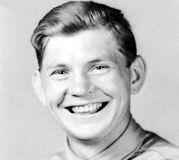
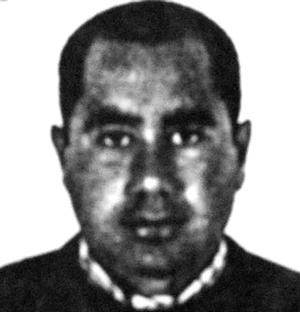
Edward Joseph Leonski
Spree killer Martin Bryant
Spree killer · Australia · 1996
Martin Bryant was born May 7, 1967, and was the elder of two children of Mauric…
35 victims
Martin Bryant
Spree killer · Australia · 1996
Martin Bryant was born May 7, 1967, and was the elder of two children of Mauric…
35 victims
 Mutsuo Toy
Spree killer · Japan · 1938
Mutsuo Toi (都井 睦雄; Toi Mutsuo) was a Japanese spree killer. Mutsuo Toi was born…
30 victims
Mutsuo Toy
Spree killer · Japan · 1938
Mutsuo Toi (都井 睦雄; Toi Mutsuo) was a Japanese spree killer. Mutsuo Toi was born…
30 victims
 Tore Hedin
Spree killer · Sweden · 1951
September 1943 — Tore Hedin broke into a local brewery near his parental home t…
9 victims
Tore Hedin
Spree killer · Sweden · 1951
September 1943 — Tore Hedin broke into a local brewery near his parental home t…
9 victims
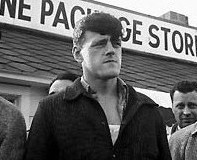 Joseph Taborsky
Spree killer · USA · 1951
Joseph “Mad Dog” Taborsky (March 23, 1924 – May 17, 1960) was a murderer who wa…
7 victims
Joseph Taborsky
Spree killer · USA · 1951
Joseph “Mad Dog” Taborsky (March 23, 1924 – May 17, 1960) was a murderer who wa…
7 victims
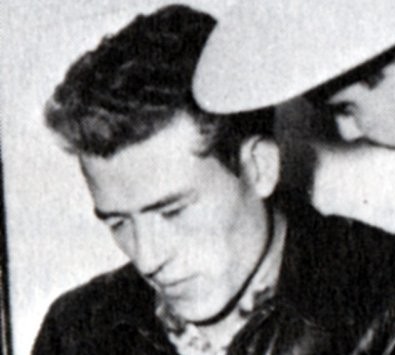 William Cook
Spree killer · USA · 1951
William Cook, also known as “Billy Boy” or “Cockeyed Cook,” committed a spree o…
6 victims
William Cook
Spree killer · USA · 1951
William Cook, also known as “Billy Boy” or “Cockeyed Cook,” committed a spree o…
6 victims
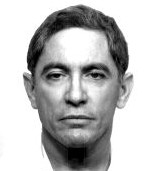 George Douglas Lott
Murderer · USA · 1992
George Douglas Lott · July 1, 1992 — George Lott stood up in a Tarrant County C…
2 victims
George Douglas Lott
Murderer · USA · 1992
George Douglas Lott · July 1, 1992 — George Lott stood up in a Tarrant County C…
2 victims
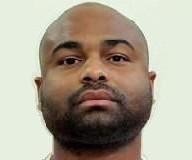 Carlos Ordway
Murderer · USA · 2007
Carlos Lamont Ordway (DOB 6-21-81) was sentenced to death on October 29, 2010 i…
2 victims
Carlos Ordway
Murderer · USA · 2007
Carlos Lamont Ordway (DOB 6-21-81) was sentenced to death on October 29, 2010 i…
2 victims
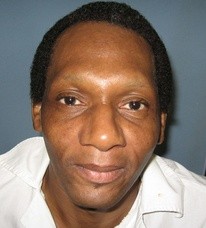 Jimmy Lee Dill
Murderer · USA · 1988
Jimmy Lee Dill was the defendant and death row inmate. · Leon Shaw was the vict…
1 victim
Jimmy Lee Dill
Murderer · USA · 1988
Jimmy Lee Dill was the defendant and death row inmate. · Leon Shaw was the vict…
1 victim
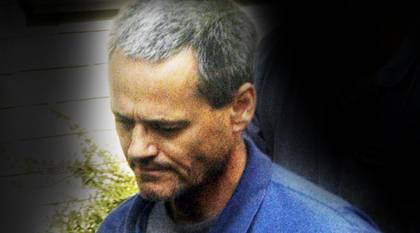 Ulf Olsson
Murderer · Sweden · 1989
Ulf Olsson (1951–), also known as Helénmannen (“the Helén man”) in Sweden, was…
2 victims
Ulf Olsson
Murderer · Sweden · 1989
Ulf Olsson (1951–), also known as Helénmannen (“the Helén man”) in Sweden, was…
2 victims
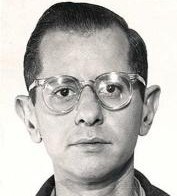 Harvey Glatman
Serial killer · USA · 1957
Harvey Murray Glatman (October 10, 1927 – September 18, 1959) was an American s…
3 victims
Harvey Glatman
Serial killer · USA · 1957
Harvey Murray Glatman (October 10, 1927 – September 18, 1959) was an American s…
3 victims
- Gender
- male
- Country
- Australia
- Location
- Melbourne, Victoria, Australia
- Date of birth
- December 12, 1918
- Age at first offence
- 24
- Characteristics
- rape, alcohol, murder for hire, torture
- Victim profile
- Ivy Violet McLeod, 40 / Pauline Thompson, 31 / Gladys Lilian Hosking, 41
- Method of murder
- Strangulation
- Date(s) of murder
- May 3-18, 1942
- Years active
- 1942
- Date of arrest
- May 22, 1942
- Status
-
Executed
Executed by hanging at Pentridge Prison on November 9, 1942
Case record: Edward Joseph Leonski
Identity
Edward Joseph Leonski was a U.S. Army private. He was described as a heavy drinker.
Leonski was also described as a self-described "Dr. Jekyll and Mr. Hyde" and as the "Singing Strangler" in the press. He was also known as the "Brownout Strangler", linked to Melbourne’s wartime status of keeping low lighting.
He was born on 12 December 1918 and died on 9 November 1942, and he was described as being 24 years old and White.
Timeline
- February 1941 — Leonski was called up for the US Army.
- February 2, 1942 — Leonski arrived in Melbourne.
- 3 May 1942 — Mrs. Ivy Violet McLeod was found murdered.
- 9 May 1942 — Mrs. Pauline Thompson was murdered.
- 17 July 1942 — Leonski was tried by an American general court-martial and sentenced to death for triple murder.
- 22 May 1942 — Leonski was arrested.
- 18 or 19 May 1942 — Miss Gladys Lilian Hosking was committed on.
- October 14, 1942 — General Douglas MacArthur confirmed the sentence.
- October 28, 1942 — A Board of Review upheld the findings and sentence.
- November 1, 1942 — General Court-Martial Order 1 promulgated Leonski’s death sentence.
- November 4, 1942 — MacArthur personally signed the order of execution.
- November 9, 1942 — Leonski was hanged at Pentridge Prison.
Background
Leonski grew up in New York. His family included Russian-born parents: John Leonski, labourer, and his wife Amelia, née Harkavitz. The family moved to East 77th Street, New York, during Edward's infancy. He was described as the sixth child.
He left junior high school in 1933 and took a secretarial course, finishing in the top 10 per cent of his class. He held several clerical jobs before working for Gristede Bros Inc. and Superior Food Markets.
While stationed with the 52nd Signal Battalion at San Antonio, Texas, Leonski began to drink heavily. He preferred concoctions such as whisky laced with hot peppers. He displayed his strength by vaulting onto bar counters and walking along them on his hands.
One brother was committed to a mental institution, and his mother was described as mentally unstable. Two brothers had prison records and a third was in a psychiatric hospital. About this time, he tried to strangle a woman.
Arriving in Melbourne in February, Leonski was quartered at Camp Pell, Royal Park. Drunkenness led to thirty days in the stockade, followed by release and another binge.
An attempted rape was alleged to have occurred when Leonski allegedly attempted to rape a woman in her St Kilda flat. He was declared sane after some dispute, and he was tried by a United States court martial.
Held in the city watchhouse, Leonski corresponded with a woman at Eltham, learned Oscar Wilde's 'The Ballad of Reading Gaol', and became a communicant of the Catholic Church.
The offence
Leonski was convicted and sentenced to die for strangling three women in Melbourne.
Victims
- Mrs. Ivy Violet McLeod (40) — committed on or about 3 May 1942. She was found dead on the night of May 2, 1942, after leaving a tavern for home. She was found murdered in the doorway of a shop next to the Bleak House Hotel, Albert Park. It was said that she was in possession of her purse, making it evident that robbery was not the motive. She was beaten and strangled.
- Mrs. Pauline Thompson (31) — committed on or about 9 May 1942. She was murdered in similar fashion after a night out and was found murdered outside a city boarding house on 9 May. Her genitals were exposed, but she was not sexually assaulted. She had sung for Leonski on their last date.
- Miss Gladys Lilian Hosking (41 or 40) — committed on 18 or 19 May 1942. She was murdered on 18 May while walking late at night near Melbourne University, and she was also described as having been murdered on May 28.
Modus operandi and related details
Leonski throttled all three women, and all were older than the killer. Although their genitals were exposed, none of the women was sexually assaulted.
He attacked Mrs. Ivy McLeod, Mrs. Pauline Thompson, and Miss Gladys Hosking in Melbourne.
A fourth woman was accosted, and Leonski left her alone when she threatened to call the police.
After an Australian sentry reported sighting a GI in blood-stained clothing on May 28, suspicion focused on American servicemen. Troops in Melbourne were assembled on parade for an inspection, and the sentry picked Leonski from the lineup.
Under questioning, Leonski made a full confession. He was described as having a twisted fascination with the female voice.
Quotes attributed to Leonski included:
- "That's why I choked those ladies."
- "It was to get their voices."
- "Her voice was sweet and soft, and I could feel myself going mad about it."
- "I wanted that voice. I choked her"
It was also described that Pauline Thompson had sung for Leonski on their last date, and Leonski recalled: "Her voice was sweet and soft, and I could feel myself going mad about it."
Witness descriptions were included for Gladys Hosking’s killing. A witness said that on the night of the killing a disheveled American man approached him asking for directions, seemingly out of breath and covered with mud. This description matched the individual Pauline Thompson was seen with on the night of her murder, and it also matched descriptions given by several women who had survived recent attacks. These survivors and other witnesses were able to pick Leonski out of a line-up of American servicemen stationed in the city during World War 2.
Investigation
Efficient detective work and the evidence of a soldier in whom Leonski had confided led to his arrest on 22 May.
Suspicion focused on American servicemen after a report of an American GI in blood-stained clothing.
Leonski was declared sane following some dispute, and he was tried and found guilty on 17 July.
Arrest
Leonski was arrested and charged with three murders. He was arrested on 22 May.
Trial
Leonski was tried by an American Court Martial and sentenced to death for triple murder on 17 July 1942.
A court martial and related review steps included the following:
- General Douglas MacArthur confirmed the sentence on October 14, 1942.
- A Board of Review upheld the findings and sentence on October 28, 1942.
- General Court-Martial Order 1 promulgated Leonski's death sentence on November 1, 1942.
MacArthur personally signed the order of execution on November 4, 1942.
Leonski filed a plea of not guilty by reason of insanity. Following dispute, he was declared sane.
Leonski’s counsel was Ira C. Rothgerber. Rothgerber attempted to win an external review, even from the U.S. Supreme Court, but was unable to do so. Rothgerber kept the issue alive after the war.
Leonski expressed himself to be lucky with his death sentence.
The case was described as being the first and only time a citizen of another country was tried and sentenced to death in Australia under the law of his own country.
Sentencing
Leonski was sentenced to death for triple murder on 17 July 1942.
General Court-Martial Order 1 promulgated the death sentence on November 1, 1942.
Appeals
Leonski’s counsel, Ira C. Rothgerber, attempted to seek external review, even from the U.S.
After the war, Rothgerber kept the issue alive, and it was described that Leonski’s case contributed to the development of the Uniform Code of Military Justice (UCMJ).
Outcome
Leonski was hanged at Pentridge Gaol on 9 November 1942.
He was described as only the second American serviceman to be executed during World War II.
Aftermath
Leonski was temporarily interred at several cemeteries in Australia. His remains were eventually permanently interred in Section 9, Row B, Site 8 at Schofield Barracks Post Cemetery, in a portion of the facility reserved for general prisoners who had died in military custody.
He was also described as eventually being buried in a military cemetery in Honolulu.
Albert Tucker’s painting, 'Memory of Leonski' (in his 'Image of Evil' series, 1943), was privately owned.
Leonski was also the subject of a novel by Andrew Mallon (1979) and of a feature film, Death of a Soldier (1986). A 1986 film titled Death of a Soldier was described as being based on Leonski.
Other details
Leonski was described as having attempted to strangle a woman earlier.
He was described as cheerful in demeanour and powerfully built, with fair hair, boyish appearance, and middle height. He gave no explanation for his crimes other than to say of one of his victims: 'I wanted that voice. I choked her'.
Spotted an error, or have more information about this case?