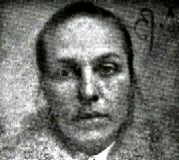
Amelia Sach
Serial killer Amelia Dyer
Serial killer · United Kingdom · 1880
Amelia Dyer was convicted for the murder of Doris Marmon. She was known as a “b…
100 victims
Amelia Dyer
Serial killer · United Kingdom · 1880
Amelia Dyer was convicted for the murder of Doris Marmon. She was known as a “b…
100 victims
 Mary Ann Cotton
Serial killer · United Kingdom · 1857
Mary Ann Cotton was executed by hanging in Durham prison on March 24, 1873. Mar…
21 victims
Mary Ann Cotton
Serial killer · United Kingdom · 1857
Mary Ann Cotton was executed by hanging in Durham prison on March 24, 1873. Mar…
21 victims
 Rosemary West
Serial killer · United Kingdom · 1971
Rosemary Pauline “Rose” West (née Letts) Rosemary Letts was born in Barnstaple,…
10 victims
Rosemary West
Serial killer · United Kingdom · 1971
Rosemary Pauline “Rose” West (née Letts) Rosemary Letts was born in Barnstaple,…
10 victims
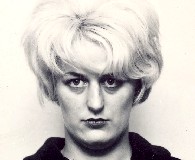 Myra Hindley
Serial killer · United Kingdom · 1963
Myra Hindley was an English serial killer who, in partnership with Ian Brady, c…
5 victims
Myra Hindley
Serial killer · United Kingdom · 1963
Myra Hindley was an English serial killer who, in partnership with Ian Brady, c…
5 victims
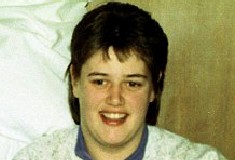 Beverley Allitt
Serial killer · United Kingdom · 1991
Beverley Allitt was a nurse who suffered from the mental illness Munchausen’s S…
4 victims
Beverley Allitt
Serial killer · United Kingdom · 1991
Beverley Allitt was a nurse who suffered from the mental illness Munchausen’s S…
4 victims
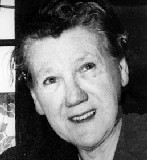 Mary Elizabeth Wilson
Serial killer · United Kingdom · 1955
Mary Elizabeth Wilson (c. 1893 - 1963), also known as the Merry widow of Windy…
4 victims
Mary Elizabeth Wilson
Serial killer · United Kingdom · 1955
Mary Elizabeth Wilson (c. 1893 - 1963), also known as the Merry widow of Windy…
4 victims
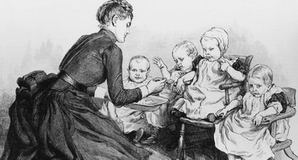 Jessie King
Murderer · United Kingdom · 1887
Jessie King was executed in Edinburgh on March 11, 1889, and she was described…
2 victims
Jessie King
Murderer · United Kingdom · 1887
Jessie King was executed in Edinburgh on March 11, 1889, and she was described…
2 victims
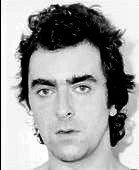 John Cannan
Murderer · United Kingdom · 1986
John Cannan Susannah “Suzy” Lamplugh was a British estate agent reported missin…
3 victims
John Cannan
Murderer · United Kingdom · 1986
John Cannan Susannah “Suzy” Lamplugh was a British estate agent reported missin…
3 victims
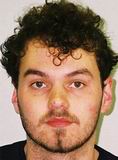 Jamie Reynolds
Murderer · United Kingdom · 2013
Jamie Reynolds murdered 17-year-old Georgia Williams after luring her to his ho…
1 victim
Jamie Reynolds
Murderer · United Kingdom · 2013
Jamie Reynolds murdered 17-year-old Georgia Williams after luring her to his ho…
1 victim
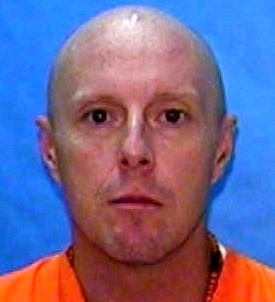 Roderick Michael Orme
Murderer · USA · 1992
Name: Roderick Michael Orme · DOB: 11/24/61 · Case information: Fourteenth Judi…
1 victim
Roderick Michael Orme
Murderer · USA · 1992
Name: Roderick Michael Orme · DOB: 11/24/61 · Case information: Fourteenth Judi…
1 victim
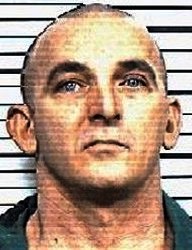 Jimmy Dale Bland
Murderer · USA · 1975
Jimmy Dale Bland was executed by lethal injection in Oklahoma on June 26, 2007.…
2 victims
Jimmy Dale Bland
Murderer · USA · 1975
Jimmy Dale Bland was executed by lethal injection in Oklahoma on June 26, 2007.…
2 victims
 Seth Privacky
Mass murderer · USA · 1998
Seth Privacky (June 2, 1980 - July 15, 2010) was sentenced to life in prison wi…
5 victims
Seth Privacky
Mass murderer · USA · 1998
Seth Privacky (June 2, 1980 - July 15, 2010) was sentenced to life in prison wi…
5 victims
- Gender
- female
- Country
- United Kingdom
- Location
- London, England, United Kingdom
- Date of birth
- 1873
- Age at first offence
- 27
- Characteristics
- infanticide
- Victim profile
- Infants of unwed mothers
- Method of murder
- Poisoning (chlorodyne, a medicine containing morphine)
- Date(s) of murder
- 1900 - 1902
- Years active
- 1900–1902
- Date of arrest
- November 18, 1902
- Status
-
Executed
Executed by hanging at Holloway on February 3, 1903
Identification
Amelia Sach was a British serial killer born in 1873 and executed on February 3, 1903. She was known as part of the Finchley baby farmers with Annie Walters.
Background
Amelia Sach was baptised Frances Amelia Thorne in Hampreston, Dorset, on May 5, 1867. She was the fourth child of ten and had three sisters. She married a builder called Jeffrey Sach in 1896.
Sach worked as a “lying-in” home operator before engaging Walters. By 1902 she was working from “Claymore House”, a semi-detached, red-brick villa in East Finchley, North London. She was also a mother; the England and Wales census of 1901 showed that a child was born to her in Clapham. She lied about her age, stating she was 32 instead of 29.
There was a possibility that the pair may have been involved in an earlier homicide resulting in another woman being executed. In 1899, Louise Masset was tried for the murder of her young son Manfred, whose body was found in the ladies’ lavatory at Dalston Junction railway station. Circumstantial evidence suggested Louise was the murderer, and the killing was to be rid of a supposed encumbrance due to her wanting to marry a man named Lucas. In her claims of innocence, Louise said she had taken Manfred out of the care of one woman to give him to two ladies she met who had an establishment for the care of growing children. The police claimed they made some effort in looking for the two women, but the extent of their investigation was unknown. Louise Masset was tried and convicted of the murder and, despite a petition for mercy, was executed in early January 1900.
The offence
Amelia Sach operated a “lying-in” home in Stanley Road and later at Claymore House in Hertford Road, both in East Finchley, London. Around 1900, she began advertising that babies “could be left”, and she took money for adoptions.
Clients described in witness accounts were mostly servants from local houses who became pregnant and had employers keen to resolve the matter discreetly. There was a charge for lying-in and another for adoption, described as a “present” to future parents of between £25 and £30.
Annie Walters would collect the baby after it was born and dispose of it with poison—chlorodyne, described as a medicine containing morphine. An unknown number of babies were murdered this way, possibly dozens. During their trial at the Old Bailey, the quantity of baby clothes found at Claymore House was used as evidence of the scale of their crimes.
A campaign to have the sentences commuted to life failed.
Investigation and arrest
The women were caught after Walters raised suspicions of her landlord in Islington who was a police officer.
On arrest, Walters was determined to be “feeble”, meaning feeble-minded. Sach was described as having said she did not know Walters.
Police-constable Seal, the landlord of the house, had become “auspicious” after Walters received two telegrams and sent off letters sealed with red wax. He had his son Albert, aged 14, watch her and later informed his superiors.
Albert described watching Walters on Saturday, November 15. Walters came out about 6.30 p.m., got on a tramway car, ran from the Angel to Highbury, and then got on the car. At the Archway Tavern, Walters met a young woman about 26 years old who was stylishly dressed. The couple went into the tavern and afterwards drove off in a hansom towards Finchley. Albert returned home and watched from the opposite side while Walters’ husband returned with a baby.
On Tuesday, November 18, Albert watched again with Detective Wright. Walters went out about 9 o’clock in the morning carrying what appeared to be a baby, and she frequently looked back to see if anyone was following. Little more than an hour later, Walters was arrested with a dead infant in her arms.
On November 21, Miss Pardoe’s child, a girl, was born. That same morning Walters received a telegram: “Five o’clock to-night. Sach, Finchley.” Walters left and returned with a living child, described as a boy. Walters gave Mrs Spencer £1 out of which to purchase a bottle of chlorodyne and some carbolic acid. Sach attended Miss Pardoe, and an hour or so after the event presented the baby to its mother, saying, “Now kiss it good-bye.” The mother never saw the child again. The father paid Mrs Sach £30 in bank notes, and these had been traced.
A separate account described how Walters left her lodgings carrying a bundle on Friday, November 14, and the child was never seen at the house again. That account also described Walters’ movements as uncertain, but with her being at 3 o’clock at one of Lockhart’s cocoa rooms at Whitechapel with a bundle; Miss Jones, an attendant, took particular notice. The wrap fell off and Miss Jones noticed something that looked like a doll. It was not moving and there was no sound. Walters was spoken to about the bundle and told a story that “it contained “a baby under chloroform,” that it had been in a hospital, that it was a boy about a week old, and that it had just undergone an operation. She was going to take the child to Finchley.” Miss Jones said she was of opinion that the child was then dead. The account said it would be shown that at 9 o’clock that morning the baby was strong and healthy.
The same account said Walters returned home at 8 in the evening apparently worse for drink, throwing some baby’s clothes across the table to Mrs Seal and saying, “There you are; those are for you.” Mrs Seal inquired, “You have taken the poor little thing, then?” Walters exclaimed, “Poor little thing, indeed,” and told Mrs Seal, “You should have seen it in its laces.” It said she carried out the idea of the wealthy lady who was to pay £100 to adopt the child.
Police arrested Walters with a dead infant in her arms.
Trial
The trial took place at the Old Bailey. They were tried before Mr. Justice Darling for offences connected to the conduct of a “nursing” home at Claymore House, East Finchley, and the death of an unknown male infant in November last year.
Charges and sentencing
On the initial trial date in the coverage, Annie Walters and Amelia Sach were described as two married women. Annie Walters was described as 54 years of age and a widow who lodged at 11 Danbury street, Islington. She was charged with the wilful murder of some children. Amelia Sach was described as 29 and married, of Claymore House, East Finchley, and was charged with being accessory to the murder.
Counsel described Claymore House as a “private nursing home,” where expectant mothers were taken in for £1 15s a week after a first payment of £3 3s.
During the trial, Conrad Lambert, a clerk in the office of the “People” newspaper, was called for the prosecution. He was brought forward to prove the insertion of an advertisement of the “home” in the “People” by prisoner Sach.
Teresa Edwards, a domestic servant at Claymore House for some months, said she wrote the advertisement at the dictation of prisoner Sach as follows: “Doctor recommends comfortable home, skilled nurses, every care, comfortable home.—Nurse, 4, Stanley-road, East Finchley.”
A further witness’s name was not mentioned in the hearing of the Court. The judge rejected a defence objection and ruled that the prosecution case was that the two prisoners were associates in a “business”; that Mrs. Sach set up a “home” for the convenience of ladies to be confined; and that Mrs. Sach was associated with Mrs. Walters in taking money the ladies paid for babies to be adopted and keeping it for herself and giving the babies to Walters.
The judge’s account connected this to adoption arrangements for specific families. The witness said Mrs. Sach arranged for “a lady in Kensington Gore” to adopt the baby for £30. The witness agreed to the arrangement and paid Mrs. Sach £30 on the night of August 29, the day the baby was born and the baby was removed, the same day. When asked whether she later asked how the child was going on, the witness said Mrs. Sach told her it was getting on fine and growing into a big boy.
Teresa Edwards said she went to be confined at 4, Stanley-road, and on Mrs. Sach’s suggestion removed with the “home” to Claymore House. When asked whether she knew prisoner Walters, she said, “I knew her then as Mrs. Laming.” Continuing, she said that on the night of the day the child of the last witness was born, “Mrs. Laming” called at Claymore House. Edwards said she saw Mrs. Sach hand “Mrs. Laming” a baby wrapped in a shawl, and also some money. Edwards said she afterwards accompanied “Mrs. Laming” and the baby to a bus, and that she went to a place where “Mrs. Laming” was living. She said in response, “Yes, in Glasgow-road. I took a parcel to her for Mrs. Sach.”
Medical evidence included postmortem findings. Dr. Joseph Pepper, Divisional Police Surgeon, made a postmortem examination of the body of the child found dead in the arms of Mrs. Walters. He gave his opinion that the child had died from asphyxia—suffocation—and that this asphyxia had probably been caused by a narcotic poison. When counsel asked: “Would the death be consistent with the administration of chlorodyne?” Dr. Pepper said: “It would.” The judge asked: “A witness (Mrs. Spencer) has stated that she heard the child making a peculiar noise.” Dr. Pepper responded: “I was in Court and heard the witness imitate the noise.” The judge then asked: “Can you account for the child making those noises?” Dr. Pepper answered: “I should say they were dying gasps.” Dr. Pepper continued that in some cases a child given chlorodyne would pass quietly away, but in others would produce convulsions before death, and a child in convulsions would make choking noises described by a previous witness. He said the child had had no food whatever. He also said the asphyxia might have been caused by other means—by another drug, or by pressure on the air-passage leading to the lungs.
Dr. Coulter agreed with Dr. Pepper in every particular except one. He thought the mark on the back of the head of the child was not due to the process of birth and not due to a direct blow, but due to severe and steady pressure.
The statement written by Mrs. Walters during the Police Court proceedings, with desire that it should be put before the jury, was read by his lordship.
Statement by Annie Walters read in court
The statement said Mrs. Walters received two telegrams from Mrs. Sach to fetch the babies. She wrote: “I had to meet a lady at Aldgate Station,” then she said she went into Lockhart’s. The statement described that the lady arrived at Aldgate Station in a brougham. Walters wrote: “I got into the brougham and gave her the baby. She said, ‘untie the parcel,’ and I untied it. Then she undressed the baby, gave me the clothes and dressed it in fine clothes and laces and a beautiful cloak.” She continued that: “the lady” said she was going to Ireland or Scotland, but not know which. She wrote that while in the conveyance “the lady” gave her a glass of champagne, and “dropping” her at St. James’s-street gave her 10s.
Speaking of the lady, Walters wrote: “I met the lady before, at Mrs. Sach’s, when I went there wee Mrs. Sach said, ‘This is Mrs. Rogers.’”
For the other baby, Walters wrote that she received a telegram to take it to South Kensington Station to meet a lady she had previously met at the archway Tavern, Highgate. Walters wrote that the lady told her she was going to take the baby to a coast-guard’s wife at Eastbourne, and would give Mrs. Walters 10s. For her trouble, and that she always thought Mrs. Sach’s name was Maude. She wrote: “She signed her name Maude always to me, and she told me she received no money for the babies. The mothers were heartless things, leaving them on her hands. I was greatly surprised to hear she received so much money from the mothers, and you know the rest.” The statement concluded: “I gave the baby two drops of chlorodyne, not intending to harm it, only to make it sleep. I had taken a bottleful, and it did not hurt me. I gave it nothing else at all. – “Yours obediently, ANNIE WALTERS.”
Demeanour, addresses, and verdict
The report described demeanour of both prisoners while evidence was being adduced. It said Mrs. Sach placed her head on one side, wrinkled her brow as though greatly annoyed at having missed a word, while Mrs. Walters sat stolidly beside her and did not move, but when Mr. Mathews opened his address she followed the example of her companion and gazed fixedly at counsel.
At 1.40 the court adjourned for luncheon. Public curiosity increased later and the court was crowded.
For the prisoner Walters, Mr. Stephenson argued that the prosecution had failed to bring forward sufficient evidence to disprove the statement Mrs. Walters had written, and he regarded the prosecution case as unduly pressed against the prisoner at the bar.
For Mrs. Sach, Mr. Leycester endorsed the arguments used by Mr. Stephenson. He argued that it had not even been proved there had been a murder.
The trial resulted in the women being found guilty and sentenced to death at the Old Bailey.
Later dated trial and witness details
A separate report stated that on the resumption of trial before Mr. Justice Darling, new witness Conrad Lambert was called to prove the insertion of an advertisement in the “People” by prisoner Sach. It also stated that a domestic servant, Teresa Edwards, wrote the advertisement at Sach’s dictation.
It also described the intervention by defence counsel on the legality of evidence, and the judge’s ruling that the prisoners were associates in a “business”.
Sentencing and execution
After conviction, both women were sentenced to death.
They became the first women to be hanged at Holloway on 3 February 1903, by Henry Pierrepoint, the future father of Albert Pierrepoint. The account also said the hanging was the only double hanging of women to be carried out in modern times.
In relation to the execution, it was noted that: “These two women were baby farmers of the worst kind and were both repulsive in type. They had literally to be carried to the scaffold and protested to the end against their sentences.”
Outcome
Amelia Sach was executed by hanging at Holloway on February 3, 1903.
Aftermath
The bodies of Sach and Walters were buried in unmarked graves within the walls of Holloway Prison, as was customary. In 1971 the prison underwent an extensive programme of rebuilding, during which the bodies of all the executed women were exhumed. With the exception of Ruth Ellis, the remains of the four other women executed at Holloway—Styllou Christofi, Edith Thompson, Sach and Walters—were subsequently reburied in a single grave (plot 117) at Brookwood Cemetery. The grave was marked with a horizontally laid grey granite tombstone, and the names of all the occupants were engraved on it.
“Claymore House”, the semi-detached, red-brick villa where Sach lived and worked in 1902, acquired a bad reputation due to the criminal activities which took place there. Some time after the trial, the building had its name chiselled off the stone plaque above the window and became anonymous.
Other details
A description of the home and its advertisement included “Home comforts. Baby can remain.” Another version of the advertisement included: “Accouchement, before and during. Skilled nursing. Home comforts. Baby can remain.”
A narrative detail described how Sach was perceived by some as appearing “a kindly soul” who doted over children, and that she opened a “nursing home” in East Finchley, London, catering to unwed mothers. It stated that clients were recruited through an advertisement in the papers. It also said Sach promised to make arrangements for “adoption” if an extra fee of twenty-five or fifty pounds was paid.
The narrative described that Walters would remove infants from the lying-in home, and that chlorodyne was used to dispatch them, with infants’ bodies described as being cast off in the Thames or buried in garbage dumps.
A specific incident described in the narrative said that in 1902, Amelia gave Walters the child of an unwed mother named Galley and instructed her to dispose of the baby as always. It said Walters ignored the order, took the infant home “for company,” and surprised her landlord who was also a policeman. The narrative stated that Walters explained she was keeping the child as a favour to some friends who lived in Kensington, but she appeared confused.
It said that while chatting with the landlord's wife, Walters referred to the baby as “a dear little girl,” but the landlady, having recently changed the child’s diaper, knew it was a boy. When Annie’s tiny roommate died a few days later, the narrative said inconvenient questions were defrayed in deference to her grief. It said two months later Walters produced another infant, which also died “accidentally” in its sleep.
A different account connected the death of Miss Galley’s child to the present charge and described it as “a healthy, vigorous boy.” It described Mrs Sach receiving £25 for it and that it was taken away by Police-constable Seal, the landlord of the house, whose suspicion followed Walters’ telegrams and letters sealed with red wax.
The case coverage also included biographical claims and classification data: it stated: “S A C H, Amelia (1873-1902); W A L T E R S, Annie (d. 1902)” and it listed: “SEX: 2F RACE: W TYPE: T MOTIVE: CE DATE(S): 189?-1902 VENUE: London, England VICTIMS: "Numerous" MO: "Baby farmers" who killed infants of unwed mothers DISPOSITION: Hanged together , 1902.” It also included “Amelia Sach Baby farm: Claymore House where Sach lived.”
It stated, in connection with the execution, that “A Baby-Farming Case” and “Two Women Sentenced To Death” were published in Otago Witness (New Zealand) with dateline information of London, January 18 and Jan. 21; and it included that the trial had taken place and the women were found guilty and sentenced to death at the Old Bailey.

Spotted an error, or have more information about this case?