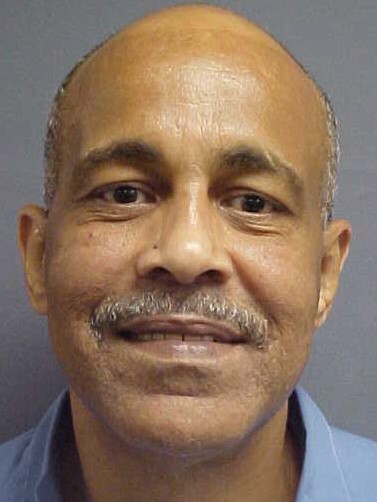
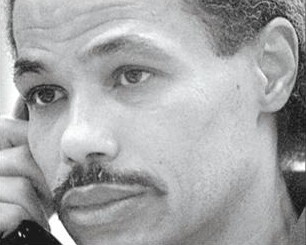
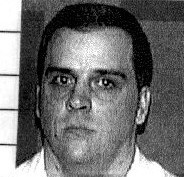
Kenneth Turrentine
Mass murderer Gameel Al-Batouti
Mass murderer · USA · 1999
Gameel Al-Batouti (also rendered “Gamil ElBatouty” or “El Batouty” in U.S. offi…
216 victims
Gameel Al-Batouti
Mass murderer · USA · 1999
Gameel Al-Batouti (also rendered “Gamil ElBatouty” or “El Batouty” in U.S. offi…
216 victims
 Timothy McVeigh
Mass murderer · USA · 1995
Timothy James McVeigh (April 23, 1968 – June 11, 2001) was a United States Army…
168 victims
Timothy McVeigh
Mass murderer · USA · 1995
Timothy James McVeigh (April 23, 1968 – June 11, 2001) was a United States Army…
168 victims
 Julio Gonzalez
Mass murderer · USA · 1990
Julio Gonzalez was sentenced to 174 twenty-five-year sentences (a total of 4,35…
87 victims
Julio Gonzalez
Mass murderer · USA · 1990
Julio Gonzalez was sentenced to 174 twenty-five-year sentences (a total of 4,35…
87 victims
 David Burke
Mass murderer · USA · 1987
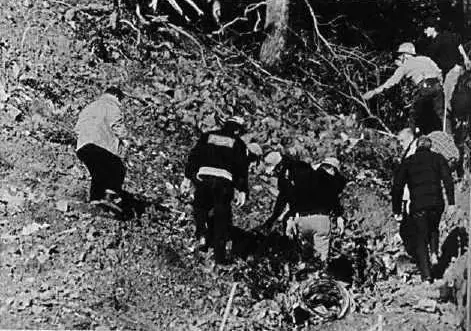
David Augustus Burke (May 18, 1952–December 7, 1987) was an employee of USAir,…
43 victims
David Burke
Mass murderer · USA · 1987
David Augustus Burke (May 18, 1952–December 7, 1987) was an employee of USAir,…
43 victims
 George Jo Hennard
Mass murderer · USA · 1991
George Jo Hennard carried out a mass killing at a Luby’s Cafeteria in Killeen,…
23 victims
George Jo Hennard
Mass murderer · USA · 1991
George Jo Hennard carried out a mass killing at a Luby’s Cafeteria in Killeen,…
23 victims
 James Huberty
Mass murderer · USA · 1984
James Oliver Huberty was a 41-year-old unemployed security guard. He was born i…
21 victims
James Huberty
Mass murderer · USA · 1984
James Oliver Huberty was a 41-year-old unemployed security guard. He was born i…
21 victims
 Andrew Lyons
Murderer · USA · 1992
Andrew Lyons (defendant) As of September 1992, Andrew Lyons and Bridgette Harri…
3 victims
Andrew Lyons
Murderer · USA · 1992
Andrew Lyons (defendant) As of September 1992, Andrew Lyons and Bridgette Harri…
3 victims
 Walburga Oesterreich
Murderer? · USA · 1922
Walburga “Dolly” Oesterreich was an American homemaker and the wife of a wealth…
1 victim
Walburga Oesterreich
Murderer? · USA · 1922
Walburga “Dolly” Oesterreich was an American homemaker and the wife of a wealth…
1 victim
 Robert Raymond Cook
Mass murderer · Canada · 1959
Robert Raymond Cook (also known as Bobby Cook): convicted murderer; eldest son…
7 victims
Robert Raymond Cook
Mass murderer · Canada · 1959
Robert Raymond Cook (also known as Bobby Cook): convicted murderer; eldest son…
7 victims
 Marguerite Steinheil
Murderer? · France · 1908
Marguerite Jeanne “Meg” Japy Steinheil was a French woman born in Beaucourt on…
2 victims
Marguerite Steinheil
Murderer? · France · 1908
Marguerite Jeanne “Meg” Japy Steinheil was a French woman born in Beaucourt on…
2 victims
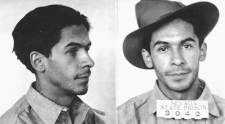 Luis Ceja
Murderer · 1930
Luis Ceja was executed at the Nevada State Prison in Carson City on September 4…
1 victim
Luis Ceja
Murderer · 1930
Luis Ceja was executed at the Nevada State Prison in Carson City on September 4…
1 victim
- Gender
- male
- Country
- USA
- Location
- Tulsa, Oklahoma, USA
- Date of birth
- February 16, 1953
- Age at first offence
- 41
- Characteristics
- parricide, murder-for-hire
- Victim profile
- Avon Stevenson, 48 (his sister), Anita Louise Richardson, 39 (his girlfriend) and Tina L. Pennington, 22, and Martise D. Richardson, 13 (Richardson’s children)
- Method of murder
- Shooting ( .22 caliber handgun)
- Date(s) of murder
- June 4, 1994
- Years active
- 1994
- Date of arrest
- Same day
- Status
-
Executed
Executed by lethal injection in Oklahoma on August 11, 2005
Case record: Kenneth Turrentine
Background
Kenneth Turrentine was convicted in Oklahoma of four counts of first degree murder and was sentenced to death on three counts and to life in prison without the possibility of parole on the remaining count. He later became an Oklahoma death row inmate under the custody of Warden Mike Mullin and sought further post-conviction and habeas relief.
The offence
On June 4, 1994, Kenneth Turrentine killed his sister Avon Stevenson, his estranged girlfriend Anita Louise Richardson, and Richardson’s two children, Martise Richardson and Tina Pennington. He suspected Richardson was having an affair and believed Stevenson knew of the alleged affairs. He also believed Richardson and Stevenson were cheating him out of money to support drug habits.
Turrentine used a .22 caliber pistol. He confronted Stevenson and an argument ensued. Stevenson laughed in his face and called him a “punk.” In response, Turrentine placed the .22 caliber pistol to Stevenson’s head and fired; Stevenson died at the scene.
Turrentine then went to Richardson’s home, where further arguments occurred and the parties moved from the front to the back bedroom. After more argument and struggle, Turrentine shot Richardson in the head; Richardson died at the scene. Turrentine then shot both Martise and Tina in the head; they died at the scene as well. After the shootings, Turrentine talked to a 911 operator and declared that he had shot his “ol lady,” his kids, and his sister. When officers arrived, they took Turrentine into custody and advised him of his rights under Miranda v. Arizona. Turrentine waived his rights and told officers that he had shot his sister, his estranged girlfriend, and his girlfriend’s two children. A medical examiner later confirmed that Stevenson, Richardson, Martise, and Tina had all died from gunshot wounds to the head.
Investigation
Turrentine called 911 after the shootings and admitted to the killings. He again confessed to the killings after officers advised him of his Miranda rights.
After the shootings, he waited outside for police to arrive.
Arrest
Officers arrived, took Turrentine into custody, advised him of his Miranda rights, and Turrentine waived those rights and provided admissions consistent with the killings.
Trial
Kenneth Turrentine was tried by jury in Tulsa County District Court and was convicted of four counts of first degree murder for the killings of:
- Anita Richardson (count one),
- Martise Richardson (count two),
- Tina Pennington (count three),
- Avon Stevenson (count four).
At the penalty phase, the jury found three aggravating circumstances beyond a reasonable doubt as to counts one, two, and three:
- that the murders were especially heinous, atrocious, or cruel;
- that Turrentine knowingly created a great risk of death to more than one person;
- that there existed a probability that Turrentine would constitute a continuing threat to society.
The jury returned sentences of death for each of the first three counts. As to count four, the jury found two aggravating circumstances beyond a reasonable doubt and returned a verdict of life without the possibility of parole.
The Court of Criminal Appeals affirmed all four convictions and sentences.
Sentencing
At sentencing, the trial court imposed death sentences for counts one, two, and three and life imprisonment without the possibility of parole for count four.
The Oklahoma Court of Criminal Appeals’ jury instructions regarding sentencing options were found to be prejudicial in later proceedings, with the court finding that the instruction had a “substantial and injurious effect, or influence in determining the jury’s verdict.” The court also found that it would infect the entire trial so that the resulting conviction violates due process, though it was stated that this alone was not enough to overturn the conviction.
Appeals
Direct appeal (Turrentine v. State, 965 P.2d 955 (Okla. Crim. App. 1998); Direct Appeal)
The Court of Criminal Appeals affirmed:
- the validity of race-neutral reasons for peremptory strikes of black jurors;
- the permissibility of removal of a juror who stated she would be absent during trial to observe the Jewish holiday of Rosh Hashanah;
- harmlessness of any error in second degree murder instructions;
- a holding that evidence did not support an instruction on voluntary intoxication, or first degree manslaughter;
- a holding that Turrentine did not receive ineffective assistance of counsel;
- a holding that alleged prosecutorial misconduct did not warrant relief;
- that evidence supported findings of death penalty aggravators of great risk of death and continuing threat for all three murders for which death penalty was imposed, and especially heinous, atrocious, or cruel murder for two of the murders; and
- that death sentences were appropriate notwithstanding an unsupported finding that the third murder was especially heinous.
The Court of Criminal Appeals affirmed the sentences and denied rehearing.
The Court of Criminal Appeals discussed sufficiency challenges to aggravators and described evidence relied on for the “continuing threat” aggravator, including that after shooting Stevenson, girlfriend, and his two children, Turrentine sat outside smiling and waited for the police, and in subsequent interviews asked if police could let two men Richardson was supposedly having an affair with out of jail so he could kill them. The Court of Criminal Appeals also noted that Turrentine laughed when talking about shooting one of the men, talked of having a shoot-out with the police, admitted to shooting victims, and showed no remorse, including stating he could have left the victims and police would not have found them for several days. The assignment of error challenging the “continuing threat” aggravator was denied.
The Court of Criminal Appeals addressed challenges to the “great risk of death” aggravator. It described that a valid aggravator was not required for the imposition of life without parole on count four, and addressed whether the aggravator finding on count four undermined reliability of death sentences. It concluded that evidence of Turrentine shooting and killing three people in the same home supported the jury’s finding that he knowingly created a great risk of death to more than one person for counts one, two, and three.
The Court of Criminal Appeals also described mitigating evidence. Turrentine presented nine witnesses, and their testimony was summarized into thirteen factors submitted to the jury as mitigating evidence, along with any other circumstances the jury might find existing or mitigating. The Court of Criminal Appeals concluded that the death sentences were factually substantiated and appropriate for counts one and two, and as to count three, after reweighing, found beyond a reasonable doubt that the jury would have sentenced Turrentine to death even if it had not considered an invalid aggravator.
It also held it could not say the jury was influenced by passion, prejudice, or any other arbitrary factor contrary to 21 O.S.1991 § 701.13(C).
The Court of Criminal Appeals stated: “Accordingly, finding no error warranting modification, the sentences of death for Counts I, II and III and the sentence of life imprisonment without the possibility of parole for Count IV are hereby AFFIRMED.”
Post-conviction relief (Turrentine v. State, 965 P.2d 985 (Okla. Crim. App. 1998); PCR)
After his direct appeal, Turrentine filed a petition for postconviction relief. The Court of Criminal Appeals denied the petition, holding that:
- the petitioner could have previously raised collaterally asserted grounds for review;
- there was no merit to properly presented claims of ineffective assistance of direct appellate counsel; and concluded that no controverted, previously unresolved factual issues material to the legality of confinement existed.
The petition for post-conviction relief was “DENIED.”
Habeas corpus (Turrentine v. Mullin, 390 F.3d 1181 (10th Cir. 2004); Habeas)
In federal habeas proceedings, the United States District Court for the Northern District of Oklahoma granted the petition in part but denied habeas relief on both convictions and sentences, after finding that striking an aggravator would not alter punishment of death. The district court granted a certificate of appealability on multiple grounds, and the Court of Appeals considered additional grounds as well.
The Court of Appeals held that it granted relief in part and reversed in part. It stated that:
- erroneous second-degree murder instructions for two of the four counts deprived Turrentine of the right to have instructions on lesser included offense and warranted grant of habeas relief;
- evidence was sufficient to support finding presence of an aggravating circumstance; and
- counsel was not ineffective.
The Court of Appeals’ disposition stated that it:
- “GRANT[s] Mr. Turrentine’s Petition for Writ of Habeas Corpus on counts two and three, and VACATE[s] his conviction and sentence on counts two and three accordingly.”
- It “DENY[ies] his Petition for Writ of Habeas Corpus on count one, and AFFIRM[ed] his conviction and capital sentence on count one.”
Outcome
After the U.S. Supreme Court denied Turrentine’s final appeal, Oklahoma set an execution date. Turrentine was executed by lethal injection in Oklahoma on August 11, 2005.
Aftermath
In clemency proceedings referenced during the case, Oklahoma’s Pardon and Parole Board denied clemency. Turrentine’s mother, Dorothy Vinson, asked that his life be spared and said, “it wasn’t the Kenneth that everyone knows” who committed the murders. Richardson’s sister, Teresa Youngblood, submitted a letter describing her family’s loss and wrote, in part: “A very small and close-knit family with many years of happiness, love and joy (as well as problems just as any other family may have) suddenly and abruptly became even smaller on that sad and horrific night.” She also described Richardson as “a vibrant, fun-loving, joyful person to be around,” wrote that Pennington had been born blind and mentally disabled and survived several life-threatening surgeries, and described Martise as: “who loved no one more than his mother.” She also wrote, “The man of the family, he tried to protect his mother on may occasions, even the night of her death,” and she included these descriptions while addressing the board.
At the time of execution, Turrentine’s final statement included: “I’ve always maintained I’ve been innocent of the crimes charged,” he said. “This is a violation of my 14th Amendment rights. It’s not over. With that being said, Mom, Dad, I love you all. Be strong.” He also said, in another account: “I love you all. You all be strong.”
Tani-sha Billingslea gave a statement during the clemency proceedings: “He's my father, and I couldn't imagine life without him, even behind bars,” and: “He's my support, and I just need him to continue to support me.”
Dorothy Vinson stated: “I am just begging you, please,” “It wasn't the Kenneth that everyone knows.” One account attributed statements about Turrentine’s alcohol and antidepressants to his mother during the clemency process, and Turrentine was described as having said: “I've been struggling with that for years,” just before the board declined to spare him.
Reuters-reported information included that Turrentine requested 10 slices of cheesecake, 10 pieces of fried chicken and fried catfish for his final meal.
Timeline
- June 3, 1994 — Turrentine telephoned his ex-wife, Catherine Turrentine, and told her he was at Anita Richardson’s house and that things were “about to come to a head.”
- June 4, 1994 — Turrentine retrieved the loaded .22 caliber pistol from his ex-wife after she initially refused; he confronted Stevenson; an argument ensued; he shot and killed Stevenson; he went to Richardson’s home; he shot and killed Richardson; he shot and killed Martise Richardson and Tina Pennington; he called 911 and admitted to the shootings.
- December 14, 1998 — The United States Supreme Court denied Turrentine’s petition for writ of certiorari in Turrentine v. Oklahoma, 525 U.S. 1057.
- August 23, 1999 — Turrentine filed a petition for writ of habeas corpus pursuant to 28 U.S.C. § 2254.
- January 21, 2003 — The district court ruled on the habeas petition.
- January 31, 2003 — Turrentine filed a notice of appeal.
- August 11, 2005 — The United States Supreme Court denied Turrentine’s last-minute appeal; Oklahoma executed Turrentine by lethal injection at 6:10 p.m.
- August 12, 2005 — News accounts described the execution as having occurred Thursday evening, and reported the execution date as August 11, 2005.
- August 15, 2005 — One account described a scheduled execution for August 15, 2005, for Turrentine.
Other details
Tani-sha Billingslea was described as Turrentine’s daughter. She stated that Turrentine was 17 when she was born and that after high school he joined the military to support his family.
Jerry Richardson, described as Richardson’s husband who was separated from her at the time of the murders, made statements during clemency-related reporting. He said: “I love my family very much, and he took them away from me,” and: “They can never be replaced.” He also did not support clemency in one account.
During clemency proceedings, it was stated that Turrentine apologized for the deaths but could not answer several board members’ questions about motive, and he stated: “I've been struggling with that for years.” He said he drank and took antidepressants in the hope that it would help him fall asleep following bouts of insomnia.
The record described evidence of child abuse never being brought to the attention of the jury in later discussions of trial errors.
The execution-related information included that he died shortly after an injection of drugs stopped his heart, and that he was placed on a gurney in the death chamber.
Legal citations in the materials included:
- Turrentine v. State, 965 P.2d 955 (Okla. Crim. App. 1998) (Direct Appeal).
- Turrentine v. State, 965 P.2d 985 (Okla. Crim. App. 1998) (PCR).
- Turrentine v. Mullin, 390 F.3d 1181 (10th Cir. 2004) (Habeas).
A medical examiner confirmed that each victim died from gunshot wounds to the head.
Jurisdiction and venues mentioned included the District Court, Tulsa County, and the Oklahoma Court of Criminal Appeals.
Sentence and count structure was described as four counts of First Degree Murder (21 O.S.1991, § 701.7), Case No. CF-94-2784.
Spotted an error, or have more information about this case?