Mtimane Msundwana
Serial killer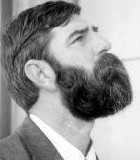 Louis Van Schoor
Serial killer · South Africa · 1986
Louis van Schoor was a security guard and an ex-policeman who was convicted and…
39 victims
Louis Van Schoor
Serial killer · South Africa · 1986
Louis van Schoor was a security guard and an ex-policeman who was convicted and…
39 victims
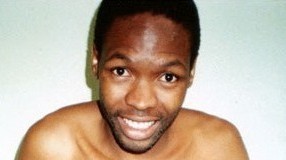 Moses Sithole
Serial killer · South Africa · 1994
Moses Sithole (November 17, 1964) was a serial rapist and serial killer in Sout…
38 victims
Moses Sithole
Serial killer · South Africa · 1994
Moses Sithole (November 17, 1964) was a serial rapist and serial killer in Sout…
38 victims
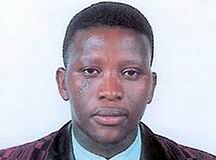 Norman Afzal Simons
Serial killer · South Africa · 1986
Norman Afzal Simons was a former teacher. He later converted to Islam in 1993,…
22 victims
Norman Afzal Simons
Serial killer · South Africa · 1986
Norman Afzal Simons was a former teacher. He later converted to Islam in 1993,…
22 victims
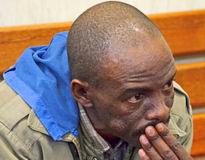 Bulelani Mabhayi
Serial killer · South Africa · 2007
Bulelani Mabhayi was a serial killer who terrorised the rural villagers of Thol…
20 victims
Bulelani Mabhayi
Serial killer · South Africa · 2007
Bulelani Mabhayi was a serial killer who terrorised the rural villagers of Thol…
20 victims
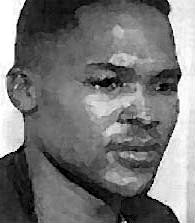 Velaphi Ndlangamandla
Serial killer · South Africa · 1998
Velaphi Ndlangamandla, known as the “saloon killer”, was convicted in connectio…
19 victims
Velaphi Ndlangamandla
Serial killer · South Africa · 1998
Velaphi Ndlangamandla, known as the “saloon killer”, was convicted in connectio…
19 victims
 Shey Weiker
Murderer · Ohio · 2014
Defendant: Shey Weiker, 32 · Residence: Fostoria · Age references: 31 (competen…
2 victims
Shey Weiker
Murderer · Ohio · 2014
Defendant: Shey Weiker, 32 · Residence: Fostoria · Age references: 31 (competen…
2 victims
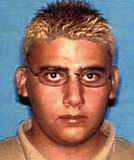 Jason Bautista
Murderer · USA · 2003
Jason Bautista killed his mother, Jane Bautista. Jane Bautista was 41 years old…
1 victim
Jason Bautista
Murderer · USA · 2003
Jason Bautista killed his mother, Jane Bautista. Jane Bautista was 41 years old…
1 victim
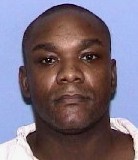 Ronald James Hamilton
Murderer · USA · 2001
Ronald James Hamilton, Jr. was sentenced to death in Texas. · 11/07/2001 — Hami…
1 victim
Ronald James Hamilton
Murderer · USA · 2001
Ronald James Hamilton, Jr. was sentenced to death in Texas. · 11/07/2001 — Hami…
1 victim
 Robert Joe Wagner
Serial killer · Australia · 1992
Robert Joe Wagner (born 28 November 1971 in Parramatta, New South Wales) was an…
10 victims
Robert Joe Wagner
Serial killer · Australia · 1992
Robert Joe Wagner (born 28 November 1971 in Parramatta, New South Wales) was an…
10 victims
 Jacquiline Reynolds
Homicide · USA · 1997
Jacquiline “Nikki” Reynolds was the defendant. Billie Jean Reynolds was the ado…
1 victim
Jacquiline Reynolds
Homicide · USA · 1997
Jacquiline “Nikki” Reynolds was the defendant. Billie Jean Reynolds was the ado…
1 victim
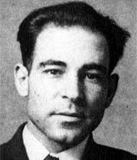 Nicola Sacco
Murderer? · USA · 1920
Nicola Sacco Nicola Sacco and Bartolomeo Vanzetti were convicted of murdering t…
2 victims
Nicola Sacco
Murderer? · USA · 1920
Nicola Sacco Nicola Sacco and Bartolomeo Vanzetti were convicted of murdering t…
2 victims
- Gender
- male
- Country
- South Africa
- Location
- Natal, South Africa
- Date of birth
- ???
- Characteristics
- robbery, fugitive
- Victim profile
- Suliman Ismail Kharva / Hassan Mia Armoordeen / Mohamed Ebrahim Motala / Ismail Hajat, his assistant Hassan Mayet and native servant Nkunzana Mazibuko ( merchants, mostly Indian )
- Method of murder
- Shooting
- Date(s) of murder
- 1929 - 1936
- Years active
- 1929–1936
- Date of arrest
- August 10, 1936
- Status
-
Executed
Executed by hanging in 1937
Case information
Name: Mtimane Msundwana
Status / outcome
Mtimane Msundwana was convicted on six counts of murder and sentenced to death, and the death sentence was carried out.
Timeline
- 17 May 1929 — An Indian storekeeper, Suliman Ismail Kharva, was shot dead at the door of his lonely store on the farm “Moorburg” in the Ntabamhlope area of the Estcourt district.
- 29 January 1933 — An Indian storekeeper, Hassan Mia Armoordeen, was shot and killed at his store on the farm “Cornfields” in the Estcourt district.
- 26 April 1933 — Case number three occurred at Ntabamhlope; Mohamed Ebrahim Motala was shot dead in the late afternoon while his Indian assistant accompanied by the store native had gone into the nearby plantation to examine snares.
- 13 June 1934 — On the farm “Heartsease” in the Loskop district, Ismail Hajat, Hassan Mayet, and Nkunzana Mazibuko were shot dead.
- 20 December 1934 — At 1 p.m., a young European named Hall was travelling by motorcycle from Durban; a native fired at him near Frere and Hall was sprayed with shot.
- June 1935 — During the early part of June 1935, natives working in a road party found a long parcel wrapped in sacking in a culvert that revealed a shotgun.
- 4 November 1935 — Just after 2 p.m. on the farm “Moorburg,” a gunman shot at an Indian lounging on the veranda and fired into the store; the storekeeper, Amod Suliman Patel, was struck in the forearm by about 10 pellets.
- 23 November 1935 — At 11.30 a.m., a native dressed in a long khaki overcoat and khaki trousers entered a store near the Hlatikulu mountain and shot Abraham Hlatshwayo through the heart; shots were fired at customers and cash was taken.
- 7 August 1936 — Mbulawa Hlopi was killed at about 2.30 p.m. after a strange native produced a gun and fired three times.
- 8 August 1936 — At about 2.30 a.m., Jameson Nxumalo was fired at on a road and hit in the leg.
- 10 August 1936 — By Monday the 10th of August 1936, the initial investigations into both crimes were complete.
- 6 p.m. (same day as detention) — Timana Sundwana (listed as Mtimane Msundwana) was located at his kraal and identified by Japie Hlongwana; he was detained.
- Daybreak following the detention night — A search of Sundwana’s kraal found a long khaki overcoat, a black woollen cap, ten rounds of live 12-bore shotgun cartridges, four rounds of live 20-bore shotgun cartridges, and three bunches of keys.
- 8–10 August 1936 (subsequent arrest steps described) — Sundwana volunteered to show where a 20-bore gun wrapped in sacking was hidden; it was found and identified as the missing property of his master.
- 18 September 1936 — Sundwana was committed for trial at Estcourt in respect of specified murders and attempted murders.
- 25 November 1935 — Before the full Bench of the Native High Court at Estcourt, Sundwana was convicted of six counts of murder and sentenced to death.
- 30 October 1936 — Sundwana admitted the murder at “Moorburg” on 17th May 1929.
- By 1937 (execution carried out) — The death sentence was duly carried out.
The offence
Series of store murders and shootings in Northern Natal
The crimes were a series of shootings at isolated stores in the Estcourt district and nearby areas.
Across the cases, features included:
- The shootings took place in the late afternoon at isolated stores.
- Cash only was searched for and taken at each place.
- No eyewitness was present on any occasion for earlier incidents described.
“Moorburg” store killing (17 May 1929)
At dusk on the 17th of May 1929, an Indian storekeeper named Suliman Ismail Kharva was shot dead at the door of his lonely store on the farm “Moorburg” in the Ntabamhlope area of the Estcourt district.
“Cornfields” store killing (29 January 1933)
On the 29th January 1933, an Indian storekeeper named Hassan Mia Armoordeen was shot and killed at his store on the farm “Cornfields”, some miles from “Moorburg”, also in the Estcourt district.
Ntabamhlope store killing (26 April 1933)
At Ntabamhlope on 26 April 1933, Mohamed Ebrahim Motala was shot dead in the late afternoon while his Indian assistant accompanied by the store native had gone into the nearby plantation to examine snares.
“Heartsease” killings (13 June 1934)
On the farm “Heartsease” in the Loskop district, between “Cornfields” and Ntabamhlope, Ismail Hajat, his assistant Hassan Mayet, and native servant Nkunzana Mazibuko were shot dead during the night.
The murders were first discovered by native customers who found that the store had not opened. The police later reached the store after the delay.
The police investigation described the caller persuading the younger Indian to open the back door, the gunman shooting:
- the elder Indian in the kitchen across the stomach, with him collapsing and dying almost immediately;
- a shot below the shoulder, after which the victim died almost immediately;
- the young Indian, who was shot through the head in the kitchen and killed outright with his revolver unfired clasped in his hand;
- and then the native servant at close quarters through the back in the doorway, who fell forward dying instantly.
A big dog belonging to the storekeeper was also shot.
Cash taken at the store was described as not more than £6 from the till; a tin box covered with dust on a high shelf was found near the till and proved to have been handled by the native. Nothing else was touched.
After leaving, the murderer ordered the native boy to his room and shot him.
An organized search of the locality resulted in:
- one cartridge case outside the back door; and
- a condensed milk tin about five hundred yards distant, freshly opened.
Attempt on motorcyclist Hall (20 December 1934)
At 1 p.m. on 20 December 1934, Hall, travelling to the Rand by motorcycle from Durban, noticed a native sitting in the long grass to the left of the road.
When Hall was within a few paces, the native reached for a gun and fired at him from an angle of about 45 degrees, spraying him with shot in the lower chest, abdomen and left hand.
Hall managed to keep going for some four or five hundred yards to a dip in the road and out of sight of the gunman, where he met a native work-party and managed to dismount. Hall received aid; natives joined by an European informed the police at Frere, and the European took Hall to the hospital at Colenso.
Wads from cartridges from a 12-bore gun were found at the scene, and the aim and apparent motive were linked by investigators to the prior crimes.
Attack on store at “Moorburg” (4 November 1935)
On 4 November 1935, just after 2 p.m., a native carrying what appeared to be a bundle of sacks arrived at the front of the store and spoke to an Indian lounging on the veranda.
The visitor produced a gun, shouted “Bekani! Bekani! (Look! Look!) Yes! Yes!”, aimed and fired at the storekeeper.
The storekeeper, Amod Suliman Patel, ran to the side of the store and was struck in the forearm by about 10 pellets but was not seriously hurt; most of the shot went into the frame of the door.
The gunman reloaded. The Indian on the veranda entered the store with the storekeeper and two native customers, and they dashed into the kitchen where they remained until the gunman left.
The gunman took about £10 in cash and a bunch of keys from two drawers serving as tills. Nothing else was touched.
When free to raise the alarm, the storekeeper sent a message to the European owner of the farm who lived about a mile away. By the time he arrived, the gunman was on the ridge of a hill some two miles off disappearing in the Ennersdale direction.
Police dogs were unable to take scent.
A third native later described the gunman as wearing an old khaki overcoat below the knee and a black close-fitting knitted cap which may have had flaps over the ears, and stated he was dressed as a stranger in the locality.
A wad indicated that a 20-bore weapon had been used.
Store attack near Hlatikulu mountain (23 November 1935)
At 11.30 a.m. on 23 November 1935, a native dressed in a long khaki overcoat and khaki trousers entered a store at the foot of the Hlatikulu mountain, about 27 miles South-West of Estcourt.
He asked the native in charge, Abraham Hlatshwayo, if he could accommodate his horses. Abraham replied “No”. The visitor then asked if he could off-saddle there for a while; Abraham told him he could.
The visitor reappeared almost immediately in the doorway pointing his gun, and shot Abraham through the heart as he stood behind the counter.
The gunman entered the store, aimed at each of the three customers (a native woman and two girls), ordered them out, and they fled.
The gunman rifled the cash box, taking about £16 in notes and silver, while leaving a cheque, postal orders, and a quantity of copper.
He took the store keys from Abraham’s person, whom he again shot through the back as Abraham lay on the floor.
Outside, the gunman fired a third shot at no particular target and departed up the hill at the back of the store towards the mountain.
The woman and girls ran to the kraal of a chief some three or four miles off, and the chief reported to the owner of the farm who communicated with the Estcourt police.
Search efforts were impeded by a heavy mist that enveloped the mountain.
Cardboard wads indicated that a 20-bore gun had again been used.
Of the three native females who were in the store, only one could give a fair description of the gunman, and his identity remained undetermined for that stage.
Killing of Mbulawa Hlopi and attempted shooting of Jameson Nxumalo (7–8 August 1936)
On Friday 7 August 1936, Mbulawa Hlopi arrived from Johannesburg at Bergville, made arrangements to sleep before resuming his journey on foot, and in the evening made the acquaintance of a strange native.
They left Bergville late the following morning accompanied by a third native named Japie Hlongwana.
At about 2.30 p.m., after covering some nine miles, the trio arrived at a gate on a farm road. Without warning, the strange native produced a gun and fired three times at Mbulawa. Mbulawa was killed by the third shot aimed at point-blank range.
Japie Hlongwana fled to cover afforded by an avenue of trees and escaped without injury.
Mbulawa’s pockets were rifled, showing the motive for crime to be robbery, but the gunman overlooked £14 left in a vest pocket.
Wads indicated that a 20-bore shotgun firing No. 6 shot had been used.
At about 2.30 a.m. the following morning, a native named Jameson Nxumalo was fired at on a road some four miles from Frere and about 35 miles from the Bergville shooting, and was hit in the leg. He was not seriously injured and his assailant walked off without interfering further.
Pellets indicated that No. 6 shot had been used.
Investigations described unusual mobility because the second event occurred exactly 12 hours after the Bergville affair.
Investigation
Early arrests and investigation difficulties
The initial murder of Suliman Ismail Kharva at “Moorburg” led to an European being arrested in connection with the matter, but he proved to be in no way implicated.
In each case cash only had been taken, leaving little for police to work upon; thorough investigations met with no success for a time.
Identification of weapon and gun theft history
A local farmer reported the loss of a 12-bore shotgun and ammunition prior to the “Cornfields” and Ntabamhlope killings.
An European motorist returning from a sale was held up and fired at by a gunman believed to be a native on the main road near Chievely, and ejected cartridge cases were left on the road.
It was strongly suspected that the stolen gun was the weapon used in the affairs, and efforts were made to trace it.
A native had been convicted of the theft of the 12-bore gun stolen in May 1932, but others were known to be involved and the weapon was never recovered at that time. The actual thief was in gaol when the last murders occurred, and associates were effectively shadowed or were absent from the area when crimes were committed.
A lead included one associate followed to Durban where an informer obtained employment with the same firm, but no useful information resulted.
A later driver search was organized, and police dogs failed after leading to a stream.
Recovery of the 12-bore weapon (June 1935)
In early June 1935, natives working on a road party found in a culvert a long parcel wrapped in sacking, which on being opened revealed a shotgun.
This was the 12-bore weapon reported stolen in May 1932.
Arms expert tests confirmed the suspicion that cartridge cases found after the Chievely hold-up and the one discovered at the scene of the “Heartsease” murder had been fired from the weapon.
Because the gun was in the hands of police, its value for tracing the murderer faded.
Public alarm and reward
Public apprehension in Northern Natal increased, and representations expressing horror and alarm were made to the government by various Indian organizations.
A reward of £100 was offered to encourage information, and the publication of the reward produced much information requiring considerable work.
Arrest and confession
Suspect detained and searched
On Monday 10 August 1936, initial investigations into the Bergville murder and the Nxumalo shooting were complete.
Early the following morning, use was made of Japie Hlongwana to test his claim that he could identify the man who had killed his companion.
Among the suspects was Timana Sundwane [ Mtimane Msundwana ] who had been regarded as possibly responsible for the theft of the 20-bore gun.
He was located at his kraal at 6 p.m. the same day and was immediately identified by Japie Hlongwana and detained.
Search results at the kraal
Because it was too dark for a proper search, a close guard was set over his kraal for the night.
At daybreak, the search found:
- a long khaki overcoat,
- a black woollen cap,
- ten rounds of live 12-bore shotgun cartridges,
- four rounds of live 20-bore shotgun cartridges,
- and three bunches of keys.
The cartridges and keys were found in the thatched roof of Sundwana’s hut.
Sundwana denied any knowledge of a gun.
When investigating officers started to pull the hut to pieces, he intervened and volunteered to show where the gun was hidden.
He took officers to a point in a riverbed about half a mile away where a 20-bore gun wrapped in sacking was found and identified as the missing property of his master.
Charges and commitment for trial
Sundwana was taken to the Estcourt Charge Office where, after being formally charged with the Bergville murder, he confessed before the Magistrate to:
- the attempted murder at Ntabamhlope on 4 November 1935; and
- the murder at Hlatikulu on 23 November 1935.
At Estcourt on 18 September 1936, Sundwana was committed for trial in respect of:
- the murders at “Heartsease”, Hlatikulu and Bergville; and
- the attempted murders at Chievely, “Moorburg” and Frere.
Further confessions after commitment
After the rising of the Court, Sundwana confessed further to:
- the shooting of the motorcyclist Hall;
- the Ntabamhlope murder on 24 April 1933;
- the “Cornfields” murder;
- the theft of the 20-bore gun;
- the Hlatikulu murder; and
- the subsequent Frere shooting.
This left only the first of the offences, the murder at “Moorburg” on 17 May 1929, unaccounted for.
On 30 October 1936, Sundwana admitted the offence and stated that he shot the Indian with a 12-bore gun, which he removed from and replaced on his master’s gunrack without the weapon being missed.
Trial and sentencing
Conviction and sentence
On 25 November 1935, before the full Bench of the Native High Court at Estcourt, Sundwana was convicted of:
- six counts of murder and sentenced to death.
The Crown withdrew:
- four counts of attempted murder; and
- two counts of theft.
Execution
The death sentence was duly carried out in 1937, after taking eight lives and making attempts on four more.
Other details
Quotes
“Bekani! Bekani! (Look! Look!) Yes! Yes!”
Detective credit mentioned
The narrative also credited the late Detective Head Constable H.H. Burnham of the Pietermaritzburg C.I.D. for his zeal, courage, and tenacity, stating that his passing was a great loss to the Natal C.I.D. and the whole South African Police. It also noted Lt-Col P.H. Golby, Deputy Commissioner S.A. Police (Criminal Investigation Deparment).
Spotted an error, or have more information about this case?