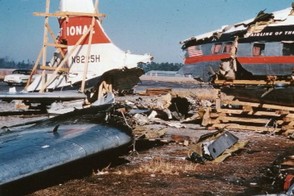
Julian Andrew Frank
Mass murderer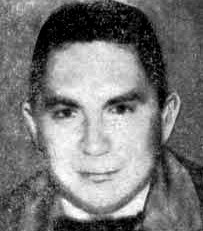 Francisco Paula Gonzales
Mass murderer · USA · 1964
Francisco Paula Gonzales was a passenger on Pacific Air Lines Flight 773. Gonza…
44 victims
Francisco Paula Gonzales
Mass murderer · USA · 1964
Francisco Paula Gonzales was a passenger on Pacific Air Lines Flight 773. Gonza…
44 victims
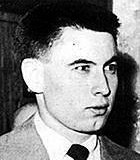 John Gilbert Graham
Mass murderer · USA · 1955
John “Jack” Gilbert Graham was born on January 23, 1932, at Denver, Colorado. H…
44 victims
John Gilbert Graham
Mass murderer · USA · 1955
John “Jack” Gilbert Graham was born on January 23, 1932, at Denver, Colorado. H…
44 victims
 Thomas Doty
Mass murderer · USA · 1962
Thomas G. Doty was a passenger on Continental Airlines Flight 11. He was a marr…
44 victims
Thomas Doty
Mass murderer · USA · 1962
Thomas G. Doty was a passenger on Continental Airlines Flight 11. He was a marr…
44 victims
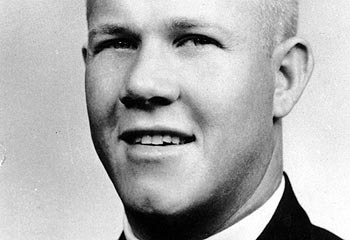 Charles Whitman
Mass murderer · USA · 1966
Charles Joseph Whitman (June 24, 1941 – August 1, 1966) shot and killed 14 peop…
15 victims
Charles Whitman
Mass murderer · USA · 1966
Charles Joseph Whitman (June 24, 1941 – August 1, 1966) shot and killed 14 peop…
15 victims
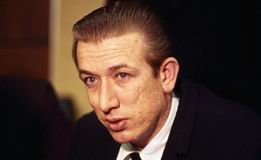 Richard Speck
Mass murderer · USA · 1966
Richard Speck (December 6, 1941–December 5, 1991) was a mass murderer who syste…
8 victims
Richard Speck
Mass murderer · USA · 1966
Richard Speck (December 6, 1941–December 5, 1991) was a mass murderer who syste…
8 victims
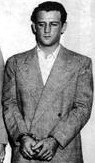 Ernest Ingenito
Mass murderer · USA · 1950
Ernest Ingenito (1924–1995) was an American mass murderer who shot nine people,…
5 victims
Ernest Ingenito
Mass murderer · USA · 1950
Ernest Ingenito (1924–1995) was an American mass murderer who shot nine people,…
5 victims
 Paul Dennis Reid
Spree killer · USA · 1997
Paul Dennis Reid, Jr. was an American serial killer. He was born November 12, 1…
7 victims
Paul Dennis Reid
Spree killer · USA · 1997
Paul Dennis Reid, Jr. was an American serial killer. He was born November 12, 1…
7 victims
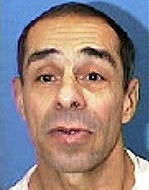 Bruce Charles Jacobs
Murderer · USA · 1986
Bruce Charles Jacobs was convicted of capital murder for killing Conrad Harris.…
1 victim
Bruce Charles Jacobs
Murderer · USA · 1986
Bruce Charles Jacobs was convicted of capital murder for killing Conrad Harris.…
1 victim
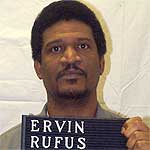 James Rufus Ervin
Homicide · USA · 1994
James Rufus Ervin — defendant · Lucius House — resident of St. Louis; accomplic…
1 victim
James Rufus Ervin
Homicide · USA · 1994
James Rufus Ervin — defendant · Lucius House — resident of St. Louis; accomplic…
1 victim
 Anisio Ferreira de Sousa
Murderer · Brazil · 1989
September 4, 2003 — Anísio Ferreira de Sousa was sentenced to 77 years in priso…
19 victims
Anisio Ferreira de Sousa
Murderer · Brazil · 1989
September 4, 2003 — Anísio Ferreira de Sousa was sentenced to 77 years in priso…
19 victims
 Carman Jenkins
Murderer · USA · 2008
Carman Jenkins pleaded guilty to murder in the death of Mekole Harris and was s…
1 victim
Carman Jenkins
Murderer · USA · 2008
Carman Jenkins pleaded guilty to murder in the death of Mekole Harris and was s…
1 victim
 Mark Duane Edwards
Murderer · USA · 2002
Mark Duane Edwards Jr., 24, was convicted for killing Larry A. Bobish, Sr., 50,…
3 victims
Mark Duane Edwards
Murderer · USA · 2002
Mark Duane Edwards Jr., 24, was convicted for killing Larry A. Bobish, Sr., 50,…
3 victims
- Gender
- male
- Country
- USA
- Location
- Brunswick County, North Carolina , USA
- Date of birth
- February 2, 1927
- Age at first offence
- 33
- Characteristics
- murder-suicide, attempt to collect insurance money
- Victim profile
- 5 crews and 28 passengers Method of murders: Bomb (dynamite)
- Method of murder
- —
- Date(s) of murder
- January 6, 1960
- Years active
- 1960
- Date of arrest
- —
- Status
-
Died in custody
Died in the explosion on National Airlines Flight 2511 on January 6, 1960
Case record: Julian Andrew Frank
Timeline
- 6 January 1960 — National Airlines Flight 2511 exploded and crashed 1-1/2 miles north-west of Bolivia, North Carolina, killing all 34 on board; Julian A. Frank died in the explosion.
Background
Julian A. Frank was a lawyer from New York City.
He lived with his wife and two small children in Westport, Connecticut, and commuted to his small office in Manhattan. Fellow commuters recalled that he was a first-rate bridge player but described him as “a loud, boastful sort of fellow,” and one acquaintance said:
“He gave me the impression of being a young man in a hurry—ambitious, driving, smart”.
He was described as often talking about dreaming that he would some day die in a plane crash.
Up to last year, Julian Frank had earned about $10,000 a year. Then he seemed to have “struck it rich,” bragged of making $14,000 a month, moved out of a $20,000 home into a $45,000 house, and talked almost casually of having “dropped $600,000 in the stock market.” He also began taking out large insurance policies, and he told friends:
“If I die,” he told friends, “my wife will be the richest woman in the world.”
At the time of his death, Frank was being harassed by multiple businessmen who claimed he had swindled them, and he was under investigation by the FBI and the New York District Attorney, while the New York Bar Association was considering disbarment procedures against him. Frank had also been under investigation for fraud and embezzlement at the time of his death.
Investigators noted that Frank had taken out large amounts of life insurance shortly before boarding the aircraft, and they later listed the size of his life and accident insurance as about $900,000 within two months before the crash, naming his ex-model wife as beneficiary.
The offence
A bomb explosion occurred inside National Airlines Flight 2511.
During investigation and recovery, it was discovered that the remains of one passenger, Julian A. Frank, were missing from the accident site at first, and his body was eventually found sixteen miles away at a place called Snow’s Marsh west of the Cape Fear River.
Autopsies showed that all other victims had died due to crash forces. Frank’s autopsy showed that he had been fatally injured by a dynamite explosion originating either in his lap or (more likely) immediately under his seat. Investigators found wires and metal fragments identified as parts of a bomb embedded in Frank’s body, mainly in his arms and legs. They also found bone and bomb fragments surrounding the seat that had been assigned to Frank on boarding. Investigators therefore suspected that Frank had taken the bomb aboard the aircraft willingly, and that the bombing was a murder-suicide.
Investigators stated that the points leading them to believe Frank was culpable included the following:
- The bomb exploded at 2:38 AM, hours after the original Flight 601 was scheduled to land at Miami.
- If a party not on the aircraft had placed the bomb on Flight 2511, it should have been set to detonate at a time when Flight 601 would have been in the air.
- The aircraft had not been in use for some time before it was called into service to replace the Boeing 707 that had been grounded, making it unlikely that the bomb was on the aircraft before boarding.
- Frank had been under investigation for fraud and embezzlement at the time of his death and had also taken out large amounts of life insurance shortly before boarding.
- The explosion was in immediate proximity to Frank, either in his lap or immediately under his seat.
The investigation also included other evidence that made it less than certain that Frank was culpable. Investigators cited:
- On November 16, 1959, National Airlines Flight 967 disappeared over the Gulf of Mexico. The aircraft was lost at sea, and the Civil Aeronautics Board could not determine a probable cause for the accident, but investigators believed the aircraft had been destroyed by a dynamite bomb.
- Investigators discovered that a small-time crook named William Taylor had boarded the aircraft on a ticket belonging to Richard Spears, a convicted felon who had befriended Taylor in prison and who had taken out over $100,000.00 worth of life insurance on himself. Investigators hypothesized that Taylor had boarded the aircraft with luggage packed by Spears and, unbeknownst to Taylor, containing a bomb.
- Frank’s purchase of life insurance before boarding a flight was not unusual in 1960, and airports even had vending machines that issued insurance policies good for the duration of the flight.
- Frank was a commercial lawyer and was not thought to have the knowledge necessary to build an explosive device.
No charges were laid in the bombing. The investigation officially remained open.
Investigators also stated that if the bomb had detonated on Flight 601, the Boeing 707 originally scheduled to fly the route, 105 passengers and an unknown number of crew would have been killed, and it would have been the first crash of a Boeing jet in passenger service. They also noted that two accidents had occurred on training flights in 1959.
Investigation
Civil Aeronautics Board investigators found evidence indicating a bomb explosion inside the plane.
The wreckage showed that an 8-ft. section near a forward washroom had been blasted outward, as if by an explosion within the plane. A small blue handbag, its bottom blown out, was found near the crash scene. Searching through the passenger list for a possible suspect, the investigators identified Julian Andrew Frank, 32.
Investigators’ interest in Frank was based on the discovery that within two months before the crash he had taken out some $900,000 in life and accident insurance, naming his ex-model wife as beneficiary.
Investigators concluded that Frank had taken aboard a “small blue bag of the sort later found near the crash.” Frank’s body washed ashore from the Atlantic at a point about 16 miles from the actual crash scene; it was missing a leg and a foot and had been pierced by pieces of metal which, investigators said, did not seem to have been part of the plane itself.
Arrest
No arrest was described, and no charges were laid in the bombing.
Trial
No trial was described.
Sentencing
No sentencing was described.
Appeals
No appeals were described.
Outcome
All 34 people on board National Airlines Flight 2511 were killed in the accident.
Frank’s remains were missing from the accident site during recovery, and his body was later found sixteen miles away at Snow’s Marsh west of the Cape Fear River. His death was attributed to a dynamite explosion originating in his lap or (more likely) immediately under his seat, based on autopsy findings and bomb fragments embedded in his body.
The investigation officially remained open, and no charges were laid.
Aftermath
The flight was said to have been routine until shortly after passing Wilmington, North Carolina. The airline was informed of the location of Flight 2511 at around 7:00 AM when Richard Randolph telephoned its dispatch office in Wilmington to advise that there was airplane wreckage in the field near his house. The wreckage was later identified as Flight 2511.
Had the bomb detonated on the Boeing 707 Flight 601, investigators stated that 105 passengers and an unknown number of crew would have been killed.
Other details
National Airlines Flight 2511 was a Douglas DC-6B aircraft, registration N8225H. The aircraft exploded over Bolivia, North Carolina, en route from New York International (Idlewild) Airport, New York City, New York, to Miami, Florida, on January 6, 1960.
The aircraft had been called into service on short notice when the normal aircraft used for the evening flight to Miami, a Boeing 707 jet identified as Flight 601, was grounded due to a cracked window. Most of the passengers who were to have flown on Flight 601 boarded a Lockheed Electra, registration N5003K; those who could not be accommodated on the Electra were boarded on Flight 2511.
Flight 2511 departed Idlewild over two hours late, at 11:34 PM.
At 2:31 AM Eastern Standard Time, one of the pilots on the flight contacted National Airlines company radio station at Wilmington to pass on a routine progress report. At 2:38 AM, the aircraft suddenly entered a wide descending right turn and crashed 1-1/2 miles north-west of Bolivia.
In the case summary context of other possible bombings, Federal Bureau of Investigation officials discussed a separate theory involving a National Airlines DC-7B that went down with 42 aboard in the Gulf of Mexico last November. The theory involved Robert Spears, 64, described as a Dallas naturopath with a long police record that included forgery, fraud, armed robbery, and a penitentiary term. The FBI reported that he had once said:
“that for $500 he would blow up a hospital.”
The passenger manifest for that flight included Spears’s name.
Spotted an error, or have more information about this case?