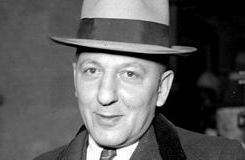
Louis Buchalter
Murderer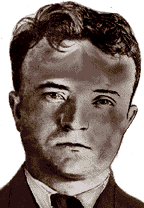 Paul Jaworski
Murderer · USA · 1926
Paul Jaworski was born in Poland as Paul Poluszynski in 1900. He later immigrat…
20 victims
Paul Jaworski
Murderer · USA · 1926
Paul Jaworski was born in Poland as Paul Poluszynski in 1900. He later immigrat…
20 victims
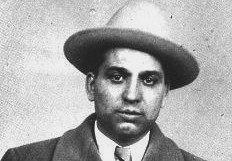 Harry Maione
Murderer · USA · 1937
Harry “Happy” Maione (1908 – February 19, 1942) was a New York mobster who serv…
12 victims
Harry Maione
Murderer · USA · 1937
Harry “Happy” Maione (1908 – February 19, 1942) was a New York mobster who serv…
12 victims
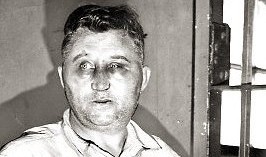 Harry Powers
Murderer · USA · 1931
Harry Powers was executed by hanging on March 18, 1932, at the West Virginia Pe…
5 victims
Harry Powers
Murderer · USA · 1931
Harry Powers was executed by hanging on March 18, 1932, at the West Virginia Pe…
5 victims
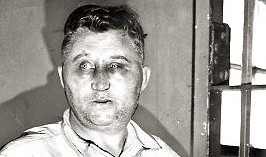 Herman Drenth
Murderer · USA · 1931
Herman Drenth was also known by the aliases Harry F. Powers and Cornelius O. Pi…
5 victims
Herman Drenth
Murderer · USA · 1931
Herman Drenth was also known by the aliases Harry F. Powers and Cornelius O. Pi…
5 victims
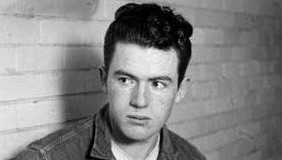 William Edward Hickman
Murderer · USA · 1926
William Edward Hickman was a man who tried to solve his financial problems by k…
5 victims
William Edward Hickman
Murderer · USA · 1926
William Edward Hickman was a man who tried to solve his financial problems by k…
5 victims
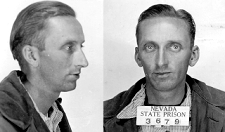 Luther Jones
Murderer · USA · 1936
Luther Jones Luther Jones was executed by asphyxiation-gas in Nevada on January…
4 victims
Luther Jones
Murderer · USA · 1936
Luther Jones Luther Jones was executed by asphyxiation-gas in Nevada on January…
4 victims
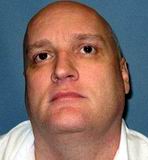 William Glenn Boyd
Murderer · USA · 1986
Name: William Glenn Boyd · Gender: M · Race: B · Date of birth: 1/6/1966 · Pris…
2 victims
William Glenn Boyd
Murderer · USA · 1986
Name: William Glenn Boyd · Gender: M · Race: B · Date of birth: 1/6/1966 · Pris…
2 victims
 Roy Michael Roberts
Murderer · USA · 1983
Roy Michael Roberts was convicted and sentenced to death for alleged participat…
1 victim
Roy Michael Roberts
Murderer · USA · 1983
Roy Michael Roberts was convicted and sentenced to death for alleged participat…
1 victim
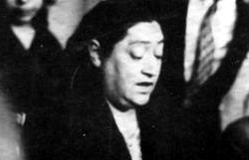 Felicitas Sanchez Aguillon
Serial killer · Mexico · 1930
Felícitas Sánchez Aguillón or Sánchez Neyra (1890 - June 16, 1941) was a Mexica…
50 victims
Felicitas Sanchez Aguillon
Serial killer · Mexico · 1930
Felícitas Sánchez Aguillón or Sánchez Neyra (1890 - June 16, 1941) was a Mexica…
50 victims
 Serafino Pelizzioni
Innocent · United Kingdom · 1865
The Negretti Murder Case The Golden Anchor, a pub in London EC1, was owned by e…
0 victims
Serafino Pelizzioni
Innocent · United Kingdom · 1865
The Negretti Murder Case The Golden Anchor, a pub in London EC1, was owned by e…
0 victims
 Carlos de Luna
Murderer · USA · 1983
Carlos de Luna was executed by lethal injection in Texas on December 7, 1989. H…
1 victim
Carlos de Luna
Murderer · USA · 1983
Carlos de Luna was executed by lethal injection in Texas on December 7, 1989. H…
1 victim
 Delores Eggert
Murderer · USA · 2007
Delores Eggert (50) pleaded guilty to first-degree murder in the death of her m…
1 victim
Delores Eggert
Murderer · USA · 2007
Delores Eggert (50) pleaded guilty to first-degree murder in the death of her m…
1 victim
- Gender
- male
- Country
- USA
- Location
- New York City, New York, USA
- Date of birth
- February 6, 1897
- Age at first offence
- 39
- Characteristics
- anarchist, angel of death, torture, crime spree, murder for hire, fugitive, gang, drug dealer
- Victim profile
- Joseph Rosen (candy store owner)
- Method of murder
- Shooting
- Date(s) of murder
- September 13, 1936
- Years active
- 1936
- Date of arrest
- August 24, 1939 (Buchalter surrendered to FBI chief J. Edgar Hoover in front of a Manhattan hotel)
- Status
-
Executed
Executed in the electric chair in Sing Sing on March 4, 1944
Overview
Louis “Lepke” Buchalter (February 6, 1897 – March 4, 1944) was an American mobster and head of the Mafia hit squad Murder, Inc. during the 1930s. He was one of the premier labor racketeers in New York City during that era. Buchalter was the only major mob boss to receive the death penalty in the United States after being convicted of murder.
Background
Buchalter was born in the Lower East Side section of Manhattan in February 1897. His mother, Rose Buchalter, called him “Lepkeleh” (“Little Louis” in Yiddish), which later became “Lepke”.
Louis Buchalter had one sister and three brothers. One brother eventually became a dentist, another brother a college professor and rabbi, and the third brother a pharmacist. His father, Barnett Buchalter, was a Russian immigrant who operated a hardware store on the Lower East Side.
In 1909, when Buchalter was 12, his father died. In 1910, Buchalter finished elementary school and started a job selling theatrical goods.
Soon after, his mother moved to Arizona for health reasons, leaving Buchalter in the care of his sister Sarah; however, Buchalter was “beyond her control”.
On September 2, 1915, Buchalter was arrested in New York for the first time for burglary and assault, but the case was discharged. When arrested as a child for breaking and entering, he was wearing stolen shoes, both for the same foot and an unmatched pair.
In late 1915 or early 1916, Buchalter went to live with his uncle in Bridgeport, Connecticut. On February 29, 1916, Buchalter was arrested in Bridgeport on burglary charges and was sent to the Cheshire Reformatory for juvenile offenders in Cheshire, Connecticut until July 12, 1917.
After a dispute with his uncle over wages, Buchalter moved back to New York City.
On September 28, 1917, Buchalter was sentenced in New York to 18 months in state prison at Sing Sing in Ossinning, New York, on a grand larceny conviction. After a transfer to Auburn Prison in Auburn, New York, Buchalter was released on January 27, 1919.
On January 22, 1920, Buchalter returned to Sing Sing on a 30 month sentence for attempted burglary. He was released on March 16, 1922.
Rise to power
Upon Buchalter’s 1922 release from prison, he started working with his childhood friend, mobster Jacob “Gurrah” Shapiro. Through force and fear, they began gaining control of the garment industry unions.
Buchalter used the unions to threaten strikes and demand weekly payments from factory owners while dipping into union bank accounts. His control of the unions evolved into a protection racket, extending into areas such as bakery trucking.
Buchalter kept control over the unions even after becoming an important figure in organized crime. He later formed an alliance with Tommy Lucchese, a leader of the Lucchese crime family, and together they controlled the garment district.
Buchalter and Shapiro moved into new and fashionable luxury buildings on Eastern Parkway (135) with family who were active synagogue goers (Union Temple and Kol Israel Synagogue of Brooklyn). In later years, Buchalter and his family lived in a penthouse in the exclusive Central Park West section of Manhattan.
In 1927, Buchalter and Shapiro were arrested for the attempted murder of bootlegger Jack Diamond, a criminal rival, but the charges were later dropped due to a lack of evidence. Buchalter was described as a quiet man who for years managed to avoid the public spotlight; in conversations with his criminal associates, he preferred listening over talking.
Buchalter compensated his gang members and took them to hockey games, boxing matches, and even winter cruises.
On August 20, 1931, Buchalter married Betty Wasserman, a British-born widow of Russian descent, at New York City Hall. Buchalter adopted Betty’s child from her previous marriage.
The offence
Murder, Inc. contract killings
In the early 1930s, Buchalter created an effective process for performing contract killings for Cosa Nostra mobsters; it had no name, but the press 10 years later called it Murder, Inc.
Cosa Nostra mobsters wanted to insulate themselves from any connection to these murders. Buchalter’s partner, mobster Albert Anastasia, would relay a contract request from the Cosa Nostra to Buchalter. Buchalter then assigned the job to Jewish and Italian street gang members from Brooklyn, none of whom had any connections with the major crime families. If they were caught, they could not implicate their Cosa Nostra employers in the crimes.
Buchalter used the same killers for his own murder contracts also. The Murder, Inc. killers completed jobs all over the country for their mobster bosses.
Dutch Schultz murder
In 1935, Buchalter arranged his most significant murder: the powerful New York gangster, Dutch Schultz. Schultz proposed to the newly created National Crime Syndicate that New York District Attorney Thomas Dewey be murdered, but many Syndicate members hated Dewey and denied Schultz’s request. Schultz said he would kill Dewey anyway and walked out.
The remaining attendees decided to murder Schultz instead and assigned the job to Buchalter.
On October 23, 1935, Schultz was shot and killed in a Newark, New Jersey tavern.
Rosen murder and other implicated killings
On September 13, 1936, Murder, Inc. killers, acting on Buchalter’s orders, gunned down Joseph Rosen, a Brooklyn candy store owner. Rosen was a former garment industry trucker whose union Buchalter took over in exchange for ownership of the candy store.
Rosen had aroused Buchalter’s ire by failing to heed warnings to leave town. Although no proof existed that Rosen was cooperating with District Attorney Thomas Dewey, Buchalter believed it to be true. At the time, no one was indicted in the Rosen murder.
Investigation
In 1935, law enforcement estimated that Buchalter and Shapiro had 250 men working for them, and that Buchalter was grossing over $1 million per year in profit. They controlled rackets in the trucking, baking, and garment industries throughout New York.
In the Rosen murder case, Buchalter’s order for the Rosen hit had been overheard by mobster Abe Reles, who turned state's evidence in 1940 and implicated Buchalter in four murders.
In 1936, while Buchalter and Shapiro were out on bail following their federal anti-trust conviction, both disappeared and a manhunt began.
On November 9, 1937, the federal government offered a $5,000 reward for information leading to Buchalter’s capture.
Over the next two years, an extensive manhunt was conducted in both the United States and Europe, with reports of Buchalter hiding in Poland and Palestine.
On July 29, 1939, Thomas Dewey requested that the City of New York offer a $25,000 reward for Buchalter’s capture, citing a string of unsolved gangland murders.
Arrest and surrender
On November 13, 1937, Buchalter was indicted in federal court on conspiracy to smuggle heroin into the United States.
The scheme involved heroin hidden in the trunks of young women and couples traveling by ocean liner from China to France, then to the port of New York. Buchalter bribed U.S. customs agents to not inspect the trunks.
On April 14, 1938, Shapiro surrendered to authorities in New York. Buchalter remained a fugitive.
On August 24, 1939, Buchalter surrendered to FBI chief J. Edgar Hoover in front of a Manhattan hotel. The surrender deal was allegedly negotiated by columnist and radio broadcaster Walter Winchell. It was later revealed that Buchalter had been hiding in New York City during his entire time as a fugitive.
After Buchalter was convicted on the federal narcotics trafficking charges, federal authorities turned him over to New York State for trial on labor extortion charges.
Trial
Federal anti-trust conviction
On November 8, 1936, Buchalter and Shapiro were convicted of violating federal anti-trust laws in the rabbit-skin fur industry in New York.
While out on bail, both Buchalter and Shapiro disappeared. On November 13, both men were sentenced while absent to two years in federal prison.
The two appealed the verdict, but in June 1937, both convictions were upheld.
Federal narcotics trafficking conviction and turn-over to state charges
On December 1, 1937, Buchalter was indicted in federal court on conspiracy to smuggle heroin into the United States.
After Buchalter’s surrender on August 24, 1939, he was convicted on the federal narcotics trafficking charges, and federal authorities turned him over to New York State for trial on labor extortion charges.
On April 5, 1940, Buchalter was sentenced to 30 years to life in state prison on those charges.
Buchalter was also sent to Leavenworth Federal Penitentiary in Kansas to serve his federal sentence of 14 years for narcotics trafficking.
Murder trial for the Rosen slaying
On May 9, 1941, Buchalter was arraigned in New York state court on the 1936 Rosen murder along with three other murders.
Buchalter’s position was worsened by the testimony of Albert Tannenbaum.
Four hours into deliberation, at 2 am on November 30, 1941, the jury found Buchalter guilty of first degree murder.
On December 2, 1941, Buchalter was sentenced to death along with his lieutenants Emanuel “Mendy” Weiss, and Louis Capone.
Sentencing
Buchalter was sentenced to death on December 2, 1941, along with Emanuel “Mendy” Weiss and Louis Capone.
Appeals
Buchalter’s lawyers filed an appeal.
In October 1942, the New York Court of Appeals voted four to three to uphold Buchalter’s conviction and death sentence (People v. Buchalter, 289 N.Y. 181).
The two dissenting judges thought the evidence was so weak that errors in the judge's instructions to the jury as to how to evaluate certain testimony were harmful enough to require a re-trial. The third dissenter agreed, but added that, in his opinion, there was insufficient evidence to sustain a guilty verdict, so the indictment should be dismissed altogether (failure of proof means no retrial).
Buchalter’s lawyers appealed to the U.S. Supreme Court. The United States Supreme Court granted Buchalter’s petition to review the case.
In 1943, the Court affirmed the Buchalter conviction seven to zero, with two justices abstaining (319 U.S. 427 (1943)).
Timeline
- February 6, 1897 — Louis “Lepke” Buchalter was born in the Lower East Side section of Manhattan.
- 1909 — Buchalter was 12 when his father died.
- 1910 — Buchalter finished elementary school and started a job selling theatrical goods.
- September 2, 1915 — Buchalter was arrested in New York for burglary and assault; the case was discharged.
- February 29, 1916 — Buchalter was arrested in Bridgeport on burglary charges and was sent to the Cheshire Reformatory.
- July 12, 1917 — Buchalter left the Cheshire Reformatory.
- September 28, 1917 — Buchalter was sentenced in New York to 18 months in state prison at Sing Sing on a grand larceny conviction.
- January 27, 1919 — Buchalter was released from Auburn Prison.
- January 22, 1920 — Buchalter returned to Sing Sing on a 30 month sentence for attempted burglary.
- March 16, 1922 — Buchalter was released.
- 1927 — Buchalter and Shapiro were arrested for the attempted murder of bootlegger Jack Diamond; charges were later dropped due to a lack of evidence.
- August 20, 1931 — Buchalter married Betty Wasserman at New York City Hall.
- October 23, 1935 — Dutch Schultz was shot and killed in a Newark, New Jersey tavern.
- September 13, 1936 — Joseph Rosen was gunned down in Brooklyn.
- November 8, 1936 — Buchalter and Shapiro were convicted of violating federal anti-trust laws in the rabbit-skin fur industry in New York.
- November 13, 1936 — Buchalter and Shapiro were sentenced while absent to two years in federal prison.
- June 1937 — The anti-trust convictions were upheld on appeal.
- November 9, 1937 — The federal government offered a $5,000 reward for information leading to Buchalter’s capture.
- December 1, 1937 — Buchalter was indicted in federal court on conspiracy to smuggle heroin into the United States.
- April 14, 1938 — Shapiro surrendered to authorities in New York.
- July 29, 1939 — Thomas Dewey requested a $25,000 reward for Buchalter’s capture.
- August 24, 1939 — Buchalter surrendered to FBI chief J.
- April 5, 1940 — Buchalter was sentenced to 30 years to life in state prison on labor extortion charges.
- May 9, 1941 — Buchalter was arraigned in New York state court on the Rosen murder.
- November 30, 1941 — The jury found Buchalter guilty of first degree murder.
- December 2, 1941 — Buchalter was sentenced to death along with Emanuel “Mendy” Weiss and Louis Capone.
- October 1942 — The New York Court of Appeals upheld the conviction and death sentence.
- 1943 — The U.S. Supreme Court affirmed the conviction seven to zero, with two justices abstaining.
- January 21, 1944 — Federal agents turned Buchalter over to state authorities, who transported him to Sing Sing prison.
- March 4, 1944 — Buchalter was executed in the electric chair in Sing Sing.
Outcome
Buchalter was executed in the electric chair in Sing Sing on March 4, 1944. A few minutes before Buchalter’s execution, his lieutenants Weiss and Capone were also executed. Buchalter was buried at the Mount Hebron Cemetery in Flushing, Queens.
Aftermath
During the 1950s and 1960s, Buchalter was portrayed in popular culture, including portrayals connected to the film Murder Inc. and television series The Untouchables and The Lawless Years. The 1975 film Lepke, starring Tony Curtis, was based on Buchalter’s life. Buchalter was also mentioned in The Sopranos, and he was encountered in prison by poet Robert Lowell during the 1940s, when Lowell was incarcerated for being a conscientious objector. Lowell described Buchalter (whom he calls “Czar Lepke”) in his poem “Memories of West Street and Lepke”, published in his book Life Studies (1959).

Spotted an error, or have more information about this case?