William Podmore
Murderer Albert Burrows
Murderer · United Kingdom · 1920
Albert Burrows (also named Albert Edward Burrows): married farm labourer who to…
4 victims
Albert Burrows
Murderer · United Kingdom · 1920
Albert Burrows (also named Albert Edward Burrows): married farm labourer who to…
4 victims
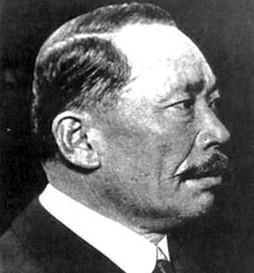 Lock Ah Tam
Murderer · United Kingdom · 1925
Lock Ah Tam was 54 when he killed his wife and two daughters. He had been a suc…
3 victims
Lock Ah Tam
Murderer · United Kingdom · 1925
Lock Ah Tam was 54 when he killed his wife and two daughters. He had been a suc…
3 victims
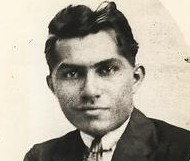 Buck Ruxton
Murderer · United Kingdom · 1935
Buck Ruxton (21 March 1899, Bombay – 12 May 1936, Manchester) was also known as…
2 victims
Buck Ruxton
Murderer · United Kingdom · 1935
Buck Ruxton (21 March 1899, Bombay – 12 May 1936, Manchester) was also known as…
2 victims
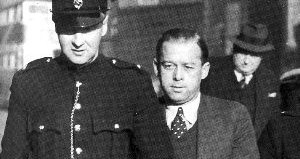 Walter Graham Rowland
Murderer · United Kingdom · 1934
Defendant: Walter Graham Rowland Age: 39 (labourer) Residence/Origin: from Mell…
2 victims
Walter Graham Rowland
Murderer · United Kingdom · 1934
Defendant: Walter Graham Rowland Age: 39 (labourer) Residence/Origin: from Mell…
2 victims
 Bobby Ray Hopkins
Murderer · USA · 1993
Bobby Ray Hopkins was convicted of capital murder and sentenced to death for ki…
2 victims
Bobby Ray Hopkins
Murderer · USA · 1993
Bobby Ray Hopkins was convicted of capital murder and sentenced to death for ki…
2 victims
 Leamon White
Murderer · USA · 1987
Leamon White was convicted of first-degree murder and sentenced to death by a M…
1 victim
Leamon White
Murderer · USA · 1987
Leamon White was convicted of first-degree murder and sentenced to death by a M…
1 victim
 Charles Carl Roberts
Mass murderer · USA · 2006
Charles Carl Roberts IV was an American milk truck driver who was involved in t…
5 victims
Charles Carl Roberts
Mass murderer · USA · 2006
Charles Carl Roberts IV was an American milk truck driver who was involved in t…
5 victims
 Willie Ray Williams
Murderer · USA · 1980
Willie Ray Williams was executed by lethal injection in Texas on January 31, 19…
1 victim
Willie Ray Williams
Murderer · USA · 1980
Willie Ray Williams was executed by lethal injection in Texas on January 31, 19…
1 victim
 Robert Streetman
Murderer · USA · 1982
Robert Streetman was executed by lethal injection in Texas on January 7, 1988.…
1 victim
Robert Streetman
Murderer · USA · 1982
Robert Streetman was executed by lethal injection in Texas on January 7, 1988.…
1 victim
- Gender
- male
- Country
- United Kingdom
- Location
- Southampton, Hampshire, England, United Kingdom
- Date of birth
- 1899
- Age at first offence
- 30
- Characteristics
- —
- Victim profile
- Vivian Messiter (male, 58)
- Method of murder
- Hitting with a hammer
- Date(s) of murder
- November 15, 1929
- Years active
- 1929
- Date of arrest
- —
- Status
-
Executed
Executed by hanging in Winchester Prison on 22nd April 1930
Overview
William Henry Podmore was found guilty of the murder of Vivian Messiter and was executed by hanging in Winchester Prison on 22nd April 1930.
Timeline
- 10 January 1929 — Two men found the decomposing, rat-bitten body of Vivian Messiter behind some boxes in a locked garage in Southampton.
- Fourteen months after the murder — Police deemed they had enough evidence to bring Podmore to trial on March 1930 at Winchester Assizes.
- March 1930 — Podmore was brought to trial on March 1930 at Winchester Assizes.
- 22 April 1930 — William Henry Podmore was hanged in Winchester Prison.
Background
Vivian Messiter was an agent for the Wolf's Head Oil Company. The garage in Southampton was used as a storeroom by the local agent of the Wolf's Head Oil Company. Vivian Messiter had been missing for nine weeks prior to the body’s discovery, and while police had checked the garage they did not pursue the matter thoroughly since they found it locked. A new oil company agent came to take over the garage, and when it was opened the body was discovered.
William Podmore was identified as William Henry Podmore, who was 29 years old, and a motor mechanic and petty thief. Podmore was known to police as wanted for a charge of fraud in Manchester.
The offence
The man’s body was found behind boxes in a locked garage in Southampton. The preliminary examination of the body revealed a puncture over the left eye, which led police to think Messiter had been shot. Further examination by Sir Bernard Spilsbury indicated that the real cause of death was multiple severe blunt force trauma to the skull, so much so that “it was fractured everywhere except on top”. Extensive blood splatter to the height of several feet was found at the crime scene, indicating that the man had been murdered in the same location.
A bloodstained hammer was found near the scene. Sir Bernard Spilsbury concluded that the hammer, wielded with great force, was the murder weapon. Spilsbury also found a hair consistent with that of the eyebrow hair of the dead man. The wounds on the victim were consistent with the hammer.
Investigation
Among papers found at the scene was a reply to an advertisement for local agents signed “William F. Thomas”.
Police discovered that a man named William F. Thomas had worked for a Wiltshire building contractor who had disappeared after allegedly absconding with a large amount of wage packets. Detectives went to the lodgings where “Mr. Thomas” had stayed before his disappearance. His departure was said to have been so hurried that he negligently left a lot of clues behind. From this, the police determined that “William Thomas” was an alias for William Henry Podmore.
Police suspicion fell on Podmore. He was initially brought in for questioning. As police still did not have enough information to support a murder charge, he was initially convicted for six months for the earlier charge of fraud.
A breakthrough came with a careful examination of a receipt book for oil sale commissions. Based on a study of indentations between the lines of a genuine receipt made by pencilled writing on the sheet above—which had been torn out—it was determined that Podmore had been reporting sales of oil to non-existent customers and collecting commissions on those sales. Police theorized that, upon learning of this, Messiter confronted Podmore about the swindle and Podmore, being aware of the Manchester charge, murdered him with the hammer.
The investigation also included forensic scientists’ continued search for evidence while Podmore was serving his sentence. A sales receipt book was found containing entries paying commission to W. F. Thomas for fictitious sales. While the top two pages had been torn out, forensic analysis revealed the writing on the page below. In the garage, a hammer had been found which had been used as the murder weapon, and an eyebrow hair was identified as belonging to Podmore. Public attention included the hair evidence, but the receipt book and other evidence were treated as more important.
Arrest
Podmore was apprehended in London. He was charged with an earlier fraud committed in Manchester because there was insufficient evidence to bring a murder charge at the time.
Trial
Podmore’s trial took place at Winchester Assizes in March 1930.
Public opinion was said to be overwhelmingly against Podmore because it was obvious that Messiter had been repeatedly battered with the hammer even when unconscious. During the trial, the hair evidence was played up by the media, while other parts of the police investigation were described as painstaking.
Of greater importance was the receipt book. Testimony included statements from two fellow prisoners of Podmore who stated that he had confessed in their presence. A jury at Winchester Assizes found Podmore guilty.
Sentencing
William Henry Podmore was sentenced to death by hanging and was executed.
Outcome
William Henry Podmore was found guilty and was hanged on 22 April 1930 despite some public outcry against the verdict.
Aftermath
The case was described as a controversial landmark British criminal case. It was described as involving a murder conviction based on a painstaking police investigation and careful forensic evaluation of the evidence.


Spotted an error, or have more information about this case?