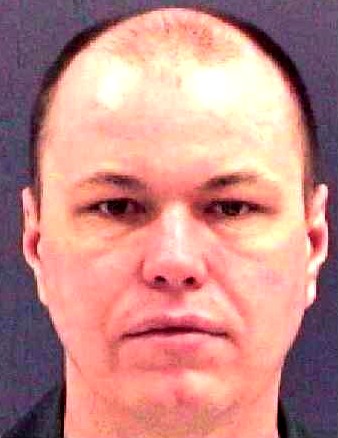
Virgil Presnell
Murderer Ervil LeBaron
Murderer · USA · 1972
Ervil Morrell LeBaron (1925 to August 16, 1981) was the leader of a polygamous…
35 victims
Ervil LeBaron
Murderer · USA · 1972
Ervil Morrell LeBaron (1925 to August 16, 1981) was the leader of a polygamous…
35 victims
 Brian Kevin Rosenfeld
Murderer · USA · 1985
Brian Kevin Rosenfeld Brian Kevin Rosenfeld was sentenced to three concurrent l…
23 victims
Brian Kevin Rosenfeld
Murderer · USA · 1985
Brian Kevin Rosenfeld Brian Kevin Rosenfeld was sentenced to three concurrent l…
23 victims
 Marvin Gray
Murderer · USA · 1975
Marvin Gray was convicted killer who claimed responsibility for 23 slayings and…
23 victims
Marvin Gray
Murderer · USA · 1975
Marvin Gray was convicted killer who claimed responsibility for 23 slayings and…
23 victims
 Yahweh ben Yahweh
Murderer · USA · 1980
Yahweh ben Yahweh was born and legally named Hulon Mitchell Jr. (October 27, 19…
23 victims
Yahweh ben Yahweh
Murderer · USA · 1980
Yahweh ben Yahweh was born and legally named Hulon Mitchell Jr. (October 27, 19…
23 victims
 Renuka Shinde
Murderer · India · 1990
Renuka Shinde was sentenced to death on June 29, 2001. The High Court upheld th…
9 victims
Renuka Shinde
Murderer · India · 1990
Renuka Shinde was sentenced to death on June 29, 2001. The High Court upheld th…
9 victims
 Karl LaGrand
Murderer · USA · 1982
Karl LaGrand was convicted of murder, attempted murder in the first degree, att…
1 victim
Karl LaGrand
Murderer · USA · 1982
Karl LaGrand was convicted of murder, attempted murder in the first degree, att…
1 victim
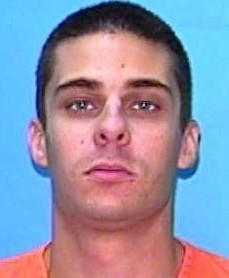 Jason Looney
Murderer · USA · 1997
Jason Looney was sentenced to death on February 18, 2000. His case was heard in…
2 victims
Jason Looney
Murderer · USA · 1997
Jason Looney was sentenced to death on February 18, 2000. His case was heard in…
2 victims
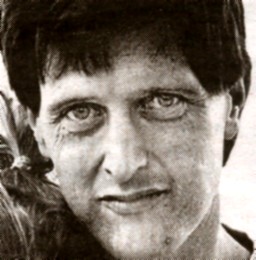 John Myles Sharpe
Murderer · Australia · 2004
John Myles Sharpe was born on 28 February 1967 in Mornington and grew up in tha…
2 victims
John Myles Sharpe
Murderer · Australia · 2004
John Myles Sharpe was born on 28 February 1967 in Mornington and grew up in tha…
2 victims
 Christopher Wayne Pritchard
Murderer · USA · 1988
Christopher “Chris” W. Pritchard (born November 25, 1968) was an American man c…
1 victim
Christopher Wayne Pritchard
Murderer · USA · 1988
Christopher “Chris” W. Pritchard (born November 25, 1968) was an American man c…
1 victim
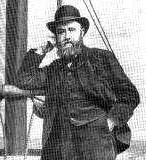 Thomas Dudley
Homicide · On the high seas · 1884
Thomas Dudley was sentenced to the statutory death penalty with a recommendatio…
1 victim
Thomas Dudley
Homicide · On the high seas · 1884
Thomas Dudley was sentenced to the statutory death penalty with a recommendatio…
1 victim
- Gender
- male
- Country
- USA
- Location
- Cobb County, Georgia, USA
- Date of birth
- 1953
- Age at first offence
- 23
- Characteristics
- rape, kidnapping, torture, domestic violence
- Victim profile
- Lori Ann Smith (female, 8)
- Method of murder
- Drowning
- Date(s) of murder
- May 4, 1976
- Years active
- 1976
- Date of arrest
- —
- Status
-
Sentenced to death
Sentenced to death on October 1976
Case identification
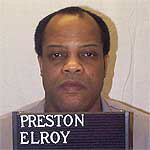
Virgil Delano Presnell Jr. was convicted in 1976 and was sentenced to death in October 1976 in Cobb County. In 1999, he was retried for resentencing and the jury recommended a death sentence again after finding beyond a reasonable doubt that he committed the murder while engaged in the commission of kidnapping with bodily injury and that the murder was outrageously or wantonly vile, horrible, or inhuman in that it involved torture and depravity of mind.
Timeline
- May 4, 1976 — Presnell kidnapped two schoolgirls.
- April 23, 1976 — Presnell attempted to abduct a ten-year-old girl in Clayton County.
- May 3, 1976 — Presnell staked out an elementary school in Cobb County and observed a ten-year-old girl walking home on a wooded trail.
- October 1976 — Presnell was sentenced to death in Cobb County.
- 1992 — Presnell’s death sentence was vacated during Federal habeas corpus proceedings.
- 1999 — A re-sentencing trial was held; the jury recommended a death sentence.
- February 22, 1999 — Voir dire in the re-sentencing trial commenced.
- March 8, 1999 — The jury was selected.
- March 16, 1999 — The jury fixed its sentence at death.
- April 1, 1999 — Presnell’s motion for a new trial was filed.
- June 20, 1999 — Presnell’s motion for a new trial was amended.
- November 3, 2000 — The trial court denied the amended motion for a new trial.
- November 30, 2000 — Presnell filed a notice of appeal.
- January 9, 2001 — The case was docketed to this Court.
- April 16, 2001 — The case was orally argued.
Background
Presnell lived with his mother in an apartment. Two days after his arrest and confession, police went to the apartment to look for the gun Presnell said he had possessed and that the older girl had noticed in his Duster when he dropped her off. The search of Presnell’s bedroom was consented to by his mother, and it revealed a handgun and child pornography depicting young girls.
The offence
Clayton County attempt
On April 23, 1976, Presnell attempted to abduct a ten-year-old girl in Clayton County as she was walking home from school on a wooded trail. Although he grabbed her and threatened her with a knife, the girl managed to break free and escape.
Cobb County kidnapping and murder
On May 3, 1976, Presnell staked out an elementary school in Cobb County and observed a ten-year-old girl walking home on a wooded trail. He returned the following day and waited on the trail. In his car, he had a rug and a jar of lubricant.
When the ten-year-old girl came walking down the trail with her eight-year-old friend, Lori Ann Smith, Presnell abducted both girls. He taped their mouths shut and threatened to kill them if they did not cooperate; he also said he had a gun. They got into Presnell’s blue Plymouth Duster. While Presnell was driving, he forced the older girl to orally sodomize him and inserted his finger into her vagina.
They drove to a secluded area and Presnell walked the children into the woods. He carried the rug and the jar of lubricant. He made both girls undress and he raped the older girl on the rug. Her vagina was torn during the rape and began bleeding.
Presnell then said that he was going to take Lori Ann back to his car and that the older girl should wait for him. On the way back to the car, Lori Ann tried to run away, but Presnell caught her and forced her face underwater in a creek, drowning her. The medical examiner testified that there was water, sand and plant matter in her lungs and stomach and that it would have taken one to several minutes for her to die. She had bruises on her neck and a bruise on her back from where Presnell apparently placed his knee.
Presnell returned to the older girl and again forced her to orally sodomize him. He then locked her in his car trunk and began driving, but a tire went flat so he dropped her off in another wooded area after forcing her to commit oral sodomy again. Although Presnell told her he would return, the older girl heard the sound of a nearby gas station and walked there. She later gave police a description of Presnell and his blue Duster and stated that his tire was flat.
Shortly thereafter the police spotted Presnell changing a tire on his blue Duster at his apartment complex not far from where he dropped off the older girl. Presnell initially denied everything but later admitted that he knew the location of the missing girl and led the police to Lori Ann’s body. He also confessed.
Investigation
Police searched Presnell’s bedroom after his confession and uncovered a handgun and child pornography depicting young girls. Police also used the information Presnell provided to lead them to Lori Ann’s body.
Arrest and confession
After the older girl described Presnell and his blue Duster and police located him changing a tire, Presnell initially denied everything but later admitted that he knew the location of the missing girl and led the police to Lori Ann’s body. He also confessed.
Trial
Initial trial and convictions (1976)
Before Judge Staley, Presnell was convicted in 1976 of malice murder, kidnapping with bodily injury and other crimes and was sentenced to death for the murder.
Retrial/resentencing trial (1999)
Presnell v. The State appears as: PRESNELL v. THE STATE. S01P0590. (274 Ga. 246) (551 SE2d 723) (2001) HUNSTEIN, Justice. Murder. Cobb Superior Court.
The evidence adduced at the re-sentencing trial authorized the jury to find that on April 23, 1976, Presnell attempted to abduct a ten-year-old girl in Clayton County as she was walking home from school on a wooded trail, and that on May 3 and the following day in Cobb County Presnell abducted both girls, taped their mouths, threatened to kill them and had them undress, forced the older girl to engage in oral sodomy and inserted his finger into her vagina, raped the older girl, drowned Lori Ann Smith in a creek, and forced further oral sodomy on the older girl before locking her in his car trunk and abandoning her after a tire went flat.
The jury recommended a death sentence after finding beyond a reasonable doubt that Presnell committed the murder while engaged in the commission of kidnapping with bodily injury and that the murder was outrageously or wantonly vile, horrible, or inhuman in that it involved torture and depravity of mind. OCGA 17-10-30 (b) (2), (7).
Jury selection issues and rulings
Presnell challenged the composition of the Cobb County Board of Jury Commissioners, which authorized Presnell’s jury pool, on the basis that the board was composed of only five members instead of the six members required by OCGA 15-12-20. The court found no reversible error because OCGA 15-12-20 (c) allows each county to establish a lesser number of jury commissioners by local rule, and Cobb County had promulgated such a rule requiring only five jury commissioners.
Presnell also complained about prospective jurors excused for cause due to inability to vote for death:
- Prospective jurors Brennan, Kidwell, Chun, Green, Fuller, and Allen were excused because they could not vote to impose a death sentence under any circumstances.
- Prospective juror Kidwell stated he would pick life and that he could never vote for the death penalty in any fact situation he could think of, and the court excused him.
- Prospective juror Morton was excused after stating she did not think she could follow the judge’s instructions exclusively, that she would follow her own criteria instead of the law as instructed, and that she would have a hard time excluding her own parameters; the court found she was substantially impaired in her ability to perform her juror duties.
- Prospective juror Vakilzadeh was excused because he stated he could not decide the case due to the case being 23 years old and because he insisted that he could not sit as a juror without having heard evidence from the original trial; he said he could not judge because he did not have evidence from everything from A to Z.
Presnell complained that the court refused to excuse ten prospective jurors—Fowler, Feusting, Stanek, Croft, Kropacek, Cole, Payne, Sharp, Adair, and Gaines—for alleged inability to consider a life sentence. The court found:
- Prospective juror Fowler could vote for a life sentence and set aside past life experience.
- Prospective jurors Feusting, Stanek, Croft, Kropacek, Cole, Payne, and Sharp indicated they could vote for a life sentence.
- Prospective juror Adair stated a death sentence was the only appropriate punishment for the death of a child, but she also stated she could vote for a life sentence and said she could keep an open mind.
- Prospective juror Gaines stated she could vote for a life sentence only if it was life without parole, but after explanation she indicated she could set aside her reservations and consider both possible sentences as instructed; the court did not find an abuse of discretion.
Because life without parole was not a sentencing option for Presnell, the court did not err by refusing to allow him to question prospective jurors about parole opinions.
The court found no error with the jury selection and no error with the scope of voir dire, describing it as broad enough to ascertain fairness and impartiality of prospective jurors.
Evidentiary and procedural rulings
Presnell moved in limine regarding the State’s use of the OCGA 17-10-30 (b) (7) aggravating circumstance on grounds it was unconstitutionally vague; the court denied it.
Motion to suppress gun and child pornography books
Presnell challenged suppression of the gun and books of child pornography found in his bedroom. Police entered based on his mother’s consent. The trial court admitted the gun and child pornography books, finding evidence of common control and authority over his bedroom and that his mother consented.
Search warrant challenge for Duster
Presnell asserted that the magistrate who issued the search warrant for his Duster in 1976 was not neutral and detached due to alleged pecuniary interest. The court found no evidence supporting this assertion and admitted evidence seized from his car, finding the search warrant facially valid and supported by probable cause.
Oath ceremony Bible issue
Presnell claimed error because jurors placed their left hands on the Bible while being sworn in as jurors. He did not object, and the issue was treated as waived. The court also found there was no reference to divine law or the contents of the Bible during trial.
State’s allegation of aggravating circumstance
The State alleged and proved the OCGA 17-10-30 (b) (7) aggravating circumstance at the 1999 trial even if it was not alleged at the 1976 trial.
Radiant Identities book
Presnell challenged admission of a book titled Radiant Identities by Jock Sturges containing photographs of nude children, which the State claimed he had ordered in 1996 from his prison cell. The court found no reversible error because independent evidence established the facts sought to be proved by the book itself, including that Presnell was upset about rejection of Radiant Identities and sent a letter to the warden requesting prison rules and guidelines governing receipt of materials containing pictures of nude children. The defense did not dispute that Presnell continued to be a pedophile and that Radiant Identities was a type of book to which a pedophile would be attracted.
Evidence regarding prior convictions and arrests
Presnell asserted error in the State’s introduction of improper evidence regarding his 1976 Florida conviction for contributing to the delinquency of a minor and numerous Georgia arrests and convictions for motor vehicle thefts in the early 1970s. Documentary evidence of these convictions and indictments was not presented to the jury but placed only in the record so the State could demonstrate it had a good faith basis for asking mitigation witnesses about their knowledge of Presnell’s criminal history.
Indictment redaction argument (rape charge)
Presnell argued that an indictment arising out of his crimes against Lori Ann Smith and the surviving victim should have been redacted to remove the rape charge because he was convicted of only statutory rape. The court found that the 1976 jury convicted Presnell of rape without specifying whether it was forcible rape or statutory rape, and this Court affirmed the conviction with direction that the trial court sentence the defendant for the crime of statutory rape. It also found abundant evidence that Presnell raped the older girl and held that Presnell showed no harm from introduction of the indictment reflecting the rape charge.
Crime scene and photographs
The crime scene and pre-autopsy photographs of the murder victim were admitted.
Prison records and confidentiality
Presnell asserted error in admission of prison records without first having them declassified as confidential and privileged state secrets under OCGA 42-5-36. The court concluded that release of prison records for use at trial was not improper because the prosecutor subpoenaed the records in compliance with OCGA 42-5-36 (c), and there was a sworn certificate authenticating the prison records signed by the assistant director of legal services for the Department of Corrections stating that OCGA 42-5-36 had been complied with.
Victim-impact evidence
Presnell challenged victim-impact evidence from several witnesses. The court found three witnesses—the surviving victim, her mother, and the doctor who treated the surviving victim’s vaginal injuries—were not victim-impact witnesses and testified solely as fact witnesses about the crimes, search for the missing girls, and injuries to the older girl. It also found that four victim-impact witnesses had proposed testimony reviewed before trial, and their trial testimony did not exceed acceptable boundaries for this kind of testimony.
Mitigation evidence
Presnell presented mitigation testimony from his aunt, who was only seven years older than Presnell and who had grown up with him. She testified about poverty and rootlessness experienced by Presnell’s family and their difficult childhood. On cross-examination, the State was permitted to question her about her lack of a criminal history and the lack of a criminal history among members of her family who experienced similar conditions as Presnell.
Juror remark in hotel lobby
As the jury was returning to their hotel the night before closing arguments, a man walking past them in the hotel lobby said "Fry him" to some of the jurors. The bailiff accompanying the jurors, Major Palmer, detained the man and questioned him. Major Palmer determined, inter alia, that the man was visiting Atlanta from Nevada, that he was completely unfamiliar with Presnell’s case, and that he did not know the jury was involved with a death penalty case. The man had seen their juror badges and thought the remark would be humorous. The next day, Major Palmer presented his report to the court, and the trial judge questioned each juror individually and determined that none of the jurors would be affected by the remark during deliberations. Presnell did not object to the procedure or move for a mistrial.
Sentencing
The re-sentencing jury recommended death after findings under OCGA 17-10-30 (b) (2) and (7), including torture and depravity of mind. The jury fixed its sentence at death on March 16, 1999.
The court found the death sentence was not imposed under the influence of passion, prejudice, or any other arbitrary factor under OCGA 17-10-35 (c) (1). It also found the death sentence was not excessive or disproportionate under OCGA 17-10-35 (c) (3), referencing similar cases involving murder during a kidnapping with bodily injury or the OCGA 17-10-30 (b) (7) aggravating circumstance.
Appeals
Presnell appealed from the re-sentencing verdict.
The court addressed several appellate claims, including jury selection issues (composition of jury commissioners, excusal of prospective jurors for cause, refusal to excuse other prospective jurors), voir dire scope, challenges to use of aggravating circumstance, suppression motions, Bible oath waiver, admissibility of the gun and pornography, challenges to search warrant neutrality, parole questioning, denial of motion in limine about vagueness of OCGA 17-10-30 (b) (7), evidentiary rulings on the Radiant Identities book, prior bad acts, indictment redaction, photographs, prison records release, and victim-impact evidence, as well as a closing argument challenge that was procedurally defaulted due to lack of objection.
Outcome
The appellate court found no reversible error with the re-sentencing trial.
Other details
Prior appellate history and federal habeas
Presnell v. State, 241 Ga. 49 (243 SE2d 496) (1978), reversed and remanded as to sentence. Presnell v. Georgia, 439 U. S. 14 (99 SC 235, 58 LE2d 207) (1978), opinion vacated in part and death sentence upheld. Presnell v. State, 243 Ga. 131 (252 SE2d 625) (1979).
In 1992, Presnell’s death sentence was vacated during Federal habeas corpus proceedings (Presnell v. Zant, 959 F2d 1524 (11th Cir. 1992)). A re-sentencing trial was held in 1999.
Parties and attorneys listed
Patrick H. Head, District Attorney, Maria B. Golick, Dana J. Norman, Russell J. Parker, Jack E. Mallard, Assistant District Attorneys, Thurbert E. Baker, Attorney General, Susan V. Boleyn, Senior Assistant Attorney General, Beth A. Burton, Assistant Attorney General were listed for appellee.
Closing argument and closing instructions issues
The appellate discussion included that Presnell did not object to the prosecutor’s closing argument, so relief required reasonable probability of changing the result. It found no error that overcame procedural default, stating it was not improper to argue Presnell’s future dangerousness. It also discussed the prosecutor’s focus on what was going through Lori Ann’s mind when she was abducted, made to undress, watched her friend being raped, and was being chased and drowned, and said it tied her mental state to Presnell’s depravity of mind. It also addressed that the prosecutor used an analogy of how a plastic cup will split if you try to push a can through it as an illustration of the injuries sustained by the older girl during the rape. It also addressed argument that Presnell showed no mercy and did not display remorse during the crimes or while confessing.
The court stated there was no error with the jury charge, including that the trial court was not required to instruct on residual doubt or any other specific mitigating circumstance as long as it charged on mitigating evidence in general. It also found no error in refusing to charge on electrocution as Georgia’s method of execution, refusing to charge on life without parole, and instructing that the jury could return a life sentence regardless of the existence or non-existence of mitigating circumstances.
Jurisdictional statute references
OCGA 17-10-30 (b) (2), (7), OCGA 17-10-35 (c) (1), (c) (3), OCGA 17-10-16, OCGA 17-10-31.1 (parole context comparisons), OCGA 15-12-20, OCGA 42-5-36, OCGA 24-9-64, and OCGA 42-5-36 (c) and (d) were cited in the appellate discussion.
Quotation included verbatim
As the jury returned to their hotel the night before closing arguments, a man walking past them in the hotel lobby said: "Fry him" to some of the jurors.
Spotted an error, or have more information about this case?