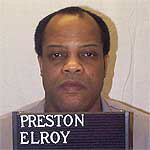
Elroy Preston
Murderer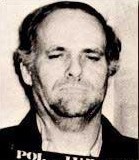 Ervil LeBaron
Murderer · USA · 1972
Ervil Morrell LeBaron (1925 to August 16, 1981) was the leader of a polygamous…
35 victims
Ervil LeBaron
Murderer · USA · 1972
Ervil Morrell LeBaron (1925 to August 16, 1981) was the leader of a polygamous…
35 victims
 Brian Kevin Rosenfeld
Murderer · USA · 1985
Brian Kevin Rosenfeld Brian Kevin Rosenfeld was sentenced to three concurrent l…
23 victims
Brian Kevin Rosenfeld
Murderer · USA · 1985
Brian Kevin Rosenfeld Brian Kevin Rosenfeld was sentenced to three concurrent l…
23 victims
 Marvin Gray
Murderer · USA · 1975
Marvin Gray was convicted killer who claimed responsibility for 23 slayings and…
23 victims
Marvin Gray
Murderer · USA · 1975
Marvin Gray was convicted killer who claimed responsibility for 23 slayings and…
23 victims
 Yahweh ben Yahweh
Murderer · USA · 1980
Yahweh ben Yahweh was born and legally named Hulon Mitchell Jr. (October 27, 19…
23 victims
Yahweh ben Yahweh
Murderer · USA · 1980
Yahweh ben Yahweh was born and legally named Hulon Mitchell Jr. (October 27, 19…
23 victims
 Zdenek Hrbac
Murderer · Germany · 2007
Zdenek Hrbac Zdenek Hrbac was sentenced to life in prison on December 15, 2007.…
1 victim
Zdenek Hrbac
Murderer · Germany · 2007
Zdenek Hrbac Zdenek Hrbac was sentenced to life in prison on December 15, 2007.…
1 victim
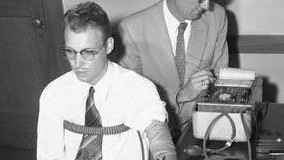 Burton Abbott
Murderer · USA · 1955
28 April 1955 — Stephanie Bryan, a 14-year-old girl, did not come home from sch…
1 victim
Burton Abbott
Murderer · USA · 1955
28 April 1955 — Stephanie Bryan, a 14-year-old girl, did not come home from sch…
1 victim
 Brittany Norwood
Murderer · USA · 2011
Brittany Norwood was a co-worker of Jayna Murray at a Lululemon Athletica store…
1 victim
Brittany Norwood
Murderer · USA · 2011
Brittany Norwood was a co-worker of Jayna Murray at a Lululemon Athletica store…
1 victim
 Allan Grimson
Serial killer · United Kingdom · 1986
December 1997 — Nicholas Wright met Allan Grimson, who had given him a telephon…
3 victims
Allan Grimson
Serial killer · United Kingdom · 1986
December 1997 — Nicholas Wright met Allan Grimson, who had given him a telephon…
3 victims
 Isabella Guzman
Murderer · USA · 2013
Isabella Guzman was an 18-year-old who lived in an Aurora home with her mother,…
1 victim
Isabella Guzman
Murderer · USA · 2013
Isabella Guzman was an 18-year-old who lived in an Aurora home with her mother,…
1 victim
- Gender
- male
- Country
- USA
- Location
- St. Louis City County, Missouri, USA
- Date of birth
- December 30, 1954
- Age at first offence
- 26
- Characteristics
- alcohol, domestic dispute
- Victim profile
- Willie "Pee Wee" Richardson and Betty Klein
- Method of murder
- St abbing with knife
- Date(s) of murder
- September 21, 1980
- Years active
- 1980
- Date of arrest
- —
- Status
-
Sentenced to death
Sentenced to death on July 2, 1982
Case information
Elroy Preston was convicted of capital murder for the killing of Willie “Pee Wee” Richardson and was sentenced to death. He was also convicted of second degree murder for the killing of Betty Klein and received a consecutive life sentence.
The case included review by the Missouri Supreme Court and subsequent federal habeas proceedings that were affirmed.
Timeline
- September 20, 1980 — After a day of drinking and arguing at the home of Ervin Preston, Willie “Pee Wee” Richardson and Betty Klein went upstairs to bed while Ervin, his brother Elroy Preston, and Elroy’s girlfriend, Sherry Brown, remained downstairs.
- September 21, 1980 (early morning hours) — Elroy Preston went upstairs, ordered Richardson and Klein to go back downstairs, and then announced he would kill them after he removed his clothes.
- July 2, 1982 — Elroy Preston was sentenced to death.
- 1984 — The Missouri Supreme Court case was cited as State of Missouri vs. Elroy Preston 673 S.W.2d 1 (Mo. banc 1984), with convictions affirmed on direct appeal.
- January 25, 1993 — The Missouri Supreme Court summarily denied Preston’s petition for a writ of habeas corpus in connection with a Missouri Supreme Court Rule 91 habeas petition, stating: “Now at this day, on consideration of a petition for writ of habeas corpus to the said respondent, it is ordered by the court [h]ere that the said petition be, and the same is hereby denied.”
- 1995 — A second Rule 91 habeas petition was filed; it was denied by the Missouri Supreme Court stating that all claims presented were procedurally defaulted.
- September 10, 1996 — The United States Court of Appeals for the Eighth Circuit case was submitted.
- November 14, 1996 — The Eighth Circuit affirmed the district court’s denial of Preston’s 28 U.S.C. Section 2254 petition.
- January 29, 1997 — Rehearing and suggestion for rehearing en banc was denied.
Background
Elroy Preston had been living temporarily with his brother Ervin Preston in the downstairs portion of his house. Ervin was a paraplegic confined to a wheelchair.
Pee Wee Richardson and Betty Klien lived together upstairs. All were present in Ervin’s quarters for an evening of heavy drinking.
During the course of the night, frequent alcohol-related verbal disputes were exchanged between the three men over petty issues, including who was to sleep where and whether some chicken which had been purchased was to be shared with Pee Wee Richardson.
Pee Wee and Betty eventually went upstairs to bed, with Elroy Preston from time to time interrupting their slumber with trips to their room.
Angry for a continuing assortment of reasons, Preston made a final trip upstairs and ordered Pee Wee and Betty to come back downstairs. In the presence of Ervin and Sherry Brown (Preston’s girlfriend), Preston announced to Pee Wee and Betty that he would kill them just as soon as he removed his clothes. The idea behind the clothes removal was to keep splattered blood off of them.
The offence
In the presence of Ervin and Sherry Brown, Preston announced that he would kill Pee Wee Richardson and Betty Klein after he removed his clothes. He removed his clothes and proceeded to stab and critically wound Pee Wee with a hunting knife.
Then, with a single swipe of the knife, Preston severed Betty’s spinal cord at the neck, killing her instantly. After killing her, he returned his attention to Pee Wee and stabbed him several more times in the chest and abdomen. Pee Wee died as a result of five stab wounds to the body, face and hands, the latter coming as he tried to ward off the lethal blows, and he also absorbed four incised wounds.
After the killings, Preston took some left over fried chicken and dipped it in the victims’ blood and ate it with relish, all the while aiming deprecatory remarks at his stone dead victims.
With this bit of action completed, Preston and Sherry Brown dragged the bodies to a back alley and left them there to be discovered by the neighbors. Preston and Ms. Brown then made some effort to clean the blood spattered house.
Investigation
No investigation-specific details beyond the described circumstances at the home were provided in the case summary.
Arrest
No arrest-specific details were provided in the case summary.
Trial
Elroy Preston was convicted of the capital murder of Pee Wee Richardson and sentenced to death.
He was also convicted of second degree murder for the killing of Betty Klein and given a consecutive life sentence.
Sentencing
Elroy Preston was sentenced to death on July 2, 1982.
He was also sentenced to a consecutive life term for second degree murder in connection with the killing of Betty Klein.
Appeals
Direct appeal and state post-conviction proceedings
His convictions were affirmed on direct appeal in State v. Preston, 673 S.W.2d 1 (Mo.).
The denial of his motion for post-conviction relief was also affirmed on appeal in Preston v. State, 736 S.W.2d 53 (Mo. Ct. App. 1987), cert. denied, 484 U.S. 1020 (1988).
The Missouri Supreme Court subsequently denied Preston’s petition for a writ of habeas corpus and his motion to recall the mandate in State ex rel. Preston v. Delo, No. 75519 (Mo. 1993) (unpublished) (habeas petition) and State v. Preston, No. 64186 (Mo. 1993) (unpublished) (motion to recall the mandate).
Federal habeas appeal (28 U.S.C. Section 2254)
The federal case was captioned Elroy Preston, Appellant, v. Paul K. Delo, Warden, Appellee, United States Court of Appeals, Eighth Circuit (No. 95-2051 as referenced by the appeal description). The submission date was September 10, 1996, and the decision date was November 14, 1996.
The court affirmed the district court’s denial of Preston’s 28 U.S.C. Section 2254 petition.
Preston alleged more than 250 grounds for relief in his section 2254 petition filed in the district court. The district court concluded that the vast majority of Preston’s claims were procedurally barred and rejected remaining claims on their merits.
Preston’s primary argument on appeal was that the district court erroneously ruled that his Brady claim was procedurally barred.
Brady claim regarding Ervin Preston’s medical records
Preston argued that the prosecutor prevented him from reviewing and presenting Ervin Preston’s medical records at trial.
Preston argued that the records showed that Ervin was treated in 1974 for severe alcoholism and suggested that he suffered from auditory hallucinations, blackouts, and memory problems.
Preston argued that the records were in court on the day of trial, subpoenaed by Preston, but the trial court ruled they were inadmissible because of remoteness in time and denied Preston access to the records.
Preston argued that these records could have impeached Ervin’s ability to clearly discern and to recall, after a day of drinking, whether Preston was sober and knew what he was doing at the time of the murders, as Ervin so testified.
The opinion stated that during direct appeal and state post-conviction proceedings, none of Preston’s attorneys ever obtained and reviewed these records, and that Preston’s counsel in the habeas action was the first to do so.
Preston first presented his Brady claim to the Missouri Supreme Court in a Missouri Supreme Court Rule 91 habeas petition in December 1992. On January 25, 1993, the Missouri Supreme Court summarily denied the petition in the quoted order:
“Now at this day, on consideration of a petition for writ of habeas corpus to the said respondent, it is ordered by the court [h]ere that the said petition be, and the same is hereby denied.”
Based on that order, the district court ruled that Preston procedurally defaulted his Brady claim in the state courts.
Preston argued that his claim was not procedurally barred because the Missouri Supreme Court reviewed the merits of his Brady claim, and he gave two reasons: that roughly four weeks elapsed between filing and denial, and that his claim of newly discovered evidence was a proper basis for a state habeas claim.
The court stated it declined to construe an unexplained Rule 91 denial as opening up the merits of previously defaulted federal issues, relying on Byrd v. Delo, 942 F.2d 1226 (8th Cir. 1991), and subsequent cases including Reese v. Delo, Charron v. Gammon, Anderson v. White, and others.
The opinion stated that to the extent meaning could be read into the Missouri Supreme Court’s order, the summary denial rested on Missouri’s procedural rules. It further stated that while a claim of newly discovered evidence is cognizable in a Rule 91 petition, Missouri required that a petitioner establish the grounds were not known while proceeding on normal post-conviction relief.
The opinion stated that Preston argued Ervin’s medical records were newly discovered and that the prosecutor misled Preston’s counsel by misrepresenting the contents of the records as relating only to Ervin’s diabetes. The opinion stated that the trial transcript showed Preston’s attorney knew that the medical records related to Ervin’s alcoholism and possible psychiatric problems.
The opinion stated that the basis of Preston’s Brady claim was known to him from the day of his trial and that there was no evidence in the record that it could not have been further investigated and raised in his direct appeal or post-conviction relief motion.
The court stated Preston could lift the procedural bar if he showed cause and actual prejudice under Coleman v. Thompson, and the court addressed prejudice.
The opinion concluded that the medical records would have had only marginal impeachment value, noting that the records were remote in time and there was no evidence that the problems for which Ervin was treated reoccurred between 1974 and the time of the killings in 1980.
The opinion stated that Preston’s trial counsel attempted to impeach Ervin by questioning him about his alcoholism, his drinking on the day of the murders, his vague and internally inconsistent testimony, and serious conflicts between his testimony and that of Sherry Brown.
The opinion also stated that the State did not rely solely on Ervin’s statements that Preston was sober and knew what he was doing to prove Preston’s mental capacity to commit capital murder.
The opinion concluded that Preston had failed to demonstrate actual prejudice related to inability to use Ervin’s medical records at trial or counsel’s failure to raise the issue on appeal.
It also stated the district court did not abuse its discretion in declining to hold an evidentiary hearing on the procedural bar issue or on the merits.
Prosecutorial misconduct claims
Preston alleged five instances of prosecutorial misconduct violating his right to due process stemming from the prosecutor’s closing arguments at the guilt and penalty phases.
The opinion stated that four of the five claims were defaulted in state court because they were not presented on direct appeal or developed in collateral proceedings, referencing Nave v. Delo.
Preston argued that the Missouri Supreme Court reviewed the merits of these claims in considering his 1992 Rule 91 habeas petition, and the Eighth Circuit rejected that argument for the same reasons as the Brady claim.
The opinion stated Preston failed to show cause and actual prejudice, making the four claims procedurally barred.
The opinion stated that the only claim preserved for review stemmed from the prosecutor’s penalty-phase closing argument, quoting the challenged statement verbatim:
“You know, recently, in New York, Norman [Mailer's] protege, after being paroled for murder . . . murdering another individual . . . and the -- the photograph of the victim in that particular case, though not particularly eloquent, after the defendant was again sentenced, said, you know, this was in New York, he said, people of New York, people of New York, what do you do at the end of the day with the garbage that you have accumulated? . . . You throw it out. You don't take it home and put it in your refrigerator.”
The opinion stated Preston argued that the reference to a paroled murderer who killed again, combined with statements in his procedurally defaulted claims, “so frightened and inflamed the jury that a reasoned and responsible determination of the sentence to be imposed was impossible.”
The opinion stated it considered only the specific statement quoted above and not the defaulted statements because the prosecutor’s statement stood on its own. It compared the case to Miller v. Lockhart, where the Eighth Circuit had considered the prosecutor’s entire penalty-phase closing argument because it created an interwoven theme.
The opinion described the factors used to determine whether an improper closing argument at the penalty phase rose to the level of a due process violation, citing Antwine v. Delo and Miller v. Lockhart, and then explained the approach of examining the totality of the circumstances to determine a reasonable probability of affecting sentencing.
The opinion stated it found there was no reasonable probability that the statement more than minimally affected the outcome of the sentencing phase, and that the comment did not “so infect[] the [sentencing phase] with unfairness as to make the resulting [sentence] a denial of due process,” quoting Darden v. Wainwright and citing Six v. Delo.
The opinion stated Preston objected only to the reference to Norman Mailer’s protege. It stated that reference did not equate with comparisons between the defendant and notorious mass murderers in Newlon, and that it was a lead-in for the prosecutor’s argument about throwing away garbage. The opinion stated that the prosecutor’s garbage comment was mean-spirited and unnecessary and that the prosecutor should have confined himself to arguing facts and aggravating circumstances.
It nonetheless concluded the challenged reference did not make the sentencing phase fundamentally unfair or its result unreliable.
Ineffective assistance of counsel claims
Preston argued that trial counsel was ineffective in several respects, and the opinion stated these were rejected by the district court.
The opinion described the governing standard under Strickland v. Washington and stated it would not reach prejudice if it found counsel did not perform deficiently.
The opinion considered multiple ineffective assistance claims, including:
Failure to present information to psychiatrists and the jury about PCP use The opinion stated Missouri courts rejected this claim, finding evidence supported that Preston did not tell counsel about his drug use, counsel could not have independently discovered such drug use, and Preston denied drug use to psychiatrists. The opinion described findings that Sherry Brown did not disclose possible marijuana and PCP use to Preston’s counsel until the week before the post-conviction relief hearing. It also stated Preston was unsure whether he had actually used PCP on the day of the murders and testified twice that he had not told psychiatrists or his own lawyers that he had used PCP. The opinion stated that both psychiatrists retained by Preston denied knowledge of drug use and that they stated Preston affirmatively denied using drugs. The opinion concluded counsel did not perform deficiently regarding the PCP issue.
Failure to inform Preston of the right to testify and preventing testimony The opinion stated that post-conviction proceedings rejected these claims. It stated that the hearing transcript showed both of Preston’s attorneys discussed his right to testify with him. It stated Preston admitted he knew he had a right to testify at the penalty phase and could have told the judge that he wanted to do so. It stated the record did not indicate that counsel prevented him.
Failure to present any evidence at the penalty phase The opinion stated Preston argued counsel should have presented his testimony, family member testimony, and testimony of mental health experts. The opinion stated counsel’s decision not to present any evidence at the sentencing phase was not lightly made and there was no per se rule that failure to present constitutes ineffective assistance. It concluded counsel’s decision was the product of reasonable investigation and trial strategy.
The opinion named Peter Stragand as the attorney responsible for presenting Preston’s penalty-phase defense. It stated Stragand testified he did not put Preston on as a witness because he thought Preston was “too quiet” and would be a bad witness, and that Stragand did not think the jury disliked Preston or had a “bad feeling towards [ Preston ] as a person.” It stated Stragand testified he did not call Sherry Brown because she had already testified twice in the guilt phase and he did not think she would be helpful in the penalty phase.
The opinion stated Stragand’s decisions were strategic choices based on a reasonable evaluation that Preston and Brown would not have been effective witnesses.
The opinion described family members being contacted before trial and stated that Stragand was aware of Preston’s history of violence toward family members, including that Preston had been abusive toward his wife, had damaged his mother’s home, and had kicked the windows out of his father’s car. It also stated Preston’s mother had kicked him out of her house shortly before the murders out of fear Preston would harm family members. The opinion stated Stragand’s investigation was not inadequate and counsel could reasonably have concluded family members would not be effective witnesses and might introduce harmful facts.
It also stated the record did not reveal what Preston’s family members would have testified to, so there was no basis to find the judgment erroneous.
For mental health experts, the opinion stated that both of Preston’s attorneys testified they planned to call two mental health experts who had examined Preston. One of Preston’s doctors diagnosed Preston as suffering from alcohol amnestic disorder and the opinion stated that this would impair his ability to willfully and deliberately take some actions, while not preventing him from knowing right from wrong. It stated the doctors agreed there was some evidence of mental abnormality or impairment related to alcohol use. The opinion described Stragand’s informed decision, after deliberation and consultation, not to present the doctors’ testimony because the State had two doctors who concluded Preston had no mental disease or defect, nor any mental impairment at the time of the crime. The opinion stated Stragand testified that calling Preston’s doctors would subject their opinions to cross-examination revealing Preston’s prior history of violence toward family members and Sherry Brown, claims about memory and framing, prior violent criminal history, past violence toward persons and property, and history of alcohol-related blackouts and outbursts of temper. It concluded that counsel could reasonably decide not to present potentially helpful mitigating evidence if it would result in introduction of damaging evidence.
Other details
The Eighth Circuit opinion included footnotes describing the record and procedure:
- It referred to a second Rule 91 habeas petition filed in 1995 and stated the Missouri Supreme Court denied it stating all claims presented were procedurally defaulted in State ex rel. Preston v. Delo, No. 77812 (Mo. 1995) (unpublished).
- It stated Preston filed 28 U.S.C. Section 2254 petition and alleged more than 250 grounds.
- It included discussion of the Antiterrorism and Effective Death Penalty Act of 1996 and whether amendments to section 2254 applied.
- It contained a recitation of the State’s reliance on facts of the crime, including that after arguing with his brother about a matter related to the two victims, Preston went upstairs, got the victims out of bed, brought them downstairs, cut the wire to the telephone, briefly argued with them, told them he would kill them after he undressed, undressed and killed them, twice stabbing Richardson multiple times, disposed of the bodies, cleaned up blood in the house, disposed of blood-soaked evidence, drove his girlfriend home, returned, tried to sleep until police officers arrived, and let them into the house.
- It stated the State relied on lack of evidence that Preston suffered from a mental disease or defect and described the existence of motive based on arguments with victims earlier that day and testimony of two police officers who observed Preston at the house after the murders, including that one spoke with Preston.
- It stated the opinion concluded a claim was preserved despite the district court’s unexplained ruling that the claim procedurally defaulted.

Spotted an error, or have more information about this case?