James Samuel Walraven
Serial killer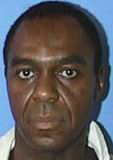 Carl Eugene Watts
Serial killer · USA · 1974
Carl Eugene Watts (born November 7, 1953; died September 21, 2007), also known…
100 victims
Carl Eugene Watts
Serial killer · USA · 1974
Carl Eugene Watts (born November 7, 1953; died September 21, 2007), also known…
100 victims
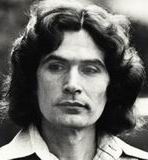 Rodney Alcala
Serial killer · USA · 1977
Rodney James Alcala (born August 23, 1943) was also known as Rodrigo Jacques Al…
100 victims
Rodney Alcala
Serial killer · USA · 1977
Rodney James Alcala (born August 23, 1943) was also known as Rodrigo Jacques Al…
100 victims
 Donald Leroy Evans
Serial killer · USA · 1975
Donald Leroy Evans (born July 5, 1957) was an American serial killer who murder…
60 victims
Donald Leroy Evans
Serial killer · USA · 1975
Donald Leroy Evans (born July 5, 1957) was an American serial killer who murder…
60 victims
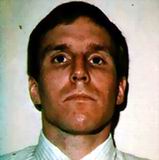 Michael Swango
Serial killer · USA · 1981
Michael Swango (Joseph Michael Swango) was a physician and American serial kill…
60 victims
Michael Swango
Serial killer · USA · 1981
Michael Swango (Joseph Michael Swango) was a physician and American serial kill…
60 victims
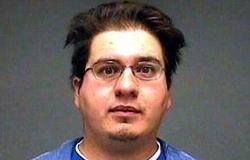 Efren Saldivar
Serial killer · USA · 1989
Efren Saldivar (born 30 September 1969) was an American serial killer who murde…
50 victims
Efren Saldivar
Serial killer · USA · 1989
Efren Saldivar (born 30 September 1969) was an American serial killer who murde…
50 victims
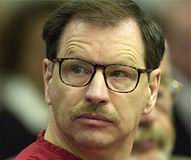 Gary Ridgway
Serial killer · USA · 1982
Gary Leon Ridgway Ridgway was born 18-February-1949 in Salt Lake City, UT. He w…
49 victims
Gary Ridgway
Serial killer · USA · 1982
Gary Leon Ridgway Ridgway was born 18-February-1949 in Salt Lake City, UT. He w…
49 victims
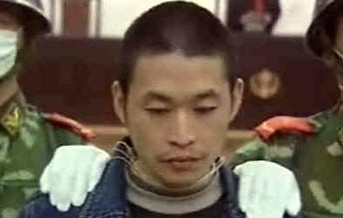 Dong Wenyu
Serial killer · China · 2006
Dong Wenyu Dong Wenyu was sentenced to death in June 2007 and was executed on N…
6 victims
Dong Wenyu
Serial killer · China · 2006
Dong Wenyu Dong Wenyu was sentenced to death in June 2007 and was executed on N…
6 victims
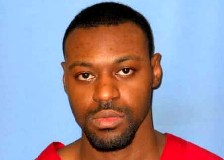 Caleb Carrothers
Murderer · USA · 2009
July 11, 2009 — Caleb Carrothers shot and killed Frank Clark and his son, Taylo…
2 victims
Caleb Carrothers
Murderer · USA · 2009
July 11, 2009 — Caleb Carrothers shot and killed Frank Clark and his son, Taylo…
2 victims
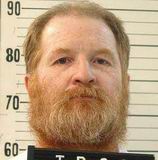 Harold Wayne Nichols
Murderer · USA · 1988
Defendant: Harold Wayne Nichols Victim: Karen Pulley (age 21) Place: Chattanoog…
1 victim
Harold Wayne Nichols
Murderer · USA · 1988
Defendant: Harold Wayne Nichols Victim: Karen Pulley (age 21) Place: Chattanoog…
1 victim
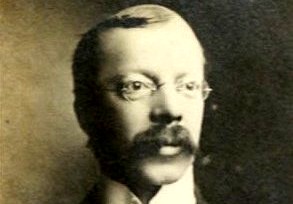 Dr. Hawley Harvey Crippen
Murderer · United Kingdom · 1910
Hawley Harvey Crippen (11 September 1862 – 23 November 1910), usually known as…
1 victim
Dr. Hawley Harvey Crippen
Murderer · United Kingdom · 1910
Hawley Harvey Crippen (11 September 1862 – 23 November 1910), usually known as…
1 victim
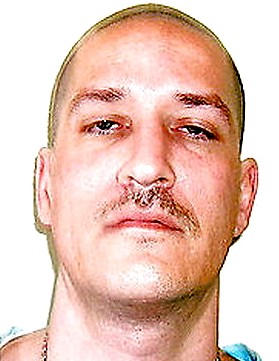 Michael William Lenz
Murderer · USA · 2000
Michael William Lenz was convicted of capital murder for the willful, deliberat…
1 victim
Michael William Lenz
Murderer · USA · 2000
Michael William Lenz was convicted of capital murder for the willful, deliberat…
1 victim
- Gender
- male
- Country
- USA
- Location
- Fulton/DeKalb Counties, Georgia, USA
- Date of birth
- 1949
- Age at first offence
- 32
- Characteristics
- rape
- Victim profile
- Louise DalSanto, 22 / Gisele Clardy, 22 / Patricia Berry, 22
- Method of murder
- Strangulation
- Date(s) of murder
- April -June 1981
- Years active
- 1981
- Date of arrest
- J uly 14, 1981
- Status
-
Sentenced to death
Sentenced to death.
Case name
James Samuel Walraven
Background
James Samuel Walraven was tried in the DeKalb Superior Court for the “bathtub” murder of Gisele Clardy and was sentenced to death. On appeal in WALRAVEN v. THE STATE, Justice Smith, the appellate court found four of the appellant’s enumerations of error to be meritorious and reversed, directing further proceedings.
The offence
Victim: Gisele Clardy
Gisele Clardy, 22, worked as assistant manager of the Cherry Hill Apartments in DeKalb County. The body of Gisele Clardy was found face down in her bathtub in an apartment identified as U-1, lying face down in the bathtub in three or four inches of water. She was nude except for her blouse. The cause of death was strangulation.
The state contended at trial that the murder of Gisele Clardy was one of a series of similar crimes.
Series of similar crimes mentioned
The case record described other deaths involving victims found in a similar manner:
- Louise Dal Santo, 22, was found lying face down in the bathtub in the Woodcreek apartment where the two sisters resided. She was nude, and the cause of death was manual strangulation. The record stated that she had been sexually attacked, and that sperm was discovered in her vagina and mouth.
- Patricia Berry, 22, was found dead face down in her bathtub, partially submerged in water, at the Windermere Apartment complex described as located on Roswell Road in Fulton County. She was nude above the waist, and the cause of death was manual strangulation.
- Margaret Finnerty reported that a man came to her door claiming to be there to fix the pipes, forced his way in, and strangled her until she was unconscious.
- Constance Harrold complained to police about a man dressed as a floral delivery person, who attempted to force his way into the apartment; the door was slammed before he could gain access.
Timeline
- May 28, 1981 — Gisele Clardy drove into the parking lot near building “U,” after which she walked out of sight with James Walraven; she did not report to work the next day.
- May 29, 1981 — Gisele Clardy’s body was discovered in apartment U-1, lying face down in the bathtub in three or four inches of water.
- March 3, 1981 — Margaret Finnerty reported that a man claiming to be a maintenance man knocked on her door, gained entry, and choked her with a kerchief or bandana until she passed out.
- March 16, 1981 — Constance Harrold reported that a man in a tan uniform with black gloves carrying a flower box attempted to force his way into her home; she called police after closing the door.
- April 15, 1981 — Dario Dal Santo found the body of his sister Louise Dal Santo lying face down in the bathtub at the Woodcreek apartment.
- June 5, 1981 — Meredith Nelson saw James Walraven in the hallway near her Windermere apartment and followed him downstairs; Walraven told her, “I just thought I’d let you know I was in your apartment earlier today . . . I was working on your pipes.”
- June 15, 1981 — The body of Patricia Berry was discovered face down in her bathtub, partially submerged in water.
- March 16, 1981 — (Also referenced) Constance Harrold’s reported attack is placed on this date in the series evidence.
- July 14, 1981 — James Walraven was arrested and interrogated.
- July 24, 1981 — David Zorda and Walraven were both in the jail store on the same date.
- September 10, 1981 — The first proceeding was held; counsel for Walraven stated he needed additional time to determine whether he would challenge the arrays of the grand or traverse juries.
- September 16, 1981 — Walraven filed a “Motion for Discovery” requesting statements given while in police custody.
- September 25, 1981 — Walraven filed his challenge to the arrays of the grand and traverse juries.
- September 28, 1981 — The court granted a motion for continuance regarding a motion to change venue and jury challenges.
- October 16, 1981 — The court convened to hear Walraven’s challenges to the arrays of the grand and traverse juries.
- November 9, 1981 — Walraven was arraigned and the case was tried starting this date.
- November 16, 1981 — Trial ended this date.
Investigation
Margaret Finnerty’s report (maintenance man)
Margaret Finnerty resided at Windermere Apartments on Roswell Road. On March 3, 1981, a man claiming to be a maintenance man knocked on her door and asked to be admitted so he could check her water. When Finnerty opened the door, the man (later identified as Walraven) choked her with a kerchief or bandana until she passed out.
Constance Harrold’s report (floral delivery person)
On March 16, 1981, Constance Harrold reported that a man in a tan uniform, wearing black gloves, and carrying a flower box under his arm rang the doorbell. When Harrold opened the door, the man stated: “I have a delivery for Mrs. Robinson.” He then tried to force his way into the home. Harrold managed to close the door, run out the back, and call the police from a neighbor’s house. The flower box was caught in the door. No flowers were inside, but when police arrived they discovered a coil of rope lying on her front porch. A man who jogged in the area resembled the description given by Harrold and was arrested, but was later released when Harrold decided she identified the wrong man. Subsequently, Harrold identified Walraven as the man who assaulted her.
Arrest-linked tip and composites
After new witnesses and composites of the suspect were developed from apartment-complex witnesses, police developed a tip leading to James Samuel Walraven, who was described as a 32-year-old unemployed individual who hung out at public tennis courts in Dekalb y Atlanta. Walraven was detained and charged with the crimes.
Arrest and interrogation
Walraven was arrested on July 14, 1981, and interrogated. During interrogation, Walraven stated that “the only person he had ever had sex with in his life was his sister,” some years before.
Police searched Walraven’s apartment on July 14, 1981 and found nothing that connected him with Gisele Clardy’s murder or any other crime.
Trial
Court and parties
- Court: DeKalb Superior Court
- Judge: Judge Henley
- Appellant: James Samuel Walraven
- Appellee: The State
The record identified legal counsel for appellee including:
- Robert E. Wilson, District Attorney
- Jonathan C. Peters, Assistant District Attorney
- Michael J. Bowers, Attorney General
- Virginia H. Jeffries, Staff Assistant Attorney General
Evidence regarding Gisele Clardy (Cherry Hill Apartments)
James Buffington, an auto mechanic working in the parking lot near building “U,” saw Gisele drive into the parking lot shortly after 4:00 p.m. Behind her was a car with two men inside. Both cars parked. Buffington later identified the passenger as appellant, James Walraven. Walraven got out and talked briefly with Gisele; both walked out of sight toward building “U.” Ten or fifteen minutes later, Walraven ran back to the car, got in, and departed. Gisele did not report to work the next day. Her body was discovered the following morning lying face down in the bathtub.
An autopsy found no sperm or seminal fluid, but bruises and contusions around her vagina indicated that she had been sexually attacked.
Evidence offered to support “series” theory
The state offered the following evidence:
- Margaret Finnerty: Walraven identified as the man who choked her with a kerchief or bandana until she passed out.
- Constance Harrold: identification of Walraven as the man who attempted to force entry after stating: “I have a delivery for Mrs. Robinson.” The police response included discovery of a coil of rope on her front porch.
- Louise Dal Santo: Dario Dal Santo found the body face down in the bathtub in the Woodcreek apartment. The record stated sperm was found in Louise’s vagina and mouth, cause of death was manual strangulation, and a pubic hair recovered from a bath rug was compared with a sample later taken from Walraven. The two hairs were sufficiently similar that they could have had a common origin. The semen sample and blood sample were examined; Walraven could not be eliminated as the donor of the seminal fluid.
- Meredith Nelson: saw Walraven near her Windermere apartment on June 5, 1981, followed him downstairs, and Walraven told her: “I just thought I’d let you know I was in your apartment earlier today . . . I was working on your pipes.”
- Patricia Berry: body found face down in bathtub partially submerged; nude above the waist; cause of death was manual strangulation.
- Joseph Gann: saw a man sneaking around a corner at about 2:15 p.m. on June 15, 1981. Gann described the man as about 6'1" or 6'2" with blondish hair, a good tan, looking very strong, and wearing a gold medallion. Gann testified he was 70 to 80% sure the man was Walraven.
Jail testimony and alleged confession
David Zorda, described as a convicted forger and prisoner at the Henry County jail at the time of trial, testified about incarceration in July 1981. Zorda said that on July 24, 1981, he and Walraven were the only white inmates at the jail store and talked briefly. Zorda testified that Walraven told him: “killed those goddamn bitches.”
Defense evidence and witnesses
- Martha Delagarza lived at Cherry Hill apartments, where Gisele Clardy had worked. About a week before Gisele was killed, Martha Delagarza testified she was followed home by a strange man in a telephone van. When she turned left into the complex, he passed her, made a u-turn, and followed her all the way to building U where she lived. She testified the driver was a large, muscular-looking man with straw-colored hair and that he was not Walraven.
- Dr. Richard Rasche, a clinical psychologist, testified that at the request of the DeKalb police he placed James Buffington under hypnosis to heighten recall. Under hypnosis, Buffington stated the man he saw talking to Gisele was only “a couple of inches” taller and was wearing a watch on his right wrist. Buffington recalled seeing a telephone company van parked nearby.
- Helen Whitehead, working at a house up the street from Harrold’s residence, testified about an event on March 16, 1981 involving a man seeking a coathanger to unlock a car. Whitehead described a man in his late 20’s with blond hair wearing a beige jumpsuit with a long white box on his car and testified the man she saw was not Walraven.
- Peggy Brodsky, manager of Glenlake Tennis Center, testified that on April 15, 1981, Walraven manned the phones at the tennis center from 4:00 p.m. to 10:00 p.m.
- Jonathan Linton testified that he saw Walraven at Blackburn Park between 4:15 and 4:30 p.m. on June 15, 1981, warmed up together, and both played in a tennis tournament later that evening.
- Robert Melton, commander of the jail division of the DeKalb County Sheriff’s Department, testified about David Zorda spending approximately three days in the DeKalb County Jail and that both were in the jail store on July 24, 1981, and no other time.
- Wayne Krier testified he was the “house man” for the “Northeast Max” cell block of the DeKalb County Jail; Walraven was incarcerated in the same cell block. Krier testified that during the first six weeks of Walraven’s incarceration, Walraven never went to the store without Krier being present, and Krier never saw Walraven talking to David Zorda and never heard Walraven confess.
Walraven’s testimony
Walraven testified on his own behalf. He denied being at the Cherry Hill Apartments on May 28, 1981 and claimed he had not been there in over three years. He testified he was right-handed and wore his watch on his left wrist. He said he never wore any other jewelry, including medallions. He also testified he never saw David Zorda until Zorda testified; he did not know the whereabouts of Windermere Apartments; he did not own a car; and he did not kill Gisele Clardy, Louise Dal Santo, or Patricia Berry, or attack Mrs. Finnerty or Mrs. Harrold.
Appeals
Enumerations of error and rulings
The appellate court reviewed enumerations of error labeled 1 through 4, finding four meritorious and reversing.
1. Grand jury challenge (untimeliness and waiver)
Walraven argued that the trial court erred in refusing to hear the challenge to the array of the grand jury. The appellate decision described Rule 11 (A) (5) of the Unified Appeal Procedure, the timing of the first proceeding (held September 10, 1981), Walraven’s counsel requesting additional time, and subsequent filing on September 25 with continuance granted on September 28. The trial court later ruled the grand jury challenge was waived and untimely and refused to hear the merits.
The appellate court concluded that no waiver occurred and held:
- the trial court erred in refusing to hear the merits of the grand jury challenge;
- the case had to be remanded for a hearing on Walraven’s challenge to the array of the grand jury;
- because the grand jury was selected prior to the release of the final, official 1980 census, validity was to be determined by reference to the 1970 official decennial census;
- if the grand jury challenge was meritorious, the indictment must be quashed and a new indictment obtained from a proper grand jury selected by reference to the now released official 1980 decennial census.
2. Admission of statement to David Zorda (discovery timing)
Walraven contended that the trial court erred in allowing Zorda to testify about Walraven’s statement made while both were in police custody at the DeKalb County Jail because the state failed to comply with Code Ann. 27-1302 by furnishing the statement at least 10 days prior to trial.
The appellate court agreed that the statement should have been excluded, citing that Code Ann. 27-1302 applied to “any statement … given by [the defendant] while in police custody,” and that the statute applied because Walraven’s motion was timely and sufficiently specific. The appellate court held the admission was not harmless and required a new trial. It also stated that if Code Ann. 27-1302 was complied with on retrial, Zorda’s testimony would be admissible.
3. Traverse jury challenge and fair-cross-section guidance
The appellate court stated that because the case would be retried, it did not determine whether the traverse jury challenge was meritorious. However, it discussed fair-cross-section analysis, including the requirement to compare juror sources with community makeup rather than voter registration lists, and it described how a prima facie case could be rebutted in fair cross-section analysis.
4. Other errors likely to occur upon retrial
The appellate court found other errors might otherwise occur upon retrial, including:
- (a) The trial court failed to specifically rule that Walraven’s statements made during custodial interrogation were voluntary, and the record lacked the “unmistakable clarity” required from Sims v. Georgia.
- (b) The trial court erred in allowing a witness for the state to testify that during custodial interrogation Walraven stated, “the only person he had ever had sex with in his life was his sister.” The appellate court held such evidence was irrelevant and inadmissible absent the injection of character by the defendant, reasoning that incest occurring years ago was not similar to the charged “bathtub” murder and did not illustrate motive in a manner sufficiently close in time to show state of mind at the time of the offense.
- (c) The appellate court stated that when reviewing the sentencing charge, it had noted the court failed to clearly and explicitly instruct the jury about the nature or function of mitigating circumstances, citing Hawes v. State and Fleming v. State, and referencing Spivey v. Zant, with additional comparisons.
Outcome
The appellate court reversed Walraven’s conviction. It remanded the case to the trial court with directions including:
- conducting a hearing on Walraven’s challenge to the array of the grand jury;
- if that challenge was meritorious, quashing the indictment and obtaining a new indictment from a proper grand jury selected by reference to the official 1980 decennial census;
- and ordering that a new trial was necessary given the discovery violation regarding Zorda’s testimony.
Other details
- The record included a statement that the “bathtub” murder case involved manual strangulation for at least some victims described (including Gisele Clardy’s cause of death being strangulation, and Louise and Patricia also being described with manual strangulation).
- The record contained multiple references to witness certainty regarding identification, including Joseph Gann’s “70 to 80% sure” testimony that the man he saw was Walraven.
- The record described that the state offered series evidence and that Walraven denied involvement in all listed assaults and killings.
Spotted an error, or have more information about this case?