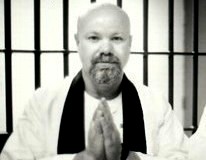
William Frank Parker
Murderer Brian Kevin Rosenfeld
Murderer · USA · 1985
Brian Kevin Rosenfeld Brian Kevin Rosenfeld was sentenced to three concurrent l…
23 victims
Brian Kevin Rosenfeld
Murderer · USA · 1985
Brian Kevin Rosenfeld Brian Kevin Rosenfeld was sentenced to three concurrent l…
23 victims
 Marvin Gray
Murderer · USA · 1975
Marvin Gray was convicted killer who claimed responsibility for 23 slayings and…
23 victims
Marvin Gray
Murderer · USA · 1975
Marvin Gray was convicted killer who claimed responsibility for 23 slayings and…
23 victims
 Yahweh ben Yahweh
Murderer · USA · 1980
Yahweh ben Yahweh was born and legally named Hulon Mitchell Jr. (October 27, 19…
23 victims
Yahweh ben Yahweh
Murderer · USA · 1980
Yahweh ben Yahweh was born and legally named Hulon Mitchell Jr. (October 27, 19…
23 victims
 Russell Ellwood
Murderer · USA · 1991
Russell Ellwood was a former taxi driver. Authorities suspected him of killing…
20 victims
Russell Ellwood
Murderer · USA · 1991
Russell Ellwood was a former taxi driver. Authorities suspected him of killing…
20 victims
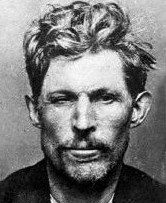 Guillaume Seznec
Murderer? · France (during a business trip from Brittany to Paris) · 1923
Guillaume Seznec was a Breton sawmill owner who was convicted of the murder of…
1 victim
Guillaume Seznec
Murderer? · France (during a business trip from Brittany to Paris) · 1923
Guillaume Seznec was a Breton sawmill owner who was convicted of the murder of…
1 victim
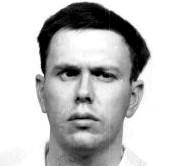 Lesley Lee Gosch
Murderer · USA · 1985
Lesley Lee Gosch was convicted of killing the wife of a San Antonio bank presid…
1 victim
Lesley Lee Gosch
Murderer · USA · 1985
Lesley Lee Gosch was convicted of killing the wife of a San Antonio bank presid…
1 victim
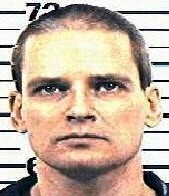 Gregg Francis Braun
Serial killer · USA · 1989
Gregg Francis Braun was executed by lethal injection in Oklahoma on July 20, 20…
5 victims
Gregg Francis Braun
Serial killer · USA · 1989
Gregg Francis Braun was executed by lethal injection in Oklahoma on July 20, 20…
5 victims
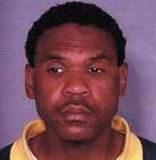 Mac Minister
Murderer · USA · 2005
Mac Minister was an American rapper. His real name was Andre Dow. He was 37 yea…
2 victims
Mac Minister
Murderer · USA · 2005
Mac Minister was an American rapper. His real name was Andre Dow. He was 37 yea…
2 victims
 Celeste Beard
Murderer · USA · 1999
Celeste Beard Johnson (born February 13, 1963) was a convicted American murdere…
1 victim
Celeste Beard
Murderer · USA · 1999
Celeste Beard Johnson (born February 13, 1963) was a convicted American murdere…
1 victim
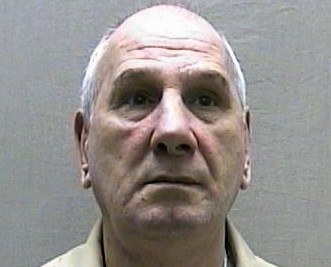 James Koedatich
Serial killer · USA · 1971
James Koedatich was born in 1948. Koedatich committed his first known murder in…
3 victims
James Koedatich
Serial killer · USA · 1971
James Koedatich was born in 1948. Koedatich committed his first known murder in…
3 victims
- Gender
- male
- Country
- USA
- Location
- Benton County, Arkansas, USA
- Date of birth
- 1954
- Age at first offence
- 30
- Characteristics
- rape, domestic violence, torture, abuse, drugs, alcohol
- Victim profile
- James and Sandra Warren ( the parents of his former wife )
- Method of murder
- Shooting
- Date(s) of murder
- November 5, 1984
- Years active
- 1984
- Date of arrest
- Same day
- Status
-
Executed
Executed by lethal injection in Arkansas on August 8, 1996
Case record: William Frank Parker
Status
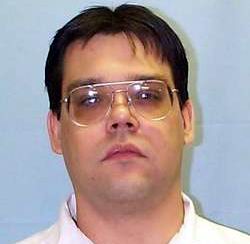
William Frank Parker was executed by lethal injection in Arkansas on August 8, 1996.
People
- William Frank Parker — defendant; inmate under sentence of death
- Pamela Warren Bratcher — former wife; told board members: “Frankie Parker has been given 111/2 more years than he gave my parents.”
- Pam Warren — former wife; abducted by Parker; was shot and seriously wounded; a police officer was also shot
- James Warren — former father-in-law; killed by Parker
- Sandra Warren — former mother-in-law; killed by Parker
- Cindy Warren — James and Sandra’s daughter; sprayed mace at Parker; escaped
- Jeffrey M. Rosenzweig — Parker’s lawyer
- Kobutsu Shindo (also known as Kevin C. Malone) — Buddhist priest; visited Parker and led the campaign to spare him
- Rev. Kobutsu Malone — referenced as “By Rev. Kobutsu Malone” in a personal account
- Rev. Jusan Fudo Sifu Frankie Parker — name used in the narrative as a spiritual-advisor/monastic reference
- Janie Parker — Parker’s mother; waited out final hours
- Janie N. Parker of Bastrop, Texas — same person as Janie Parker referenced elsewhere
- Shari — Parker’s sister (named in clemency campaign narrative)
- Cathy Parker — Parker’s sister; suicide in March 1980 (named in narrative)
- Richard Parker — Parker’s brother; suicide in December 1983 (named in narrative)
- Larry Norris — Director, Arkansas Department of Correction; announced lethal-injection statement
- Dale “Butch” Reeve — Governor’s assistant on Criminal Justice (named in narrative)
- Jim Harris — spokesperson from the governor’s office (named in narrative)
- Jack Gillian — Governor Tucker’s assistant; refused meeting in narrative
- Stark Ligon — Governor’s legal counsel (named in narrative)
- Dr. Walter Oglesby — Arkansas State Hospital staff psychiatrist (named in habeas discussion as referenced during trial proceedings)
- Dr. David Pritchard — psychologist who testified for the State at the first trial and for the prosecution in rebuttal at the second trial
- Ven. Eido Shimano, Roshi — performed/selected name in a Jukai context (named in narrative)
- Ven. Philip Kapleau Roshi — contacted Parker by speaking to him while on death row (named in narrative)
- Lama Tarchin Rinpoche — contacted Parker by speaking to him while on death row (named in narrative)
- Ven. Eido Shimano — also referenced as “Ven. Eido Shimano Roshi” in narrative
- J. (pursuant to a named certificate context) Myojo — described as making a rakusu by hand (named in narrative)
- James Reynolds — chaplain mentioned in narrative (Rev. James Reynolds)
- Guntharp — Assistant Director (named in lethal-injection narrative)
- Warden Reed — referenced in lethal-injection narrative
Background
William Frank Parker was executed in Arkansas for murdering the parents of his former wife. He also shot his wife, but she survived.
Parker was 42 at the time of execution. His adopted name was described as meaning “teacher” in Chinese, and a later Buddhist name was described as Ju San, meaning “mountain of everlasting life.” An abbot’s inscription encouraged him to “depart with dignity like a mountain, trusting that his life is everlasting.”
Parker’s mother, Janie Parker, waited out the final hours with him and pulled up to the prison with several cans of beer iced down in the car and a handgun in her purse. The weapon was confiscated by guards, and she told KARK-TV: “I forgot I had it in my damn purse.” She also said: “You never know when you might break down and someone try to kill you.”
Parker attracted support from the Dalai Lama, who wrote to oppose the execution, and actor Richard Gere, a fellow Buddhist who had hoped to visit him on death row. The Corrections Department refused to allow the visit, stating it did not have time to do a background check on Gere.
Parker invoked his Buddhist beliefs in his final words: “I seek refuge in the Buddha. I seek refuge in the Dharma. I seek refuge in the Sangha.”
A personal account within the record also stated that Parker was “doing time in solitary confinement” and had received Buddhist materials after asking a prison guard for a Bible to read. The record quoted a Buddhist Dhammapada line: “The Dharmapada.”
The record included further quoted teachings attributed to the Dharmapada:
“Mind is the forerunner of all actions. All deeds are led by mind, created by mind. If one speaks or acts with a corrupt mind, suffering follows, as the wheel follows the hoof of an ox pulling a cart.”
The record also described Parker as a practicing Buddhist in Arkansas’s prison system and included interview statements attributed to Parker about meditation and death:
“The Buddha said the greatest of all footprints is that of the elephant, and the greatest meditation is that on death,”
“I needed to come to grips with death. I was having trouble with it. Buddhism teaches that it's the big lie, the big delusion.
“Now I know,” he said, pointing to his chest, “that this vehicle will die. But what's in it moves on.”
The offence
On November 5, 1984, Parker, high on liquor and cocaine and “desperately unhappy about his recent divorce,” killed his former in-laws at their house in Rogers, Ark., and later abducted his former wife.
Parker took his former wife to a police station and shot her and wounded a policeman three times before being disarmed.
The habeas-corpus factual/procedural background stated that soon after Parker and Pam Warren divorced, Parker approached the home of Pam Warren’s parents, James and Sandra Warren, dressed in combat fatigues and carrying a 9mm pistol. It stated that when James Warren and daughter Cindy Warren left the house, Parker attacked; Cindy sprayed mace at Parker and escaped; Parker followed James into the house where he shot and killed James and Sandra Warren; Parker then abducted Pam Warren from her apartment; and at the police station he shot and seriously wounded Pam Warren and a police officer before surrendering several hours later.
The habeas-corpus background also stated:
- Parker was convicted of capital felony murder and sentenced to death for killing James and Sandra Warren.
- The Arkansas Supreme Court reversed because the killings were not committed during the course of an independent felony.
- The State then retried Parker for the Warren homicides, charging him with premeditated capital murder; he was again convicted and sentenced to death; and the Arkansas Supreme Court affirmed on direct appeal and denied postconviction relief.
The habeas-corpus background further identified the first-trial charging theory and reversal basis:
- First trial: capital felony murder for killing James and Sandra Warren “in the course of and in furtherance of” a burglary.
- Arkansas Supreme Court reversed in Parker I on the basis that the burglary did not support a felony murder conviction because “the burglary and murder have the same objective.”
Investigation
No investigation-specific facts were provided in the material beyond the narrative of the attack and the subsequent sentencing and appellate history.
Arrest
No arrest-specific facts were provided in the material beyond the surrender referenced in the habeas factual background.
Trial
Parker was convicted of capital felony murder and sentenced to death for killing James and Sandra Warren, then retried and convicted again and sentenced to death for premeditated capital murder.
The record included details of Parker’s psychiatric assistance proceedings in the federal habeas discussion. It stated:
- Parker unsuccessfully urged an insanity defense at the first trial.
- Before trial, he was examined at Arkansas State Hospital.
- For the second trial, Parker moved to represent himself and standby counsel moved for appointment of a psychiatrist; the trial court granted self-representation but initially did not order additional psychiatric assistance.
- During voir dire, Parker’s desire for psychiatric assistance for mitigation was raised, and the trial court twice ordered the Sheriff to allow Parker access to Dr. Oglesby.
- A four-day continuance was granted primarily because Parker argued he needed a better opportunity to meet with Dr. Oglesby.
- At the guilt phase, neither side offered expert testimony relating to Parker’s mental condition.
- At the penalty phase, Dr. Oglesby testified for the defense; Dr. Pritchard testified for the State in rebuttal; and Dr. Oglesby testified again on surrebuttal.
- The jury verdict form included a section on mitigating circumstances. It stated that one or more but less than all jurors found Parker acted under unusual pressures or influences, and it stated that the jury unanimously found no extreme mental or emotional disturbance and no impairment from mental defect or drug abuse, the statutory mitigating circumstances.
The record also stated that a prosecutor at a state clemency board hearing said Parker once joked he had turned the Warrens into “worm food.” It included the prosecutor comment through attribution but also included an editorial note within the material about misrepresentation:
- Prosecutor: “worm food.”
- Parker’s former wife Pamela Warren Bratcher told board members: “Frankie Parker has been given 11 1/2 more years than he gave my parents.”
Sentencing
Parker was sentenced to death for capital murder for killing James and Sandra Warren.
In the clemency board narrative, the board voted 5 to 0 to advise the governor not to commute Parker’s sentence.
Parker’s remarks in clemency board proceedings included:
- “What are you going to do?”
- “Say, 'Sorry I killed your Mom and Dad?' ”
- “My death is her life,”
- “and when I die, she's going to be lost.”
Appeals
The federal appellate materials included the case caption: William Frank Parker, Plaintiff-Appellant/Cross-Appellee, v. Larry Norris, Director, Arkansas Department of Correction, Defendant-Appellee/Cross-Appellant. 64 F.3d 1178 (Federal Circuits, 8th Cir.). Docket number: 94-3022, 94-3104.
It stated that Parker appealed the district court’s denial of various claims raised in his petition for a writ of habeas corpus and that the State cross-appealed the district court’s decision that Parker was denied adequate psychiatric assistance at the penalty phase.
The federal appellate decision stated:
- “We conclude that Parker was afforded constitutionally-mandated psychiatric assistance throughout his trial, and that the district court properly rejected his other claims.”
- “Accordingly, we remand with directions to deny his petition for a writ of habeas corpus.”
- It also stated: “The judgment of the district court is reversed and the case is remanded with instructions to deny the petition for a writ of habeas corpus.”
The federal appellate decision included discussion of double jeopardy, psychiatric assistance, and aggravating circumstance issues, including:
- The Arkansas Supreme Court’s reversal in Parker I and affirmance in Parker II.
- Reliance on double jeopardy principles and exceptions discussed in the appellate decision.
- Ake v. Oklahoma psychiatric assistance analysis with reference to Dr. Oglesby.
- Prior violent felony aggravating circumstance and jury issues.
The record also included language that Parker “forbidden his lawyer, Jeffrey M. Rosenzweig of Little Rock, to file additional appeals” and described him as not wanting delays.
Outcome
Parker was executed by lethal injection in Arkansas on August 8, 1996.
The record’s execution narrative included the lethal-injection announcement and coroner pronouncement quote attributed to the Director:
“A lethal injection was administered at 9:01 PM and the coroner has pronounced Sifu William Frank Parker dead at 9:04 PM this eighth day of August, 1996, thereby carrying out the judgment and sentence of the Circuit Court of Benton County Arkansas, of death by lethal injection. Such judgment having been entered March 28th, 1988 pursuant to the verdict of a lawfully constituted jury which found him guilty of the crime of capital murder.”
The execution narrative also described Parker’s final meal arrival at “twenty after five in the afternoon” and a statement written at “7:22 PM,” with the record stating it was asked to be read at a press conference after his death.
Aftermath
The record described final events around the execution chamber and viewing room, including the chanting and a description of execution restraints and equipment.
It stated that Parker’s last meal was received and that he divided personal belongings into a small cardboard box and wrote a list as to who got what.
It included a description of chanting the Three Refuges: “I take refuge in the Buddha, I take refuge in the Dharma, I take refuge in the Sangha. . . . ”
The record included a narrative account of Parker bowing and embracing and whispering: “I love you my brother, thank you so much.”
The record also described that Warden Reed said the last thing Parker saw was a picture of the Buddha held by his executioner, the Director of the Department of Correctional Services, Mr. Larry Norris, and that Norris showed Parker the picture, Parker closed his eyes and nodded to indicate he had seen it.
Other details
Monastic and Buddhist-related items in the record
The narrative stated Parker received a new name during a Jukai ceremony performed by Kobutsu Shindo (also known as Kevin C. Malone), and that an abbot’s certificate encouraged him to: “depart with dignity like a mountain, trusting that his life is everlasting.”
The narrative also stated that during the ordination ceremony, Parker was shackled; requests to have chains removed and to bring a camera were denied; and Parker received the ordination name of Fudo, described as “the immovable Bodhisattva chained to a rock in hell until all beings are liberated from suffering.” It stated his name became Rev. Jusan Fudo Sifu William Frank Parker.
The narrative mentioned he wore a ritualistic black apron called a rakusu and that only the rakusu was allowed to be worn.
It stated a photograph of His Holiness the Dalai Lama was paper-clipped on one strap of his rakusu.
The narrative described contacts made by Parker while on death row with:
- Ven. Eido Shimano Roshi
- Ven. Philip Kapleau Roshi
- Lama Tarchin Rinpoche in Switzerland
Execution-related time and movement details in the narrative
The narrative stated:
- Parker was moved to the Cummins Unit in Varner, Arkansas, under tight security early on the sixth.
- He was allowed visits with friends and family until the 8th, after which only the narrator and his attorney were permitted.
- The narrator spent the entire day with him on the eighth from 8:40 AM until 8:51 PM.
- Death watch officers recorded events in a “death watch” log-book.
- The “tie-down team” arrived at 8:50; chanting continued at entry; the viewing curtains opened at 9:01; the Director announced the lethal injection at 9:01 and the coroner pronounced death at 9:04.
Governor-related items in the narrative
The narrative stated:
- Gov. Jim Guy Tucker advanced the execution date of Parker by six weeks after taking office, saying the victims’ family had suffered long enough.
- A reprieve moved the execution date to July 11 so the U.S. Supreme Court could judge the constitutionality of a new federal law limiting appeals by condemned prisoners.
- Governor Tucker delayed the execution to July 11.
- Shortly after convictions, Governor Tucker announced an intention to step down from office on July 15; the office was then to be filled by Lieutenant Governor Rev. Mike Huckabee.
- A proclamation moved the execution date to August 8.
- The narrative included direct quote from Jim Harris: “This [date change] was out of consideration for the victim's family. They've waited years and we could determine no reason to delay it more.”
- It stated an assistant’s call described the Governor refusing to meet prior to execution and that “there was no reason to do so now.”
- The narrative described a claim that the date change reduced six weeks of Parker’s life.
Clemency board hearing items in the narrative
The narrative included:
- Parker’s lawyer Jeffrey M. Rosenzweig as the person who described Parker’s psychological state in relation to execution.
- A prosecutor statement about Parker joking “worm food.”
- Pamela Warren Bratcher’s statement to board members: “Frankie Parker has been given 111/2 more years than he gave my parents.”
- The board’s vote: 5 to 0 to advise the governor not to commute.
- Parker’s remarks including: “What are you going to do?” and “Say, 'Sorry I killed your Mom and Dad?' ”
- Parker’s remarks including: “My death is her life,” and “and when I die, she's going to be lost.”
Editorial note included in the narrative
An editorial note within the record stated misrepresentations and included these statements:
- Frankie Parker was distressed that three items misrepresented him.
- The first was the mention of the minister, saying he “did make that comment” and was “deeply embarrassed about it.”
- The second was the comment about the Warrens’ becoming “worm food,” saying he said he “himself never said that.”
- The third was that a quote regarding Pam Bratcher and his death being her life was not from a mocking perspective; it described that he considered her psychological state and hoped she would be free to move on with her life.
Spotted an error, or have more information about this case?