Robyn Leroy Parks
Murderer Ervil LeBaron
Murderer · USA · 1972
Ervil Morrell LeBaron (1925 to August 16, 1981) was the leader of a polygamous…
35 victims
Ervil LeBaron
Murderer · USA · 1972
Ervil Morrell LeBaron (1925 to August 16, 1981) was the leader of a polygamous…
35 victims
 Brian Kevin Rosenfeld
Murderer · USA · 1985
Brian Kevin Rosenfeld Brian Kevin Rosenfeld was sentenced to three concurrent l…
23 victims
Brian Kevin Rosenfeld
Murderer · USA · 1985
Brian Kevin Rosenfeld Brian Kevin Rosenfeld was sentenced to three concurrent l…
23 victims
 Marvin Gray
Murderer · USA · 1975
Marvin Gray was convicted killer who claimed responsibility for 23 slayings and…
23 victims
Marvin Gray
Murderer · USA · 1975
Marvin Gray was convicted killer who claimed responsibility for 23 slayings and…
23 victims
 Yahweh ben Yahweh
Murderer · USA · 1980
Yahweh ben Yahweh was born and legally named Hulon Mitchell Jr. (October 27, 19…
23 victims
Yahweh ben Yahweh
Murderer · USA · 1980
Yahweh ben Yahweh was born and legally named Hulon Mitchell Jr. (October 27, 19…
23 victims
 Manuel Octavio Bermudez
—
Manuel Octavio Bermudez was known as “El Monstruo de los Cañaduzales.” For four…
Manuel Octavio Bermudez
—
Manuel Octavio Bermudez was known as “El Monstruo de los Cañaduzales.” For four…
 Ernest Brown
Murderer · 1933
Ernest Brown was executed by hanging at Armley prison in Leeds on February 6, 1…
1 victim
Ernest Brown
Murderer · 1933
Ernest Brown was executed by hanging at Armley prison in Leeds on February 6, 1…
1 victim
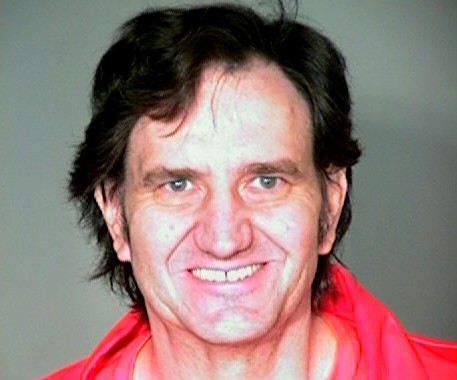 James Styers
Murderer · USA · 1989
James Styers filed a missing child report on December 2, 1989, advising police…
1 victim
James Styers
Murderer · USA · 1989
James Styers filed a missing child report on December 2, 1989, advising police…
1 victim
 Curtis Allgier
Murderer · USA · 2007
Curtis Michael Allgier (born August 25, 1979) was a white supremacist skinhead…
1 victim
Curtis Allgier
Murderer · USA · 2007
Curtis Michael Allgier (born August 25, 1979) was a white supremacist skinhead…
1 victim
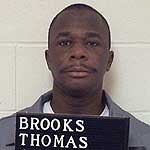 Thomas Brooks
Murderer · USA · 1993
Thomas Brooks, Jr. was convicted in the State of Missouri, Respondent, v. Thoma…
1 victim
Thomas Brooks
Murderer · USA · 1993
Thomas Brooks, Jr. was convicted in the State of Missouri, Respondent, v. Thoma…
1 victim
- Gender
- male
- Country
- USA
- Location
- Oklahoma City, Oklahoma, USA
- Date of birth
- 1954
- Age at first offence
- 23
- Characteristics
- rape?, motive unclear, motive unknown, history of mental illness, abuse, domestic violence, drug addict
- Victim profile
- Abdullah Ibrahim, 24 ( gas station attendant )
- Method of murder
- Shooting (.45 caliber pistol)
- Date(s) of murder
- August 17, 1977
- Years active
- 1977
- Date of arrest
- September 1, 1977
- Status
-
Executed
Executed by lethal injection in Oklahoma on March 10, 1992
Timeline
- February 18, 1972 — Robyn Leroy Parks pleaded guilty to the charge of Robbery by Force in Case No. CRF-72-292 in the District Court of Oklahoma County and received a five (5) year suspended sentence, with a condition that he was not to violate any city, state or federal laws.
- January 24, 1974 — The trial court heard the State's Application to Revoke the suspended sentence on the sole ground that, in Case No. CRF-73-3099, the jury returned a verdict of guilty of Attempted Burglary in the Second Degree and assessed his penalty at three years and seven months in the state penitentiary.
- January 25, 1974 — Formal sentencing did not occur until this date in Case No. CRF-73-3099.
- October 9, 1974 — The appeal in Case No. O-74-463 resulted in the order of revocation being reversed and remanded.
- January 9, 1974 — The conviction before a jury in Case No. CRF-73-3099 occurred on this date (as referenced for the revocation reversed and remanded).
- November 26, 1974 — The appeal in Case No. F-74-516 resulted in the judgment and sentence being affirmed for Attempted Burglary in the Second Degree, After Former Conviction of a Felony, with punishment fixed at three (3) years and seven (7) months’ imprisonment.
- October 23, 1973 — Mrs. Murray Emerson Jones, employed in the fine jewelry department of the John A. Brown Company at 208 West Park Avenue in downtown Oklahoma City, locked the doors and activated the silent alarm system at approximately 5:30 p.m.
- October 24, 1973 — Officer Wesley F. Dawson was dispatched at approximately 12:25 a.m. after the silent alarm sounded and observed Robyn Leroy Parks standing approximately 20 to 30 feet from the door.
- October 26, 1973 — Detective Bill Minor interviewed Parks shortly after 8:00 a.m. and Parks denied knowledge of the burglary and denied participation in the same.
- October 22, 1973 — Walter Afinow testified that on this date Parks cleaned the above mentioned door at 5:30 a.m.
- August 17, 1977 — At approximately 4:30 a.m., victim Abdullah Ibrahim was found shot to death on the floor of the Gulf Service Station where he was employed.
- August 29, 1977 — James Clegg allowed representatives of the State to tape a phone conversation with Parks in which Parks told Clegg that he shot Abdullah Ibrahim because Ibrahim had written down his tag number and Parks was afraid Ibrahim would call the police when he realized Parks’s credit card was hot.
- August 30, 1977 — During a second phone conversation, Parks revealed the location of the gun used to shoot the victim.
- 1982-08-26 — An appeal in Parks v. State, Case Number F-79-3, was decided on this date; the conviction of Murder in the First Degree resulted in a death sentence and the appeal was affirmed.
- 1988 — A Federal appeals court upheld Parks's conviction but threw out his death sentence, ruling the trial judge's instruction to the sentencing jury “to avoid any influence of sympathy” had been unfair.
- 1990 — The Supreme Court reinstated the sentence because Parks had failed to raise the issue earlier in the state courts.
- March 10, 1992 — Robyn Leroy Parks was executed by injection.
- April 29, 1974 — The State urged that the Kern decision should be applied prospectively as of this date.
- February 14, 1991 — The United States Court of Appeals, Tenth Circuit, issued its decision in a habeas proceeding reported at 925 F.2d 366.
- May 14, 1990 — An order had required the state to notify the court in writing before attempting to set a new execution date; it was vacated in the later decision.
Background
Robyn Leroy Parks was a Black man.
In 1978, a jury found Parks guilty of murdering a gas station attendant whom he feared would inform the police of his use of a stolen credit card.
Parks’s father testified during mitigation in the sentencing phase of the trial. The jury was advised it could consider evidence presented in both the guilt stage and sentencing stage and could consider any mitigating circumstances supported by the evidence beyond those listed in the jury instruction.
In his own defense at trial in the murder case, Parks testified that his taped statements to an informant were not true and that he had made the incriminating statements in order to protect his family from further harassment. He claimed that on an earlier day he had obtained gas at the station and because he did not have money to pay, the attendant wrote down his license tag number, and that he returned the same night to pay for the gas. He also testified that on the night of the murder, he had stayed at the home of Elaine Sheets.
Parks had a prior conviction: when he was seventeen years old, he was convicted of Robbery by Force or Fear.
The offence
Murder of Abdullah Ibrahim
At approximately 4:30 a.m. on August 17, 1977, victim Abdullah Ibrahim was found shot to death on the floor of the Gulf Service Station where he was employed.
An unused charge slip bearing various notations on both the front and back, apparently used as a scratch pad to compute customers’ purchases and figure tax, was found at the scene of the homicide. This same charge slip had a license tag number written across the front of it: XZ-5710. It was subsequently determined that the owner of the vehicle bearing that license tag number was Robyn LeRoy Parks.
The jury found one aggravating circumstance: the murder was committed for the purpose of avoiding or preventing a lawful arrest or prosecution.
Prosecutors said Parks’s motive for the killing was his fear that Mr. Ibrahim would catch him using a stolen credit card.
In conversations taped by the police days later, Parks told a friend that he had killed Mr. Ibrahim and said where the murder weapon was hidden.
Attempted burglary-related prior convictions
Mrs. Murray Emerson Jones testified that on October 23, 1973, she was employed at the fine jewelry department of the John A. Brown Company located at 208 West Park Avenue in downtown Oklahoma City, and at approximately 5:30 p.m. she locked the doors and activated the silent alarm system. At approximately 12:25 a.m. the following morning she was called to the store by a policeman. Upon her arrival she observed a glass panel, dimensions approximately 60" x 28", leaning against a wall. She observed the molding had been pried loose and removed from the door, and that inside the door she observed a pen knife and screwdriver laying on the floor. She further added that during early morning hours of each Monday the doors and windows of this department were cleaned by the store maintenance people. She positively stated that on October 23, 1973, the door glass she observed had been cleaned earlier that date.
Officer Wesley F. Dawson of the Oklahoma City Police Department testified that on October 24, 1973, at approximately 12:25 a.m. he was dispatched to the location for the silent alarm. He drove to the intersection of Robinson and Park and observed Parks standing approximately 20 to 30 feet from the door. Upon inquiry, Parks told the officer he observed two people jimmying the door with another standing across the street acting as a lookout man. Parks gave descriptions of those people and stated he was just returning from a movie. Officer Dawson testified his investigation revealed another person near the store area identified as Mr. Fortune, and Parks told Dawson that Fortune was not a member of the trio previously identified.
Detective Bill Minor testified he interviewed Parks shortly after 8:00 a.m. October 26, 1973, and Parks denied knowledge of the burglary and denied participation in the same.
Officer Barber testified that after stipulation as to his qualifications as an expert witness, he lifted two fingerprints from the edges of the glass identified as being made by Parks.
At the trial’s first stage, the defense presented Walter Afinow, who testified that on Monday, October 22, 1973, he cleaned the door at 5:30 a.m. Tom Quinn, an investigator for the defense, testified regarding dimensions of the glass door.
Investigation
A silent alarm system sounded and led to police attendance at the scene described in the attempted burglary evidence.
For the murder, the unused charge slip with notations and the license tag number XZ-5710 connected Parks’s vehicle to the scene.
James Clegg, an informant, allowed representatives of the State to tape two phone conversations with Parks while Parks was in San Pedro, California.
During the August 29th telephone conversation, Parks told Clegg that he shot Abdullah Ibrahim because Ibrahim had written down his tag number and Parks was afraid Ibrahim would call the police when he realized Parks’s credit card was hot.
During the August 30th phone conversation, Parks revealed the location of the gun. At that location, a .45 calibre pistol in a holster and a box of .45 calibre ammunition was found by Clegg accompanied by a police detective.
Arrest
No arrest is described in the provided material.
Trial
Prior proceedings: robbery by force, revocation, and attempted burglary appeals
Robyn Leroy Parks pleaded guilty to Robbery by Force or Fear in Case No. CRF-72-292 and received a five (5) year suspended sentence in which one condition was that he not violate any city, state or federal laws.
The State filed an application to revoke the suspended sentence, asserting Parks’s prior offense in Case No. CRF-73-3099, with a jury verdict of guilty of Attempted Burglary in the Second Degree. The revocation order reversed and remanded.
In Case No. F-74-516, Parks was convicted of Attempted Burglary in the Second Degree, After Former Conviction of a Felony. His punishment was fixed at three (3) years and seven (7) months’ imprisonment. Judgment and sentence were affirmed.
In that attempted burglary case, the District Court proceedings included witnesses Mrs. Murray Emerson Jones and police officers Wesley F. Dawson and others, and included defense testimony by Walter Afinow and an investigator, Tom Quinn. The State rested after the officer testimony and stipulations. The defense rested after calling those witnesses. The appeal argued insufficiency of the evidence and excessive punishment; the appellate court found the punishment was within the statutory range and that there were no errors in the manner in which the trial court conducted the trial. The judgment and sentence were affirmed.
Murder trial and sentencing
Parks was found guilty of Murder in the First Degree in Oklahoma County District Court, Case No. CRF-77-3159.
Subsequent to a hearing on aggravating and mitigating circumstances, the jury voted to impose the death penalty.
Evidence at trial and rejected instruction
The trial judge refused to allow an instruction on the offense of Murder in the Second Degree. The desired instruction would have allowed the jury to determine, based on the evidence, that Parks murdered Ibrahim while Parks was committing the felony of using a fraudulent credit card in violation of Laws 1981, ch. 86, § 4, now 21 O.S. 1981 § 1550.22.
The appellate court stated there was no evidence to support a lower degree of the crime charged or an included offense, and therefore it was unnecessary to instruct on second degree murder and the court had no authority to ask the jury to consider the issue.
The appellate court described that the sole evidence supporting a finding that Parks was using a fraudulent credit card was Parks’s own statement made during the tape recorded conversation with the informant, Clegg, and that no other evidence of a credit card, a credit card receipt for gasoline, or missing gasoline was introduced.
The appellate court quoted Judge Cannon’s statement:
As a matter of fact, the defendant's own testimony was that he didn't even own a credit card. But even in the State's case there was no evidence of a credit card, except his statements and his statement alone does not prove the corpus delecti of the crime. There is no corpus delecti of any other felony having been committed. . . . There is no evidence of it and, consequently, it's Murder One or nothing. (Tr. 543)
The appellate court also explained that the State had to prove corpus delecti beyond a reasonable doubt with evidence other than a confession and that corpus delecti meant the actual commission of a particular crime by someone. It concluded that testimony of the police and the medical examiner established that a homicide was committed, and that the credit card slip bearing Parks’s license tag number linked him to the corpus delecti.
Voir dire and instructions issues
The appellate decision addressed excusing six jurors for cause due to their opposition to the death penalty and found the line of questioning did not violate Witherspoon v. Illinois. The trial judge asked jurors:
“In a case where the law and evidence warrant, in a proper case, could you without doing violence to your conscience, agree to a verdict imposing the death penalty?”
If a juror responded in the negative, the judge asked:
“If you found beyond a reasonable doubt that the defendant was guilty of murder in the first degree and if under the evidence, facts and circumstances of the case, the law would permit you to consider a sentence of death, are your reservations about the death penalty such, that regardless of the law, the facts and circumstances of the case, you would not inflict the death penalty.”
The appellate decision stated the line of questioning and the resulting dismissal for cause did not violate Witherspoon because it determined that the juror, regardless of the law and facts, would never inflict the death penalty.
The appellate decision also addressed remarks allegedly defining reasonable doubt during voir dire. It quoted the judge’s statement:
“No one's going to tell you what reasonable doubt is. Its got to be beyond a reasonable doubt. There's a higher degree of proof required in a criminal case before you could find someone guilty than in a civil case. Go back to those scales, ladies and gentlemen. If you have those scales that are even, and in a civil case you tip them in favor of the plaintiff by preponderance of the evidence. But in a criminal case, there has to be a greater one. Exactly where, is up to you, but you have to be beyond a reasonable doubt before you can find a defendant [651 P.2d 692] guilty. That's the law of all fifty states. . . . That's the law of Oklahoma and the Federal government.”
The appellate decision stated that it was reversible error to attempt to define reasonable doubt but found that nowhere in the remark complained of did the trial court actually define it, so no error occurred.
Taped conversations and related evidentiary claims
The appellate decision held that admission of taped conversations did not violate Article II, § 30 of the Oklahoma Constitution because one party consenting to the taping divested the conversation of its private character. It also held the best evidence rule was not violated because the jury listened to the actual tapes and said it did not consider the typed copies issue because appellant cited no relevant authority.
Closing argument and prosecutorial remarks
The appellate decision recounted prosecutor remarks that defense counsel claimed denied a fair trial. It included a quoted statement by the prosecutor:
“So looking at it from both sides, I can't find a single, solitary mitigating circumstance that would offset any of the aggravating circumstances.”
It also described defense claims that the prosecutor commented on how the death penalty was effectuated in Oklahoma County, told the jury to leave sympathy, sentiment and prejudice out of deliberations, and commented on the deterrent value of the death penalty. The appellate decision found that because defense counsel did not object to these remarks, waiver applied unless remarks were fundamentally prejudicial; it found no fundamental prejudice and denied these propositions of error.
Jury instruction on sympathy
The appellate decision addressed an instruction stating:
“You must avoid any influence or sympathy, sentiment, passion, prejudice or other arbitrary factor when imposing sentence.”
It concluded the statement was taken out of context and that earlier instructions on mitigation were not nullified.
It also reproduced Instruction No. 9 in full, describing the anti-sympathy instruction as given in the penalty trial:
In arriving at your determination as to what sentence is appropriate under the law, you are authorized to consider all the facts and circumstances of this case whether presented by the State or the defendant and whether presented in the first proceeding or this sentencing proceeding. All of the previous instructions given you in the first part of this trial apply where applicable and must be considered along with these additional Instructions; together they contain all the law of any kind to be applied by you in this case, and the rules by which you are to weigh the evidence and determine the facts in issue. You must consider them all together, and not a part of them to the exclusion of the rest. You are the judges of the facts. The importance and worth of the evidence is for you to determine. You must avoid any influence of sympathy, sentiment, passion, prejudice, or other arbitrary factor when imposing sentence. You should discharge your duty as jurors impartially, conscientiously and faithfully under your oaths and return such verdict as the evidence warrants when measured by these Instructions. The Court has made rulings during the sentencing stage of this trial. In doing so, the Court has not expressed nor intimated in any way the conclusions to be reached by you in this case. The Court specifically has not expressed any opinion as to whether or not any statutory aggravating circumstances exist, or whether or not any mitigating circumstances exist. You must not use any method of chance in arriving at a verdict but must base it on the judgment of each juror concurring therein. You have already elected a Foreman. Your verdict must be unanimous. Proper forms of verdict will be furnished you from which you shall choose one to express your decision. When you have reached a verdict, all of you in a body must return it into open court. The law provides that you should now listen to and consider the further argument of counsel. (emphasis added).
The record also included a separate instruction described as Instruction Five, which stated:
“You are further instructed that mitigating circumstances, if any, must be considered by you.... You are not limited in your consideration to the minimum mitigating circumstances set out herein, and you may consider any other or additional mitigating circumstances, if any, that you may find from the evidence to exist in this case. What facts or evidence that may constitute an additional mitigating circumstance is for the jury to determine. .... (emphasis added).”
Voir dire/prosecutor comments addressed in later habeas
Later federal habeas analysis described prosecutor comments in voir dire and closing that were alleged to be anti-sympathy remarks.
The habeas material quoted prosecutor remarks during voir dire:
Of course the Court will instruct you that you should not allow sympathy, sentiment or prejudice to enter into your deliberations. And, frankly, that's just as cold blooded as you can put it. During this trial, no matter if you get to dislike me as an attorney or you don't like the way I part my hair or you don't like David Hood, or you think he looks real good and you think you ought to rule for it that way; as Judge Cannon told you, you can have your sympathies and your sentiment and your prejudices all you want to--you know you can be as sympathetic as you want to or you can be as prejudiced as you want to be, but you can't do it and sit on this jury. So that's just a real simple way that Judge Cannon put it to you. You cannot allow your sympathy, sentiment or prejudice to influence you in this case and sit on this jury. And now is the time for us to find out if you will eliminate any sympathy, sentiment or prejudice in this case. Will all of you do that? Tr.Vol. I at 86-87.
Another quoted comment during final rebuttal at the end of the sentencing phase:
[The defense counsel's] closing arguments are really a pitch to you for sympathy--sympathy, or sentiment or prejudice; and you told me in voir dire you wouldn't do that. Well, it's just cold turkey. He either did it or he doesn't, you know. You leave the sympathy, and the sentiment and prejudice part out of it. Tr.Vol. V at 725-26.
The habeas material also quoted further voir dire comments:
unless the court instructs you that under the law, if a fellow has a different lifestyle that entitles him to commit a murder, you wouldn't allow that to influence you, would you? Tr.Vol. I at 124.
And no matter what his lifestyle was, if the state proves to your satisfaction beyond a reasonable doubt that he is guilty, then irregardless of his lifestyle, you wouldn't let that influence your verdict, would you? Id. at 124-24.
And:
[when asked about welfare recipients] solely for the reason that it's necessary that they come in and get welfare payments.
The habeas material then included the prosecutor’s follow-up:
And, in any event, you wouldn't consider a different lifestyle as--if it's--unless the court so instructs you that if you have a different lifestyle that it's all right to go out and do things that other people can't do, you wouldn't feel like a different lifestyle would give anyone a right to do anything that is in violation of the law, would you? Id. at 155.
In closing argument at the end of the sentencing phase, the prosecutor was quoted:
And, now the court also tells you, you can consider anything else that you want to, to mitigate the penalty of death and the term of life. You can consider anything you want to in addition to what he's told you. Tr.Vol. V at 703-04.
Sentencing
After the jury found Parks guilty of Murder in the First Degree, a separate sentencing proceeding was held under 21 O.S. 1981 § 701.10.
After the sentencing evidence, the jury sentenced Parks to death.
The jury found one aggravating circumstance: that the murder was committed for the purpose of avoiding or preventing a lawful arrest or prosecution.
The appellate review required three determinations under 21 O.S. 1981 § 701.13, and the appellate court held: (1) the sentence of death was not imposed under the influence of passion, prejudice, or any other arbitrary factor; (2) evidence supported the aggravating circumstance; and (3) the sentence of death was not excessive or disproportionate considering the crime and the defendant compared to similar cases. The appellate court then affirmed the judgment of guilt and the sentence of death.
Appeals
Oklahoma Court of Criminal Appeals (1982)
In Parks v. State, Case Number F-79-3 decided 08/26/1982, the Oklahoma Court of Criminal Appeals affirmed the conviction and sentence of death.
Among issues addressed, the court held that refusal to instruct on Murder in the Second Degree was correct due to lack of evidence of fraudulent credit card use sufficient to allow such a finding.
The court addressed multiple propositions of error related to taped conversations, prosecutor remarks, jury instructions (including the anti-sympathy instruction context), jury composition with death penalty views, reasonable doubt remarks, evidence instructions, and sufficiency of evidence for the aggravating circumstance.
The court also stated it overruled each assignment of error and found no fundamental error.
U.S. Supreme Court and federal habeas
A Federal appeals court in 1988 upheld the conviction but threw out the death sentence, ruling the trial judge's instruction to the sentencing jury “to avoid any influence of sympathy” had been unfair.
In 1990, the U.S. Supreme Court reinstated the sentence because Parks failed to raise the issue earlier in state courts.
In later habeas proceedings, the United States Court of Appeals, Tenth Circuit, in 925 F.2d 366, addressed whether the prosecutor's anti-sympathy comments combined with an anti-sympathy instruction during the penalty stage improperly influenced the jury to discount mitigating evidence. The Tenth Circuit held that the prosecutor's remarks, when considered with instructions given, did not have the effect of prohibiting the jury from considering any of Parks’s mitigating evidence, and therefore affirmed the denial of habeas relief.
The Supreme Court previously reversed an en banc decision; it held that the anti-sympathy instruction by itself did not violate Parks’s constitutional rights, and it determined the argument advocated a new rule that could not be applied retroactively under Teague v. Lane and Penry v. Lynaugh.
The Tenth Circuit described that it was reviewing a reserved claim after remand. It stated it could not find a reasonable likelihood the prosecutor’s comments were applied by the jury to interfere with the consideration of constitutionally relevant mitigating evidence and denied the petition for habeas relief. It also affirmed the district court’s denial of Parks’s petition for habeas corpus and vacated the earlier order requiring the state to notify the court before attempting to set a new execution date.
Outcome
Robyn Leroy Parks was executed on March 10, 1992, by injection in Oklahoma.
He was reported to have said:
- "I'm still awake."
- "I love you, too, Debra."
The reported executions included a statement that the execution was carried out by injection and that he became the second person executed in Oklahoma since the U.S. Supreme Court in 1976 let the states resume capital punishment.
The murder victim Abdullah Ibrahim was described as 24 years old and employed at a gas station in Oklahoma City while attending college.
Aftermath
A reporter for “Tulsa World” was quoted describing the execution as “scary and ugly,” and later as “It was overwhelming, stunning, disturbing – an intrusion into a moment so personal that reporters, taught for years that intrusion is their business, had trouble looking into each others’ eyes after it was over.”
The habeas proceedings ended with denial of Parks’s habeas relief by the Tenth Circuit and affirmance of the district court’s denial, with vacatur of the May 14, 1990 order requiring notice before setting a new execution date.
In the homicide case, the appellate decision described the telephone conversations between James and Robyn (Parks) and included the following transcript fragment:
***** James: Youdon't [sic] know nuthin. Robin: Agh — I don't know. James: You don't [sic] know nuthin. Robin: I reckon. James: Hey man, and I just found out today you didn't even get no money. Robin: I wasn't going there to get no money. James: You wasn't ____ Robin: I went there with a credit card I guess, credit card, you see what happened, he come up, I give him the credit card, he come out the booth to come back and look at my tag number. James: ugh-huh Robin: So I know then that if he get the tag number, as soon as I leave he gonna call the law. James: Hugh. Robin: All right? [sic] James: Ugh-hugh. Robin: OK, he gonna call the law, I got them guns, the dynamite and everything in my trunk, right? James: Yea, I didn't know that. Robin: I ain't going to get too far before they get on me (James; ugh-huh,), so I said the way to do that if he don't be around then ain't nuthin he can tell them noway. ***** Robin: No, but see, but that is what people fail to realize. See if he had of told on me, see I would have went anyway. See what I'm saying? James: Yea. Robin: And, I just looked at it I might as well, If I'm go, let me go for being a dumb son of a gun, you know a little funky gas credit card. ***** James: . . . Hey man, but see, I have just been thinking man, you got to be cool man, because I, you know, shit, the thing is that that's murder. Robin: Yea, but, well, that is what I'm trying to get you to see, ain't no witnesses, so what? James: Yea. Robin: See, I'm what I'm trying to get you to see, if they, if I would have got caught red today they can't find nobody that they can get up there and say yea, they seen me do this or seen me do that or this happen or that happen because there wasn't nobody there but me and him. See, and, I ain't got no guns, I ain't got nuthin.
Other details
Clarence M. Mills, Judge, is named in the appeal in Case No. O-74-463.
William S. Myers, Jr., Judge, is named in the appeal in Case No. F-74-516.
The appellate decision in F-74-516 stated the trial court’s judgment and sentence were affirmed.
In the attempted burglary appeal in F-74-516, it described a bifurcated proceeding where counsel stipulated regarding the former conviction.
In the Oklahoma murder appeal in F-79-3, it described that the State offered three aggravating circumstances to justify imposition of the death penalty and that, in mitigation, the State offered the testimony of Robyn Parks’s father.
The appellate decision described an issue about the prosecutor’s improper remarks and the requirement for defense counsel to object and request admonition to disregard statements.
In the Oklahoma murder appeal, it addressed admissibility of a photograph of the victim at the scene of the crime for proving the aggravating circumstance that the offense was especially heinous, atrocious and cruel, and stated that because the jury failed to find that aggravating circumstance, no abuse of discretion was apparent.
The Oklahoma murder appeal described the jury’s requirement to reach a unanimous verdict and discussed the statutory provision that if the jury could not agree within a reasonable time, the judge would impose life imprisonment.
In the federal habeas proceedings, the respondents included James Saffle, Warden, Oklahoma State Penitentiary, McAlester, Oklahoma; Larry Meachum, Superintendent, Oklahoma Department of Corrections; and Robert H. Henry, Attorney General, State of Oklahoma.
The federal habeas material noted that in an earlier en banc consideration, the caption had included John N. Brown, Warden, Oklahoma State Penitentiary, McAlester, Oklahoma, and later the caption was amended to substitute James Saffle as Warden, and amended to substitute Robert H. Henry for Michael C. Turpen as Attorney General.
Spotted an error, or have more information about this case?