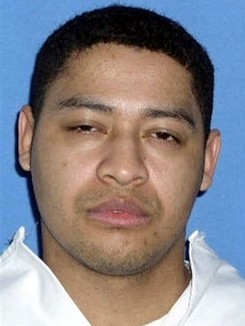
Kenneth Parr
Murderer Russell Ellwood
Murderer · USA · 1991
Russell Ellwood was a former taxi driver. Authorities suspected him of killing…
20 victims
Russell Ellwood
Murderer · USA · 1991
Russell Ellwood was a former taxi driver. Authorities suspected him of killing…
20 victims
 Robert Martines Perez
Murderer · USA · 1994
Name: Robert Martines Perez · Other name used in proceedings: Robert Martinez P…
15 victims
Robert Martines Perez
Murderer · USA · 1994
Name: Robert Martines Perez · Other name used in proceedings: Robert Martinez P…
15 victims
 Billy Frank Vickers
Murderer · USA · 1993
Billy Frank Vickers Vickers was executed by lethal injection in Texas on Januar…
14 victims
Billy Frank Vickers
Murderer · USA · 1993
Billy Frank Vickers Vickers was executed by lethal injection in Texas on Januar…
14 victims
 Walanzo Robinson
Murderer · USA · 1989
May 19, 1989 — Walanzo Deon Robinson and Dennis Eugene Hill argued in northeast…
1 victim
Walanzo Robinson
Murderer · USA · 1989
May 19, 1989 — Walanzo Deon Robinson and Dennis Eugene Hill argued in northeast…
1 victim
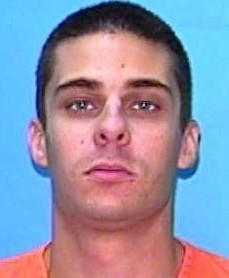 Jason Looney
Murderer · USA · 1997
Jason Looney was sentenced to death on February 18, 2000. His case was heard in…
2 victims
Jason Looney
Murderer · USA · 1997
Jason Looney was sentenced to death on February 18, 2000. His case was heard in…
2 victims
 Ricky Chase
Murderer · USA · 1989
Ricky Chase was convicted in February 1990 of capital murder for the robbery an…
1 victim
Ricky Chase
Murderer · USA · 1989
Ricky Chase was convicted in February 1990 of capital murder for the robbery an…
1 victim
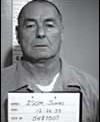 James Michael Isom
Murderer · USA
James Michael Isom was an Oregon death row inmate. He died in prison in 1997. I…
1 victim
James Michael Isom
Murderer · USA
James Michael Isom was an Oregon death row inmate. He died in prison in 1997. I…
1 victim
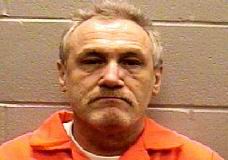 Donald Blom
Murderer · USA · 1999
Donald Blom (born 1949) was convicted of first-degree murder in the killing of…
1 victim
Donald Blom
Murderer · USA · 1999
Donald Blom (born 1949) was convicted of first-degree murder in the killing of…
1 victim
 Erik Hollie
Murderer · USA · 2009
Erik Hollie was sentenced to death on March 16, 2010, for a capital murder in W…
1 victim
Erik Hollie
Murderer · USA · 2009
Erik Hollie was sentenced to death on March 16, 2010, for a capital murder in W…
1 victim
- Gender
- male
- Country
- USA
- Location
- Matagorda County, Texas, USA
- Date of birth
- January 16, 1980
- Age at first offence
- 18
- Characteristics
- rape, robbery
- Victim profile
- Linda "Suzie" Malek (female, 30)
- Method of murder
- Shooting
- Date(s) of murder
- January 21, 1998
- Years active
- 1998
- Date of arrest
- —
- Status
-
Executed
Executed by lethal injection in Texas on August 15, 2007
Case identification
- Name: Kenneth Parr
- TDCJ Number: 999312
- Date of birth: 01/16/1980
- Age at receipt: 19
- Date received: 06/07/1999
- Education: 11 years
- Occupation: laborer
- Gender: Male
- Race: Black
- Hair color: Black
- Eye color: Brown
- Height: 05' 06"
- Weight: 164 lb
- Native county/state: Matagorda County, Texas
Status
Kenneth Parr was scheduled for execution after 6 p.m. Wednesday, August 15, 2007. He was sentenced to death for capital murder for the rape and robbery of Linda “Suzie” Malek. He was executed by lethal injection in Texas on August 15, 2007. Parr had only a brief final statement as he received a lethal dose of drugs, responding “Yeah” when asked by the warden if he had anything to say. “I just want to tell my family I love y’all, man. Keep your head up, y’all.” Nine minutes later, he was pronounced dead. A lethal dose of drugs was started. Parr was pronounced dead at 6:20 p.m.
People
Defendant
- Kenneth Parr (male; Black; laborer; TDCJ number 999312)
Co-defendant
- Michael Wayne Jiminez (co-defendant; brother and accomplice in the burglary, rape, and murder)
Victim
- Linda “Suzie” Malek (30-year-old white female)
- Victim’s children present during the offence: 8-year-old Ashley and six-year-old Zachary
The offence
On the evening of January 20, 1998, Charlotte Brown talked on the phone with her 28-year-old daughter Linda “Suzie” Malek and made plans to visit with her and her two children, 8-year-old Ashley and six-year-old Zachary, at Charlotte’s home the following day. The phone conversation was the last time Charlotte heard her daughter’s voice.
At about 2 a.m. the next day, Charlotte and her husband, Mike, received a call from Ashley who stated that two men had broken into their house. Ashley told Charlotte, “Is Mommy all right?” and that “they shot her.” Ashley also said her mother was not talking.
The first thing Charlotte and Mike noticed as they approached Suzie’s home was Suzie’s car blocking the driveway. Mike testified that “that wasn’t normal.” The living room was a mess, with papers scattered in front of the sofa and the entertainment center, and the television was missing. The children’s Sega Saturn game was also missing from its usual place in the entertainment center. The VCR was gone too. Much of Suzie’s jewelry was missing, along with her purse and the keys to her car.
Charlotte and Mike found Suzie lying face-down on the floor in her bedroom. Ashley recounted the crime for her grandparents. She said she had her eyes closed and was holding her mother’s hand: “She was squeezing it so tight it hurt. . . . Mommy was begging them not to shoot her. . . . And they shot her twice.”
Ashley described being awakened by her mother’s screaming, “Oh my God. Help me.” Ashley said they were all terrified. Ashley testified that two men, one short and one tall, wearing mask-like bandanas, were standing in the doorway to the bedroom. According to Ashley, one of them had a gun. Ashley said they were told to get on the floor: “They said to keep your faces to the floor because they didn’t want us to see.” Ashley said that while the three lay on the floor crying, the two men called her mother dirty names. They asked her if she had a gun. When she said no, they told her “if they found one, she was dead.”
The two men wanted to know if Suzie had a jewelry box; she had two. Suzie told them where her jewelry was. Ashley described the rape her mother was forced to endure. The men then shot Suzie twice in the head. Ashley recalled one of the men asking her where the keys to her mother’s car were. She told them, and they left. One then came back and asked her how to start the car; it had a standard transmission. Ashley explained that the clutch would have to be pushed in. The assailant left, threatening to come back.
After thirty minutes, still afraid the men would return, Ashley called her grandmother and told Mike what had happened. When her grandmother asked if they had tried to wake their mother up, Ashley told her no “[b]ecause I knew that she was gone.”
Parr and one co-defendant robbed, sexually assaulted, and murdered Linda “Suzie” Malek. While masked, Parr and the co-defendant burst into the residence through the front door. Parr and the co-defendant, armed with handguns, entered the victim’s bedroom and sexually assaulted the victim. Parr and the co-defendant ransacked the home, robbing the victim of money and property. The subject fatally shot the victim one time in the head.
Evidence indicated that Suzie was sexually assaulted and that she was shot to death.
The victim’s two small children were in the residence at the time of the offense and observed Parr and the co-defendant flee the residence with car keys belonging to the victim. Parr stopped and asked one of the children how to operate the car. When they were unable to start the car, they fled on foot.
Co-defendants’ actions after the offence included that much of the property stolen from Suzie’s home was recovered from the apartment of Monica Silva, Parr’s girlfriend. Some of the evidence, including Suzie’s purse, was recovered from a dumpster outside Silva’s apartment. Finally, Parr confessed to the burglary of Suzie’s home.
In the early morning hours after the murder, Parr was at Silva’s apartment. He told her he “had really messed up this time.” He said that “he had gone into a place and burglarized this place. This time he had gone in with a gun.”
Michael Jiminez, Parr’s brother and accomplice in the burglary, rape, and murder, confessed too. He said, “Me and Kenny did that. . . . We’re the ones who killed that lady.” Jiminez also said that the robbery had been planned: “They were going to kick down the door and go in there. They were sitting outside talking about what they were going to do before they went and did it.” Jiminez said he and Parr shot Suzie twice in the head. Finally, Jiminez said, “We were going to kill the kids, but the gun messed up.”
In separate accounts of the same incident, Parr and the co-defendant burst into Linda “Suzie” Malek’s home through the front door, ordered Malek and her children to lie face down on the floor, asked Ashley whether she had a gun, asked where her mother’s jewelry box was, raped her, shot her twice in the head, ransacked the home, fled with the victim’s car keys, and fled on foot after the car could not be started. Those accounts also described manual transmission operation and the return by one assailant to ask how to start the car.
Investigation
A police investigation discovered Suzie’s purse in a dumpster at an apartment complex across the street. The investigation led to Monica Silva, a resident of the apartments. Much of the property stolen from Malek’s home was recovered from Silva’s apartment, including in one described account items hidden in an air conditioning vent in Silva’s apartment. A murder weapon was hidden in an air conditioning vent at the apartment, described as a rusty .22-caliber rifle in one account.
Evidence presented at trial included:
- Prisoner fingerprints found at the murder scene
- DNA evidence tied Parr to the rape
- Property items recovered from Silva’s apartment or nearby locations
Arrest
Parr was arrested for the Malek slaying. Parr was on parole at the time of the capital murder.
Trial
Charges and conviction
Parr was indicted for capital murder by a Matagorda County grand jury. A jury found Parr guilty of capital murder. Following a separate punishment hearing, the court assessed a sentence of death.
Trial testimony and evidence
Ashley testified at trial, describing the night of the break-in and her mother’s assault and killing. The jury heard Ashley’s description and the threats made by the masked men, including the statements that if they found a gun “she was dead” and that they kept faces to the floor because they didn’t want the children to see.
Testimony also included that Monica Silva testified that Parr told her he committed burglary with a gun and that he informed her that items were hidden in the air-conditioning vent. Silva also described finding a VCR, a video game console, a gun, and a jewelry box when she returned home. One described account included that while Silva was taking out her trash, a bag fell open and a purse containing Malek’s driver’s license fell out.
A resident of Silva’s apartment complex testified about hearing two gunshots on the night of the murder and hearing two men arguing outside her window. Another resident testified that she saw and heard two young men talking and recognized the men as Kenneth Parr and Michael Jiminez.
Parr did not testify.
In one account, the State presented DNA evidence left on the victim’s body from the rape and described a rifle hidden in an air conditioning vent.
At his trial, evidence showed that Parr wrote a rap song about killing Suzie Malek and about planning to kill again.
In one account, an accomplice-related statement included that Jiminez told a witness he and Parr shot Suzie twice in the back of the head and planned to kill the children but the rusty gun “messed up.”
A Texas Attorney General press release stated that Parr confessed to the murder; the material also described that this referred to incriminating statements attributed to him in other witnesses’ testimonies.
Because of publicity surrounding the murder in Brazoria County, the trial was moved to neighboring Matagorda County.
Sentencing
Parr was sentenced to death after conviction for capital murder for the rape and robbery of Linda “Suzie” Malek.
A district court later denied habeas relief on all claims, and the Court of Appeals for the Fifth Circuit affirmed the denial.
Appeals
Parr pursued state and federal habeas relief and subsequent appellate review.
Procedural history as recorded
- April 15, 1998 — A Matagorda County grand jury indicted Parr for capital murder.
- April 12, 1999 — A jury found Parr guilty of capital murder and following a separate punishment hearing, the court assessed a sentence of death.
- March 7, 2001 — Parr’s conviction and death sentence were affirmed by the Texas Court of Criminal Appeals.
- December 5, 2000 — Parr filed a state application for writ of habeas corpus.
- November 13, 2002 — The Texas Court of Criminal Appeals denied habeas relief.
- November 13, 2003 — Parr filed a federal petition for writ of habeas corpus.
- July 27, 2004 — The federal district court denied habeas relief on all claims.
- December 7, 2006 — The 5th Circuit Court of Appeals affirmed the district court’s denial of habeas relief.
- March 7, 2007 — Parr sought certiorari review in the U.S. Supreme Court.
- June 18, 2007 — The Supreme Court denied certiorari review.
- December 20, 2006 — The trial court set execution date for August 15, 2007.
Federal habeas decision details
Parr’s case proceeded as Parr v. Quarterman, 472 F.3d 245 (5th Cir. 2006) (Habeas). The Court of Appeals affirmed the district court’s denial of habeas relief and denied Parr’s request for a certificate of appealability (COA).
The holdings listed included:
- Collateral estoppel did not bar prisoner's prosecution.
- State habeas court’s conclusion that prosecutor's handwritten note was immaterial was not an unreasonable application of Brady.
- State habeas court’s conclusion that prosecutor's failure to disclose alleged police coercion of witness did not violate Brady was not unreasonable.
- Prosecutor's failure to disclose relationship between prosecution and parole officer did not violate Brady.
- Trial counsel's presentation of mitigating evidence at punishment phase did not render his assistance ineffective.
- State habeas court's failure to consider evidence that jury improperly considered the issue of parole did not warrant habeas relief.
- District court correctly denied relief on claim concerning trial court's failure to instruct jury that prisoner would have to serve 40 years before being eligible for parole.
- District court did not err in denying relief on claim that parole officer's testimony misled jurors regarding the time prisoner would serve before becoming eligible for parole.
- Witness's statement referring to prisoner's interview was not a comment on prisoner's post-arrest silence in violation of his due process rights.
- Prisoner's due process rights were not violated by introduction of a booking photo of prisoner's brother/co-defendant.
- Prisoner would not be granted a COA on the issue of whether his death sentence, for a crime committed when he was 18 months and four days old, violated his Eighth Amendment rights against cruel and unusual punishment.
The narrative procedural background included that Parr requested federal habeas relief after his conviction and sentence of death and denial of his application for state habeas relief. The district court denied habeas relief but granted a certificate of appealability (COA) on 17 issues. The Court of Appeals found Parr’s claims did not warrant habeas relief and denied his request for a COA.
Other details
Prior criminal history and parole
Parr’s extensive criminal history included convictions for burglary of a habitation and assault. He also had a history of domestic abuse.
In one account, Parr already was on probation after juvenile burglary and assault convictions when he was arrested for the Malek slaying. Parr’s timing was just days past his 18th birthday, and the material described that the U.S. Supreme Court has barred execution for those convicted of crimes committed when under 18. Parr’s lawyers raised the age issue in earlier appeals but lost.
Parr v. Quarterman records also described Parr’s parole status at the time of the murder and a parole revocation proceeding. At the revocation hearing, the examiner concluded there was insufficient evidence to prove that Parr was involved in the theft of Malek’s television.
Girlfriend and other witnesses mentioned
- Monica Silva (Parr’s girlfriend; testified regarding finding stolen items at her apartment, including a VCR, video game console, gun, and jewelry box, and described receiving Parr’s statements)
- Charlotte Brown (Malek’s mother; called after Ashley’s report; received a call from Ashley)
- Mike Brown (Malek’s stepfather; received a call from Ashley and drove to Malek’s home)
- Ashley (Malek’s 8-year-old daughter; testified at trial)
- Zachary (Malek’s six-year-old son)
- Mary Cologne (Parr’s mother; attended the execution)
- Joe Williams (Parr’s brother; attended the execution)
- Steven Reis (Matagorda County district attorney who prosecuted Parr in one account; quoted)
- Michelle Lyons (Texas Department of Criminal Justice spokeswoman; quoted)
Quotes (verbatim)
Mike testified he knew then, “that wasn’t normal.”
Ashley recounted: “She was squeezing it so tight it hurt. . . . . . . And they shot her twice.”
Ashley said: “Oh my God. Help me.”
Ashley testified: “They said to keep your faces to the floor because they didn’t want us to see.”
Ashley testified: “if they found one, she was dead.”
Ashley told her grandmother no “[b]ecause I knew that she was gone.”
Parr told Monica Silva: “had really messed up this time.”
Parr said: “he had gone into a place and burglarized this place.
Jiminez said, “Me and Kenny did that. . . . We’re the ones who killed that lady.”
Jiminez said: “They were going to kick down the door and go in there. They were sitting outside talking about what they were going to do before they went and did it.”
Jiminez said, “We were going to kill the kids, but the gun messed up.”
At execution, Parr responded: “Yeah”
Parr said: “I just want to tell my family I love y’all, man,” he said.
Parr said: “Keep your head up, y’all.”
Parr said: “Can y’all hear me? Tell my family that I love y’all,”
Michelle Lyons said: “From all accounts, he was not a problem, not aggressive or assaultive with the staff,”
Michelle Lyons said: “He made his way willingly to the execution chamber. We’re very fortunate.”
Steven Reis said: “His history of violence is clearly part of the reason the jurors chose to answer the capital murder questions as they did,”
Steven Reis said: “They were certain that he posed a danger to anyone with whom he would come into contact.”
Michelle Lyons said: “He made threats against our staff, and it was determined that it was simply too dangerous to allow him out of his cell,”
Michelle Lyons said: “He’s been adamant that he would like to harm staff members before he’s executed.”
Steven Reis said: “I thank God for having intervened by causing a rifle to jam before those two murderers could kill two helpless children,”
Steven Reis said: “He is the clearest example of how even death row inmates are dangerous,”
Steven Reis said: “Many people suggest that once a defendant is incarcerated for life, they pose no danger to society. This misleading statement presumes that the people who work within the prisons are not members of society, which is preposterous. Those people are at risk from the likes of Parr.”
Disciplinary infractions and threats before execution
After convicted of her murder and sent to death row, prison records show he continued to pile up disciplinary infractions. In the weeks preceding his execution, officials took the rare step of putting him off-limits for media interviews because he threatened to harm prison officers. The material stated that he threatened to harm female prison staff members and then broadened his threats to include others working at the facility. Because of these threats, prison officials took the rare step of denying visits from the news media the week before his execution.
A disciplinary record was described as including an incident where he attacked a female corrections officer and threw her down a flight of stairs. In one account, Texas Department of Criminal Justice officials described repeated threats to rape female prison employees before his death.
Execution location and pronouncement time
The execution took place in Huntsville, Texas. in one account. Another account stated nine minutes after he was pronounced dead.
Other statements attributed to Parr
The material included a longer prose statement presented as an article written by Kenneth Parr, titled “A DAY IN A THOUGHT,” containing multiple paragraphs and quotations. It included the following verbatim lines:
- “The rich get richer and the poor get poorer.”
- “Sometimes the longest way around is the shortest way to the Light. And the darkest part of the night is right before the day break. But, the sun shines just a little brighter after the storm is all over.”
- “DO NOT LET ME BE A VOICE UNHEARD !”
The statement also included: “I’m in the process of suffering grave Misjustices.” and included the line “In continuation we leave a small article written by Kenneth Parr himself: ‘A DAY IN A THOUGHT’”. It also stated: “In the struggle for liberation I will say, DO NOT LET ME BE A VOICE UNHEARD !”
The material included an address for contact: “Kenneth Parr # 999312 Terrell Unit 12002 FM 350 South Livingston, Texas 77351 USA”.
Outcome
Parr’s execution was carried out on August 15, 2007 by lethal injection in Texas.
Spotted an error, or have more information about this case?