
Donald Blom
Murderer Russell Ellwood
Murderer · USA · 1991
Russell Ellwood was a former taxi driver. Authorities suspected him of killing…
20 victims
Russell Ellwood
Murderer · USA · 1991
Russell Ellwood was a former taxi driver. Authorities suspected him of killing…
20 victims
 Robert Martines Perez
Murderer · USA · 1994
Name: Robert Martines Perez · Other name used in proceedings: Robert Martinez P…
15 victims
Robert Martines Perez
Murderer · USA · 1994
Name: Robert Martines Perez · Other name used in proceedings: Robert Martinez P…
15 victims
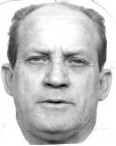 Billy Frank Vickers
Murderer · USA · 1993
Billy Frank Vickers Vickers was executed by lethal injection in Texas on Januar…
14 victims
Billy Frank Vickers
Murderer · USA · 1993
Billy Frank Vickers Vickers was executed by lethal injection in Texas on Januar…
14 victims
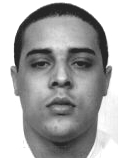 Gerald Tigner
Murderer · USA · 1992
Gerald Wayne Tigner was convicted of the capital murders of Michael Watkins and…
3 victims
Gerald Tigner
Murderer · USA · 1992
Gerald Wayne Tigner was convicted of the capital murders of Michael Watkins and…
3 victims
 Gilberta Estrada
Murderer · USA · 2007
Gilberta Estrada was identified as the 25-year-old woman who hanged three of he…
3 victims
Gilberta Estrada
Murderer · USA · 2007
Gilberta Estrada was identified as the 25-year-old woman who hanged three of he…
3 victims
 Elena Kiejliches
Murderer · USA · 2000
Defendant: Elena Kiejliches (Russian émigré) · Victim: Borys Kiejliches (also d…
1 victim
Elena Kiejliches
Murderer · USA · 2000
Defendant: Elena Kiejliches (Russian émigré) · Victim: Borys Kiejliches (also d…
1 victim
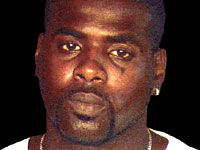 Marlon Legere
Murderer · USA · 2004
Marlon Legere was born October 10, 1975, and he was a Trinidadian-American from…
2 victims
Marlon Legere
Murderer · USA · 2004
Marlon Legere was born October 10, 1975, and he was a Trinidadian-American from…
2 victims
 Pete Russell
Murderer · USA · 2001
Pete Russell, Jr. was listed with TDCJ Number 999443 and Date of Birth 05/02/19…
1 victim
Pete Russell
Murderer · USA · 2001
Pete Russell, Jr. was listed with TDCJ Number 999443 and Date of Birth 05/02/19…
1 victim
 Rita Gorgonowa
Murderer · Poland · 1931
Rita Gorgonowa Rita Gorgonowa was also known by the real name Emilia Margerita…
1 victim
Rita Gorgonowa
Murderer · Poland · 1931
Rita Gorgonowa Rita Gorgonowa was also known by the real name Emilia Margerita…
1 victim
- Gender
- male
- Country
- USA
- Location
- Moose Lake, Minnesota, USA
- Date of birth
- February 5, 1949
- Age at first offence
- 50
- Characteristics
- serial rapist, rape, kidnapping
- Victim profile
- Katie Poirier, 19
- Method of murder
- Strangulation
- Date(s) of murder
- May 26, 1999
- Years active
- 1999
- Date of arrest
- June 22, 1999
- Status
-
Life imprisonment
Sentenced to life in prison without parole on August 16, 2000
Case record: Donald Blom
Parties
- Donald Blom (born 1949) was convicted of first-degree murder in the killing of Katie Poirier (19).
- Katie Poirier was a 19-year-old night clerk.
- Pam Poirier was Katie Poirier’s mother.
- Rodney Brodin was Blom’s defense attorney.
- Thomas Pertler was the prosecutor.
- Judge Gary Pagliaccetti presided over the sentencing hearing.
- Dr. Ann Norrlander testified as a forensic odontologist.
- Amy Blom testified for the defense.
- Lloyd Simich was Katie’s grandfather.
- Darrel Brown provided information to police.
- Dennis Fier was a Minnesota Bureau of Criminal Apprehension agent mentioned as having suspected Blom.
Timeline
- 26 May 1999 — Katie Poirier went missing from the D. J.'s Expressway Conoco convenience store in Moose Lake, Minnesota, where she worked as a night clerk.
- June 18 — Darrel Brown called the police tip line, reporting that Donald Hutchinson looked similar to the suspect composite sketch and had been absent the day after Katie’s disappearance.
- June 22 — Blom was arrested while driving home; he was taken in for questioning.
- 8 September — Blom confessed to abducting Katie, strangling her and burning her body in a fire pit on his property.
- August 10 — Blom denied kidnapping Katie while testifying.
- August 16, 2000 — Blom was sentenced to life in prison without parole.
- 2004 — An appeals court upheld Blom’s conviction.
- 2006 — Blom expressed willingness to answer questions about unsolved local crimes in exchange for transfer to a prison closer to his relatives.
- December 2007 — The Minnesota Supreme Court rejected Blom’s third petition for a new hearing.
Background
Donald Albin Blom (born 1949) was an American citizen. He was a registered sex offender involved in five cases of kidnapping or sexual assault prior to Katie’s murder, and investigators suspected him of being a serial killer.
Blom’s father had abused him when he was around 13 years old. This incident turned Blom into an underage drinker and a problem child. In the 10th grade, he went to a reform school where he often skipped classes.
Prior offences and convictions described
- In 1975, Blom kidnapped a 14-year-old girl, gagged her and raped her. He locked her up in his car trunk, but she escaped and turned him in. He went to trial and was convicted.
- Three years later, he committed aggravated assault.
- In 1983, he was arrested for criminal sexual conduct. The same year, he threatened two teenage girls at knifepoint in a remote area, tied them to a tree, and put socks in their mouths. He choked and revived one of them several times and said he was going to rape them. The girls were rescued when a police officer saw their car parked the wrong way. Blom fled into the woods, later changed his appearance by dying his hair, and was arrested two months later when one of the girls recognized him. He pleaded guilty.
- By May 1999, Blom had six felony convictions, five involving kidnapping and sexual assault.
- An examination in 1992 included a psychologist prediction that if Blom was not closely monitored, he would probably engage in additional antisocial behavior.
- The narrative also described Blom as having changed his name and appearance over time, and as having gotten a job and got married.
The offence
On 26 May 1999, 19-year-old Katie Poirier went missing from the D. A passer-by reported that there was no attendant present in the store.
A grainy black-and-white surveillance video showed Katie being forced out of the store around 11:40 pm by a man wearing jeans, a backwards baseball cap and a New York Yankees baseball jersey with the number 23 on the back. The man’s hand was at the back of Katie’s neck, and based on the way she touched her throat, there might have been a cord tied around her neck. Police estimated the abductor was about 5'10" and weighed around 170, had long light-colored hair, and appeared to be around 25 years old.
Witnesses reported seeing a black pick-up truck near the convenience store that evening. One witness gave a partial license plate number (three numbers and a letter). A composite sketch of the abductor based on statements of four witnesses was broadcast on local media.
Blom was later confessed by him (and at trial by evidence) to abducting Katie, strangling her and burning her body in a fire pit on his property.
Investigation
Investigators checked Blom soon after Katie’s disappearance because Blom had a pickup truck registered to his name with a license plate number matching the partial number provided by the witness. However, that vehicle was white-colored.
Blom had been working at the Minnesota Veteran’s Home under the name “Donald Hutchinson” prior to Katie’s death.
Tip and links to the composite sketch
On June 18, Blom’s former co-worker Darrel Brown called the police tip line. Brown stated that “Donald Hutchison” looked similar to the man in the composite sketch, had been absent on the day following Katie’s disappearance, had recently cut his hair, had stopped driving his black pick-up truck, and had suddenly quit his job as a janitor without any notice.
Investigators also learned that Blom owned a 20-acre property in Moose Lake, 12 miles from the convenience store where Katie had been abducted. Investigators learned that Blom had earlier been convicted of abducting seven petite young girls like Katie. Search warrants were obtained. Neighbors said Blom had spent a lot of time at the property before Katie’s abduction, but not since.
Search activities
While initially questioned by agents from Minnesota’s Bureau of Criminal Apprehension, Blom was spending time with his family at a campground 140 miles away from his home in Richfield, Minnesota. He was arrested later that same day, June 22, while driving home. He was described as friendly and cooperative, but he refused to give a statement and requested an attorney.
Investigators searched Blom’s residence and extensive Moose Lake property with support from over one hundred members of the National Guard and several hundred volunteers. They were unable to find Katie or her body despite extensive searches. They found some firearms that Blom was not allowed to carry given his prior convictions.
On the second day of the search, investigators found fragments that appeared to be bone in a fire pit on Blom’s property. The fragments were sent to a lab and were identified as pieces of human bones and a charred portion of a human tooth. DNA tests were inconclusive, but dental examination established that the filling of the tooth portion matched that of the fillings used for Katie. Researchers stated the tooth belonged to a young female, and the chance of it belonging to Katie was described as quite high.
Confession and evidence disputes
On 8 September, Blom confessed to abducting Katie, strangling her and burning her body in the fire pit. The confession was described as somewhat inconsistent with the evidence. The surveillance video showed the man with his hand on the back of Katie’s neck, while Blom stated he walked out with Katie and that she asked him to let her go several times but did not fight until he started choking her at his property. Blom stated he killed Katie with his bare hands and burned her dead body using wood and paper. Investigators stated that wood and paper alone would not have been sufficient to reduce a human body to ash. Blom also did not confess to sexually assaulting Katie and said he did not know why he had committed the crime.
When asked whether the remains in the fire pit were those of Katie Poirer, he said "I guess so". When pressed, he said "I didn't know the answer to this question". When asked "then whose remains are they", he replied "Well, I was asking that myself, man."
Blom soon recanted the confession, saying that stress of solitary confinement and hallucinations due to “ten medications” had prompted him to make a false confession.
Arrest
Blom was arrested on June 22 while driving home from the campground where he had been with his family. He refused to give a statement and requested an attorney.
He was initially held in a county facility but was placed in solitary confinement after his plans to escape were discovered.
Trial
Proceedings
Blom’s trial began in June 2000. Over fifty witnesses were called to testify.
Evidence presented against Blom included:
- video surveillance,
- witness reports,
- testimonies from two women whom Blom had kidnapped in 1983,
- his confession,
- and forensic odontologist testimony.
Witnesses and evidence at trial
Blom stated that he never had a New York Yankees jersey with the number 23 on the back, which was worn by the man in the surveillance video. Blom’s brother testified that he had given the Blom family a box of old clothing that included a New York Yankees jersey.
The two women kidnapped in 1983 resembled Katie as girls and testified about how Blom had treated them. The forensic odontologist Dr. Ann Norrlander testified that the tooth portion recovered from Blom’s property was consistent with Katie’s age, gender and dental work. Blom’s barber confirmed that Blom’s hair had blond tips at the time of the abduction, making him appear younger, while the man in the surveillance video was assumed to be around 25 years old.
The defense argued and presented evidence to counter identification, including lineup identification claims.
Defense case: Amy Blom and cross-examination claims
Blom’s defense attorney Rodney Brodin presented Blom’s wife Amy as his first witness on 7 August. Amy testified that her husband had come home at 9:30 pm on the night of Katie’s disappearance, that they went to bed, and that when she woke up in the morning the coffee had been ready. She testified that this made her believe he had been home the entire night. She also accused the police of threatening to take her children away if she did not answer questions in the way they wanted. She denied seeing any baseball jersey in clothing given by Blom’s brother.
Brodin also reiterated that only one of the six witnesses was able to identify Blom in a line-up. He called his own odontologist to counter prosecution dental experts, and argued that Blom’s earlier confession was a mistake and should not be taken into account. Brodin also claimed that another man had confessed to the crime but was not arrested.
Heated exchange and testimony timing
During trial, Blom expressed angrily to his family that he was not the murderer and got involved in a heated exchange of words with Katie’s mother.
On August 10, Blom denied kidnapping Katie. He said his wife had threatened to commit suicide due to media pressure and therefore he decided to make a confession to get out of the cell. He said he had been at Moose Lake in the evening for fishing and returned home by 10:00 pm before the time of Katie’s abduction.
Prosecutor Thomas Pertler cross-examined Blom about his confession; Blom answered with yes or no answers. Blom also said he had never seen the baseball jersey before and that people who claimed to have seen him wear it were mistaken.
Closing and verdict
After deliberation, Blom was convicted of first-degree murder and life without parole. He was also given a 19-year sentence for possession of firearms found at his property, on top of the first-degree murder charge.
Sentencing
On August 16, 2000, Blom was sentenced to life in prison without parole.
An AP account described the sentencing hearing as chaotic. Judge Gary Pagliaccetti suspended the hearing for about 40 minutes after an angry exchange between Pam Poirier and Blom.
During the hearing, Pam Poirier spoke toward Blom and said: "Get a good look at me. I want my face in your dreams always". She also said: "Give it a rest. It's my turn".
Blom stood up and cursed her and said: "You've got the wrong (expletive) guy, lady" and "You look all you want. I'm not your (expletive) man." Deputies wrestled Blom back into his seat as Pagliaccetti cleared the room.
When the hearing resumed, Blom repeated his assertion that he was innocent and that his recanted confession was "a stupid thing to do." He said: "I'm not guilty" and "If there was something I could do to prove it, I would." He also said to Poirier’s family: "I have respect for you, and feel sorry for what you lost ... and I hope someday it will come out."
Appeals
Donald Blom appealed his conviction.
In 2004, an appeals court upheld Blom’s conviction. The narrative described it as an 81-page ruling that upheld his conviction, determining that the trial was fair and seeing no reason to reverse the decision or grant a new trial.
In December 2007, the Minnesota Supreme Court rejected Blom’s third petition for a new hearing. It described Blom as claiming that his confession had been coerced and that he had been improperly denied the opportunity to gather evidence demonstrating his innocence. It also described him complaining that imprisonment in another state hindered him from working on his appeal. The court decided his claims were procedurally barred.
Outcome
- Blom’s conviction resulted in life in prison without parole.
- Blom was also sentenced to 19 years for possession of firearms found at his property, in addition to the life without parole sentence for first-degree murder.
- Katie Poirier’s body was never found despite extensive searches of roads, woods, lakes and fishing shacks.
Aftermath
By the time of Blom’s conviction, over $200,000 had been spent on the case.
The case was described as changing how Minnesota charged criminals by tightening Minnesota sex offender laws and implementing longer prison terms to repeat offenders, informally known as “Katie’s Law.”
Family and public developments described
After the trial ended, Amy Blom sent an email to two Minnesota legislators stating that she believed Blom was Katie’s murderer. She stated that Blom had abused her for seven years and that she had not known he had been married twice earlier. She said when he adopted her last name “Blom,” she had been flattered and did not realize it was to conceal his past. She said he went to the Moose Lake property frequently and told her little, and she believed he had committed other crimes including murder. She stated that she was no longer under his domination and could tell the truth; Blom had not been home that night.
Blom’s sons confirmed violent abuse by describing Amy’s bruises and black eyes.
In 2006, Blom expressed willingness to answer questions about unsolved local crimes in exchange for transfer to a prison closer to his relatives. The confession never materialized after detectives arrived with the transfer letter. The narrative described Blom kept talking about other matters for three days and then no confession occurred.
Suspected links to other crimes
Investigators believed Blom may have been involved in a series of murders dating back to the 1970s, with a modus operandi described as changing his name and appearance after each incident.
Dennis Fier, a Minnesota Bureau of Criminal Apprehension agent, had suspected Blom was a serial killer for a long time. The account included Fier’s claim about what Blom had admitted: "often would leave for entire nights, would be using alcohol and drugs and would not remember when he came home the next day, where he had been or what he did."
At the time of Blom’s arrest, investigators were reportedly looking at similar crimes, including the murder of 19-year-old Wisconsin student Holly Spangler. In 1993, Holly’s decomposed body was found in the woods of a Bloomington, Minnesota park. Blom was described as living in the area under the name “Donald Prince” and as a registered sex offender; he was described as one of the top suspects at the time.
Another case described was the strangulation of Wilma Johnson, whose body was found near the St. Paul Cathedral in 1983. Blom was described as admitting he was at the crime scene but denying killing her. The narrative also said Blom told investigators he might have killed a man near the St. Paul high bridge, even though a body was never found.
Other details
- The sentencing and trial narrative described a mandatory life sentence for Blom as a repeat sex offender.
- The case captured the state’s attention from the start due to the grainy black-and-white surveillance video showing Katie being forced out of the store and the fact that her body was not found despite extensive searches.
- The narrative described the involvement of searchers including volunteers, the National Guard, and law enforcement.
- A composite sketch was broadcast and used to seek information.

Spotted an error, or have more information about this case?