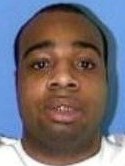
Toronto Patterson
Homicide Jack Kevorkian
Homicide · USA · 1990
Jack Kevorkian (born May 26, 1928) was a controversial American pathologist. He…
130 victims
Jack Kevorkian
Homicide · USA · 1990
Jack Kevorkian (born May 26, 1928) was a controversial American pathologist. He…
130 victims
 David Koresh
Homicide · USA · 1993
David Koresh (born Vernon Wayne Howell; August 17, 1959 – April 19, 1993) led t…
79 victims
David Koresh
Homicide · USA · 1993
David Koresh (born Vernon Wayne Howell; August 17, 1959 – April 19, 1993) led t…
79 victims
 Todd Hall
Homicide · USA · 1996
Todd Hall was described by neighbors as "mentally slow" and was said to have su…
9 victims
Todd Hall
Homicide · USA · 1996
Todd Hall was described by neighbors as "mentally slow" and was said to have su…
9 victims
 Clinton Bankston
Homicide · USA · 1987
15 August 1987 — Ann Morris (63), her sister Sally Nicholson (59), and Sally’s…
5 victims
Clinton Bankston
Homicide · USA · 1987
15 August 1987 — Ann Morris (63), her sister Sally Nicholson (59), and Sally’s…
5 victims
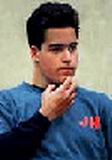 Joshua Jenkins
Homicide · USA · 1996
Joshua Jenkins was a 15-year-old American killer who killed five members of his…
5 victims
Joshua Jenkins
Homicide · USA · 1996
Joshua Jenkins was a 15-year-old American killer who killed five members of his…
5 victims
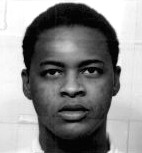 Richard James Wilkerson
Mass murderer · USA · 1983
Richard James Wilkerson (#756) Richard James Wilkerson was executed by lethal i…
4 victims
Richard James Wilkerson
Mass murderer · USA · 1983
Richard James Wilkerson (#756) Richard James Wilkerson was executed by lethal i…
4 victims
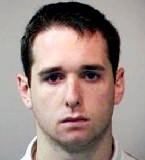 Raymond Clark
Murderer · USA · 2009
Annie Marie Le (July 3, 1985 – September 8, 2009) was a 24-year-old American do…
1 victim
Raymond Clark
Murderer · USA · 2009
Annie Marie Le (July 3, 1985 – September 8, 2009) was a 24-year-old American do…
1 victim
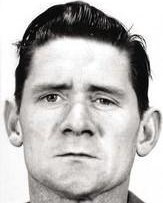 Ronald Joseph Ryan
Murderer · Australia · 1965
Ronald Joseph Ryan (c. 21 February 1925 - 3 February 1967) was executed by hang…
1 victim
Ronald Joseph Ryan
Murderer · Australia · 1965
Ronald Joseph Ryan (c. 21 February 1925 - 3 February 1967) was executed by hang…
1 victim
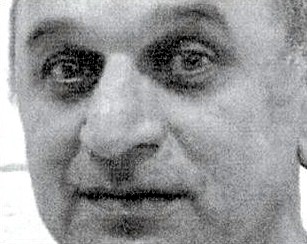 David Lee Fisher
Murderer · USA · 1983
David Lee Fisher was executed by lethal injection in Virginia on March 25, 1999…
1 victim
David Lee Fisher
Murderer · USA · 1983
David Lee Fisher was executed by lethal injection in Virginia on March 25, 1999…
1 victim
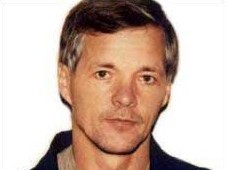 Jack Unterweger
Serial killer · USA / Czechoslovakia · 1976
Johann “Jack” Unterweger was an Austrian serial killer. He was born in 1950 in…
12 victims
Jack Unterweger
Serial killer · USA / Czechoslovakia · 1976
Johann “Jack” Unterweger was an Austrian serial killer. He was born in 1950 in…
12 victims
- Gender
- male
- Country
- USA
- Location
- Dallas County, Texas, USA
- Date of birth
- October 17, 1977
- Age at first offence
- 18
- Characteristics
- juvenile (17), robbery, drugs, drug dealer, crack addict
- Victim profile
- Kimberly Brewer, 25, and her two daughters, 3 year old Ollie, and 6 year old Jennifer
- Method of murder
- Shooting ( .38-revolver)
- Date(s) of murder
- June 6, 1995
- Years active
- 1995
- Date of arrest
- Same day
- Status
-
Executed
Executed by lethal injection in Texas on August 28, 2002
Case record: Toronto Patterson
Timeline
- 1994 — Patterson was charged as a juvenile for unlawful weapon possession; the case was ultimately dismissed.
- June 6, 1995 — Patterson left his girlfriend’s house and later drove his grandmother’s car to Evelyn Stiff’s home, visited with Kimberly Brewer, then returned and fatally shot Kimberly and her children, three-year-old Ollie and six-year-old Jennifer, with a .38-revolver.
- April 1995 — Patterson’s car with expensive gold and chrome wheel rims was stolen.
- June 6, 1995 (around 10 or 11 a.m.) — Patterson informed a friend he was going to physical therapy for a back injury.
- June 6, 1995 (around 2 or 3 p.m.) — Patterson returned to his girlfriend’s house looking scared and out-of-breath, changed his clothes, and told a friend he had just robbed and shot someone in an attempt to rob the person of his wheels.
- June 6, 1995 (same day) — Patterson tried to sell the stolen wheels to Aycock Tire and Wheel and kept the wheels in his girlfriend’s garage after failing to make a deal.
- June 6, 1995 (same day) — Police officers arrested Patterson on murder charges and searched both Patterson’s vehicle and the residence of Patterson’s girlfriend.
- June 7, 1995 — Patterson submitted two written statements to a police detective admitting and apologizing for his involvement in the murders.
- June 23, 1995 — Patterson was indicted for capital murder in the 5th Criminal District Court of Dallas County, Texas.
- Nov. 10, 1995 — Trial on the merits began.
- Nov. 17, 1995 — The jury returned a verdict of “guilty.”
- Nov. 20, 1995 — Following a separate punishment hearing, the same jury answered “yes” to the future dangerousness special issue; the trial court assessed punishment at death.
- 1999 (on an unspecified date in 1999) — The Texas Court of Criminal Appeals affirmed the conviction and sentence in an unpublished opinion.
- 1999 (later that same year) — The Supreme Court denied certiorari review.
- Sept. 4, 1997 — Patterson petitioned for state habeas relief while his direct appeal was pending.
- Feb. 3, 1999 — The Court of Criminal Appeals adopted the trial court’s recommendation to deny state habeas relief.
- Dec. 16, 1999 — The United States District Court for the Northern District of Texas stayed Patterson’s execution to allow him to seek federal habeas corpus relief.
- April 3, 2000 — Patterson submitted a second state habeas petition to the Court of Criminal Appeals.
- May 3, 2000 — The Court of Criminal Appeals dismissed the successive petition as an abuse of the writ.
- Oct. 4, 2000 — Patterson applied for federal habeas relief in the district court.
- Aug. 17, 2001 — The district court issued a final order denying relief and also denied Patterson’s request for a certificate of appealability.
- Feb. 26, 2002 — The Fifth Circuit Court of Appeals denied Patterson’s request for a certificate of appealability.
- June 28, 2002 — The Supreme Court denied Patterson’s petition for certiorari to the Fifth Circuit.
- Aug. 20, 2002 — Patterson’s third state writ was dismissed as an abuse of the writ.
- Aug. 28, 2002 — Patterson was executed by lethal injection in Texas after 6 p.m.
- Aug. 23, 2002 — The Texas Attorney General issued information stating Patterson was scheduled to be executed after 6 p.m. on Wednesday, Aug. 28, 2002.
Background
Toronto Patterson began selling crack cocaine when he was 15 years old. He openly displayed gang membership when he was 15. At age 17, he developed an affinity for expensive chrome and gold automobile wheels. He had been a gang member when he was a high school sophomore, had worn his gang colors to school, carried a beeper, defied authority, and failed to attend his classes. He threatened to kill school authorities when they confiscated his beeper, and he dropped out of high school during his sophomore year.
Patterson was also a drug dealer and stole money from a drug customer on at least two occasions. He sold cocaine to an undercover FBI informant on March 10 and March 12, 1994, in an area of Dallas heavily occupied by gang members.
Patterson owned a car equipped with expensive chrome and gold or all gold automobile wheels, but it was stolen in April 1995. He knew that Vernon Stiff, a cousin serving time in the penitentiary, stored a BMW with such wheels at the home of Evelyn Stiff, his great-aunt.
Patterson also had firearms history described in the case materials. The year before the murders, Patterson possessed a .38 handgun and a 9 mm handgun. In that year, he fired a “Mac 12” gun at one of his friends. On Sept. 6, 1994, after police officers found a loaded 9 mm handgun in Patterson’s vehicle during a routine traffic stop, he was charged as a juvenile for unlawful weapon possession; the case was ultimately dismissed.
Patterson’s childhood and development were described as involving exposure to drugs and violence and whippings inflicted by his mother. Another portrayal in the materials stated that drug and alcohol abuse were pervasive in his world, and that he was exposed early to drugs, alcohol, and violence in his home and community.
Patterson wrote a pen pal request while on death row. In that request, he described his interests in learning, reading, writing, drawing, writing poems, and craftwork, and playing sports and watching TV. He stated he was born a Baptist, believed in God, and had faith and prayed and read his Bible from time to time. He wrote that he began writing a book to generate funds for help with his life on death row and asked for sincere friendship and assistance.
A death row letter also stated that Patterson was arrested in Dallas, Texas on the charge of Capital Murder and that he was “shipped off” to Texas Death Row; it asserted that he remained in search of sincere friendship and that he began to write a book as a means to generate funds for obtaining adequate legal representation. In that letter, he described that an execution date was set for Aug. 28, 2002. The letter ended with “In Struggle! - Toronto Patterson.”
The offence
On June 6, 1995, Patterson drove his grandmother’s car to Evelyn Stiff’s home and visited with Kimberly Brewer, one of Evelyn’s daughters. After chatting with Kimberly for about 15 minutes, Patterson went to physical therapy. Thereafter, Patterson returned to Evelyn’s house and fatally shot Kimberly and her two children: three-year-old Ollie and six-year-old Jennifer, using a .38-revolver.
Kimberly was shot in the head as she relaxed on a living room recliner. Jennifer was shot in the head as she watched cartoons and played in her bedroom. Ollie, on the bed in the same room, was killed by a gunshot to the head. Ollie also had gunshot wounds to her left hand and neck. The children’s injuries were described as indicating Patterson was only three feet away when he shot them, and that Ollie’s injuries were consistent with an adult standing over her and firing downward while she cowered in the corner of the bed and covered her ears.
After the murders, Patterson went to the garage, unfastened three of the wheels from the BMW, and placed them in his grandmother’s car, and he was unable to unfasten the fourth wheel. Patterson did not take any other valuable items from the house.
Around 2 or 3 p.m., Patterson returned to his girlfriend’s house looking scared and out-of-breath. He changed his clothes and explained to a friend that he had just robbed and shot someone in an attempt to rob the person of his wheels and that he needed help carting three of the wheels into the house.
That same afternoon, Patterson tried to sell the stolen wheels to Aycock Tire and Wheel. Because he was unable to make a deal with the store manager, he kept the wheels in his girlfriend’s garage.
The materials also stated that there were no valuables taken from the house and that authorities discovered the bodies of Kimberly’s daughters, six-year-old Jennifer Brewer and three-year-old Ollie Brown, in a bedroom, and Kimberly Brewer’s body in a recliner in front of the television set. Upon searching the garage, three of the four wheels on the BMW belonging to Kimberly’s brother were found missing, and it was apparent someone tried unsuccessfully to remove the fourth wheel.
Investigation
Police arrested Patterson on murder charges the same day and searched both his vehicle and the residence of Patterson’s girlfriend. Clothing that Patterson wore earlier in the day had tiny spots of blood that were consistent with a blood pattern that would result from shooting someone in the head.
Patterson initially claimed that two Jamaicans actually did the shooting. In a second statement, after police confronted him with the fact that the wheels were located at his girlfriend’s house, he admitted he was the one who committed the triple homicide.
On June 7, 1995, Patterson submitted two written statements to a police detective. In the first statement, Patterson claimed that he gave the stolen wheels to “two Jamaicans” who actually did the shooting. In the second statement, after being confronted with the fact that police had located the wheels at his girlfriend’s house, Patterson admitted that he was the one who committed the triple homicide.
At trial, Patterson testified and recanted. He claimed that his statements had been coerced, and he claimed that the “Jamaicans-made-me-do-it” story was not his doing and that he had nothing to do with the murders.
Prosecutors also presented evidence that Patterson’s fingerprints were found on the wheel rims, along with clothing found at his girlfriend’s house that had spots of blood from the victims. Prosecutors also used a videotape of television news coverage, in which they alleged Patterson was seen in the background while the bodies were being removed.
The materials included a separate statement attributed to Patterson’s confession:
“I’m sorry for what I have done to my family and friends. I confess to Detective Wig that I want y’all to know that I love y’all and I didn’t want nothing to happen to me, nor family or friends. I can be rehabilitated. This is the hardest situation I have ever been in dealing with the Jamaicans. I will never do it again”.
Arrest
Patterson was arrested by police on murder charges on June 6, 1995, after police searched his vehicle and his girlfriend’s residence and found evidence including the wheels and blood spots on clothing he had worn earlier in the day.
One account described Patterson as being seen in news footage outside the cousin’s house while the bodies were being removed. Another account described him as having been spotted by prosecutors scanning television coverage of the bodies being removed, based on his appearance in the video.
Trial
Patterson was indicted for capital murder in the 5th Criminal District Court of Dallas County, Texas on June 23, 1995. He pleaded “not guilty.”
Trial began on Nov. 10, 1995. On Nov. 17, 1995, the jury returned a verdict of “guilty.” A separate punishment hearing followed. The jury answered “yes” to the future dangerousness special issue and found that no mitigating circumstance warranted a sentence of life imprisonment. The trial court assessed punishment at death on Nov. 20, 1995.
The materials stated that Patterson was tried only on charges of killing the 3-year-old, and because the girl was under 6, Patterson was found guilty of a capital offense.
The defense at trial presented Patterson’s testimony that he had nothing to do with the murders and that his previous statements were coerced.
Sentencing
Following a separate punishment hearing, the jury answered “yes” to the future dangerousness special issue and found that no mitigating circumstance warranted that Patterson be sentenced to life imprisonment. Consequently, on Nov. 20, 1995, the trial court assessed punishment at death.
In the materials, Patterson was sentenced to death for the capital murder of Ollie Brown in Dallas, Texas, on June 6, 1995, and it was stated that the sentence date was Nov. 20, 1995.
Appeals
Patterson’s conviction and sentence were automatically appealed to the Texas Court of Criminal Appeals, and in 1999 that court affirmed in an unpublished opinion. The Supreme Court denied certiorari review later that same year.
While his direct appeal was pending, Patterson petitioned for state habeas relief on Sept. 4, 1997. The trial court recommended that relief be denied, and on Feb. 3, 1999, the Court of Criminal Appeals adopted that recommendation after reviewing the record.
On Dec. 16, 1999, the United States District Court for the Northern District of Texas stayed Patterson’s execution to allow him to seek federal habeas corpus relief. Before filing his federal petition, Patterson submitted a second state habeas petition on April 3, 2000. On May 3, 2000, the Court of Criminal Appeals dismissed the successive petition as an abuse of the writ.
On Oct. 4, 2000, Patterson applied for federal habeas relief in the district court. On Aug. 17, 2001, the district court issued a final order denying relief and denied Patterson’s request for a certificate of appealability. On Feb. 26, 2002, the Fifth Circuit Court of Appeals denied Patterson’s request for a certificate of appealability. On June 28, 2002, the Supreme Court denied Patterson’s petition for certiorari to the Fifth Circuit.
On or about July 29, 2002, Patterson filed a third state writ in the Court of Criminal Appeals, which was dismissed as an abuse of the writ on Aug. 20, 2002.
The materials also included discussion that three U.S. Supreme Court justices issued statements in a rare public dissent on a request for a stay of execution: Justices John Paul Stevens, Ruth Bader Ginsburg, and Stephen Breyer. The materials included the statements attributed to Stevens and Ginsburg.
The following statement was attributed to Stevens:
“I joined that [dissenting] opinion and remain convinced that it correctly interpreted the law,” Stevens said of the Stanford v. Kentucky decision. “Given the apparent consensus that exists among the states and in the international community against the execution of a capital sentence imposed on a juvenile offender, I think it would be appropriate for the court to revisit the issue at the earliest opportunity.”
The following statement was attributed to Ginsburg:
“I think it appropriate to revisit the issue at this time,” Ginsburg said.
Outcome
Patterson was executed by lethal injection in Texas on August 28, 2002, in Huntsville, Texas, after 6 p.m. Patterson was pronounced dead at 6:20 p.m. CDT.
The execution was associated with a scheduled execution after 6 p.m. on Wednesday, Aug. 28, 2002. The materials also stated that Patterson was 24 at the time of execution and that he was 17 when the murders occurred.
Patterson gave final words while strapped to the death chamber gurney. The materials provided the following final words:
“I am sorry for the pain, sorry for what I caused my friends, family, and loved ones. I feel a great deal of responsibility and guilt for what happened. I should be punished for the crime, but I do not think I should die for a crime I did not commit.”
The materials included additional final statement content:
“I ask for your forgiveness and that you will all forgive me,” he said. “I invite you all to my funeral. We are still family.”
Aftermath
The Texas Board of Pardons and Paroles voted 16-1 against commuting Patterson’s sentence to life in prison two days prior to his execution. The parole board also voted 17-0 against granting a stay of execution.
The materials included discussion of legal and public debate about executing juvenile offenders, including statements attributed to Steven Hawkins, executive director of the National Coalition to Abolish the Death Penalty, and to George West, one of the Dallas County district attorneys who prosecuted Patterson, and to Jason January, who was among Patterson’s prosecutors. The materials included the following verbatim statements.
Steven Hawkins was quoted:
“Such executions not only violate international norms, they also offend human decency,”
George West was quoted:
“The stated age of an individual is one thing, their maturity and experience is another,” West said.
“And this guy wasn't a dummy.”
Jason January was quoted:
“If the age was 18, then the 18-year-olds would be someone complained about; if it was 19, it would be the 19-year-olds,”
Jason January was also quoted:
“If someone wants to be worried about the execution of juveniles, they should have worried about it when Toronto was filling Ollie, 3 years old, full of holes, and Jennifer, full of holes. Not just one shot, but multiple shots.”
The materials also quoted George West:
“He told one of his friends that he just 'jacked' somebody,” George West, another prosecutor in the case, said this week.
The materials also quoted Jason January again about seeing Patterson in video footage:
“Lo and behold, there's Tonto and the girlfriend just hanging back in the crowd checking it out,” January said.
“We were shocked to see it. There's his own family and he's not going up to comfort anybody. He's just lurking in the background.”
The materials also included a quote from George West about thought processes:
“It was extremely sad,” West said this week.
“The only person who could stop him physically was Kimberly, the woman... But what does he do? He decides: 'I've got to eliminate eyewitnesses because that means I could try to increase my odds of not getting caught. So I eliminate the two kids who know me.' ”
“No question about thought processes there,” West added.
“There was no need to kill the kids otherwise.”
The materials stated that Patterson had been known in prison as “Tonto,” and it included an interview in which Patterson maintained innocence and described aspects of his confession. That interview included the following quoted statement by Patterson:
“I was in that room so long and didn't know which way was up. [The detective] was telling me what I did. The way he said I was going to be able to talk to someone ... was once I told him what he wanted to hear ... So, I told him, so I would be able to go to the judge and let him know how he did me in that room and stuff. But I found out later, it wasn't like that.”
In the same set of materials, Patterson was quoted:
“I wanted to kind of keep up, be accepted. By just keeping up with the everyday fad, I would be accepted -- clothes, hairstyles, jewelry, whatever. I started selling drugs to keep up.”
The materials also reported that Patterson’s girlfriend was pregnant at the time of his arrest; she gave birth to a daughter, who Patterson saw only once across the glass at a visitation session. The materials included a claim that the first and only time he had seen his daughter was in May.
Victims and people
- Kimberly Brewer — victim; age 25; shot in the head while seated in a living room recliner; body discovered in a recliner in front of the television set.
- Ollie Brown — victim; age 3; shot in the head and also had gunshot wounds to her left hand and neck; body discovered on the bed in the same room.
- Jennifer (Jennifer Brewer) — victim; age 6; shot in the head while watching cartoons and playing in her bedroom.
Additional named individuals included:
- Vernon Stiff — Patterson’s cousin who stored a BMW with expensive wheels at Evelyn Stiff’s home; serving time in the penitentiary.
- Evelyn Stiff — great-aunt; mother of Kimberly Brewer in the materials.
- Kimberly Brewer’s brother — described as having a BMW in the garage from which three chrome and gold wheel rims were missing.
- Kimberly Brewer — described as “cousin” and as “great-aunt’s daughter” in different parts of the materials.
- Aycock Tire and Wheel store manager — named as the manager Patterson was unable to make a deal with.
- Detective Wig — referenced in Patterson’s quoted confession statement: “I confess to Detective Wig...”
- John Cornyn — Texas Attorney General in the materials’ information section.
- ClarkProsecutor.org — referenced as part of the Attorney General media advisory text.
- Michael Graczyk — referenced as the author of a Dallas Morning News AP item in the materials.
- Rick Perry — named in connection with urging Gov. Rick Perry and the Texas Board of Pardons and Paroles.
- Steven Hawkins — quoted in materials about international norms.
- George West — district attorney/prosecutor quoted in materials.
- Jason January — assistant district attorney/prosecutor quoted in materials.
- T.J. Jones and Napoleon Beazley — named in the materials as other executed Texas inmates at ages 17 for crimes committed when they were 17.
Other details
Patterson’s Final Meal was described as: six pieces of crispy fried chicken, four jalapeno peppers, four buttered buttermilk biscuits, chef salad (with bacon bits, black olives, ham, and Italian dressing), six Sprites, and white cake with white icing.
The materials included a dispute about the identity of the killer at trial: Patterson maintained that “two Jamaicans” actually did the shooting, and that his statements were coerced; he recanted at trial and testified to coercion. The materials also included claims that the jury was found guilty of a capital offense because the girl was under 6, and it was stated that Patterson was tried only on charges of killing the 3-year-old.
The materials referenced a case timeline statement: Patterson was convicted in November 1995, affirmed on direct appeal in January 1999, and state post-conviction proceedings denied relief in February 1999; certiorari denial occurred in October 1999. The materials also stated the convicting court set an execution date for February 24, 2000, but that execution was stayed on Dec. 16, 1999.
The materials included an execution-related date and setting: “Huntsville, Texas.”
The materials included references to international law and multiple organizations opposing capital punishment for minors, plus discussion of ICCPR Article 6(5) and the Convention on the Rights of the Child; these discussions were included as part of the broader materials describing debate around the execution.
Spotted an error, or have more information about this case?