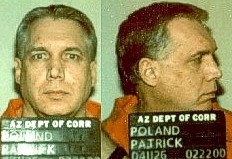
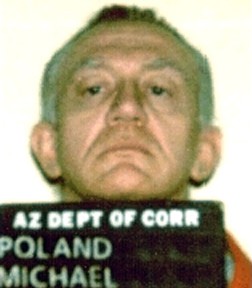
Patrick Poland
Murderer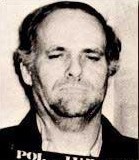 Ervil LeBaron
Murderer · USA · 1972
Ervil Morrell LeBaron (1925 to August 16, 1981) was the leader of a polygamous…
35 victims
Ervil LeBaron
Murderer · USA · 1972
Ervil Morrell LeBaron (1925 to August 16, 1981) was the leader of a polygamous…
35 victims
 Brian Kevin Rosenfeld
Murderer · USA · 1985
Brian Kevin Rosenfeld Brian Kevin Rosenfeld was sentenced to three concurrent l…
23 victims
Brian Kevin Rosenfeld
Murderer · USA · 1985
Brian Kevin Rosenfeld Brian Kevin Rosenfeld was sentenced to three concurrent l…
23 victims
 Marvin Gray
Murderer · USA · 1975
Marvin Gray was convicted killer who claimed responsibility for 23 slayings and…
23 victims
Marvin Gray
Murderer · USA · 1975
Marvin Gray was convicted killer who claimed responsibility for 23 slayings and…
23 victims
 Yahweh ben Yahweh
Murderer · USA · 1980
Yahweh ben Yahweh was born and legally named Hulon Mitchell Jr. (October 27, 19…
23 victims
Yahweh ben Yahweh
Murderer · USA · 1980
Yahweh ben Yahweh was born and legally named Hulon Mitchell Jr. (October 27, 19…
23 victims
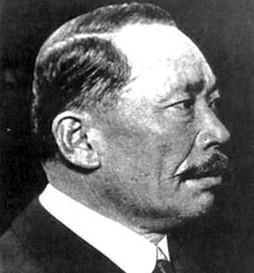 Lock Ah Tam
Murderer · United Kingdom · 1925
Lock Ah Tam was 54 when he killed his wife and two daughters. He had been a suc…
3 victims
Lock Ah Tam
Murderer · United Kingdom · 1925
Lock Ah Tam was 54 when he killed his wife and two daughters. He had been a suc…
3 victims
 Floyd Allen Medlock
Murderer · USA · 1990
Floyd Allen Medlock was executed by lethal injection in Oklahoma on January 16,…
1 victim
Floyd Allen Medlock
Murderer · USA · 1990
Floyd Allen Medlock was executed by lethal injection in Oklahoma on January 16,…
1 victim
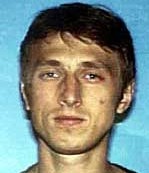 Nikolay Soltys
Spree killer · USA · 2001
Name: Nikolay Soltys · Also known as: Mykola Soltys, Nikolay A. Soltys, Nikolay…
6 victims
Nikolay Soltys
Spree killer · USA · 2001
Name: Nikolay Soltys · Also known as: Mykola Soltys, Nikolay A. Soltys, Nikolay…
6 victims
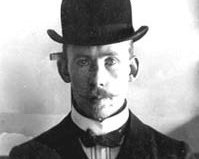 Johan Alfred Ander
Murderer · Sweden · 1910
Johan Alfred Ander was born on October 27, 1873, and was executed on November 2…
1 victim
Johan Alfred Ander
Murderer · Sweden · 1910
Johan Alfred Ander was born on October 27, 1873, and was executed on November 2…
1 victim
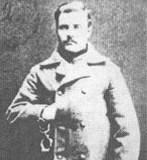 Matti Haapoja
Murderer · Finland / Russia · 1867
Matti Haapoja was a Finnish murderer. He was born on September 16, 1845 in Isok…
25 victims
Matti Haapoja
Murderer · Finland / Russia · 1867
Matti Haapoja was a Finnish murderer. He was born on September 16, 1845 in Isok…
25 victims
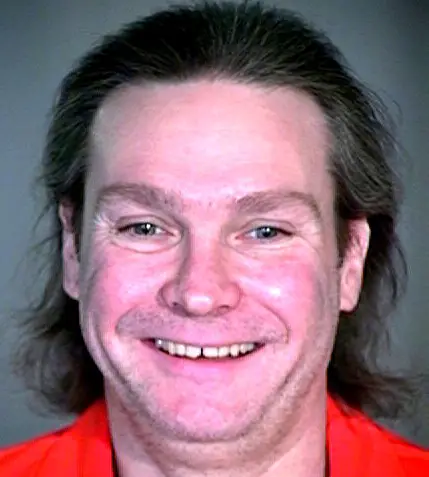 Anthony Spears
Murderer · USA · 1992
Defendant: Anthony Spears (Caucasian). He lived near San Diego. · Victim: Jeane…
1 victim
Anthony Spears
Murderer · USA · 1992
Defendant: Anthony Spears (Caucasian). He lived near San Diego. · Victim: Jeane…
1 victim
- Gender
- male
- Country
- USA
- Location
- Mohave County, Arizona, USA
- Date of birth
- March 8, 1950
- Age at first offence
- 27
- Characteristics
- kidnapping, rape, abduction
- Victim profile
- Russell Dempsey and Cecil Newkirk ( armored car drivers )
- Method of murder
- Drowning
- Date(s) of murder
- May 24, 1977
- Years active
- 1977
- Date of arrest
- May 1978
- Status
-
Executed
Executed by lethal injection in Arizona on March 15, 2000
Case identity
Patrick Poland was convicted in Arizona state court of first-degree murder and was sentenced to death for the 1977 murders of two armored car guards, Russell Dempsey and Cecil Newkirk. He was executed by lethal injection in Arizona on March 15, 2000.
Timeline
- February 1977 — Patrick Poland, using the name Mark Harris, purchased a taser gun; Michael was present when the gun was purchased.
- February 1977 — Patrick Poland purchased a police scanner using the name Mark Harris; Michael contemporaneously purchased a police scanner using the name Mark Harris in making the purchase.
- February 1977 — Michael used the name Mark Harris again in preparing some false identification.
- April 25, 1977 — A man using the name Mark Harris purchased three large canvas bags (approximately 6 feet in length) from Phoenix Tent and Awning.
- May 1977 — Patrick and Michael purchased an emergency light bar identical to those used on the roofs of police vehicles; they said it was to be used in a towing business but they had no such business.
- May 10, 1977 — At 8:09 a.m., Michael made a collect telephone call to his home from a pay phone in Black Canyon City.
- May 17, 1978 — The Federal government charged Patrick and Michael Poland with five counts of bank robbery, two counts of kidnapping, and two counts of murder in United States of America v. Michael Kent Poland and Patrick Gene Poland, CR 78319-TUC-WCF (TFM).
- July 27, 1977 — F.B.I. agents executed a search warrant at Michael Poland’s home and a search warrant at Patrick’s house.
- October 18, 1982 — Second trial commenced.
- November 18, 1982 — Verdicts returned in the second trial (Patrick and Michael found guilty of both murder charges).
- February 3, 1983 — Trial court sentenced Patrick to death for both murder counts.
- March 25, 1985 — Arizona Supreme Court affirmed Patrick’s convictions and death sentence. State v. Poland, 144 Ariz. 412, 698 P.2d 207 (1985).
- May 5, 1986 — The Supreme Court affirmed the Arizona Supreme Court ruling on the double jeopardy issue.
- November 4, 1987 — Patrick filed a petition for post-conviction relief raising 32 claims.
- November 15, 1988 — After an evidentiary hearing, the trial court denied the petition; the Arizona Supreme Court subsequently denied review.
- June 10, 1993 — Patrick filed a second post-conviction relief petition raising 17 issues.
- March 1, 1999 — The Ninth Circuit affirmed denial of the federal amended petition for writ of habeas corpus.
- October 4, 1999 — The United States Supreme Court denied certiorari review.
- February 9, 2000 — The Arizona Supreme Court issued the warrant for execution.
- March 15, 2000 — Execution carried out by lethal injection.
Background
Patrick Poland and his brother Michael Poland were convicted for the 1977 murders of two armored car guards, Russell Dempsey and Cecil Newkirk, and Patrick later received death sentences. His brother Michael Poland was executed last in 1999 for participation in the same crime.
In February 1977, Patrick purchased a taser gun using the name Mark Harris; Michael was present at the purchase. Patrick also purchased a police scanner in February 1977, and Michael contemporaneously purchased a police scanner using the name Mark Harris in making the purchase. Michael used the name Mark Harris again in preparing false identification.
That same month, Michael visited his brother-in-law, John Eaton, in Flagstaff, Arizona. John Eaton was a campus police officer at Northern Arizona University and a reserve officer with the Flagstaff Police Department. During the visit, Michael spent approximately 2 hours reading police manuals at Eaton’s home and discussed the use of scanners with Eaton.
On April 25, 1977, a man using the name Mark Harris purchased three large canvas bags (approximately 6 feet in length) from Phoenix Tent and Awning.
In May 1977, Patrick and Michael purchased an emergency light bar identical to those used on the roofs of police vehicles. They claimed the light bar was to be used in their towing business, but they had no such business. Patrick and his brother returned to the store twice after the purchase because the bar was not functioning properly; store employees repaired the item.
Also in May 1977, Michael called a friend, David Manzer, who was a former police officer with the city of Phoenix. Michael asked Manzer about the belt and holster he had worn as a police officer, and Manzer told him where to purchase that type of equipment.
The offences
On May 24, 1977, two Purolator guards, Russell Dempsey and Cecil Newkirk, left Phoenix in an armored van on their run to banks in Prescott, Sedona and Flagstaff. On Interstate #17, they were stopped by Patrick and Michael Poland, who were disguised as highway patrolmen and were driving a car fitted with emergency lights. The Polands took the guards captive and removed close to $300,000 in cash.
On May 25, 1977, authorities found the abandoned Purolator van. That morning, Michael rented a boat at the Lake Mead marina and piloted the boat to a little used landing, where he met his brother. They put the guards into canvas bags, took them across the lake, and dumped them into the water. The bodies surfaced 3 weeks later in a cove on the Nevada side of the lake.
Divers and authorities recovered the bodies and related physical evidence in Debbie’s Cove on the Nevada side of Lake Mead. On June 16, 1977, a boater discovered a body floating in the waters of Debbie’s Cove; a canvas bag covered the upper portion of the body. On June 23, 1977, a second body surfaced approximately 100 yards from the first; no canvas bag covered this body, but divers found such a bag a short distance away. On August 15, 1977, divers found a third canvas bag beneath the waters of Debbie’s Cove; this bag contained a tarpaulin and a blanket. Divers also found two revolvers and a bent license plate on the bottom of the cove near the bag.
The canvas bags recovered from Debbie’s Cove were the same bags purchased under the name “Mark Harris” from Phoenix Tent and Awning. The tarpaulin was identified as being of the type Patrick and his brother had borrowed from their father and never returned. Particles found on the tarpaulin were consistent with particles found on a tarpaulin used to cover sacks of cement. The revolvers belonged to Dempsey and Newkirk.
The medical examiner for Clark County, Nevada, performed autopsies on the two bodies and identified them as Dempsey and Newkirk. Both bodies were in advanced stages of decomposition and had been in the water for a substantial length of time. The medical examiner concluded that both men had drowned, although there was a possibility that Dempsey might have died from a heart attack before his body was placed in the water.
Investigation
After the offences, procedural and investigative steps included FBI search warrants and subsequent evidence review.
On July 27, 1977, F.B.I. agents executed a search warrant at Michael Poland’s home. The search uncovered two handcuff cases, a scanner, over $13,000 in cash, a taser gun receipt bearing the name of Mark Harris, and a police-type gun belt. Agents searched Michael’s car and discovered a siren that could be activated by a switch inside the passenger compartment.
Simultaneously, F.B.I. agents executed a search warrant at Patrick’s house. Agents found, among other things, over $15,000 in currency and a wallet with an insert for a law enforcement-type badge.
Arrest and pretrial events
Authorities searched unsuccessfully for Dempsey and Newkirk after the Purolator van was found abandoned on May 25, 1977. Officers found in the van a $500 bill and a total of $34,650 in coins, and blood stains in several areas inside the van. The blood was determined to be human blood type O, and Dempsey had type O blood.
The Polands were arrested in May 1978, leaving a trail of evidence including spending $127,000 of the money in their hometown of Prescott.
People
Victims
- Russell Dempsey — Purolator guard, type O blood.
- Cecil Newkirk — Purolator guard.
Related persons
- Michael Poland — brother; executed last in 1999 for participation in the same crime.
- John Eaton — brother-in-law; campus police officer at Northern Arizona University and a reserve officer with the Flagstaff Police Department.
- David Manzer — former police officer with the city of Phoenix; provided information about belt and holster equipment.
- Ralph Van Buskirk — rented the boat to Michael at the Temple Bar Marina on the Arizona side of Lake Mead.
- Stan Sekulski — tow truck operator who freed Patrick and Michael’s pickup truck from the mud at Bonelli Landing.
- Bernice Snyder and Arnold Snyder — were traveling northbound from Phoenix to Sedona; Bernice Snyder observed a light-colored car and a Purolator van stopped near the Bumblebee Road exit.
- Edna Acker and her husband — were traveling northbound on Interstate 17; Edna Acker saw the van stopped and identified a man as Patrick.
Trial officials and lawyers (as listed)
- Presiding Judge: Paul G. Rosenblatt.
- Prosecutors (first trial): Billy Hicks.
- Prosecutors (second trial): Melvin McDonald, Wesley Jennings, Steven Twist.
- Yavapai County prosecutors (appointed special): Melvin McDonald and Roland Jennings; they took over the state prosecution with an Assistant Arizona Attorney General.
- Yavapai County Attorney: Arthur Markham (not the prosecutor in the second trial; discussed in later material).
Trial
Federal charges and proceedings
On May 17, 1978, the Federal government charged Patrick and Michael Poland with five counts of bank robbery, two counts of kidnapping, and two counts of murder in United States of America v.
In July 1978, the United States Attorney prosecuting the case offered a plea agreement under which the Polands would plead guilty to federal murder charges. In return, the federal government would move to dismiss the bank robbery and kidnapping charges, and would recommend that the State of Arizona not prosecute the Polands for any crime related to the robbery, kidnappings and murders. The Polands rejected the plea agreement.
The United States’ Attorney’s Office subsequently moved to dismiss both murder counts, and the district court dismissed those counts.
On February 14, 1979, Patrick was convicted of five counts of bank robbery and two counts of kidnapping. On March 14, 1979, the district court sentenced Patrick to 100 years imprisonment and ordered that Patrick pay a $50,000 fine.
State charges and proceedings
On April 26, 1979, the State of Arizona charged Patrick and his brother with two counts of first-degree murder in connection with the same incident underlying their federal court convictions for robbery and kidnapping.
The first trial included the following procedural markers: start of trial October 23, 1979; verdict November 24, 1979; sentencing April 9, 1980. Following a jury trial, the Polands were convicted of both counts of first-degree murder and were sentenced to death on both counts.
On April 13, 1982, the Arizona Supreme Court reversed the Polands’ convictions, finding that the jurors had improperly considered extrajudicial information, including the fact of the Polands’ prior federal convictions for the same offense. The matter was remanded for a new trial.
On June 8, 1982, the Yavapai County Attorney filed a motion to dismiss the case without prejudice, claiming insufficient evidence to proceed to trial at that time. Patrick’s counsel did not oppose the motion to dismiss and asked that dismissal be with prejudice.
The trial court denied the motion, stating that defendants and the public were entitled to a trial, and that any problems with the evidence could be worked out. At a later hearing, the trial court indicated the county attorney could not abandon responsibility to prosecute and suggested a special prosecutor or assistance from the Arizona Attorney General’s Office. The trial court concluded that, having heard all the evidence at trial, it could not find insufficiency as a valid reason for dismissing the matter.
United States Attorneys Melvin McDonald and Roland Jennings contacted the Yavapai County Attorney to offer assistance. After being appointed as special Yavapai County prosecutors, those two men and an Assistant Arizona Attorney General took over the state prosecution.
The second trial commenced on October 18, 1982. After several weeks of trial, the jury returned verdicts finding Patrick and Michael guilty of both of the murder charges.
Special verdict and sentencing
On February 3, 1983, the trial court sentenced Patrick to death for both murder counts. In its Special Verdict filed the same day, the trial court found as aggravating circumstances that Patrick had committed the murders in an especially cruel, heinous, or depraved manner and for pecuniary gain. The trial court found mitigating circumstances but concluded none were sufficiently substantial to call for leniency.
Direct appeal
On March 25, 1985, the Arizona Supreme Court affirmed Patrick’s convictions and death sentence. State v. Poland, 144 Ariz. 412, 698 P.2d 207 (1985).
The Arizona Supreme Court reversed the trial court’s finding that the murders were especially cruel, heinous, or depraved, but affirmed the death sentence after finding no mitigating circumstances sufficient to call for leniency.
Appeals
United States Supreme Court (double jeopardy issue)
The United States Supreme Court considered whether the double jeopardy clause barred further capital sentencing proceedings when, on appeal from a death sentence, the reviewing court found evidence insufficient to support the only aggravating factor relied on by the sentencing judge, but did not find the evidence insufficient to support the death penalty.
On May 5, 1986, the Court affirmed the Arizona Supreme Court’s ruling on this issue.
The Supreme Court stated that the Double Jeopardy Clause did not foreclose a second sentencing hearing at which the “clean slate” rule applied. The judgment of the Supreme Court of Arizona was affirmed. Justice WHITE delivered the opinion of the Court, joined by Chief Justice BURGER and Justices POWELL, REHNQUIST, STEVENS, and O’CONNOR. Justice MARSHALL filed a dissenting opinion joined by Justices BRENNAN and BLACKMUN.
Other details
Proceedings: post-conviction and habeas
On November 4, 1987, Patrick filed a petition for post-conviction relief raising 32 claims. On November 15, 1988, following an evidentiary hearing, the trial court denied the petition, and the Arizona Supreme Court subsequently denied review.
On June 10, 1993, Patrick filed a second post-conviction relief petition raising 17 issues. The petition was denied on the basis of preclusion.
Patrick filed an amended petition for writ of habeas corpus in federal district court in January 1993. The district court denied the petition, and that decision was affirmed by the Ninth Circuit on March 1, 1999.
The United States Supreme Court denied certiorari review on October 4, 1999. The Arizona Supreme Court issued the warrant for execution on February 9, 2000.
Patrick had also filed a third petition for post-conviction relief in Yavapai County Superior Court that remained pending as of the time reflected in the material. The petition raised three claims: (1) a Jones issue arguing that Jones v. United States, 526 U.S. 227, 119 S. Ct. 1215 (1999), changed the law regarding whether a defendant is entitled to a jury determination of aggravating circumstances; (2) a claim that his lengthy incarceration constituted cruel and unusual punishment under Lackey v. Texas, 514 U.S. 1045 (1995); and (3) jury misconduct based on jurors’ consideration of taser gun evidence.
Apparent discrepancies and additional details from the execution material
During the execution-related material, it was stated that Patrick had said apologies and that his last words included:
“If I may, once again, to the Newkirk and Dempsey families, please accept my apologies. I'm sincere. I'm sorry for the pain and suffering I have caused. I do thank you for your forgiveness. I ask my family to forgive me for the pain I have caused them. I ask all my friends and people who believed in me to please forgive me, and I ask the woman I love to remember I will always love her.”
The execution report also stated that the execution began at 3.03pm and was completed at 3.07pm.
A separate execution-related account stated that Patrick was executed one week after his 50th birthday, and that his girlfriend, identified as Sherrie Jo Christensen in one account and Sherrie Jo Christensen in another portion of the material, attended from a viewing area.
That execution-related account reported that Poland requested no last meal and asked that his family or children not witness the execution. It stated that he spent his final hours with a Catholic priest and received last rites about 2 1/2 hours before his execution.
A quoted statement in the material attributed to A. Melvin McDonald was:
“I hope that his death will bring peace,”
and:
“Mr. Poland paid for this crime each and every day for 23 years. I think he had genuine remorse. I felt justice was done in the execution of the first brother. I felt mercy could have been done today by giving Patrick Poland life in prison.”
A quoted statement attributed to Yavapai County prosecutor Arthur Markham was:
“A man would not lie just before death,”
Equipment and evidence links described in the background material
The material stated that on May 24, 1977, the van carried a total of $328,150 in cash, of which $288,000 was currency. It also stated that after May 25, 1977 authorities found the van west of Interstate 17 near the Bumblebee Road exit.
It stated that Michael rented a boat from Ralph Van Buskirk at Temple Bar Marina at 6:15 a.m. and told Van Buskirk he planned to meet someone at Bonelli Landing. After about 2:00 p.m., Michael and another man returned to the boat, telling Van Buskirk their pickup truck was stuck at Bonelli Landing. Patrick eventually contacted tow truck operator Stan Sekulski, who drove Michael and his companion back to Bonelli Landing. Sekulski saw the truck at the water’s edge with all four wheels in the water, with the back of the truck facing the lake and the tailgate down. Sekulski attached a tow line to the front axle and freed the truck from the mud after around 45 minutes.
Within a week, Patrick and Michael, who had been in severe financial straits, were flush with money and made numerous cash purchases and repaid loans in cash, spending more than $100,000.
Mentioned later conduct
The material stated that in 1997, Michael Poland tried to arrange an escape plot by offering a prison guard a $2 million bribe to allow him to flee while en route to a local hospital for medical treatment. It stated the guard scheme was that the money was hidden from the armored car robbery and that handwritten notes and a detailed map of the hospital were found in Michael’s cell. The material also stated that in interviews with corrections investigators, Michael Poland said he liked to plan escapes because “it was just something fun to do.”
Names and related persons referenced in later discussion
The material included other family and additional persons discussed in execution-related material: Philip Poland, Philip and Patrick’s brother; Stacey, Patrick’s daughter; and a warden for the state Department of Corrections named Dan Vannelli. It included quoted statements from Melvin McDonald urging clemency, and a statement from Camilla Strongin, a Department of Corrections spokeswoman, about last rites and last meal. It also included a quoted statement from a spokesman for Arizona Attorney General Janet Napolitano, stating awareness of the change of heart and representation at the clemency hearing.
Quotes from the material about clemency and remorse
The material attributed to Melvin McDonald:
“He knew he had no chance,”
and:
“But the value of the hearing was to let him know during the last day of his life that people cared for his, and that his family truly loves him. It was an expression that I think made his last hours very special to him. He could see the love.”
It also attributed to Melvin McDonald:
“justice had been done,”
and:
“I was a warrior,”
It further included a quote attributed to McDonald:
“The evil architect of the crime was executed, and the brother facing execution next week has some redeeming value to him,”
and:
“This is the product of an evil brother.”
A quote attributed to the quoted attorney Thomas Gorman stated:
“Michael Poland was a sociopathic killer who would kill members of his family, and Patrick believed that [he and his brother] were only going to rob, not kill the guards,”
and also:
The material also included quoted statements attributed to Thomas Gorman:
“Gorman stated.”
and:
“He says Poland was under "duress" and had to kill to save his own life.”
The material included a quote attributed to Arlene Poland:
“I won't talk about them,”
and:
“They told me not to talk.”
Mandated sentencing considerations listed for Patrick
The material listed aggravating circumstances for Patrick as: prior conviction involving violence; pecuniary gain; and especially heinous/cruel/depraved (noted as struck on appeal). It listed mitigating circumstances as “None sufficient to call for leniency.”
Last meal
The material stated “No Last Meal Request.”
Execution details
Patrick Poland’s execution began at 3.03pm and was completed at 3.07pm. It was carried out by lethal injection at ASPC Florence. His last words included an apology to the Newkirk and Dempsey families and requests for forgiveness for pain and suffering caused, and included an apology request to his family and friends, and a statement to the woman he loved that he would always love her.
Spotted an error, or have more information about this case?