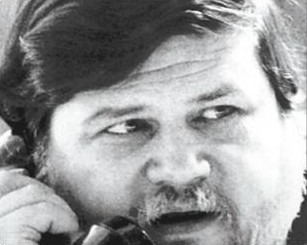
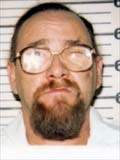
David Mark Pruett
Murderer Ervil LeBaron
Murderer · USA · 1972
Ervil Morrell LeBaron (1925 to August 16, 1981) was the leader of a polygamous…
35 victims
Ervil LeBaron
Murderer · USA · 1972
Ervil Morrell LeBaron (1925 to August 16, 1981) was the leader of a polygamous…
35 victims
 Brian Kevin Rosenfeld
Murderer · USA · 1985
Brian Kevin Rosenfeld Brian Kevin Rosenfeld was sentenced to three concurrent l…
23 victims
Brian Kevin Rosenfeld
Murderer · USA · 1985
Brian Kevin Rosenfeld Brian Kevin Rosenfeld was sentenced to three concurrent l…
23 victims
 Marvin Gray
Murderer · USA · 1975
Marvin Gray was convicted killer who claimed responsibility for 23 slayings and…
23 victims
Marvin Gray
Murderer · USA · 1975
Marvin Gray was convicted killer who claimed responsibility for 23 slayings and…
23 victims
 Yahweh ben Yahweh
Murderer · USA · 1980
Yahweh ben Yahweh was born and legally named Hulon Mitchell Jr. (October 27, 19…
23 victims
Yahweh ben Yahweh
Murderer · USA · 1980
Yahweh ben Yahweh was born and legally named Hulon Mitchell Jr. (October 27, 19…
23 victims
 Ramadan Mansour
Serial killer · Egypt · 2004
Ramadan Abdel Rehim Mansour (born circa 1980, in Tanta, Gharbia, Egypt), also k…
20 victims
Ramadan Mansour
Serial killer · Egypt · 2004
Ramadan Abdel Rehim Mansour (born circa 1980, in Tanta, Gharbia, Egypt), also k…
20 victims
 Jack Harry Smith
Murderer · USA · 1978
Jack Harry Smith was sentenced to death on October 9, 1978. Jack Harry Smith ar…
1 victim
Jack Harry Smith
Murderer · USA · 1978
Jack Harry Smith was sentenced to death on October 9, 1978. Jack Harry Smith ar…
1 victim
 Mick Philpott
Homicide · United Kingdom · 2012
Michael “Mick” Philpott was an Englishman who had gained notoriety as a crimina…
6 victims
Mick Philpott
Homicide · United Kingdom · 2012
Michael “Mick” Philpott was an Englishman who had gained notoriety as a crimina…
6 victims
 Alvin Wayne Crane
Murderer · USA · 1987
Alvin Wayne Crane was executed by lethal injection in Texas on October 12, 1999…
1 victim
Alvin Wayne Crane
Murderer · USA · 1987
Alvin Wayne Crane was executed by lethal injection in Texas on October 12, 1999…
1 victim
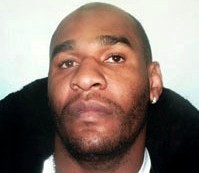 Gary Lloyd Nelson
Murderer · United Kingdom · 1993
Name: Gary Lloyd Nelson · Birth year: 1969 · Nationality: British · Residence/l…
2 victims
Gary Lloyd Nelson
Murderer · United Kingdom · 1993
Name: Gary Lloyd Nelson · Birth year: 1969 · Nationality: British · Residence/l…
2 victims
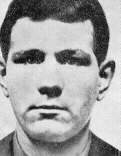 Alfred Charles Whiteway
Murderer · United Kingdom · 1953
Alfred Charles Whiteway was a serial rapist. Both girls had very deep stab woun…
2 victims
Alfred Charles Whiteway
Murderer · United Kingdom · 1953
Alfred Charles Whiteway was a serial rapist. Both girls had very deep stab woun…
2 victims
- Gender
- male
- Country
- USA
- Location
- Virginia Beach, Virginia, USA
- Date of birth
- 1949
- Age at first offence
- 26
- Characteristics
- rape, robbery
- Victim profile
- Debra McInnis ( coworker ) / Wilma Harvey ( his best friend's wife )
- Method of murder
- St abbing with knife
- Date(s) of murder
- 1975 / 1985
- Years active
- 1975–1985
- Date of arrest
- February 14, 1985
- Status
-
Executed
Executed by electrocution in Virginia on December 16, 1993
Case name
David Mark Pruett
Timeline
- February 12, 1985 — Pruett went to the home of friends Richard and Wilma Harvey; Richard Harvey was out of town; Pruett stopped in ostensibly to check on Mrs. Harvey; Mrs. Harvey paid the paperboy from a grey cashbox; after seeing her take money from the cashbox, Pruett formed the intent to rob Mrs. Harvey; Mrs. Harvey and Pruett continued to talk until she said that she needed to get ready to go to church; Pruett asked permission to use the bathroom; while in the bathroom, Pruett decided that he “wanted some sex” and told himself “well go do it.”; he went upstairs and told Mrs. Harvey that he “wanted some sex”; at first she refused; Pruett drew a knife he had brought and forced her to submit; after he raped her, he bound her hands and feet and used a sock to tie a gag over her mouth; he stabbed her several times and cut her throat open; after he killed her, he ransacked the house looking for money and took the money he could find, including the money in the grey cashbox; he disposed of his blood-soaked clothes and the knife; Mrs. Harvey’s body was discovered on her bed by relatives the next day.
- February 14 — Police interviewed Pruett twice; during the first interview at 1:00 a.m., Pruett admitted visiting Mrs. Harvey but denied any knowledge about the killing; he stated, “I can't understand it. I, I can't feel that anybody could.”; he also said that he was more anxious to find the killer than the police were and that he would take a polygraph test; after police discovered that Pruett’s fingerprints had been found on the headboard of Mrs. Harvey’s bed and on her eyeglasses, he confessed to robbing, raping, and killing Mrs. Harvey, and he also confessed to robbing and killing Debra McInnis in 1975.
- 1975 — Pruett confessed to robbing and killing Debra McInnis, a coworker at a Kentucky Fried Chicken restaurant.
- 1986 — Pruett was convicted of first-degree murder and robbery in the McInnis case four months after receiving the death sentence for killing Mrs. Harvey.
- March 26, 1986 — The trial court imposed the sentences fixed by the jury.
- November 16, 1989 — The Supreme Court of Virginia refused a petition for appeal.
- May 14, 1990 — The United States Supreme Court denied certiorari.
- November 29, 1990 — Pruett filed his present action in the United States District Court for the Eastern District of Virginia.
- August 19, 1991 — The district court, without a hearing, entered its order granting the respondent’s motion to dismiss the petition.
- February 11, 1992 — Pruett appealed the final judgment and order of the district court.
- May 25, 1993 — The appellate opinion in Pruett v. Thompson was issued.
- December 16, 1993 — Pruett was executed by electrocution in Virginia.
- December 18, 1993 — The New York Times reported the execution took place on Thursday in Virginia’s electric chair and that Pruett was pronounced dead at 11:11 P.M. at the Greensville Correctional Center.
Background
Pruett attacked a Virginia state court judgment sentencing him to death. The United States District Court for the Eastern District of Virginia denied his petition for a writ of habeas corpus, and the judgment was affirmed.
On February 12, 1985, Pruett visited friends Richard and Wilma Harvey. Richard Harvey was out of town on business, and Pruett stopped in ostensibly to check on Mrs. Harvey. Pruett chatted with Mrs. Harvey for several minutes. When the paperboy came to the door to collect, Mrs. Harvey paid him from a grey cashbox. After seeing Mrs. Harvey take money from the cashbox, Pruett formed the intent to rob Mrs. Harvey. Mrs. Harvey and Pruett continued to talk until she said she needed to get ready to go to church. Pruett asked for permission to use the bathroom.
While in the bathroom, Pruett decided that he “wanted some sex” and “told himself 'well go do it.'” He went upstairs and told Mrs. Harvey that he “wanted some sex.” At first she refused, but Pruett drew a knife he had brought with him and forced her to submit. After he raped Mrs. Harvey, Pruett bound her hands and feet and used a sock to tie a gag over her mouth. He stabbed Mrs. Harvey several times and cut her throat open. The medical examiner counted twenty-nine stab wounds in all, several of which would have been fatal alone. The Supreme Court of Virginia did not articulate a reason for the initial stabbing, but found that Pruett cut her throat when she tried to kick him while he was stabbing her.
After he killed Mrs. Harvey, Pruett ransacked the house looking for money. He took all the money that he could find, including the money in the grey cashbox. He disposed of his blood-soaked clothes and the knife. Mrs.
Pruett also confessed to robbing and killing Debra McInnis in 1975, a coworker at a Kentucky Fried Chicken restaurant in Virginia Beach. He received a life sentence for the McInnis' murder and a death sentence for the Harvey murder.
The offence
On February 12, 1985, Pruett went to Mrs. Harvey’s home and, after deciding to rob her upon seeing her take money from a grey cashbox, forced her to submit at knife point and raped her. After the rape, he bound her hands and feet, gagged her mouth with a sock, stabbed her multiple times, and cut her throat open, killing her. He then searched the house for money, including the grey cashbox.
Victim(s)
- Wilma Harvey, 35 — friend’s wife; raped, stabbed, and killed; hands tied behind her back when the nude body was found; multiple stab wounds; throat cut open.
- Debra McInnis — coworker at a Kentucky Fried Chicken restaurant; Pruett confessed to robbing and killing her in 1975.
Investigation
On February 14, police interviewed Pruett twice. During the first interview at 1:00 a.m., Pruett admitted visiting Mrs. Harvey but denied any knowledge about the killing. In response to a question about whether he had any idea of who might want to kill Mrs. Harvey, Pruett stated: “I can't understand it. I, I can't feel that anybody could.” He also said he was more anxious to find the killer than the police were and that he would take a polygraph test.
After police discovered Pruett’s fingerprints on the headboard of Mrs. Harvey’s bed and on her eyeglasses, they again questioned Pruett. He confessed to robbing, raping, and killing Mrs.
Arrest
Pruett was arrested for the crime involving the murder of Wilma Harvey.
Trial
Pruett was charged by indictments with the capital murder of Mrs. Harvey during the commission of, or subsequent to, rape; rape of Mrs. Harvey; and robbery of Mrs. Harvey.
Jury verdict and sentences
A jury convicted Pruett on all three charges and fixed his punishment for rape at life imprisonment and for robbery at 75 years in prison. The same jury then heard evidence in aggravation and mitigation of the murder charge and returned a sentence of death.
On March 26, 1986, the trial court imposed the sentences fixed by the jury. The Virginia Supreme Court affirmed the judgments and the sentence of death.
The court found that the death penalty was appropriate because the crime fit both the “vileness” prong and the “future dangerousness” prong of Virginia’s capital murder statute.
Separate noncapital case
Pruett was convicted of the murder of Mrs. McInnis in a separate nonjury trial, for which he received a life sentence under the noncapital murder statute, Va. Code Ann. § 18.2-32. The McInnis murder was also described as a brutal stabbing, and the motive was stated as robbery.
Appeals
State post-conviction and direct review
Pruett sought post-conviction relief in the Circuit Court of the City of Virginia Beach, Virginia, by filing a petition for a writ of habeas corpus.
- On June 14, 1988, the circuit court dismissed certain counts in the petition and ordered an evidentiary hearing on the remaining claims.
- The evidentiary hearing was held on October 18 and 19, 1988.
- The circuit court entered findings of fact and conclusions of law on March 6, 1989 and dismissed the petition in full by final order on March 27, 1989.
- On November 16, 1989, the Supreme Court of Virginia refused a petition for appeal.
Federal habeas proceedings
Pruett filed his present action in the United States District Court for the Eastern District of Virginia on November 29, 1990. The petition requested an evidentiary hearing. On August 19, 1991, the district court, without a hearing, granted the respondent’s motion to dismiss the petition: Pruett v. Thompson, 771 F.Supp. 1428 (E.D.Va. 1991) (mem.).
Pruett appealed the final judgment and order of the district court on February 11, 1992.
Federal appellate issues and holdings
Pruett raised five grounds in the federal appeal:
- The state trial court erred in not instructing the jury on the lesser-included offense of first degree murder during the guilt phase.
- Prosecutorial misconduct infected the trial and sentencing.
- The jury instructions given at the penalty phase were inadequate.
- Pruett received ineffective assistance of trial and appellate counsel.
- The district court abused its discretion by failing to grant an evidentiary hearing on his habeas petition, specifically on the ineffective assistance of counsel claim.
The appellate court held three of Pruett’s assignments of error were procedurally defaulted: the refusal to instruct on lesser-included first degree murder during guilt phase, prosecutorial misconduct, and the adequacy of the penalty phase instructions.
Lesser-included offense instruction claim
At trial Pruett offered an instruction on the lesser-included offense of first degree murder excluding the felony-murder theory of rape, necessarily proceeding on the theory that there had been consensual intercourse. The trial court refused the instruction, finding the jury might find it confusing and that there was no evidence to support the instruction.
The appellate court addressed Pruett’s procedural default arguments (Murray v. Carrier and Sawyer v. Whitley) and concluded Pruett did not demonstrate cause and prejudice or actual innocence under the Sawyer standard. It found “abundant evidence” that Pruett raped Mrs. Harvey and concluded Pruett could not show that, but for any constitutional error, no reasonable juror would have found him eligible for the death penalty.
The appellate court discussed Pruett’s confession, including the following quotation attributed to Pruett during the confession:
[Pruett]: “I told Wilma, she said she had to go get ready to go and I went to the bathroom and the next thing I knew I was up in her bathroom. I said that I was, I wanted some sex. I had some sex with her and then I killed her.”
The appellate court then set out follow-up questioning and answers, including:
[Q]: “Allright. You said you did have sex with her? [A]: Yes. [Q]: Before or after you stabbed her? [A]: Before. [Q]: Okay. Before or after you tied her up? [A]: Before. [Q]: Okay. Was the sex voluntary? [A]: No. [Q]: You had to force her? [A]: Yea. [Q]: How did you have to force her? [A]: By asking her. I mean, ah, with the knife. [Q]: With the knife. [A]: Yea. So then she said no problem. [Q]: How did you, how did you force her with the knife? [A]: I don't know. [Q]: Did you threaten her? Did you, ah ... [A]: I said, well, yea, I said I want some sex. I want some sex and, ah, then she said, okay and then I put the knife down. [Q]: Okay. So you didn't have the knife when you were having sex with her then? [A]: No.”
The appellate court concluded that, even under the most favorable reading, the confession did not support consensual intercourse and described it as overwhelming evidence of rape, noting the jury separately convicted Pruett of rape.
Ineffective assistance of counsel
Pruett alleged ineffective assistance of counsel and argued his counsel was deficient in multiple ways. The appellate court held Pruett did not receive ineffective assistance of counsel.
The appellate court described issues in two categories:
- decisions not to argue lack of future dangerousness and the approach to guilt-phase strategy based on consensual sex, and
- alleged failures to investigate and present psychiatric mitigation evidence.
In the course of reviewing counsel’s strategic decision, the appellate court reproduced testimony from cross-examination in which the attorney made statements about trial strategy and danger arguments. The following quotation appears as part of that cross-examination:
[Mr. Anderson]: “There is one final complaint that you denied the possibility of the defendant adapting well to incarceration and, therefore, perhaps not being a future danger. Did you think that the jury would be more impressed with evidence of Mr. Pruett's dangerousness to the community at large or whether or not he would be a danger if confined in prison? Which one do you think the jury would be more interested in?” [Mr. Stallings]: “We were talking about community at large. That was a real tactical thing we were playing with. I wanted to say that David would never get out of prison. I was handcuffed a little bit on that as to how far the judge would let me go. These were all conferences we had. I don't know if it's on the record or not, and the Commonwealth said if I opened that door, they could get into parole eligibility so I kind of walked a thin line there and I think the Commonwealth got into dangerousness in their closing. I was trying to present to the jury the myth that if they give him life, he would be in there for the rest of his life and he would never get out and, again, I guess that's where I was coming from was my concern on it. I wanted to make the jury think he will never hurt anyone in society again. He is going away forever.” Q: “Going back to Doctor Tsao's evaluation and when he was asked to determine whether Mr. Pruett was a future danger, did you at the time think that he should primarily focus on his dangerousness generally or his dangerousness to other inmates and people in the system--community. A: That's what I would be dealing with. Again, I don't really want to talk about dangerousness to the prison community because the best case scenario, that's still a factor. If they give him life, I don't want Tsao getting up there saying if you give him life, he won't hurt anyone else, but he sure could hurt someone in prison.”
The appellate court also quoted testimony attributed to Dougherty about Pruett’s changing story:
Dougherty testified that “I felt at that point that there was no reality in that. I mean, he changed [his story] to suit our needs--the defense's needs.”
Disposition
The appellate court affirmed the judgment of the district court.
Sentencing
For the murder of Wilma Harvey, the jury returned a sentence of death, and the trial court imposed that sentence on March 26, 1986. The Virginia Supreme Court affirmed the sentence of death.
For the rape of Mrs. Harvey, the jury fixed punishment at life imprisonment. For the robbery of Mrs. Harvey, the jury fixed punishment at 75 years in prison.
Pruett received a life sentence for the McInnis murder in a separate nonjury trial.
Outcome
The United States Supreme Court rejected Pruett’s final appeal without comment, and Pruett was executed in Virginia. Wayne Brown, the prison’s operations officer, said Pruett was pronounced dead at 11:11 P.M.
Aftermath
In a petition filed with Gov. L. Douglas Wilder, one of Pruett’s lawyers, Donald Lee, argued that the death sentence should be commuted to life in prison, stating that the jurors who sentenced Pruett to be executed never heard about his severe emotional and psychological problems.
Other details
Case caption and court details
Pruett v. Thompson, No. 92-4002. Federal Circuits, 4th Circuit. Before RUSSELL, WIDENER, and HALL, Circuit Judges. Opinion by WIDENER, Circuit Judge. The judgment was affirmed.
Identified people and roles named in the proceedings
- Richard Harvey — friend of Pruett; husband of Wilma Harvey; out of town on business on February 12, 1985.
- Wilma Harvey, 35 — victim; raped and killed at her Virginia Beach home.
- Richard’s employer context includes that he managed the restaurant where Pruett was given a job as a cook.
- Wayne Brown — prison operations officer; said Pruett was pronounced dead at 11:11 P.M.
- Gov. L. Douglas Wilder — governor to whom a petition seeking commutation was filed.
- Donald Lee — lawyer who argued commutation in the petition.
- Dr. Tsao — psychiatrist who evaluated Pruett.
- Dr. Brown — forensic psychologist.
- Mr. Stallings — lawyer who represented Pruett at trial and on direct appeal.
- Dr. Fisher — another forensic psychologist.
- Pruett’s mother and father — testified at the state evidentiary hearing.
- Mr. Phillips — prosecutor at Pruett’s trial.
- Mr. Dougherty — associate at Mr. Stallings’s firm; worked on Pruett’s case and trial; testified at the state evidentiary hearing.
- Miss Weise — nurse and medical administrator at the Virginia Beach Correctional Center.
- Mr. Costigan — psychiatric social worker at VBCC.
- The Commonwealth’s Attorney — referenced in appellate discussion of prosecutorial misconduct arguments.
- The paperboy — collected payment from Mrs. Harvey.
- The medical examiner — counted twenty-nine stab wounds and related fatality assessment.
Legal standards and statutory references included in the opinion
The appellate court referenced Virginia statutes defining capital murder and first degree murder and discussed procedural default principles using Slayton v. Parrigan. It also referenced constitutional standards and habeas review frameworks under Murray v. Carrier and Sawyer v. Whitley.
The opinion included the following verbatim statement of a Virginia statute excerpt: “The following offenses shall constitute capital murder, punishable as a Class 1 felony ... (e) The willful, deliberate and premeditated killing of a person during the commission of, or subsequent to, rape. Va.Code Ann. § 18.2-31 (1982).”
And a verbatim excerpt: “Murder, other than capital murder ... by any willful, deliberate, and premeditated killing, or in the commission of, or attempt to commit ... rape ... is murder of the first degree, punishable as a Class 2 felony. Va.Code Ann. § 18.2-32.”

Spotted an error, or have more information about this case?