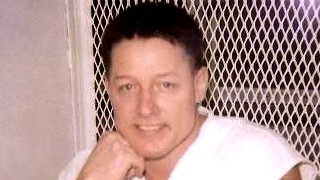
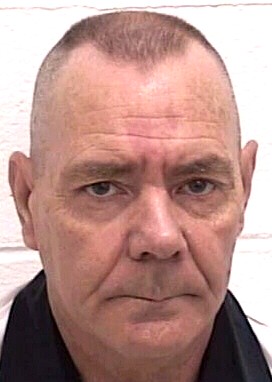
Lonnie Pursley
Murderer Russell Ellwood
Murderer · USA · 1991
Russell Ellwood was a former taxi driver. Authorities suspected him of killing…
20 victims
Russell Ellwood
Murderer · USA · 1991
Russell Ellwood was a former taxi driver. Authorities suspected him of killing…
20 victims
 Robert Martines Perez
Murderer · USA · 1994
Name: Robert Martines Perez · Other name used in proceedings: Robert Martinez P…
15 victims
Robert Martines Perez
Murderer · USA · 1994
Name: Robert Martines Perez · Other name used in proceedings: Robert Martinez P…
15 victims
 Billy Frank Vickers
Murderer · USA · 1993
Billy Frank Vickers Vickers was executed by lethal injection in Texas on Januar…
14 victims
Billy Frank Vickers
Murderer · USA · 1993
Billy Frank Vickers Vickers was executed by lethal injection in Texas on Januar…
14 victims
 Ronnie Lee Conner
Murderer · USA · 1990
Ronnie Lee Conner was convicted of capital murder for the kidnap, robbery and m…
1 victim
Ronnie Lee Conner
Murderer · USA · 1990
Ronnie Lee Conner was convicted of capital murder for the kidnap, robbery and m…
1 victim
 Sataro Fukiage
Serial killer · Japan · 1906
Sataro Fukiage (吹上 佐太郎, Fukiage Satarō) was born in February 1889. He was born…
7 victims
Sataro Fukiage
Serial killer · Japan · 1906
Sataro Fukiage (吹上 佐太郎, Fukiage Satarō) was born in February 1889. He was born…
7 victims
 Rudy Eugene
Attacker · USA · 2012
Rudy Eugene was born on February 4, 1981 at the Jackson Memorial Hospital. He w…
0 victims
Rudy Eugene
Attacker · USA · 2012
Rudy Eugene was born on February 4, 1981 at the Jackson Memorial Hospital. He w…
0 victims
- Gender
- male
- Country
- USA
- Location
- Polk County, Texas, USA
- Date of birth
- September 17, 1961
- Age at first offence
- 36
- Characteristics
- robbery, drugs
- Victim profile
- Robert Earl Cook, 47
- Method of murder
- Beating
- Date(s) of murder
- March 29, 1997
- Years active
- 1997
- Date of arrest
- April 20, 1997
- Status
-
Executed
Executed by lethal injection in Texas on May 3, 2005
Case record: Lonnie Pursley
Timeline
- Aug. 7, 1997 — A Polk County grand jury indicted Pursley for capital murder.
- Jan. 14, 1997 — The jury found Pursley guilty of capital murder, and later answered Texas' capital murder special issues in a manner that required the trial court to sentence Pursley to death.
- Jan. 20, 1999 — A jury found Pursley guilty of capital murder, and the court later sentenced him to death.
- Jan. 31, 2001 — The Texas Court of Criminal Appeals affirmed Pursley’s conviction and sentence.
- Mar. 28, 2001 — The Texas Court of Criminal Appeals denied rehearing.
- June 27, 2001 — The Court of Criminal Appeals dismissed Pursley’s application for state habeas relief.
- Aug. 10, 2001 — The trial court entered an order setting Pursley’s execution date for November 30, 2001.
- Aug. 29, 2001 — Pursley filed a motion in federal district court seeking a stay of his execution.
- Sep. 12, 2001 — The federal district court granted Pursley’s motion for stay.
- June 27, 2002 — Pursley filed a petition for writ of habeas corpus in the federal district court.
- Sep. 25, 2003 — The federal district court denied habeas relief.
- Nov. 18, 2004 — The 5th U.S. Circuit Court of Appeals denied Pursley permission to appeal.
- Jan. 11, 2005 — The trial court entered an order setting the execution date for May 3, 2005.
- Feb. 16, 2005 — Pursley petitioned the U.S. Supreme Court for certiorari review.
- Apr. 18, 2005 — The U.S. Supreme Court denied the petition for certiorari review.
- May 3, 2005 — Pursley was executed by lethal injection in Texas.
Background
Lonnie Wayne Pursley was convicted of capital murder and was sentenced to death for the death of Robert Earl Cook. Pursley had prior convictions for burglary of a habitation, theft by appropriation and unauthorized use of a motor vehicle.
Pursley’s prior convictions included:
- A five year sentence from San Jacinto County for 1 count of Burglary of a Habitation, released on parole on 12/21/90, after being released on Parole on 07/08/87 and returned from Parole with a new conviction on 12/21/90.
- A 10 year sentence from San Jacinto County for 1 count of Theft By Appropriation, with release on parole on 06/14/91 and return from Parole with new conviction on 08/24/92.
- A 20 year sentence from Polk and San Jacinto County for 1 count of Burglary of a Habitation, 1 count of Burglary of a Vehicle and 1 count of Unauthorized Use of a Motor Vehicle, released on parole on 11/28/95. Pursley had been sent to prison three times from 1987 to 1992, each time being released on parole and committing new crimes while on parole. At the time of the murder, Pursley was on parole after having served 3 years of a 20-year sentence for burglary.
A federal habeas proceeding described Pursley as petitioning for a writ of habeas corpus after conviction and denial of habeas relief.
The offence
On Good Friday, March 28, 1997, Robert Cook was driving to his home in Livingston.
On the same day, Pursley, his wife, and their children visited relatives in Shepherd. After getting into an argument with his wife, Pursley left the house on foot.
Testimony supported the prosecution’s theory that Cook must have stopped and offered Pursley a ride. Cook left work and drove down Highway 59 towards his trailer home near Livingston, and Cook was on Highway 59 probably at about the same time Pursley was walking down that highway after leaving from his in-law’s house on foot following an argument with his wife.
Sheila Dupree, Cook’s niece and next-door neighbor, testified that later that night she observed a large man smoking a cigarette in the doorway of Cook’s trailer home. Dupree testified that she saw Cook sitting inside with an emotionless expression and that from looking at Cook she could tell something was wrong.
Dupree testified that the following day, the gate on Cook’s property was not closed properly and Cook’s car was gone. Cook had plans to spend time with his mother that day but never showed up. When Cook still had not returned home by the evening of March 30, Cook’s mother contacted the police, who began searching for Cook the next day. Upon learning that Cook was missing, Dupree told police about the man that she had seen standing in Cook’s doorway.
After spending some time with Cook in his home, Pursley had Cook drive out into the woods. Pursley savagely beat Cook to death, took his rings, and left the body. At trial, witnesses testified that Pursley later drove Cook’s bloodstained car, and witnesses testified that the vehicle had blood on the inside and outside and that Pursley had blood on his clothing.
At least two witnesses testified that Pursley admitted to them that he had beaten someone and had left the victim to choke on his own blood. Pursley’s cousin, Richard Winfrey, testified that on March 30 Pursley told him he was pretty sure he had beaten someone to death in his car. Winfrey further testified that Pursley told him he had hidden the victim’s car in some woods located off of a dirt road and asked him for fake identification so he could leave the country.
Prosecutors said that Pursley used some rings he took from the victim to buy drugs. Pursley also used Cook’s rings to buy drugs.
According to the factual and procedural background, Cook left work and drove down Highway 59 towards his trailer home near Livingston. Cook had been on Highway 59, probably at about the same time Pursley was walking down that highway. At some point the pair drove into the woods in the northeast part of Polk County where Cook was beaten to death and robbed of his rings.
Investigation and evidence
Cook’s body was discovered in a wooded area. On April 6, 1997, a passer-by discovered Cook’s decomposing body lying face down in a wooded area at the end of a dead-end dirt road, approximately 2.5 miles from Cook’s home. Trauma to the body indicated that Cook had been pummeled brutally in the chest and abdomen with the assailant’s hands, feet, or with some other unknown object. On April 15, 1997, police discovered Cook’s car abandoned in a wooded area. There was a large amount of blood spattered throughout the vehicle.
DNA evidence linked Pursley to the crime. The only DNA evidence linking Pursley to the crime was on a cigarette butt found in the ashtray of the victim’s vehicle eighteen months after the car was discovered by the police.
A federal appellate description stated that Pursley’s DNA was found on a cigarette but from the ashtray of Cook’s car.
Arrest
Pursley was arrested on April 20, 1997. A police warrant had been issued for Pursley’s arrest, and Pursley turned himself in after learning that there was a warrant for arrest on the charge of capital murder.
Trial
Pursley was charged by indictment for the murder and robbery of Cook.
A jury found Pursley guilty of capital murder, and the trial court sentenced him to death. The jury answered Texas' capital murder special issues in a manner that required the trial court to sentence Pursley to death.
During the trial, the prosecution’s theory was that Cook must have stopped and offered Pursley a ride. Witnesses testified that Pursley and his family were visiting his in-laws' house in Shepherd, Pursley got into an argument with his wife, and Pursley left the house on foot. Witnesses testified that Pursley was later seen driving Cook’s bloodstained car and had blood on his clothing. Witnesses testified about admissions by Pursley that he had beaten someone and left the victim to choke on his own blood, including Richard Winfrey’s testimony about Pursley stating that he was pretty sure he had beaten someone to death in his car and had hidden the victim’s car in woods off a dirt road.
The trial included victim impact evidence at the guilt-innocence phase. In federal habeas proceedings, a panel later held that alleged victim impact evidence presented at the guilt phase was not so unduly prejudicial that it rendered the trial fundamentally unfair.
The trial court also restrained Pursley in shackles and handcuffs during voir dire and excluded Pursley from individual voir dire. In federal habeas proceedings, the panel later held that these actions did not deny Pursley his constitutional rights to a fair trial and a presumption of innocence.
Sentencing
The jury convicted Pursley of capital murder and later answered Texas capital murder special issues in a manner that required the trial court to sentence him to death. On January 20, 1999, a jury found Pursley guilty of capital murder and the court later sentenced him to death.
Appeals and post-conviction proceedings
Direct review and state habeas
- Pursley’s conviction and sentence were appealed automatically to the Texas Court of Criminal Appeals, which affirmed on January 31, 2001, and denied rehearing on March 28, 2001.
- On July 31, 2001, Pursley filed an application for writ of habeas corpus in the state trial court, and on June 27, 2001 the Court of Criminal Appeals dismissed Pursley’s application for state habeas relief.
- The Court of Criminal Appeals dismissed Pursley’s state habeas application on June 27, 2001.
Federal habeas proceedings
- On August 29, 2001, Pursley filed a motion in federal district court seeking a stay of his execution, and on September 12, 2001 the federal district court granted the motion for stay.
- On June 27, 2002, Pursley filed a petition for writ of habeas corpus in the federal district court.
- On September 25, 2003, the federal district court denied habeas relief.
Certificate of appealability and Fifth Circuit
- Pursley sought a certificate of appealability, and the Court of Appeals held that the claims regarding victim impact evidence and the voir dire restraints/exclusion did not amount to denial of constitutional rights. Pursley’s application for COA was denied, and denial of habeas relief was affirmed.
- On November 18, 2004, the 5th U.S.
U.S. Supreme Court
- On February 16, 2005, Pursley petitioned the U.S.
- On April 18, 2005, the U.S.
Outcome
Pursley was executed by lethal injection in Texas on May 3, 2005.
In a final statement, Pursley addressed Cook’s victim’s family and said:
"Yes. I would like to address the victim's family. I received your poem and I ma very grateful for your forgiveness. I still want to ask for it anyway. I have Jesus in my heart and I am sorry for any pain I caused you all. Thank you for your forgiveness. I am sorry. Ashlee, Pam -- I am going to miss you all. I love you all. Give everybody my love. Give everybody my love, O.K.? Mother, James, Justin, Corey, Brent, grand-babies and Daddy - I love you Pam. I love you Ashlee, Pammy and Irene. I will see you all on the other side. Couple friends on death row who have helped me; Shy town and Crazy Jay...I love you all and for all your support. Uncle Ray too. I am saved and I am going home, O.K.? You all stay strong. You all stay strong. That is all."
Reuters reported Pursley’s statement to witnesses while strapped to a gurney in the Texas death chamber:
"I received your poem and I am very grateful for your forgiveness. I still want to ask for it anyway," he said to witnesses while strapped to a gurney in the Texas death chamber. "I have Jesus in my heart and I am sorry for any pain I caused you."
The poem Cook’s nephew, Jamie Hollis, read in part:
"A soul that is lost, pays no greater cost, than to leave this world, without being forgiven."
Reuters reported the family statement read:
"No, not by my family or me, for we forgive," it said.
Cook’s sister responded, between sobs:
"We forgive you."
Pursley also thanked fellow death row inmates and expressed love to witnesses. A final statement included:
"I am going to miss you all. I love you all. Give everybody my love. I'll see you all on the other side," and: "I'm saved and I'm going home. OK? Y'all stay strong. Y'all stay strong."
One report stated Pursley gasped and snored as the drugs took effect, and he was pronounced dead at 6:23 p.m. CDT, eight minutes after the drugs began flowing.
Pursley’s daughter became emotional and was escorted from the chamber prematurely.
The execution was carried out moments after the U.S. Supreme Court rejected a request by Pursley’s attorneys to postpone the punishment. Attorneys argued prosecutors improperly withheld information that the physician who performed the autopsy on Cook had been dismissed while working at the Harris County Medical Examiner's Office for sloppy performance and mismanaging of autopsies. The appeal described the information as favorable to the defense and as something that could have been used to impeach the physician’s credibility and competence.
Aftermath
Pursley’s final meal was reported as:
- A cheeseburger, four fried pork chops, french fries, two dinner rolls, a piece of cheesecake and iced tea with sugar.
Other details
Pursley later claimed that witnesses’ testimony against him was perjured and that the evidence against him was "fabricated, botched, tainted, and yes, even planted!" Pursley wrote on a prison pen pal web site:
"Most of the evidence used against me was fabricated, botched, tainted, and yes, even planted!" and: "There was not anything planted!"
In that same pen pal request, Pursley wrote:
"Hello! My name is Lonnie. I am currently on Texas' infamous Death Row. I was arrested on April 20, 1997 when I turned myself over to the authorities after finding that there was a warrant for arrest on the charge of Capital Murder. Family members are no longer supporting me, nor are they keeping in contact with me. I would like to find someone to correspond with. Please be patient with me, as I am not financially stable. There are things in here that are very much needed to get by, such as: hygiene items, writing supplies, and stamps. Any and all help will be greatly appreciated. I was born in Houston, Texas on September 17, 1961. I was raised in a small East Texas town called Coldsprings. I'm 5'9" tall, 230 pounds, with blue eyes and dusty blond hair. My interests are rodeo - both watching and participating when I had the chance to, playing handball and lifting weights. I also like to do artwork. RACE, SEX, AGE - none of these matter. I hope to hear from you soon. THANKS! I remain."
Pursley declined to speak with reporters on death row in one account.
A prosecutor-surmised sequence placed Cook driving on U.S. Highway 59 near Shepherd in San Jacinto County and picking up hitchhikers; the prosecution speculated Pursley was walking along the highway and Cook offered him a ride.
In describing incarceration conditions, one account stated that strict prison population caps imposed by U.S. District Judge William Wayne Justice led to early releases in Texas and that bed shortages and court-imposed population limits contributed to Pursley’s parole despite increasingly longer sentences.
A statement attributed to Polk County Sheriff Kenneth Hammack said:
The case name and citation appeared as: Pursley v. Dretke, 114 Fed.Appx. 630, Slip Copy, 2004 WL 2617939 (5th Cir. 2004) (Habeas).
Spotted an error, or have more information about this case?