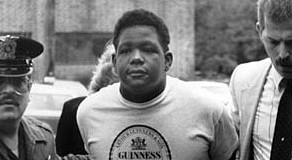
Craig Price
Juvenile serial killer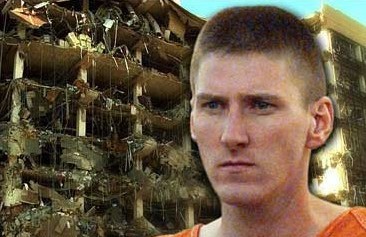 Timothy McVeigh
Mass murderer · USA · 1995
Timothy James McVeigh (April 23, 1968 – June 11, 2001) was a United States Army…
168 victims
Timothy McVeigh
Mass murderer · USA · 1995
Timothy James McVeigh (April 23, 1968 – June 11, 2001) was a United States Army…
168 victims
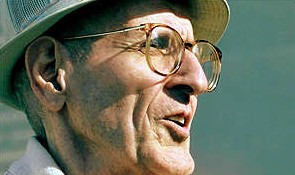 Jack Kevorkian
Homicide · USA · 1990
Jack Kevorkian (born May 26, 1928) was a controversial American pathologist. He…
130 victims
Jack Kevorkian
Homicide · USA · 1990
Jack Kevorkian (born May 26, 1928) was a controversial American pathologist. He…
130 victims
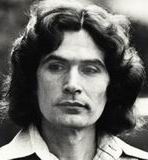 Rodney Alcala
Serial killer · USA · 1977
Rodney James Alcala (born August 23, 1943) was also known as Rodrigo Jacques Al…
100 victims
Rodney Alcala
Serial killer · USA · 1977
Rodney James Alcala (born August 23, 1943) was also known as Rodrigo Jacques Al…
100 victims
 Julio Gonzalez
Mass murderer · USA · 1990
Julio Gonzalez was sentenced to 174 twenty-five-year sentences (a total of 4,35…
87 victims
Julio Gonzalez
Mass murderer · USA · 1990
Julio Gonzalez was sentenced to 174 twenty-five-year sentences (a total of 4,35…
87 victims
 David Koresh
Homicide · USA · 1993
David Koresh (born Vernon Wayne Howell; August 17, 1959 – April 19, 1993) led t…
79 victims
David Koresh
Homicide · USA · 1993
David Koresh (born Vernon Wayne Howell; August 17, 1959 – April 19, 1993) led t…
79 victims
 Glen Edward Rogers
Serial killer · USA · 1993
Glen Edward Rogers was a spree killer whose cross-country rampage in 1994-95 le…
70 victims
Glen Edward Rogers
Serial killer · USA · 1993
Glen Edward Rogers was a spree killer whose cross-country rampage in 1994-95 le…
70 victims
 Guadalupe Ronquillo-Ovalle
Mass murderer · USA · 2013
Guadalupe Ronquillo-Ovalle killed her husband, Israel Alvarez, and their three…
4 victims
Guadalupe Ronquillo-Ovalle
Mass murderer · USA · 2013
Guadalupe Ronquillo-Ovalle killed her husband, Israel Alvarez, and their three…
4 victims
 Daroyce Mosley
Mass murderer · USA · 1994
DaRoyce Lamont Mosley was convicted of capital murder for the death of Patricia…
4 victims
Daroyce Mosley
Mass murderer · USA · 1994
DaRoyce Lamont Mosley was convicted of capital murder for the death of Patricia…
4 victims
 Bobby James Moore
Murderer · USA · 1980
Defendant: Bobby James Moore Victim: Jim McCarble The federal habeas corpus rel…
1 victim
Bobby James Moore
Murderer · USA · 1980
Defendant: Bobby James Moore Victim: Jim McCarble The federal habeas corpus rel…
1 victim
 Arthur Martin Ross
Murderer · USA · 1990
Arthur Martin Ross · April 10, 1990 — Arthur Ross telephoned the victim and arr…
1 victim
Arthur Martin Ross
Murderer · USA · 1990
Arthur Martin Ross · April 10, 1990 — Arthur Ross telephoned the victim and arr…
1 victim
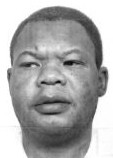 Kelsey Patterson
Homicide · USA · 1992
Kelsey Patterson was executed by lethal injection in Texas on May 18, 2004, aft…
2 victims
Kelsey Patterson
Homicide · USA · 1992
Kelsey Patterson was executed by lethal injection in Texas on May 18, 2004, aft…
2 victims
- Gender
- male
- Country
- USA
- Location
- Warwick, Rhode Island, USA
- Date of birth
- 1974
- Age at first offence
- 13
- Characteristics
- juvenile (13), serial rapist, dismemberment
- Victim profile
- Rebecca Spencer, 27 / Joan Heaton, 39, and her daughters, Jennifer 10, and Melissa 8
- Method of murder
- St abbing with knife
- Date(s) of murder
- 1987 / 1989
- Years active
- 1987–1989
- Date of arrest
- —
- Status
-
Sentenced 29 years to the jail during various sentences from 1991 to 2007
Overview
Craig Price was a juvenile serial killer from the Buttonwoods neighbourhoods of Warwick, Rhode Island, known as the "Slasher of Warwick." He was arrested in 1989 for four murders committed in his neighborhood: the murders of Joan Heaton, 39, and her two daughters, Jennifer, 10, and Melissa, 8, that year, and the murder of another woman two years prior.
Timeline
- 1987 — Craig Price murdered neighbor Rebecca Spencer, 27, by stabbing her 58 times.
- 1989 — Craig Price butchered neighbor Joan Heaton 63 times and killed her two young daughters using kitchen knives.
- September 4, 1989 — Marie Bouchard went to check on her daughter Joan Heaton and her grandchildren Jennifer and Melissa at their home on Metropolitan Drive in the Buttonwoods area of Warwick, Rhode Island; she and Mary Lou discovered the bodies and called police.
- September 5, 1989 — Investigators got a break when Detective Ray Pendergast spotted Craig Price, 15, in a park; Craig had a bandage on his hand.
- September 17, 1989 — Detectives conducted an overnight surveillance operation and then searched Craig Price’s house; officers found a trash bag in the shed containing bloody knives from the Heaton household and bloodied articles of clothing, gloves and other objects; Craig was arrested for the murders of Joan, Jennifer and Melissa.
- September 21, 1989 — Craig appeared before Judge Carmine R. DiPetrillo at the Kent County Courthouse; he pleaded guilty to murder and burglary charges and was ordered to serve five years at the Rhode Island Training School’s Youth Correctional Center; he was also ordered to undergo intense psychological examination and therapy.
- 1990 — Wesley Profit, a Massachusetts psychiatrist who examined Craig Price on behalf of the state, wrote that Price was a serial killer who was in a psychotic rage at the time of the murders and was in dire need of extensive treatment.
- 1991 to 2007 — Craig Price served various jail sentences totaling 29 years.
- 1992 — Jeffrey Pine was elected attorney general.
- 1993 — Rhode Island citizens demanded that juveniles be treated differently; Pine introduced a bill related to civil commitment of a mentally ill individual who posed a danger to society; the Craig Price Bill passed.
- October 3, 1994 — Craig’s trial began at the Superior Court in Providence.
- October 6, 1994 — The jury returned a verdict finding Craig guilty on both counts of extortion and simple assault.
- October 11, 1994 — Craig Price turned 21.
- February 1996 — Craig bit a correctional officer’s finger during a brawl.
- 1997 — Craig appeared before Chief District Court Judge Albert DeRobbio after a jury convicted him of criminal contempt.
- 2004 — Craig was transferred to the Florida Department of Corrections as part of a routine interstate transfer; in 2004 he said in court, "The state was effectively organized not to rehabilitate me, but to incarcerate me."
- December 15, 2007 — An entry stated "Juvenile Serial Killer Remains in Prison" in a newspaper article.
The offence
Rebecca Spencer murder (1987)
Craig Price murdered Rebecca Spencer, 27, a mother of two. He stabbed her 58 times.
Joan Heaton and daughters murders (1989)
Craig Price butchered Joan Heaton, 39, with kitchen knives 63 times. He also killed her two daughters, Jennifer, 10, and Melissa, 8.
Marie Bouchard discovered the bodies with Mary Lou after they went to check on Joan and the grandchildren over the Labor Day weekend. They found the interior splattered with blood and a putrid smell. Joan was found lying beneath blood-soaked sheets in the hallway. Jennifer was lying nearby and Melissa was on the kitchen floor. All three had been murdered.
The victims had been stabbed multiple times with kitchen knives. The youngest child, Melissa, was stabbed so fiercely that one of the blades actually broke off in her neck. She also had her skull bashed in with a kitchen stool. Joan was also bludgeoned and strangled.
It was believed that the murders occurred three days prior to the discovery.
Investigation
The Warwick Police Department reviewed evidence and interviewed locals. Investigators enlisted FBI profiler Gregg O. McCrary to assist.
McCrary believed the murderer was likely someone from the Heaton neighborhood and suggested the crime probably connected with another unsolved murder in Buttonwoods two years earlier. He noted similarities including use of a weapon already present in the house and an "unusual display of 'overkill'": Joan and Rebecca were stabbed approximately 60 times each, and the children approximately 30 times each.
McCrary advised investigators to look for someone in the neighborhood with a cut or bandaged hand, believing that the stabbing frenzy likely resulted in the murderer stabbing his own hand.
Expert blood analyst Dr. Henry Lee examined the Heaton residence and analyzed blood splatters and trails. Investigators gathered a bloody sock imprint; whoever left the imprint wore a size 13 shoe.
Arrest and interrogation
On September 5, 1989, Detective Ray Pendergast and Mark Brandreth spoke with a neighborhood boy named Craig Price, 15. Craig responded with concern and said he had seen the bodies coming out of the house the day before, and that he lived a few doors away from the Heaton family. Investigators observed that Craig had a bandage on his hand.
Craig claimed that he hurt his hand by getting drunk several nights earlier and punching his hand through a car window on Keeley Avenue. Investigators learned there was no police report of a smashed car window in the area Craig mentioned and found no evidence of glass on the street.
Craig was then pursued as a suspect. Investigators questioned Craig with his parents present at the police station. Craig maintained his story about hurting his hand while trying to break into a car. Investigators asked him to take a lie-detector test; the test revealed he was lying, but it did not prove involvement in the murders.
Investigators learned Craig ran with a gang of juvenile delinquents known to burglarize houses and discovered that Craig boasted about killing Rebecca Spencer.
Detectives obtained a search warrant. Detectives Kevin Collins, Arthur Anderson and Tim Colgan organized a search team and set up overnight surveillance. In the early morning hours of September 17, detectives led by Collins, Anderson and Colgan rang the doorbell; Craig’s father answered and let them in. Craig was found dozing on the couch.
In the shed behind the house, detectives found a trash bag containing incriminating evidence: several bloody knives from the Heaton household and bloodied articles of clothing, gloves and other objects. Investigators woke Craig and arrested him for the murders of Joan, Jennifer and Melissa. Craig seemed unaffected at the time of arrest and was booked and interrogated.
Confessions
During the interview, Craig Price confessed immediately to the Heaton murders. His story was described as changing periodically, and he later became worn out and decided it was easier to tell the truth.
Craig told investigators his primary intention was to burglarize the house. He said he found an open window in the kitchen and crawled through it, landing on a table that broke but, despite the noise, he continued the burglary. He said he walked through the residence looking for items to steal until Joan, who had awakened, turned on the light and spotted him. Craig stated that he grabbed Joan, beat and strangled her.
Craig stated that Joan’s screams woke the children; Melissa ran to the kitchen to call the police but Craig overpowered her. He said he tackled the girls to the floor, then went to the kitchen, grabbed knives and stabbed them. He said that during the attack one girl bit his hand, and that he bit the girl back on the face and also bit Joan. Craig stated he smashed the youngest girl over the head with a stool when she continued to struggle.
Craig stated he accidentally stabbed his hand during the murders and removed the gloves he was wearing to tend to his injuries in the bathroom. He admitted covering the victims with blankets, and he attempted to clean up with towels but left because he feared police would catch him. He said he quickly returned to his home several doors away.
He said he hid his blood-soaked clothes in a bag in the attic, and detectives later found the bag in the location Craig described.
After describing the Heaton murders, Craig admitted he also killed Rebecca Spencer, stating he was 13 at the time.
Court proceedings and sentencing
Plea and Youth Correctional Center sentence (1989)
On September 21, 1989, Craig appeared before Judge Carmine R. DiPetrillo at the Kent County Courthouse. He pleaded guilty to murder and burglary charges. He was ordered to serve five years at the Rhode Island Training School’s Youth Correctional Center (YCC), a maximum-security detention facility. He was ordered to undergo intense psychological examination and therapy.
Craig refused treatment and refused to officially discuss the murders by pleading the Fifth Amendment. He withdrew from the diagnostic and treatment program arranged by the judge, citing fears that the psychiatric examination might result in him being placed in a psychiatric facility for commitment beyond his twenty-first birthday. Craig completed his high school equivalency test and began taking satellite college courses while in the institution.
Extortion trial and conviction (1994)
Craig was indicted on one count of simple assault and extortion for threatening to injure Officer Mark Petrella, a training school employee. One week later, Craig was arraigned and bail was set at $500,000, and trial was scheduled for later that fall.
Craig’s hearing took place on June 27 at the Providence County Family Court before Judge S. Jeremiah Jr. During the proceedings, Craig was ordered to undergo a psychiatric exam, and the judge found him in civil contempt and added an extra year to his incarceration to be served at the Adult Correctional Institution in Cranston, Rhode Island.
The trial began at the Superior Court in Providence on October 3, 1994, before Judge Thomas Needham. Attorney Robert Mann and Katie Hynes led the defense team. Prosecutors Patrick Youngs and Mike Stone represented the state’s case against Craig.
During opening statements, Stone told jurors that they would learn how Craig verbally assaulted Petrella after he was given a disciplinary report to sign for possession of contraband material (cigarettes and a lighter) and would hear how Craig threatened the officer if he continued his job at the facility.
A witness, Mark Petrella, testified for two hours about the confrontation, including that Craig threatened to "snuff" him if he ever returned to work, and that several officers tried unsuccessfully to calm Craig’s increasingly volatile behavior. The defense introduced Antwyon Carter, who testified that he never heard Craig use the word "snuff" against Petrella and that he did not believe the dispute was life-threatening. Under cross-examination Carter contradicted himself by indicating Craig’s actions were threatening. Another defense witness also suggested Craig acted in a threatening way toward Petrella.
Craig then testified on his own behalf. He stated that after the cigarettes and lighter were found in his possession, Petrella gave him the impression he would not report the incident. Craig testified he was surprised and angered when Petrella presented him with the disciplinary report later that day. He admitted shouting profanity at the officer but denied threatening to "snuff" him out. Craig believed Petrella’s report was part of a conspiracy to keep him locked up. During cross-examination Craig flew into a rage, claiming that everyone lied and accusing prosecutors of being at the head of a conspiracy to put him behind bars permanently.
On October 6, 1994, following closing arguments and jury deliberation, Craig was found guilty on both counts of extortion and simple assault. A hearing in December determined Craig’s punishment.
Judge Needham sentenced Craig to 15 years, eight of which were suspended, at the Adult Correctional Institution in Cranston.
Criminal contempt and additional years
The record described multiple proceedings and convictions stemming from Craig’s refusals and prison conduct.
In February 1996, Craig bit a correctional officer’s finger during a brawl. Prosecutors took the uncommon step of charging him for probation violation despite him still being imprisoned. He was also charged with assault. Craig was found guilty and sentenced to an additional year in prison.
The next year, Craig was placed on trial for criminal contempt due to failure to comply with psychological evaluations ordered by the state. The charges stemmed from complaints by psychiatrists that Craig lied about events surrounding the murders. Craig admitted to the charges and was eventually found guilty. Craig received an additional 25 years on top of other sentences, with 10 years to be served outright and 15 years on probation.
In October 1998, seven more years were added for assaulting a correctional officer. In February 1999 and again in October 2001, Craig was sentenced to a total of four more years for verbally and physically assaulting correctional officers.
In May 1997, Price appeared before Chief District Court Judge Albert DeRobbio after a jury convicted him of criminal contempt. The Supreme Court ruled that judges had unlimited sentencing power in such cases. DeRobbio stated:
"I did not feel that I could, in conscience, sentence him to life on a contempt charge."
DeRobbio gave 25 years, 10 to serve and the remaining 15 years if Price got into trouble or refused treatment. DeRobbio further stated:
"I felt that to put him on hold for 25 years would be to put a hold on many, many things"
"And maybe, in that time, some form of treatment could be found."
The record also described ongoing appeals that went to the state Supreme Court, with Price losing each time.
Other incarceration-related legal outcomes
Craig was scheduled to be released from the ACI in Cranston, Rhode Island, in 1998 after his sentence for murder had been served, with an additional two years for contempt. The record also stated he was later transferred to the Florida Department of Corrections in 2004.
The record included additional allegations and prosecutions while incarcerated:
- assault and violation of probation for fights while in prison
- violation of probation while still imprisoned
- contempt for psychological evaluation refusal
- extortion for threatening a corrections officer
- probation violation and assault convictions related to prison fights
Appeals
The record described that several appeals went to the state Supreme Court and that Craig Price lost each time. It also included context that mental health advocates had opposed the law allowing courts to consider criminal records in commitment proceedings.
Aftermath and prison status
The record described prison violence and transfers. It stated that on July 29, 2009, Price was involved in a prison fight with another inmate, and that one of the correctional officers was stabbed in the finger by a handmade shank in Price’s possession. After the fight, Price was transferred to another facility.
It stated that an officer from the Rhode Island Department of Corrections said Price had been booked twice for fighting since leaving the Adult Correctional Institutions in Cranston. It also said Price was recently denied parole in March and had a good time release date in April 2020, and that the date may change after his recent behavior.
The record described Craig Price’s projected release schedule as follows:
- his current scheduled release date was stated as December 2020
- his projected release date was also stated as February 2022
The record included Craig Price’s comments in court in 2004:
"The state was effectively organized not to rehabilitate me, but to incarcerate me,"
"They were looking for anything to lock me up."
It also described that Pine and others had argued that the legal system needed changes for future young murderers and that laws allowing juveniles to be tried as adults could not be applied retroactively to Price.
Other details
- Craig Price had a previous criminal record for petty theft.
- He was arrested about a month before his 16th birthday and was tried and convicted as a minor.
- The record described that, by law at the time, courts could hold him in a training school until his 21st birthday, and his criminal records would be sealed.
- The record included that in his confession he described his primary intention as burglary and that he hid blood-soaked clothes in the attic.
- The record described planned and discussed legislative changes, including the "Craig Price Bill," and referenced a law allowing juveniles to be tried in adult court for serious crimes that could not be applied retroactively to Price.
- The record included participation in programs in the Youth Correctional Center, including high school equivalency testing and satellite college courses, as well as permission to counsel other youths and patrolling hallways, and permission to make a rap video threatening lyrics.
- The record described that President Bill Clinton flew to Providence and made comments suggesting juvenile records should not be sealed but publicly accessible and that laws needed to be changed to prevent juveniles with a violent history from purchasing firearms.
- The record included that citizens organized Citizens Opposed to the Release of Craig Price (CORP) to lobby against his release, with fundraising and national awareness efforts including banners stating "Killer Craig Price. Moving to your city? Beware."
- The record included a quote from Craig Price upon being led from the courthouse:
"When I get out I'm going to smoke a bomber"
Spotted an error, or have more information about this case?