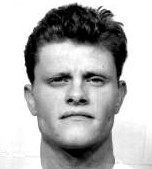
Robert Drew
Murderer Brian Kevin Rosenfeld
Murderer · USA · 1985
Brian Kevin Rosenfeld Brian Kevin Rosenfeld was sentenced to three concurrent l…
23 victims
Brian Kevin Rosenfeld
Murderer · USA · 1985
Brian Kevin Rosenfeld Brian Kevin Rosenfeld was sentenced to three concurrent l…
23 victims
 Marvin Gray
Murderer · USA · 1975
Marvin Gray was convicted killer who claimed responsibility for 23 slayings and…
23 victims
Marvin Gray
Murderer · USA · 1975
Marvin Gray was convicted killer who claimed responsibility for 23 slayings and…
23 victims
 Yahweh ben Yahweh
Murderer · USA · 1980
Yahweh ben Yahweh was born and legally named Hulon Mitchell Jr. (October 27, 19…
23 victims
Yahweh ben Yahweh
Murderer · USA · 1980
Yahweh ben Yahweh was born and legally named Hulon Mitchell Jr. (October 27, 19…
23 victims
 Russell Ellwood
Murderer · USA · 1991
Russell Ellwood was a former taxi driver. Authorities suspected him of killing…
20 victims
Russell Ellwood
Murderer · USA · 1991
Russell Ellwood was a former taxi driver. Authorities suspected him of killing…
20 victims
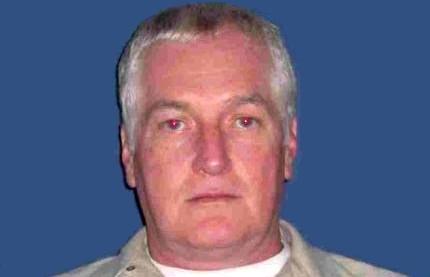 Thomas Edward Luther
Serial killer · USA · 1970
Thomas Edward Luther was a convicted rapist who was sentenced to life in prison…
9 victims
Thomas Edward Luther
Serial killer · USA · 1970
Thomas Edward Luther was a convicted rapist who was sentenced to life in prison…
9 victims
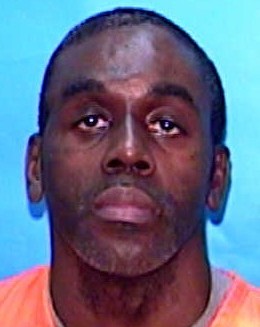 Victor Tony Jones
Murderer · USA · 1990
Name: Victor Tony Jones · Date of birth: 05/01/61 · Court: Eleventh Judicial Ci…
2 victims
Victor Tony Jones
Murderer · USA · 1990
Name: Victor Tony Jones · Date of birth: 05/01/61 · Court: Eleventh Judicial Ci…
2 victims
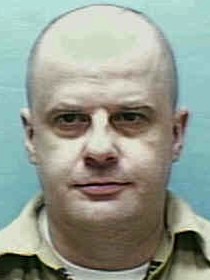 Scott Mink
Murderer · USA · 2000
Scott Andrew Mink (October 13, 1963 - July 20, 2004) lived with his elderly par…
2 victims
Scott Mink
Murderer · USA · 2000
Scott Andrew Mink (October 13, 1963 - July 20, 2004) lived with his elderly par…
2 victims
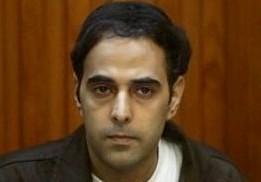 Yigal Amir
Murderer · Israel · 1995
Yigal Amir (born May 23, 1970) was the Israeli assassin of the Prime Minister o…
1 victim
Yigal Amir
Murderer · Israel · 1995
Yigal Amir (born May 23, 1970) was the Israeli assassin of the Prime Minister o…
1 victim
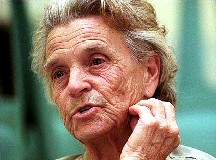 Faye Copeland
Serial killer · USA · 1986
Faye Della Copeland was born in 1921 and died on December 30, 2003. She was des…
5 victims
Faye Copeland
Serial killer · USA · 1986
Faye Della Copeland was born in 1921 and died on December 30, 2003. She was des…
5 victims
- Gender
- male
- Country
- USA
- Location
- Harris County, Texas, USA
- Date of birth
- April 8, 1959
- Age at first offence
- 24
- Characteristics
- robbery, alcohol, drug addict, kidnapping
- Victim profile
- Jeffrey Leon Mays (male, 17)
- Method of murder
- St abbing with knife
- Date(s) of murder
- February 22, 1983
- Years active
- 1983
- Date of arrest
- —
- Status
-
Executed
Executed by lethal injection in Texas on August 2, 1994
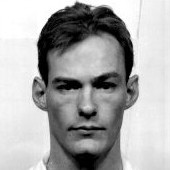
Case record: Robert Nelson Drew
Status / sentence
Robert Nelson Drew was executed by lethal injection in Texas on August 2, 1994.
Timeline
- February 21, 1983 — Jeffrey Leon Mays was stabbed to death.
- February 22, 1983 — Drew’s death sentence for stabbing runaway Jeffrey Mays, 17, followed a fight.
- April 8, 1959 — Robert Nelson Drew was born.
- December 3, 1983 — Drew was convicted of capital murder and received a death sentence.
- December 9, 1983 — Sentencing date.
- March 28, 1984 — Puralewski executed an affidavit taking sole responsibility for Mays’ death.
- March 30, 1984 — Defense appellate brief filed.
- April 13, 1984 — The state trial court denied Drew’s motion for a new trial.
- April 28, 1988 — Drew filed a state habeas petition.
- June 14, 1988 — The Court of Criminal Appeals denied Drew’s petition.
- June 14, 1988 — Drew filed a motion for stay of execution and a habeas petition in federal district court; the district court granted a stay of execution.
- February 20, 1991 — The district court denied Drew habeas relief.
- July 31, 1991 — The district court granted a Certificate of Probable Cause (CPC).
- June 18, 1992 — A panel of the United States Court of Appeals for the Fifth Circuit affirmed the district court’s denial of relief.
- November 25, 1992 — Drew’s execution was stayed by timely filing of a writ of certiorari.
- October 4, 1993 — Drew instituted his second federal habeas corpus petition.
- October 7, 1993 — The district court denied Drew all relief and denied a CPC in the second petition.
- October 11, 1993 — The Fifth Circuit denied Drew’s application for a CPC and denied a motion for a stay of execution.
- September 30, 1993 — The Texas Court of Criminal Appeals denied Drew’s application for habeas relief regarding the drawing-of-a-smiling-face issue.
- June 28, 1993 — The Supreme Court denied Drew’s petition for writ of certiorari.
- February 28, 1994 — Certiorari to the Supreme Court was denied.
- July 28, 1994 — A writ of habeas corpus decision was denied by writ judge Ruben Guerrero.
- August 22, 1994 — The offender execution date was listed as August 22, 1994 in one execution summary line.
- August 2, 1994 — Drew was executed.
Background
Robert Nelson Drew was White and had been married and divorced. He had one child and had been described as a drifter at the time of the murder. Drew attended education level noted as 10th grade. Drew had a broken and poverty stricken home background with a history of domestic problems and a drinking problem, according to testimony from Drew’s uncle, Donald Martelle. Martelle testified that Drew’s early childhood was marred by repeated fights between his parents; Drew’s parents divorced and abandoned him when he was very young, leaving him to be raised by his grandparents.
In the prior events leading to the offense, Jeffrey Leon Mays had family conflict and decided to run away from home. Bee Landrum had family conflict because of difficulties with alcohol and drugs.
The offence
On February 21, 1983, Jeffrey Leon Mays, a White male, was stabbed to death.
Drew and Jeffrey Leon Mays were described as having gotten into an argument while traveling in a car. Drew and Ernest Puralewski, an accomplice, ordered Mays out of the car and stabbed him to death. The allegations stated that, in the course of committing robbery against Mays, Drew intentionally caused the death of Mays by stabbing him.
The allegations also stated that, in the course of the kidnap of Landrum, stabbing Mays intentionally and knowingly caused death of Mays by stabbing him with a knife, and that Drew intended to cause severe bodily injury to Mays and caused Mays’ death by intentionally and knowingly committing an act clearly dangerous to human life. After beating Mays in the car, Drew and Puralewski ordered Mays out of the car and stabbed him to death.
Investigation / arrests
After leaving Puralewski at a bar in Houston, Drew and Landrum were stopped by the police at 3:30 A.M. for speeding. After an investigation, Drew was charged with capital murder.
People
- Robert Nelson Drew — defendant.
- Jeffrey Leon Mays — victim; 17-year-old runaway.
- Bee Landrum — witness described as the only eyewitness; later recanted testimony and admitted he did not, in fact, see what happened.
- Ernest Puralewski — co-defendant/accomplice; later admitted he committed the murder alone and pleaded guilty to one count of capital murder; he later executed an affidavit taking sole responsibility for Mays’ death and recanted earlier statements.
- Donald Martelle — Drew’s uncle; testified to Drew’s background and drinking problem.
- Peter Fleury — private investigator assisting Drew’s attorney; executed an affidavit relaying content of a telephone conversation.
- Alvin Eisenberg — jury foreman; executed an affidavit responding to Fleury’s affidavit.
- Grover Smith — prospective juror.
- Archie Cotton — prospective juror.
- Doug S. Mason II — offered to switch places with Drew.
- Ronald Kuby — Drew’s attorney; also named as writ attorney.
- William Kunstler — named as defendant’s appellate attorney and also named as a writ attorney.
- Bradford E. Yock — named as defendant’s appellate attorney.
- Eric Hagstette — Assistant DA.
- Don Rogers and Richard Stephanow — defense attorneys.
- Hon. Charles Hearn — trial judge, 263 District Court, Harris County, TX.
- Alan Burns — inmate incarcerated with Puralewski; provided a sworn affidavit.
- Ruben Guerrero — writ judge.
- Ron Kuley — named in Drew’s last statement as Drew’s attorney who would read a letter at a press conference.
- Dan Morales — named in connection with petitioning for a new execution date.
- John Holmes — named in connection with petitioning for a new execution date.
- Frank — a man in whose company Drew was met.
- John Sly — named as a hitchhiker picked up during the trip.
Trial
Charge and plea
Drew entered a plea of Not Guilty.
Drew was convicted of Capital Murder – TX PC s.19.03 (a)(2).
The confession question was answered: No.
Evidence described at trial
Scientific evidence was stated as: No psychiatric testimony presented.
Drew’s trial was described as relying largely on the testimony of one eyewitness, Bee Landrum. Landrum’s testimony was described as extremely shocking, powerful, and graphic. Landrum claimed he could see all people at the crime scene and claimed he saw Drew pull the victim’s head back and slash his throat. Landrum re-enacted the killing for the jury.
A tape-recorded interview with Landrum, made several hours after the murder in which he admitted he had not seen the killing, was not offered into evidence at trial.
Drew’s co-defendant, Ernest Puralewski, was awaiting his own trial for capital murder and refused to testify at Drew’s trial.
It was stated that both prosecution and defense acknowledged that Drew’s knife was not the murder weapon and did not cause fatal wounds.
Mitigation evidence
Drew’s uncle, Donald Martelle, testified during the punishment phase that Drew’s early childhood was marked by repeated fights between his parents; his parents divorced and abandoned him when he was very young, and he was raised by his grandparents. Martelle also testified about Drew’s broken and poverty stricken home background with a history of domestic problems and a drinking problem.
Other evidence mentioned included Drew’s comparative youth at the time of the crime, the fact that he did not strike the blow that killed Mays, and that Drew had consumed alcohol and marijuana before becoming involved in the crime.
Evidence of mental retardation, mental illness, and/or neurological damage was addressed in the sense that “Applicant’s responses were consistent with counsel’s personal observation of applicant and corroborated counsel’s conclusions that neither insanity nor competency to stand trial were issues in applicant’s case.”
Jurors and voir dire issues
Drew challenged the trial court’s decisions sustaining challenges for cause to prospective jurors Grover Smith and Archie Cotton.
In the federal appellate discussion, the record described Smith insisting on a higher burden of proof than he understood the reasonable doubt standard in a capital case. The record described Cotton’s definition of “continuing threat to society” as requiring the State to prove probability that the defendant would commit future murders, leading the trial court to dismiss him for cause.
Prosecutor closing argument and quotations
In the federal appellate material, a prosecutor remark was quoted:
The prosecutor argued: “The only question is was a robbery going on and was the defendant the one who did it. That doesn't take long. To take a long time is unfair. It's an insult to what this has been about. It is an insult to people here--to the victim's family and to Bee. The trial court overruled defense counsel's objection to this comment.”
In closing, the prosecutor concluded: “I am going to sit down and ask that you come to a swift verdict and the only verdict that is applicable under the law that of [sic] this defendant being guilty of capital murder.”
Another prosecutor quote appeared:
“At one point, the prosecutor stated: I ask you to look at the facts and realize that based upon those facts that there is no other conclusion than that there was a robbery going on, an all day robbery. You had a rolling chamber of torture, a chamber of execution in that car. That's what that rolling party became that this defendant--guilty, guilty, more guilty than Mike [Puralewski] of this offense. And I think you can see that the only way to come to this conclusion safely is by looking at the charge. The Judge needs you to do that. Realize that most of its definitions you have heard before and the Judge is telling you that you have to find him guilty.”
“At another point, the prosecutor argued to the jury: "Keep in mind what that evidence is and keep in mind the Court is not telling you what to do. The Court cannot do that."”
In the taped interview exchange quoted in the federal appellate material, the following verbatim statements were included:
[Landrum] “I don't know. OK, so we pulled over and they took the keys out of the car. Lock my door and says if I move I am a dead man. They take Jeff outside and hear them hit him a few times and then I hear him cutting him. You know, stabbing him.”
[Interviewer] “Did you look over and see them stabbing him?”
[Landrum] “I'd seen them throwing him on the ground and I seen them bending over and then when I heard the sounds I shut my eyes and turned away.”
Sentencing
Drew was sentenced to death.
Direct appeal
A direct appeal to the Texas Court of Criminal Appeals was decided with an opinion date of September 30, 1987, affirming conviction.
The opinion citation was: Drew v. State, 743 S.W. 2d 207 (Tex. Crim. App. 1987).
Certiorari to the Supreme Court was denied June 28, 1993.
Grounds raised included:
- denial of an appellants out-of-time motion for new trial on basis of lack of jurisdiction because “new available” evidence warranted a new trial and because jury misconduct occurred when parole was discussed
- sufficiency of evidence to prove murder was committed in the course of committing robbery and sufficiency of evidence to support affirmative finding of the second special issue that the appellant was a continuing threat to society
- improper jury argument of prosecutor
- trial court error in sustaining challenges for cause to venire men Grover Smith and Archie Cotton
Habeas corpus and appeals
State habeas corpus
A state writ of habeas corpus was pursued. It was denied by decision July 28, 1994.
It included grounds alleging innocence, an alternative murderer scenario, and issues about suppression and jury consideration:
- Ernest Puralewski confessed in sworn affidavit fully exculpating Drew.
- Bee Landrum, the only eyewitness, recanted; a tape recording with Landrum hours after the killing was suppressed until 5 years after Drew’s trial.
- Execution of an innocent person was alleged to violate the 8th and 14th Amendment of the US Constitution and Art 1 s.13 of TX Constitution.
- A claim alleged that a prosecutor hypothesis at voir dire fundamentally misstated Texas law, violating constitutional guarantees and resulting in inability of jurors to reliably determine guilt and consider and give effect to mitigating evidence.
- Additional evidence developed by writ attorneys included evidence that Puralewski had been claiming sole responsibility for the murder since incarceration; Alan Burns provided a sworn affidavit to that effect.
Certiorari to the Supreme Court was denied February 28, 1994.
Federal habeas corpus and related procedural history
Drew filed a petition for writ of habeas corpus in federal district court on June 14, 1988, after a state petition. The district court denied relief on February 20, 1991. Drew’s request for a Certificate of Probable Cause was granted July 31, 1991. The Fifth Circuit affirmed on June 18, 1992, in an appeal described as: Robert Nelson Drew v. James A. Collins, Director, Texas Department of Criminal Justice, Institutional Division.
After a second execution date for October 14, 1993 was set aside by a new habeas application in state court and denied in an unpublished order on September 30, 1993, Drew filed a second federal habeas petition and sought a CPC and a stay. The district judge denied relief on October 7, 1993, and the Fifth Circuit denied CPC and the stay on October 11, 1993, treating the second federal habeas petition as an abuse of the writ because the claim could have been raised earlier.
Claims in the second petition included:
- that the trial judge’s drawing of a smiling face after the judge’s signature on the letter and order of execution constituted cruel and unusual punishment in violation of the Eighth Amendment
- that the drawing violated the Establishment Clause of the First Amendment
Other details
Co-defendant plea and recantation
Ernest Puralewski pleaded guilty to one count of capital murder and was sentenced to 60 years. It was stated that Puralewski later recanted earlier statements and confessed that Drew did not murder the boy, and that Puralewski signed a sworn affidavit exculpating Drew.
Witness and eyewitness issues
Bee Landrum later recanted his testimony and admitted he did not, in fact, see what happened. Landrum took two polygraph tests; the first was inconclusive and the second showed “no deception.”
Knife / weapon statements
It was stated that Drew’s knife was not the murder weapon and did not cause fatal wounds.
Attempts to stay and execution dates
It was stated that Drew had another execution date for October 14, 1993, which was set aside by a new habeas application in state court. A new execution date of Aug. 2, 1994 was set.
Last statement
Drew’s last statement included the following text, with the first two or three words not understood: “I don’t know why Marta Glass wasn’t allowed in here. I love you all. Keep the faith. Remember the death penalty is murder. They are taking the life of an innocent man. My attorney, Ron Kuley [ illegible ], will read my letter at a press conference after this is over. That is all I have to say. I love you all. Robert Drew”

Spotted an error, or have more information about this case?