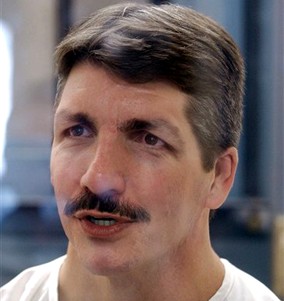
Paul Dennis Reid
Spree killer Mark Barton
Spree killer · USA · 1999
Mark Orrin Barton (1955 – July 29, 1999) committed a spree killing in Stockbrid…
12 victims
Mark Barton
Spree killer · USA · 1999
Mark Orrin Barton (1955 – July 29, 1999) committed a spree killing in Stockbrid…
12 victims
 John Allen Muhammad
Spree killer · USA · 2002
John Allen Muhammad carried out the 2002 D.C. sniper attacks with his 17-year-o…
10 victims
John Allen Muhammad
Spree killer · USA · 2002
John Allen Muhammad carried out the 2002 D.C. sniper attacks with his 17-year-o…
10 victims
 Jeffrey Weise
Spree killer · USA · 2005
Jeffrey Weise, a 16-year-old student at Red Lake High School in Red Lake, an un…
9 victims
Jeffrey Weise
Spree killer · USA · 2005
Jeffrey Weise, a 16-year-old student at Red Lake High School in Red Lake, an un…
9 victims
 Christopher Dwayne Peterson
Spree killer · USA · 1990
Christopher Dwayne Peterson (born January 20, 1969, in Gary, Indiana, USA) was…
7 victims
Christopher Dwayne Peterson
Spree killer · USA · 1990
Christopher Dwayne Peterson (born January 20, 1969, in Gary, Indiana, USA) was…
7 victims
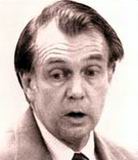 Richard Crafts
Murderer · USA · 1986
Richard Crafts was sentenced to 50 years in prison on January 9, 1990. Helle Cr…
1 victim
Richard Crafts
Murderer · USA · 1986
Richard Crafts was sentenced to 50 years in prison on January 9, 1990. Helle Cr…
1 victim
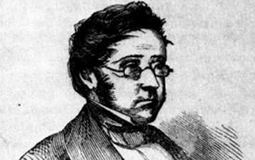 John White Webster
Murderer · USA · 1849
John White Webster (May 20, 1793–August 30, 1850) was born in Boston, Massachus…
1 victim
John White Webster
Murderer · USA · 1849
John White Webster (May 20, 1793–August 30, 1850) was born in Boston, Massachus…
1 victim
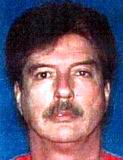 David Roland Waters
Murderer · USA · 1995
David Roland Waters was an American office manager for American Atheists. He wa…
4 victims
David Roland Waters
Murderer · USA · 1995
David Roland Waters was an American office manager for American Atheists. He wa…
4 victims
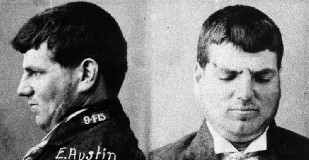 Ernest Austin
Murderer · Australia · 1913
Ernest Austin died on 22 September 1913. He was the last person executed by Que…
1 victim
Ernest Austin
Murderer · Australia · 1913
Ernest Austin died on 22 September 1913. He was the last person executed by Que…
1 victim
 Alexander Solonik
Murderer · Russia · 1990
In February 1997, Greek newspapers published articles that claimed a Russian mo…
10 victims
Alexander Solonik
Murderer · Russia · 1990
In February 1997, Greek newspapers published articles that claimed a Russian mo…
10 victims
- Gender
- male
- Country
- USA
- Location
- Metropolitan Nashville/Clarksville, Tennessee, USA
- Date of birth
- November 12, 1957
- Age at first offence
- 40
- Characteristics
- serial rapist, dr ugs
- Victim profile
- Employee Sarah Jackson, 16, and the manager, Steve Hampton, 25 / Employees Andrea Brown, 17; Ronald Santiago, 27; and Robert A. Sewell, Jr., 23 / Employees Angela Holmes, 21, and Michelle Mace, 16
- Method of murder
- Shooting - Stabbing with knife
- Date(s) of murder
- February-April 1997
- Years active
- 1997
- Date of arrest
- June 25, 1997
- Status
-
Sentenced to death
Sentenced to death on September 22, 1999
Case details
Paul Dennis Reid, Jr. was an American serial killer. He was born November 12, 1957. He was originally from Richland Hills, Texas, a suburb of Fort Worth.
Reid was convicted and sentenced to death for seven murders during three fast food restaurant robberies in Metropolitan Nashville, Tennessee and Clarksville, Tennessee between the months of February and April 1997. He was currently awaiting execution.
Reid assaulted eight victims in the three robberies, killing seven of them.
At the time of the murders, Reid was on parole from an 1983 conviction in Texas on charges relating to the aggravated armed robbery of a Houston steakhouse. He had served seven years of a 20-year sentence, and was paroled in 1990.
Reid was considered the prime suspect and was charged in the Captain D’s and McDonald’s murders, and eventually in the Baskin-Robbins murders. He was convicted on seven counts of first-degree murder across three trials and received seven death sentences.
Reid waived his right to an appeal. His family, along with anti-death penalty activists, claimed he was mentally challenged and unable to make that decision, and filed multiple motions to stay his execution. The Tennessee Supreme Court upheld all of Reid’s sentences.
Reid resided at Tennessee’s Morgan County Correctional Complex (Inmate #303893). His seven death sentences were the most ever handed down to a single person in the state of Tennessee.
Timeline
- February 15, 1997 — Reid was fired as a dishwasher from a Shoney’s restaurant in Donelson, for losing his temper and throwing a plate that hit another employee.
- February 16, 1997 — Sarah Jackson, 16, and Steve Hampton, 25, were shot and killed execution-style at a Captain D’s restaurant on Lebanon Road in Donelson, Tennessee.
- February 18, 1997 — Reid used some of the cash from the Captain D’s robbery to prepay the lease on a car.
- March 23, 1997 — Reid murdered three McDonald’s employees in Hermitage, Tennessee and attempted to murder Jose Alfredo Ramirez Gonzalez.
- April 20, 1999 — Reid received two death sentences.
- April 23, 1997 — Angela Holmes, 21, and Michelle Mace, 16, were kidnapped during a robbery at a Baskin-Robbins store in Clarksville, Tennessee.
- April 24, 1997 — The bodies of Angela Holmes and Michelle Mace were found at Dunbar Cave State Natural Area in Montgomery County, Tennessee.
- June 12, 1997 — Police first considered Paul Reid a suspect in the Captain D’s crime after his arrest in Cheatham County for allegedly attempting to kidnap the manager of a Shoney’s restaurant.
- June 25, 1997 — Reid went to the home of the Shoney’s manager who fired him the day before the Captain D’s murders, armed with a knife, and attempted to get in.
- September 22, 1999 — A jury in Clarksville, Tennessee sentenced Reid to death for the murder of the two ice cream shop employees.
- October 5, 200? — Reid was scheduled to be put to death by lethal injection, before a stay reset the execution for next June 28th.
- December 26, 2007 — A stay of execution was issued by US District Judge Todd J. Campbell, pending investigation into the constitutionality of Tennessee’s lethal injection methods.
- January 3, 2008 — Reid’s latest execution date was scheduled, but it had been stayed.
- April 16, 2008 — The U.S. Supreme Court issued an opinion in a Kentucky case upholding the legality of execution by lethal injection.
- April 2009 — A trial of Reid’s alleged cohort, Jim Degorski, was set to begin in April 2009.
The offence
Crimes and victims
Reid committed murders during three fast food restaurant robberies.
Reid’s spree involved three fast food restaurant robberies in Metropolitan Nashville, Tennessee and Clarksville, Tennessee between February and April 1997. He assaulted eight victims and killed seven.
Captain D’s
On the morning of February 16, 1997, Reid entered Captain D’s at Lebanon Road in Donelson, Tennessee before opening, under the guise of applying for a job.
Reid forced employee Sarah Jackson, 16, and the manager, Steve Hampton, 25, into the restaurant’s cooler and bound their hands and feet. Reid forced the two to lie on the floor and then shot them execution style.
Money, including large amounts of change, was found missing from the cash register. Steve Hampton’s wallet, which contained $600 that he intended to use to pay rent, was missing.
Steve’s wallet and other items were later found near Ellington Parkway.
Reid used the cash from the Captain D’s robbery as a down payment on a car two days later.
Additional details included:
- Steve Hampton and Sarah Jackson were found dead lying face down on the floor inside the restaurant’s walk-in cooler after an area director for Captain D’s spoke with Steve on the telephone around 8:15 to 8:30 a.m. and about an hour later the employee arrived for work but was unable to enter because the doors were locked.
- An employee arrived and got a busy signal on the telephone call, contacted another employee whose father was a Metro police officer, and the father arrived; after the assistant manager unlocked the door, the father entered between 11 a.m. and noon.
- The victims had been shot execution-style while lying on the floor.
- Steve had been shot twice in the back of the head and once in the back.
- Sarah had been shot four times in the head and once in the back.
- According to the medical examiner, two of Sarah’s head wounds were fatal, but the two other head wounds were superficial, and the shot to her back was not immediately incapacitating; if these less serious wounds were inflicted first, Sarah may have been able to move.
- A blood pattern of Sarah’s gloved hand on shelving near, but above, her body indicated Sarah had attempted to pull herself up from the floor after she was shot.
- The victims were shot with a .32 caliber weapon, probably a revolver.
- $7140, including $250 in coins, was taken in the robbery.
Evidence described at Captain D’s
Steve’s driver's license and a video rental card were found in the median of Ellington Parkway with Reid’s fingerprints on each. Reid’s right thumbprint was found on the movie rental card.
Police also found several shoe prints inside Captain D’s near the safe. The length of these shoe prints was consistent with shoes seized from Reid’s residence, while the tread design did not match.
A photograph dated July 16, 1996 showed Reid wearing a pair of dingy white tennis shoes that police had not found in his residence.
Two witnesses identified Reid as the man who came by Captain D’s the night before the murders inquiring about a job. They testified that a man came into the restaurant through the exit door around 10 p.m. shortly before closing, said he was interested in applying for a part-time job, and said he worked at Shoney’s just down the road. The employees gave the man an employment application and told him that the manager, Steve Hampton, would be working the next day. When the man asked if anyone would be at the restaurant on Sunday morning, Carter told him that Steve would be there but would be busy and unable to talk until approximately 2:45 p.m., after the Sunday lunch rush. The man left in a dark-colored car.
About a week after the murders, employees helped police prepare a composite sketch. In June of 1997, police showed them a photographic lineup of six individuals, including Reid. One employee positively identified Reid. A short time later, the other employee saw Reid during a television news report about his arrest and immediately called police, informing them that Reid was the man who came into Captain D’s the night before the murders.
At trial, the second employee explained that certainty came from the news report enabling him to hear Reid’s voice, see the way his lips moved when he talked, and see the way he walked.
Three other people testified, linking Reid to the murders, including:
- A man passing by the restaurant at approximately 8:45 a.m. saw a blue Ford station wagon with damage to the left front and possibly to the left rear parked at a funny angle toward the rear of the building; the proof showed Reid drove a light blue 1988 Ford Escort station wagon involved in an auto accident in January of 1997; the car was appraised by an insurance company on February 3, 1997 and was found to have damage to the left front end; the man testified the car in insurance photographs was similar to the car he observed.
- A woman driving by on her way to church around 8:50 a.m. saw a man identified as Steve Hampton standing inside the doorway talking to a man outside holding white paper; the unidentified man was dark-haired and about five inches taller than Steve, consistent with Reid’s described height and appearance.
- Another passerby noticed around 9:30 a.m. a car that looked out of place parked about a car-length away from the front of the building headed in the opposite direction of drive-thru arrows; he noticed a man walking hurriedly away from the restaurant toward the car; after the witness’s eyes caught, the man dropped his head completely down in a suspicious way; the man entered the passenger side of the car. The witness described the man as tall with muscular build and large neck, dark eyebrows and dark eyes, full head of hair slicked back, wearing a white shirt, dark pants, and white tennis shoes “not new.” The witness heard about the murders the next day, called police twice, then later called again after seeing Reid on television after arrest in June of 1997 and identified Reid.
McDonald’s
On the evening of March 23, 1997, Reid approached two employees behind McDonald’s on Lebanon Road in Hermitage, Tennessee after closing.
At gunpoint, he forced them back into the restaurant. Reid shot three employees to death execution-style in the storeroom:
- Andrea Brown, 17
- Ronald Santiago, 27
- Robert A. Sewell, Jr., 23
Reid attempted to shoot Jose Antonio Ramirez Gonzalez, but his weapon failed. Reid stabbed Gonzalez 17 times and left him for dead. Gonzalez survived by playing dead. Reid then took US$3000 from the cash registers and fled. Gonzalez was taken to the hospital, treated, and ultimately survived, and he testified against Reid.
Additional detail described that:
- Reid waited until closing time at midnight to pull a gun on Gonzalez and another worker as they took garbage to the trash bin.
- Reid ordered them back into the building, robbed the restaurant, and ordered them and two other employees into a storeroom.
- Then Reid shot all but Gonzalez execution-style in the head as they lay face down.
- Apparently running out of bullets, Reid stabbed Gonzalez 17 times before leaving him for dead.
- Gonzalez identified Reid as the killer.
Baskin-Robbins
On the evening of April 23, 1997, Reid went to the door of Baskin-Robbins on Wilma Rudolph Boulevard in Clarksville, Tennessee after closing. Reid persuaded the employees to let him inside.
Once inside, Reid kidnapped Angela Holmes, 21, and Michelle Mace, 16 and forced the two to Dunbar Cave State Park. Their bodies were discovered the next day on a lake shore with their throats cut.
Additional details included:
- The store regularly closed at 10:00 p.m.
- Around 10:10 p.m., Michelle’s brother arrived to pick up Michelle, noticed Angela’s car in the parking lot and lights inside the store on; he entered through an unlocked door and found no one, then called 911.
- Officers dispatched and searched the store, finding the cash register drawer empty except for coins, a safe in an office with the top removed, the victims’ purses with no money taken from the purses, a mop and bucket in the customer area, and the freezer left open.
- On the morning of April 24, 1997, the bodies of Angela Holmes and Michelle Mace were found at Dunbar Cave State Natural Area in Montgomery County, Tennessee between 2.1 and 3.6 miles from the Baskin-Robbins store.
- Both victims suffered deep stab wounds to their necks and other stab wounds, cuts, and abrasions; both bled to death.
- A witness testified she had visited with the victims at Baskin-Robbins from 9:20 p.m. until 10:00 p.m. on April 23; she described a man in his late twenties or early thirties who entered the store, became “obnoxious” and “very loud” about the prices, and left before 10:00 p.m.
- As the witness left at 10:00 p.m., she saw a “shiny red” car enter the parking lot.
- Other witnesses testified to seeing the same car at or near the store and said it was odd because the car was not in a parking space.
- Others testified to seeing a red car near Dunbar Cave around 10:30 p.m. on the night of April 23, 1997.
Evidence described at Baskin-Robbins
Reid’s car was found to contain forensic evidence from the victims, as well as evidence of a credit card gasoline purchase near the location of the bodies on the night of the murders, placing him at the scene around the time of the crime in an area roughly 40 miles (64 km) from his home.
Blood evidence from the victims was found on his shoes.
Investigation
Apprehension and arrest
On June 25, 1997, Reid went to the home of the Shoney’s manager who fired him from a dishwashing job the day before the Captain D’s murders. The stated reason for firing was Reid losing his temper and throwing a dish at a fellow employee.
Reid was armed with a knife and approached the man’s front door and attempted to get in, but the screen door was locked. The man’s son videotaped the encounter, and the footage was subsequently released to the media following police investigation.
After the kidnapping attempt failed, Reid left without further incident and was subsequently arrested by Nashville police. He was considered the prime suspect and charged in the Captain D’s and McDonald’s murders, and eventually charged in the Baskin-Robbins murders.
Police first considered Paul Reid a suspect on June 12, 1997 after his arrest in Cheatham County for allegedly attempting to kidnap the manager of a Shoney’s restaurant. From this arrest, police obtained Reid’s fingerprints and photograph.
Although none of Reid’s fingerprints were found at Captain D’s, several items belonging to Steven Hampton were found one day after the murders lying alongside Ellington Parkway, a four-lane highway in East Nashville, including a movie rental card belonging to Steve. Reid’s right thumbprint was found on this card.
The area where Steve’s belongings were found was 11.5 miles from the crime scene and 1.2 miles from Reid’s home.
Trial
Juror selection
Reid was convicted on seven counts of first-degree murder across three trials.
Jurors from West and East Tennessee were brought in and sequestered because a judge determined that overwhelming media coverage in Nashville would prevent selection of an unbiased jury from Middle Tennessee.
Captain D’s trial
In the Captain D’s murders, Steve Hampton’s driver's license and a video rental card were found in the median of Ellington Parkway with Reid’s fingerprints on each.
Reid was convicted on two counts of first-degree murder.
Baskin-Robbins trial
In the Baskin-Robbins murders, Reid’s car contained forensic evidence from the victims and evidence of a credit card gasoline purchase near the location of the bodies on the night of the murders, placing him at the scene around the time of the crime in an area roughly 40 miles (64 km) from his home. Blood evidence was found on his shoes.
He was found guilty on two counts of first-degree murder.
McDonald’s trial
In the McDonald’s murders, Jose Antonio Ramirez Gonzalez, the lone surviving victim, identified Reid as his attacker in court. This was considered the key piece of evidence needed to convict Reid.
Reid was found guilty on three counts of first-degree murder and one count of attempted murder.
In addition to his seven murder convictions, Reid was also convicted on multiple counts of lesser charges related to the same crimes, including especially aggravated robbery and especially aggravated kidnapping.
Sentencing
Reid received seven death sentences for his convictions.
The first two coming on April 20, 1999. Reid received two death sentences on September 22, 1999 (for the Baskin-Robbins murders). Reid received three death sentences for the murders on May 27, 2000 (for the McDonald’s murders). Reid received two death sentences for the Captain D’s murders on April 20, 1999 (as stated in the narrative).
Reid’s execution has been stayed several times since then, including an instance in 2003 just hours before the scheduled execution. Reid eventually waived his right to an appeal.
His latest execution date was scheduled for January 3, 2008, but was stayed on December 26, 2007 by US District Judge Todd J.
The stay was part of a larger investigation, and not directly related to Reid’s case.
Appeals
After the latest delay for Reid granted in June of 2006, the victims’ families were frustrated but not surprised. Brenda Sewell said:
"With all of the appeals he keeps going through and all of the drama he keeps starting, we're just trying to stay positive for each other,"
and then: "We've just got to do what it takes to get by,"
Reid’s appeals included issues raised in the McDonald’s appeal, including a claim that Criminal Court Judge Cheryl Blackburn erred by finding him competent to stand trial.
In the Tennessee Supreme Court decision, Justice Gary R. Wade wrote:
"In our view, the evidence in the record does not preponderate against the trial court's finding that the defendant was competent to stand trial,"
and: "The trial court applied the correct legal standard: whether the defendant had 'the capacity to understand the nature and object of the proceedings against him, to consult with counsel and to assist in preparing his defense.'"
The Tennessee Supreme Court also held that Judge Blackburn was not required to recuse herself because she had presided over Reid’s trial for the murders of two Captain D’s employees.
The Tennessee Supreme Court affirmed the convictions and death sentences.
A separate opinion by retired Justice Adolpho A. Birch, Jr. agreed that Reid’s convictions should be upheld but called upon the governor to suspend the use of lethal injections as a "killing agent" until further study.
A Jan. 3, 2008 execution date was set in the McDonald’s case, and the statement indicated Reid had state and federal appeals remaining in the McDonald’s case.
Other details
Mental issues described
Since Reid’s arrest, Reid’s family, notably his sister Linda Martiniano, argued that he was mentally incompetent to stand trial, and since his convictions, they argued he was not able to make sound legal decisions.
Reid displayed erratic decision-making, choosing to appeal some verdicts and not others, and professing his will to die as sentenced after fighting to avoid such a fate earlier in his defense.
Reid showed signs of paranoia, calling his defense team "actors" and claiming he was part of a United States government mind-control project called "Scientific Technology" that monitored his every move.
In cross-examinations, the prosecution attempted to counter this defense by claiming Reid was a crafty con artist using these "delusions" as a defense mechanism.
Defense and prosecution arguments at sentencing trial
Reid’s attorneys argued that Reid suffered brain damage as a child and that he should be spared execution because of his “broken brain.” Prosecutors said he should die because of the cruelty of the murders and his past crimes.
Effects of the spree
As a result of Reid’s spree, several fast food restaurants in the Nashville area began closing earlier and police patrols around such establishments became more frequent.
The city of Mt. Juliet, Tennessee, a Nashville suburb, began a program requiring all fast food employees to carry a decal on the rear window of their automobiles, so police could identify any out-of-place cars in late-night patrols.
Other crimes suspected
For a time, Reid was considered a prime suspect in the 1993 Brown’s Chicken massacre in Palatine, Illinois due to the similar nature of the crime in relation to two incidents in Nashville. Characteristics including shoeprints found at the scene and descriptions of the killer matched Reid’s profile.
His alibi checked out, and Reid was later ruled out as a suspect.
Juan Luna was convicted on seven counts of murder in 2007. Juan Luna’s alleged cohort, Jim Degorski, was awaiting trial, set to begin in April, 2009.
Media attention
Reid’s original trial was the first murder trial to be broadcast live in the state of Tennessee via WTVF’s NewsChannel5+ cable channel, following the allowance of cameras in the courtroom a few years earlier.
Reid’s subsequent trials were also broadcast live.
Ten years later, Reid’s story still got top-billing on Nashville-area newscasts when new information was revealed.
Reid’s story was also the subject of a Discovery Channel documentary in 2004.
Named officials and opinions (as described)
The Tennessee Supreme Court opinion rejecting issues in the McDonald’s appeal was written by Justice Gary R. Wade.
Chief Justice William M. Barker and Justices Janice M. Holder and Cornelia A. Clark concurred in the majority opinion, which affirmed a Court of Criminal Appeals decision.
Retired Justice Adolpho A. Birch, Jr., who heard the case as a specially designated member of the court, wrote a separate opinion agreeing that convictions should be upheld and called upon the governor to suspend lethal injections as a "killing agent" until further study.
A stay was issued by US District Judge Todd J. Campbell on December 26, 2007 pending investigation into the constitutionality of Tennessee’s lethal injection methods.
Spotted an error, or have more information about this case?