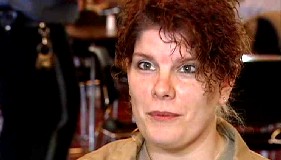
Kristine Bunch
Murderer?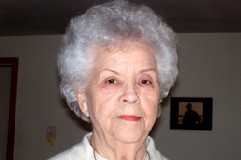 Betty Neumar
Murderer? · USA · 1986
Betty Neumar (November 1931 – June 13, 2011) was an American woman charged with…
1 victim
Betty Neumar
Murderer? · USA · 1986
Betty Neumar (November 1931 – June 13, 2011) was an American woman charged with…
1 victim
 Elicia Hughes
Murderer? · USA · 2004
Elicia Hughes was a 3rd grade teacher. She married Brian Hughes in 1999. Five y…
1 victim
Elicia Hughes
Murderer? · USA · 2004
Elicia Hughes was a 3rd grade teacher. She married Brian Hughes in 1999. Five y…
1 victim
 Sabrina Butler
Murderer? · USA · 1989
Sabrina Butler was an African-American woman who was seventeen when her nine mo…
0 victims
Sabrina Butler
Murderer? · USA · 1989
Sabrina Butler was an African-American woman who was seventeen when her nine mo…
0 victims
 Richard Allen Williams
Murderer? · USA · 1992
Boone County Prosecutor Kevin Crane dismissed the charges in August 2003 after…
10 victims
Richard Allen Williams
Murderer? · USA · 1992
Boone County Prosecutor Kevin Crane dismissed the charges in August 2003 after…
10 victims
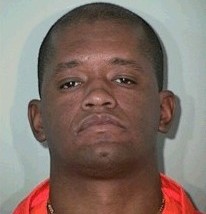 Andre Minnitt
Murderer? · USA · 1992
Andre Minnitt was convicted of crimes connected to the El Grande Market slaying…
3 victims
Andre Minnitt
Murderer? · USA · 1992
Andre Minnitt was convicted of crimes connected to the El Grande Market slaying…
3 victims
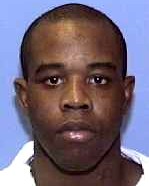 Perry Eugene Williams
Murderer · USA · 2000
Perry Eugene Williams (TDCJ Number 999420) Williams was born in Houston. The fa…
1 victim
Perry Eugene Williams
Murderer · USA · 2000
Perry Eugene Williams (TDCJ Number 999420) Williams was born in Houston. The fa…
1 victim
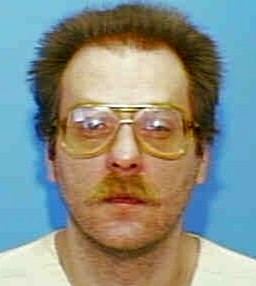 John Joseph Fautenberry
Serial killer · USA · 1990
John Joseph Fautenberry was a former Oregon truck driver. Fautenberry was broug…
6 victims
John Joseph Fautenberry
Serial killer · USA · 1990
John Joseph Fautenberry was a former Oregon truck driver. Fautenberry was broug…
6 victims
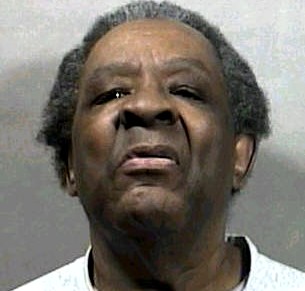 Leroy Snyder
Serial killer · USA · 1969
Leroy Snyder was a 38-year-old junkyard laborer. He was charged with the murder…
7 victims
Leroy Snyder
Serial killer · USA · 1969
Leroy Snyder was a 38-year-old junkyard laborer. He was charged with the murder…
7 victims
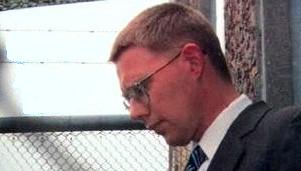 Christopher John Lewis
Murderer · New Zealand · 1996
Christopher John Lewis was found dead in his cell by Auckland Mt Eden prison st…
1 victim
Christopher John Lewis
Murderer · New Zealand · 1996
Christopher John Lewis was found dead in his cell by Auckland Mt Eden prison st…
1 victim
 Matthew Macon
Serial killer · USA · 2004
Matthew Emmanuel Macon was 27 when police said he was suspected of killing five…
6 victims
Matthew Macon
Serial killer · USA · 2004
Matthew Emmanuel Macon was 27 when police said he was suspected of killing five…
6 victims
- Gender
- female
- Country
- USA
- Location
- Decatur County, Indiana, USA
- Date of birth
- 1974
- Age at first offence
- 21
- Characteristics
- arson, parricide
- Victim profile
- H er 4-year-old son Tony
- Method of murder
- Smoke inhalation (kerosene)
- Date(s) of murder
- June 30, 1995
- Years active
- 1995
- Date of arrest
- 6 days after
- Status
-
Indiana Court of Appeals vacated Kristine Bunch’s 1996 arson and murder conviction for the mobile home fire that killed her three-year-old son Tony; she was granted a new trial, and a vacated conviction was allowed on March 20, 2012
Parties and identity
Kristine Bunch was the defendant in a case involving the 1996 arson and murder of her three-year-old son Tony.
Background
In June 1995, a fire occurred at Kristine Bunch’s mother’s trailer home in Greensburg. Bunch later described memories of running down a hallway through thick smoke to her son’s room, seeing Tony trapped inside on the bed, and calling for his mother. She tried to throw a blanket on the fire but could not get inside. She ran outside to find help and did so before getting mild burns.
Kristine Bunch had no prior criminal history, no arrest record, and no psychiatric history.
She served prison time as inmate number 966069 and described extensive prison-related activities, including education and ministry involvement. She had achieved what her attorneys and prison officials described as degree-holding cosmetology training, mini-marathon participation, service-dog training, and ministry volunteer work, and she had earned a general educational development diploma, an associate’s degree in cosmetology through Ball State University, and additional certification described as paralegal. She was also described as the first female inmate to take the LSAT in the women’s prison.
The offence
Kristine Bunch was convicted in 1996 of arson and murder in connection with the mobile home fire that killed her son Tony, who was three years old.
The prosecution’s theory was that Bunch poured kerosene through the linoleum-floored bedroom where her son Tony was found, into the living room of the trailer, and then lit a match.
Fire investigators at the time concluded that the fire was deliberately set. They found burn patterns and evidence of an accelerant.
Investigation
Investigators described burn patterns and evidence of an accelerant. They also concluded the arson within two hours of their arrival at the trailer. The first investigators arrived around 8 o’clock in the morning, and by 10 o’clock in the morning they had reached a conclusion.
A prosecution theory used photos showing burn patterns as evidence of multiple places of origin.
Later challenges to that evidence argued that fire investigation techniques used at the time were outdated and relied on “junk science.” New evidence in the appeals court decision included reports suggesting the fire started in the ceiling. The appeals court also found that the State violated rules by not turning over burn tests from the ATF, and it ruled that new evidence suggesting the fire started in the ceiling should be heard.
Carbon monoxide information was central in the later dispute. An autopsy report on Tony’s body showed he died with 80 percent carbon monoxide in his blood. A combustion science expert stated that 80 percent was impossibly high if the fire had been set in Tony’s room and that Tony was dead before flames reached him.
The combustion science expert’s theory was that the fire started in an unventilated place, such as the space between the ceiling and the roof, involving electrical wires and a malfunctioning light, and that a short could overheat ceiling tiles. The expert described that smoldering would produce products including soot and carbon monoxide, and those would leak into the room. The expert further described a process where carbon monoxide products were inhaled quickly and could lead to quick death from the products.
Arrest
Six days after the June 1995 fire, Kristine Bunch was arrested and charged with both arson and felony murder.
Trial
Kristine Bunch pleaded not guilty and proceeded to a jury trial in February 1996.
At sentencing, prosecutors initially sought life without parole. The jury unanimously recommended against that penalty, and the trial court imposed the maximum of 60 years.
A prosecution statement described that Bunch poured kerosene through the linoleum-floored bedroom in which her son Tony was found and into the living room of the trailer before lighting a match.
After the jury convicted her in 1996 on both arson and murder charges, she initially received 50 years for arson and 60 years for murder. The trial judge merged the two at sentencing.
During appeals proceedings, Bunch described having virtually no contact with her appointed appellate lawyer during direct appeal and that she received the brief in prison once it was filed.
Sentencing
Bunch received sentences after the 1996 jury verdict. She initially received 50 years for the arson and 60 years for the murder.
Appeals
On direct appeal to the Indiana Supreme Court, Bunch’s felony murder conviction and 60-year sentence were affirmed, and the case was remanded with direction to vacate the arson conviction because of double jeopardy.
Bunch later sought post-conviction relief. A post-conviction hearing was scheduled for Oct. 20, where her attorneys expected the judge to consider evidence and decide whether relief was warranted. A petition for PCR in Decatur Circuit Court was filed in November, and she had filed it following research in a prison law library and involvement through counsel.
In 2012, the Indiana Court of Appeals ruled that Bunch’s 1996 arson and murder conviction for the mobile home fire that killed her three-year-old son Tony should be tossed out, and that Bunch should get a new trial.
The appeals court ruling stated that new evidence suggesting the fire started in the ceiling should be heard and that the State withheld a test report from the ATF. The Indiana Attorney General’s office issued a statement that the State respectfully disagreed with the majority’s opinion and largely agreed with the dissenting opinion’s analysis of the issues, and that in the State’s view Bunch was not entitled to a new trial. The statement further stated that the State was carefully examining the lengthy opinion to determine whether to ask the Court of Appeals to rehear the case or seek further review in the Indiana Supreme Court, and that the State had 30 days to file a petition for rehearing or transfer.
A prosecutor indicated the State would seek review by the Indiana Supreme Court, described as requesting transfer. The prosecutor stated that if Decatur County declined to prosecute, Bunch would be set free and the case would be dismissed.
Kristine Bunch v. State was described in coverage as “The Court of Appeals of Indiana,” and the reporting stated that a vacated conviction was allowed on March 20, 2012.
Outcome
The Indiana Court of Appeals vacated Bunch’s 1996 arson and murder conviction in connection with the mobile home fire that killed her three-year-old son Tony and granted a new trial. The appeals court ruled that new evidence suggesting the fire started in the ceiling should be heard and that the State had withheld a test report from the ATF. The State requested further review considerations, including potential petitioning for rehearing, transfer, or seeking review in the Indiana Supreme Court.
Other details
Prior history and claims about motives
Bunch’s sentencing and appeals related discussions included statements that there was “no motive.”
Statements and quotations
Bunch said: “It's hard when you're convicted, to still keep saying ,'But I didn't.' It's like you don't think anyone's going to believe that,” and she also said: “You teeter between hope, excitement, anger, fear,” describing her emotions over the years.
Bunch said: “It's indescribable. I never thought anyone would step up to help me, and now I have more lawyers than I can name and more investigators. People that I've never ever met,” and she said: “I am never going to stop fighting, never going to stop trying to prove that I didn't do this,”.
Bunch said: “If you survive a fatal fire, you've got a very good chance of being charged with setting it,” and fire expert John Lentini stated: “If just 5 percent of the nation's half-a-million yearly structure fires are suspicious, Lentini said, then that means 25,000 chances to mistakenly charge someone with arson. And if they [prove a crime took place] with bad evidence, and the jury believes that it's a set fire, many times there is no doubt about who did it,”.
Fire expert John Lentini said: “We are hoping to generate some of the artifacts that people in the past have called evidence of arson,” and he also stated: “It was an awakening,” and “I think when they said ... 'art,' I think what they meant was luck,”.
Combustion expert Jaime McAllister said: “Their theory is impossible,” and she stated: “You couldn't breathe in that amount of carbon monoxide and get to that level of 80 percent before you would die from the heat,” and “Tony Bunch was dead, she said, long before the flames got to him.”
Regarding products of smoldering, McAllister said: “As that smoldering occurs, it produces a lot of products, like soot and carbon monoxide,” and “And they would start to leak out in the room.” She further said: “Very quickly, he is going to inhale those products, and he is going to die very quickly from those products,”.
Defense attorney Ron Safer said: “We couldn’t be more pleased with the Indiana Court of Appeals ruling, and we will continue to vigorously defend Kristine to ensure that we right this terrible injustice,” and he also stated: “We will not rest until Kristine is back home where she belongs.”
Senior staff attorney Jane Raley said: “This is a woman who has no prior criminal history ... no arrest record ... no psychiatric history,” and she said: “There was nothing here.”
Raley stated: “There is no motive,” and “The fire could not have started in the living room, it could not have started in the bedroom,” and “So we know that the fire could not have happened the way the state claims... It just can't happen”.
Raley also said: “That is 100 percent inaccurate,” and “One hundred percent wrong. One hundred percent fiction.”
Raley said: “One of the biggest things that struck me when reading the transcripts is that you just don’t jump to an arson conclusion within an hour … . You have to rule out everything else and then come to that decision. That wasn’t done here.”
In addition, Raley said: “it's always difficult to unravel a wrongful conviction.”
Indiana Attorney General office statement
The Indiana Attorney General’s office released the following statement:
“The State respectfully disagrees with the majority's opinion and largely agrees with the dissenting opinion's analysis of the issues. In the State's view, Bunch is not entitled to a new trial. The State is carefully examining the lengthy opinion in order to determine whether to ask the Court of Appeals to rehear the case, or to seek further review in the Indiana Supreme Court. The State has 30 days to file a petition for rehearing or transfer."
Prosecutor comments
Decatur County prosecutor Jim Rosenberry said he believed the “new” science was already rejected by the jury and that he believed Raley wanted to substitute her expert's opinions for that of the jury. The prosecutor also declined an on-camera interview request and stated that the jury made the right decision, and he said Bunch’s behavior was questionable and that she made many contradictory statements during numerous police interviews.
Spotted an error, or have more information about this case?