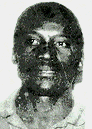
Clifton McCree
Mass murderer Gameel Al-Batouti
Mass murderer · USA · 1999
Gameel Al-Batouti (also rendered “Gamil ElBatouty” or “El Batouty” in U.S. offi…
216 victims
Gameel Al-Batouti
Mass murderer · USA · 1999
Gameel Al-Batouti (also rendered “Gamil ElBatouty” or “El Batouty” in U.S. offi…
216 victims
 Timothy McVeigh
Mass murderer · USA · 1995
Timothy James McVeigh (April 23, 1968 – June 11, 2001) was a United States Army…
168 victims
Timothy McVeigh
Mass murderer · USA · 1995
Timothy James McVeigh (April 23, 1968 – June 11, 2001) was a United States Army…
168 victims
 Julio Gonzalez
Mass murderer · USA · 1990
Julio Gonzalez was sentenced to 174 twenty-five-year sentences (a total of 4,35…
87 victims
Julio Gonzalez
Mass murderer · USA · 1990
Julio Gonzalez was sentenced to 174 twenty-five-year sentences (a total of 4,35…
87 victims
 David Burke
Mass murderer · USA · 1987
David Augustus Burke (May 18, 1952–December 7, 1987) was an employee of USAir,…
43 victims
David Burke
Mass murderer · USA · 1987
David Augustus Burke (May 18, 1952–December 7, 1987) was an employee of USAir,…
43 victims
 George Jo Hennard
Mass murderer · USA · 1991
George Jo Hennard carried out a mass killing at a Luby’s Cafeteria in Killeen,…
23 victims
George Jo Hennard
Mass murderer · USA · 1991
George Jo Hennard carried out a mass killing at a Luby’s Cafeteria in Killeen,…
23 victims
 Ronald Gene Simmons
Mass murderer · USA · 1987
Ronald Gene Simmons was a retired United States Air Force sergeant. Over the Ch…
16 victims
Ronald Gene Simmons
Mass murderer · USA · 1987
Ronald Gene Simmons was a retired United States Air Force sergeant. Over the Ch…
16 victims
 Walanzo Robinson
Murderer · USA · 1989
May 19, 1989 — Walanzo Deon Robinson and Dennis Eugene Hill argued in northeast…
1 victim
Walanzo Robinson
Murderer · USA · 1989
May 19, 1989 — Walanzo Deon Robinson and Dennis Eugene Hill argued in northeast…
1 victim
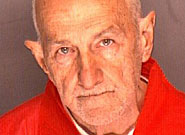 Roger Kibbe
Serial killer · USA · 1977
Roger Reece Kibbe was a middle-aged husband with a lengthy record that included…
7 victims
Roger Kibbe
Serial killer · USA · 1977
Roger Reece Kibbe was a middle-aged husband with a lengthy record that included…
7 victims
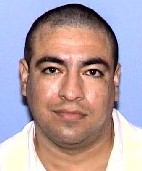 Abel Revilla Ochoa
Mass murderer · USA · 2002
Abel Revilla Ochoa (TDCJ number 999450), born 01/23/1973, was convicted of capi…
5 victims
Abel Revilla Ochoa
Mass murderer · USA · 2002
Abel Revilla Ochoa (TDCJ number 999450), born 01/23/1973, was convicted of capi…
5 victims
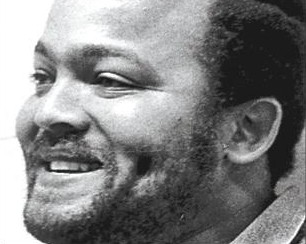 Joe Louis Wise
Murderer · USA · 1983
Name: Joe Louis Wise Status: Executed by electrocution in Virginia on September…
1 victim
Joe Louis Wise
Murderer · USA · 1983
Name: Joe Louis Wise Status: Executed by electrocution in Virginia on September…
1 victim
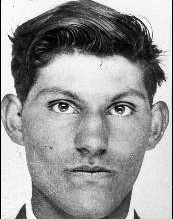 Edwin Albert Bush
Murderer · United Kingdom · 1961
Edwin Albert Bush was convicted of murder and was executed by hanging at Penton…
1 victim
Edwin Albert Bush
Murderer · United Kingdom · 1961
Edwin Albert Bush was convicted of murder and was executed by hanging at Penton…
1 victim
- Gender
- male
- Country
- USA
- Location
- Fort Lauderdale, Florida, USA
- Date of birth
- 1955
- Age at first offence
- 41
- Characteristics
- revenge, dr ugs, history of mental illness, domestic dispute
- Victim profile
- Former co-workers
- Method of murder
- Shooting (9mm Glock pistol)
- Date(s) of murder
- February 9, 1996
- Years active
- 1996
- Date of arrest
- —
- Status
-
Died in custody
Committed suicide by shooting himself the same day he fired on former co-workers, killing five and wounding a sixth
Case record: Clifton McCree
Background
Clifton McCree was a black man who had worked for the city as part of a beach cleanup detail. He had worked in the fresh air and enjoyed the landscape attractive to tourists for 18 years. Friends and neighbors said they never saw him with a beer, much less a gun.
Co-workers said he could get belligerent when he smoked marijuana, but the occasional outbursts were overlooked. Petty, who lived next door, frequently heard loud arguments through the walls. He said McCree was very touchy and volatile, and that people did not want to get too much into his business.
McCree’s firing came after a 20-day suspension for failing a drug test, “threatening and harassing” co-workers, and making “insulting remarks” to tourists and residents on the beach. At the time, he said his threats were a joke.
His wife, Ezerma McCree, described their relationship as rocky at times. She said troubles at home might have something to do with his attitude shift but she would not discuss details. She confirmed an affair and threatened divorce in the period leading up to the shooting, and said his occasional pot smoking became a constant haze. She said his depression worsened after money ran out and after the water heater broke.
Multiple accounts described his childhood and family background. Emily Lovetta McCree gave birth to Clifton Levoid on Nov. 23, 1954, in Thomasville, Ga. His father was described by family as tough and mean and quick to a fight. Emily had her own wild side and was known to abandon McCree for days and go with men on drinking binges.
When McCree was 4, Emily married and moved to Pompano Beach, where she picked up the street nickname “Little Bit.” His stepfather said there were times when Emily left and did not come home for two weeks at a time, including when the kids were in diapers. In 1961, the stepfather said he accidentally shot Emily when she stumbled home after a binge; she later recovered.
Around the same time, the 7-year-old saw his younger brother, Curtis, die on the way to the hospital from a sudden intestinal disorder. When McCree was 11, his mother left home one night and did not return. His stepfather said he sent the boy to live with his step-grandfather, a crew chief who put him to work in the vegetable fields of northern Broward County.
When Emily’s sister Edna learned of his fate a year later, she was outraged. Edna and her husband, Dewitt Watkins, went looking for him, plucked him off a dirt road, and put him on a bus to family in Thomasville, where McCree lived for almost two years. McCree later returned to Fort Lauderdale at 14 and lived on his own in a rented one-room apartment with the Watkins.
McCree enrolled himself in Dillard High in 1973. Dillard football coach Anderson Spince described him as “He was loner,” saying he was quiet, respectful, and went to class.
After graduation, McCree tried a semester at a historically black college in North Carolina, but soon dropped out. Dewitt Watkins said, “He really could have made it for himself,” and added that McCree quit because he did not like to take handouts from anybody.
His dream was to become a pilot, but he failed the required Air Force tests and settled on the Marines. He excelled during his two years at Camp Pendleton near San Diego, became an expert rifleman, was a team leader with two soldiers under his command, and earned a promotion from private to lance-corporal. He came home in 1977 and got a part-time job in the city parks department, which became full-time a year later and became his career for the next 18 years. His job evaluations were described as glowing from the beginning.
There were early signs of an attitude problem. Six months into his new job, police were called to Snyder Park to break up a fight with a co-worker over money one owed the other.
On Sept. 13, 1994, he boarded a school bus bound for Rogers Middle School and chastised a group of boys who had been fighting with his son at the bus stop, then left when the bus driver asked him to. No charges were filed.
A turning point in his behavior was described as beginning in the last two years, with an affair and increased drug use. It was said he began calling fellow workers Nazis and using profane names, with sporadic enraged outbursts out of proportion to events. He referred often to guns, saying, “If you mess with my job . . . it will be time to lock and load.” It was also said, according to city documents, that he said, “You can complain about me to the city but the city can't resurrect you.” His outbursts were described as often racially tinged.
The offence
On Feb. 9, 1996, at about 5 a.m., McCree returned to a temporary trailer office a block from the beach and systematically started firing on the beach cleaning crew he once worked with as they sat around a table preparing for work.
McCree entered the trailer carrying a 9mm semi-automatic handgun and said, “Everyone is going to die.” They ran for the exits.
He squeezed off 10 shots, slapped in another clip, and fired again. When it was over, five men lay dead, another dying, and another critically wounded; the most gravely wounded later died. Police said he killed five former co-workers and wounded a sixth before killing himself.
He used a Glock pistol during the attack. Police and witnesses described that he had two weapons, but that the loaded .32-caliber revolver was never taken out of its holster.
A suicide note was described as being in the pocket of his pants and a set of details described that police later found an empty 10-round magazine, another partly loaded magazine in the gun next to his body, and 12 spent shell casings when police arrived.
The victims named were: Joseph Belotto, Kenneth Brunjes, Tim Clifford, Donald Moon and Mark Bretz. Lelan Brookins survived the massacre and remained hospitalized.
Investigation and disciplinary history
City officials said they first became aware of McCree’s behavioral problems in October 1994 when workers began complaining about him. That and a failed drug test led them to fire McCree from his beach-cleaning job on Dec. 9, 1994. His firing followed a series of increasingly serious threats of violence. By the time he was fired, he was described as so paranoid he accused a dog of staring at him and screamed insults and racial slurs at tourists while threatening to exact revenge on any co-worker who reported his behavior.
After he was fired, he was said to have applied for work with the Broward Sheriff’s Office as a corrections officer but was rejected because of his city firing and drug use.
There was mention of an additional earlier disciplinary history, including his suspension for tardiness and absenteeism and a serious fight in 1977.
Toxicology tests described that McCree had marijuana in his system when he gunned down five people and then killed himself, but there was no sign of stronger drugs or alcohol.
Experts described as a deliberate method to his targeting and an orchestrated ambush, and that his rage had gone unchallenged for years.
A co-worker, Joe Zankovitch, said he initially got along with McCree and even considered him a friend when he wasn’t stoned. Zankovitch said: “He was a lot more OK when he didn't smoke marijuana. The last year and a half he smoked so much he got really paranoid . . . He'd always talked about people behind their backs but he started calling people white trash right to their faces.”
McCree threatened a co-worker before the shooting. He had threatened to kill Joe Zankovitch, and Zankovitch did not turn him in to the boss.
Arrest
No arrest was described because McCree killed himself after the shootings.
Trial
No trial was described.
Sentencing
No sentence was described.
Appeals
No appeal history was described.
Outcome
Police and witnesses said McCree turned a gun on himself and committed suicide immediately after the shootings.
The legal status at the time was suicide by shooting himself the same day he fired on former co-workers, killing five and wounding a sixth.
Aftermath
A city reeling and workplace concerns were described, including that the number of supervisors killed at work had doubled since 1985, and that the shootings were described as the second this week in which a disgruntled ex-employee used a gun to vent rage over being dismissed.
After the massacre, McCree’s family expressed their condolences in a statement that said, “We knew he was distraught, but not to that extent.”
By noon of the same day, the yellow crime-scene tape around the murder site was taken down to allow a fund-raising go-cart race to take place.
A tape of a hearing released Saturday was described, including statements attributed to Parks Supervisor Thomas Tapp and to McCree. The exchange included:
Tapp: Nationally, there's been people threatened and people who have been killed by workers and it's a scary situation, so joking about it and playing around with it is something we can't tolerate.
McCree: I'm really, I, I'm not that type of person. I feel like my, my, my whole character has just been -- you know -- trashed because I'm really, really, I'm not that type of person.
On threatening outbursts toward co-workers:
"I don't understand when they say the guys was feeling menaced or threatened by me . . . One day I came into the trailer and stuff, I had a Frisbee and I had a toy water gun and I was following around. You know, joking around and stuff . . . and that was misunderstood, you know."
"I'm sick over the whole thing . . . Why would they, for years we've worked together and then all the sudden I've become this, this, some kind of monster or something. I don't, I don't understand."
"I don't understand, I don't know, someone getting mad with me -- but I don't figure they would fabricate or tell a lie on me or nothing."
On marijuana use:
"I don't have a criminal record, you know, if you wanted to check. It's just not my nature. I've made a few mistakes, I'm not perfect or nothing. But that was the only time and a lot of things was going on and this and that and -- whoa, divorce -- and this and that and problem times but that's, that's, that's not me. I'm not a malicious person or nothing. That's just not my nature. I was misunderstood or just, I don't know. That's just not in me."
On whether he owned a gun:
"No, I used to. Not now. You know, I can't understand. One of the guys got mad with me and I wouldn't believe they would just fabricate, you know, something like that."
A suicide note was described. One note was quoted as saying:
"All the hope, effort and opportunity at employment only prove to be futile after being terminated by the city of Ft. Lauderdale," he wrote. "The economic lynching without regard or recourse was (is) something very evil. Since I couldn't continue to support my family, life became nothing."
Another account described his suicide note as saying his shootings were “to punish some of the cowardly, racist devils” that got him fired.
Other details
McCree was described as having cleaned beaches for the city for 18 years and working in a parks department.
He had a best man at his wedding in 1979. Robert Hatcher recalled:
“He just came out and told me to my face 'I ain't gonna see y'all no more,' ”
He said he did not see McCree for 18 years after that day, and then saw him when he turned on the TV.
McCree and Ezerma married in 1979, attended only by Ezerma’s large family, and it was said Clifton’s mother did not show and that he did not go to his mother’s funeral. It was stated that Clifton’s mother died on May 25, 1982 at the age of 42. It was also said that Ezerma had only recently found out about other family. Ezerma said: “His uncle came to the house the other day. I wished I had known them.”
McCree and Ezerma had three children: Clifton Jr., 10; Christina, 10; and Derek, 7.
Neighbors described the children’s routines: noted neighbor Gloria Woodson said the children were “very welltrained,” and they rode their bikes no farther than the edge of the next-door neighbor’s house, were in by 6 and in bed by 9 every night.
Veronda Rhodes recalled:
"If 'Zerma was still here at 6, the phone would ring and we'd know it was Cliff,"
Joe Petty described McCree as a devoted father who worked a second job to make ends meet, and said McCree was a strict father. Petty said:
"I stayed my distance. He was very touchy,"
and: "You didn't want to get too much in his business. He was very volatile. "
Petty said:
"He enjoyed his family and didn't seem to need much else,"
Ezerma said:
"I was always a budget-type person," and “And he was always coming home with things for those kids. I'd get on him about the money, and he'd say it's all right. I swear those kids have more expensive shoes than I do."
In September 1994, he chastised boys on a school bus bound for Rogers Middle School; no charges were filed.
A co-worker described in October 1994 said workers overcame their fear of reporting him, at the same time the city announced a policy to address workplace violence.
It was described that after he left the city officially on Dec. 9, 1994 with a lump sum pension payout of $27,360, nobody saw much of Clifton McCree; he was said to have lived alone at times and tried to get work.
He was described as storming the parks trailer the next morning after an attempt to get his old job back; the rejection was described as coming hard.
He was described as carrying two guns into the trailer: a loaded six-shot .32-caliber revolver that remained in the holster, and a 9mm Glock pistol that was used during the shooting.
A statement that “We knew he was distraught, but not to that extent” was attributed to his family after the shooting.
A list of staff writers was included in the scraped text, but no additional case facts about the offence were provided by that list.

Spotted an error, or have more information about this case?