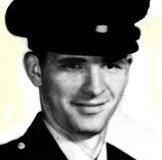
Dean Corll
Serial killer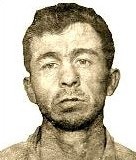 Donald Henry Gaskins
Serial killer · USA · 1969
Donald Henry Gaskins, also known as Donald “Pee Wee” Gaskins, was a serial kill…
200 victims
Donald Henry Gaskins
Serial killer · USA · 1969
Donald Henry Gaskins, also known as Donald “Pee Wee” Gaskins, was a serial kill…
200 victims
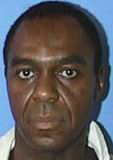 Carl Eugene Watts
Serial killer · USA · 1974
Carl Eugene Watts (born November 7, 1953; died September 21, 2007), also known…
100 victims
Carl Eugene Watts
Serial killer · USA · 1974
Carl Eugene Watts (born November 7, 1953; died September 21, 2007), also known…
100 victims
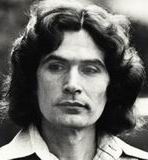 Rodney Alcala
Serial killer · USA · 1977
Rodney James Alcala (born August 23, 1943) was also known as Rodrigo Jacques Al…
100 victims
Rodney Alcala
Serial killer · USA · 1977
Rodney James Alcala (born August 23, 1943) was also known as Rodrigo Jacques Al…
100 victims
 Donald Harvey
Serial killer · USA · 1970
Donald Harvey was known as an American serial killer and a self-professed “Ange…
87 victims
Donald Harvey
Serial killer · USA · 1970
Donald Harvey was known as an American serial killer and a self-professed “Ange…
87 victims
 Ottis Toole
Serial killer · USA · 1961
Ottis Elwood Toole (sometimes misspelled as “Otis”) was an American serial kill…
65 victims
Ottis Toole
Serial killer · USA · 1961
Ottis Elwood Toole (sometimes misspelled as “Otis”) was an American serial kill…
65 victims
 Donald Leroy Evans
Serial killer · USA · 1975
Donald Leroy Evans (born July 5, 1957) was an American serial killer who murder…
60 victims
Donald Leroy Evans
Serial killer · USA · 1975
Donald Leroy Evans (born July 5, 1957) was an American serial killer who murder…
60 victims
 Dale Scheanette
Murderer · USA · 1996
Dale Devon Scheanette was born as a male identified as Hispanic. He was describ…
2 victims
Dale Scheanette
Murderer · USA · 1996
Dale Devon Scheanette was born as a male identified as Hispanic. He was describ…
2 victims
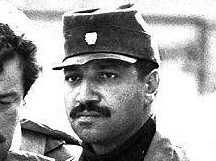 George Emil Banks
Mass murderer · USA · 1982
George Emil Banks was an American mass murderer and a former Camp Hill prison g…
13 victims
George Emil Banks
Mass murderer · USA · 1982
George Emil Banks was an American mass murderer and a former Camp Hill prison g…
13 victims
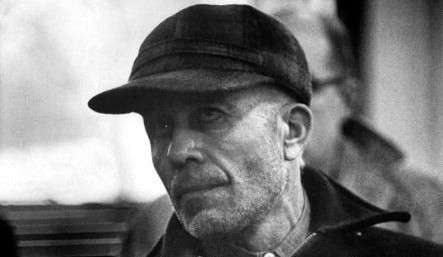 Edward Gein
Homicide · USA · 1954
Edward Gein was sentenced to life imprisonment in 1968. He was found not guilty…
2 victims
Edward Gein
Homicide · USA · 1954
Edward Gein was sentenced to life imprisonment in 1968. He was found not guilty…
2 victims
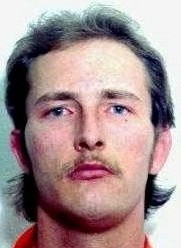 Robert James Anderson
Murderer · USA · 1992
Robert James Anderson was executed in Huntsville, Texas. Audra Ann Reeves was t…
1 victim
Robert James Anderson
Murderer · USA · 1992
Robert James Anderson was executed in Huntsville, Texas. Audra Ann Reeves was t…
1 victim
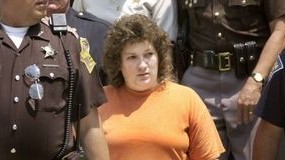 Judy Kirby
Mass murderer · USA · 2000
Judy Kirby was found guilty of murder for intentionally causing a head-on crash…
7 victims
Judy Kirby
Mass murderer · USA · 2000
Judy Kirby was found guilty of murder for intentionally causing a head-on crash…
7 victims
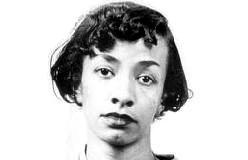 Betty Butler
Murderer · USA · 1952
Betty Butler was executed on June 11, 1954. She was 26 years old and was of the…
1 victim
Betty Butler
Murderer · USA · 1952
Betty Butler was executed on June 11, 1954. She was 26 years old and was of the…
1 victim
- Gender
- male
- Country
- USA
- Location
- Houston, Harris County, Texas, USA
- Date of birth
- December 24, 1939
- Age at first offence
- 31
- Characteristics
- homosexual rapist, mutilation
- Victim profile
- Jeffrey Konen, 18 / Danny Yates, 14, and James Glass, 14 / Jerry Waldrop, 13, and his brother Donald Waldrop, 15 / Randell Harvey, 15 / David Hilligiest, 13, and Gregory Malley Winkle, 16 / Ruben Watson, 17 / Willard 'Rusty' Branch, Jr. 17 / Frank Aguirre, 18 / Mark Scott, 17 / Johnny Delone, 16, and Billy Baulch, 17 / Steven Sickman, 17 / Wally Jay Simoneaux, 14, and Richard Hembree, 13 / Richard Kepner, 19 / Joseph Lyles, 17 / Billy Ray Lawrence, 15 / Ray Blackburn, 20 / Homer Garcia, 15 / John Sellars, 17 / Michael 'Tony' Baulch, 15 / Marty Jones, 18, and Charles Cary Cobble, 17 / James Dreymala, 13
- Method of murder
- Strangulation / Shooting
- Date(s) of murder
- 1970 - 1973
- Years active
- 1970–1973
- Date of arrest
- —
- Status
-
Died in custody
Shot dead by his accomplice Elmer Henley on August 8, 1973
Case record: Dean Corll
Status
Dean Corll was shot dead by his accomplice Elmer Henley on August 8, 1973.
Background
Dean Corll was born on December 24, 1939, in Fort Wayne, Indiana. He grew up in a combative home where his parents quarreled constantly. His parents divorced while Corll was still an infant and later remarried after World War II. His father provided no stabilizing influence and punished Corll harshly for the smallest infractions. When the couple separated a second time, Corll and his younger brother were left with a series of sitters while his mother worked to support the family on her own.
Rheumatic fever left Corll with a heart condition and resulted in frequent absence from school. Corll seemed to welcome the change when his mother remarried and the family moved to Texas. A part-time business making candy expanded to become the family’s livelihood. Corll was generous with samples as he sought to win new friends.
Corll was drafted into military service in 1964 despite his heart condition. He displayed signs of homosexuality in the military. On turning thirty in December 1969, Corll seemed to undergo a shift in personality, becoming hypersensitive and glum. He spent time with teenage boys, including David Owen Brooks and Elmer Wayne Henley, passing out free candy and hosting glue and paint-sniffing parties at his apartment in Pasadena, a suburb of Houston. Corll leaned toward bondage in sexual relationships with young men and boys and showed a sadistic streak.
At some point in Corll’s life, his mother, Mary Robinson, remarried to Jake West. Corll played trombone in his high school brass band and was regarded as a well-behaved student who achieved satisfactory grades. After his graduation from Vidor High School in 1958, the family moved to the Heights district of Houston and opened a shop named “Pecan Prince.” In 1960, Corll moved to Indiana to live with his grandparents for almost two years. He returned to Houston in 1962 to help the family candy business and later moved into his own apartment above the shop. Corll’s mother divorced Jake West in 1963 and appointed Dean as vice-president of the candy company. That year, a teenage male employee complained to Corll’s mother that Corll made sexual advances; Corll’s mother fired the youth.
After his honorable discharge from the army in June 1965, Corll returned to Houston and resumed his position in the candy business. In 1965 the Corll Candy Company moved across the street from a Heights elementary school. Corll gave free candy to local children, particularly teenaged boys, and a pool table was installed at the rear of the factory where employees and local youths congregated. In 1967 Corll befriended 12-year-old David Brooks, who was a sixth grade student. Corll gave Brooks money when Brooks needed cash and allowed him to stay at his apartment when he visited Houston.
Following closure of the family candy company in June 1968, Corll took a job as an electrician at the Houston Lighting and Power Company, where he tested electrical relay systems. He worked there until the day he was killed by Elmer Wayne Henley. Corll often moved addresses during the period when he abducted and murdered young men.
The offence
From 1970 to 1973, Dean Corll abducted, tortured, and murdered teenage boys and young men. Most victims were male and many were in their mid-teens. Corll’s victims were drawn largely from Houston Heights, a low-income neighborhood northwest of downtown Houston.
Corll lured victims into his van with offers of a party or a lift and drove them to his house. Victims were plied with alcohol or drugs until they passed out, tricked into putting on handcuffs, or grabbed by force. Victims were stripped naked and tied to a bed or a plywood torture board. They were sexually assaulted, tortured, and—sometimes after several days—killed. Bodies were then tied in plastic sheeting and buried in multiple locations including a rented boat shed, a beach on the Bolivar Peninsula, a woodland near Lake Sam Rayburn, and a beach in Jefferson County.
In some instances, Corll forced victims to phone or write to their parents to explain their absences. Corll was also said to have retained keepsakes, usually keys, from victims.
Brooks and Henley described the recruitment and killing pattern as involving parties with alcohol and marijuana and victims being lured from Houston Heights.
Corll used bondage and a sadistic approach toward young men and boys. On one occasion during 1970, David Owen Brooks entered Corll’s apartment to find Corll nude with two naked boys strapped to a homemade torture rack. Corll released the boys and offered Brooks a car in return for his promise of silence.
Brooks would later describe that Corll paid $200 for each victim procurers brought to him, and the pattern included procurers offering lured victims to Corll’s apartment.
People
- Dean Corll (defendant/offender; serial killer)
- Elmer Wayne Henley (accomplice; later shot Corll)
- David Owen Brooks (accomplice)
- Jeffrey Konen (victim)
- James Glass / Danny Yates (victims)
- Donald Waldrop / Jerry Waldrop (victims)
- David Hilligiest / Malley Winkle (victims)
- Ruben Watson (victim)
- Frank Anthony Aguirre (victim)
- Mark Scott (victim)
- Johnny Delone / Billy Baulch (victims)
- Steven Sickman (victim)
- Wally Jay Simoneaux / Richard Hembree (victims)
- Richard Kepner (victim)
- Joseph Lyles (victim)
- Billy Ray Lawrence (victim)
- Ray Blackburn (victim)
- Homer Garcia (victim)
- John Sellars (victim)
- Michael “Tony” Baulch / Marty Jones / Charles Cary Cobble (victims)
- James Dreymala (victim)
- Rhonda Williams (additional person present during the confrontation; also described as Henley’s procurement)
- Timothy Cordell Kerley (additional person present during the confrontation; also described as intended victim)
- Charles Melder (Henley’s attorney, opposed psychiatric examination)
- Will Gray (Henley’s defense attorney)
- Jim Skelton (Brooks’ defense attorney)
- Tommy Dunn (Assistant District Attorney)
- Velma Lines (operator who answered Henley’s call)
- Pope Paul VI (mentioned as commenting publicly)
- Dr. Sharon Derrick (forensic anthropologist referenced in identification of unidentified victims)
- Dr. Joseph Jachimczyk (misidentified body referenced in connection with Mark Scott)
- Stated prior convictions/outcomes participants: none listed for Corll himself beyond death.
Investigation
A tearful phone call from Elmer Henley summoned Pasadena police officers to Corll’s apartment on August 8, 1973. Officers found Corll dead and described six bullet holes in his shoulder and back. Henley claimed he had killed his “friend” in self-defense. Police then searched for victims at locations Henley directed them to.
Investigators later unearthed bodies at Corll’s rented boat shed in southwest Houston. Additional graves were found following trips to Lake Sam Rayburn and High Island Beach. Police found a total of 27 dead during the initial discoveries.
Henley’s confession and subsequent cooperation guided detectives to the boat shed, where police found evidence including a Ford Econoline van with sealed windows, rope, plastic sheeting materials, weapons and torture-related items, and human hair found inside a wooden crate. Police also uncovered a plywood torture board with handcuffs in each corner, rolls of clear plastic, hunting knives, and sex-related items described in the narrative.
At the boat shed, multiple victims were found in varying stages of decomposition, wrapped in clear plastic sheeting. Investigators reported strangulation and shooting among victims, and extensive sexual torture details. Some victims were described as having had genitals removed and severe injuries including castration-like findings. On August 8, 1973, eight corpses were uncovered at the boat shed, and the discoveries continued over the following days.
On August 9, 1973, police accompanied Henley to Lake Sam Rayburn in San Augustine County and found additional bodies. On August 10, 1973, further bodies were found in Lake Sam Rayburn, and on the same day police went to High Island Beach and found more victims. On August 13, 1973, Henley and Brooks again accompanied police to High Island Beach, where four more bodies were found, making 27 known victims.
David Brooks gave a statement denying participation while admitting he had known about Corll raping and killing two youths in 1970, and later gave a full confession that evening. Brooks agreed to assist in the search.
Families of Corll’s victims criticized Houston Police for initially listing missing youths as runaways and for dismissiveness toward parents’ insistence that their sons would not run away. The Waldrop brothers’ father complained that the Houston police chief told him “You know your boys are runaways.” The mother of Malley Winkle stated: “You don’t run away (from home) with nothing but a bathing suit and 80 cents.”
After the findings, requests were submitted by more than one hundred parents seeking information about missing children. The record described that none were linked to Corll and co., and almost none were tracked down.
Timeline
- August 8, 1973 — Elmer Henley shot and killed Dean Corll; police responded to Henley’s call at 2020 Lamar Drive, Pasadena, and began searches that led to the discovery of victims.
- August 9, 1973 — Police accompanied Henley to Lake Sam Rayburn and found additional bodies.
- August 10, 1973 — Two more bodies were found buried at Lake Sam Rayburn; Henley and Brooks led police to graves on High Island Beach.
- August 13, 1973 — Henley and Brooks led police to High Island Beach, where four more bodies were found, bringing the total to 27 known victims.
Arrest
Following Henley’s call to the Pasadena Police on August 8, 1973, Henley was in custody, along with Rhonda Williams and Timothy Cordell Kerley. Henley provided names and directions that enabled police to locate the boat shed and other burial sites. David Brooks was later questioned and gave confessions in custody.
Trial
Henley and Brooks were tried separately.
Henley trial (July 1974; retrial)
Henley was brought to trial in San Antonio on July 1, 1974, charged with six murders committed between March 1972 and July 1973. The prosecution called dozens of witnesses including Tim Kerley and Billy Ridinger, who had been lured to Corll’s Schuler Street address in 1972. Police read from Henley’s written statements.
Henley did not testify. His defense attorney was Will Gray. The State introduced a total of eighty-two pieces of evidence including Corll’s torture board and one of the boxes used to transport victims; hair found in the box was concluded to have come from Charles Cobble.
On July 16, 1974, Henley was sentenced to six consecutive 99-year terms, totaling 594 years, for each of the murders for which he was charged.
Henley appealed his sentence and conviction, contending the jury in his initial trial had not been sequestered, that objections to news media being present had been overruled, and that attempts to prevent the initial trial in San Antonio had been overruled. The appeal was upheld and Henley was awarded a retrial in December 1978. He was tried again in June 1979 and was again convicted of six murders on June 27, 1979, and again sentenced to six consecutive 99-year terms.
It was also stated that Henley’s conviction was overturned on appeal in December 1978 due to pre-trial publicity. His second conviction followed in June 1979.
Brooks trial (February 27, 1975)
David Brooks was brought to trial on February 27, 1975. Brooks had been indicted for four murders committed between December 1970 and June 1973 but was brought to trial charged only with the June 1973 murder of 15-year-old Billy Ray Lawrence. Brooks’ defense attorney was Jim Skelton. The assistant district attorney Tommy Dunn dismissed the defense contention that Brooks had not committed any murders.
During Brooks’ trial, the jury deliberated for 90 minutes. Brooks was found guilty of Lawrence’s murder on March 4, 1975, and was sentenced to life imprisonment. Brooks showed no emotion as the sentence was passed, while his wife burst into tears.
Brooks appealed against his sentence, contending signed confessions used against him were taken without him being informed of his legal rights. The appeal was dismissed in May 1979.
Sentencing
- Elmer Wayne Henley — sentenced to six consecutive 99-year terms for six murders in July 1974; conviction overturned on appeal in December 1978; convicted again and sentenced to six consecutive 99-year terms on June 27, 1979.
- David Owen Brooks — sentenced to life imprisonment for the murder of 15-year-old Billy Ray Lawrence; conviction upheld after appeal dismissed in May 1979.
Outcome
Aftermath
Searches continued after the killing of Corll, with police discovering 27 known victims. Henley initially insisted there were additional bodies in the boat shed and more at High Island Beach, but those bodies were not found. At the time of discovery, the case was described as the worst serial murder case in the United States by number of victims.
Families criticized police for the initial runaways classification. The record described that police were inundated with inquiries from parents across the United States. The narrative also described that later child pornography investigations linked other local pedophiles, but no prosecutions were forthcoming.
The record referenced that in December 1978 Henley’s conviction was overturned on pre-trial publicity grounds and then he was convicted and sentenced a second time in June 1979.
Evidence and victim-related details
A list of victims was provided with dates, ages, and brief circumstances. The record described victims being abducted from Houston Heights and buried at locations including High Island Beach, Corll’s rented boat shed, Lake Sam Rayburn, and other areas.
The record included the following dated victim entries:
- September 25, 1970 — Jeffrey Konen (18): abducted while hitchhiking; buried at High Island Beach.
- December 15, 1970 — Danny Yates (14): lured with James Glass to Corll’s Yorktown apartment; later described as strangled and buried in the boat shed.
- December 15, 1970 — James Glass (14): acquaintance of Corll; tied and later described as raped, strangled and buried in a boat shed Corll rented.
- January 30, 1971 — Donald Waldrop (15) and Jerry Waldrop (13): brothers; abducted and later described as raped, tortured and strangled before burial in the boat shed.
- May 29, 1971 — David Hilligiest (13) and Gregory Malley Winkle (16): abducted; the record described them as vanishing after climbing into a van and later as killed and buried.
- August 17, 1971 — Ruben Watson (17): abducted after being persuaded to attend a party; later described as strangled and buried in the boat shed.
- March 24, 1972 — Frank Anthony Aguirre (18): described as strangled and buried at High Island Beach.
- April 20, 1972 — Mark Scott (17): described as strangled and buried at High Island; his remains were described as not yet found in one portion of the record.
- May 21, 1972 — Johnny DeLone (16) and May 21, 1972 — Billy Baulch (17): described as shot and strangled or strangled; buried at High Island Beach.
- July 20, 1972 — Steven Sickman (17): described as last seen leaving a party; strangled with a nylon cord and buried in the boat shed; remains identified later.
- October 3, 1972 — Wally Jay Simoneaux (14) and October 3, 1972 — Richard Hembree (13): described as strangled and shot respectively, with burial at the boat shed or Westcott Towers address.
- November 12, 1972 — Richard Kepner (19): described as strangled and buried at High Island Beach.
- February 1, 1973 — Joseph Lyles (17): described as buried at Jefferson County Beach.
- June 4, 1973 — Billy Ray Lawrence (15): described as kept alive for four days before being killed and buried at Lake Sam Rayburn.
- June 15, 1973 — Ray Blackburn (20): described as strangled at Corll’s Lamar Drive residence and buried at Lake Sam Rayburn.
- July 7, 1973 — Homer Garcia (15): described as shot in the head and chest and buried at Lake Sam Rayburn.
- July 12, 1973 — John Sellars (17): described as shot and buried at High Island Beach, described as the only victim buried fully clothed in one portion of the record.
- July 19, 1973 — Michael “Tony” Baulch (15): described as strangled and buried at Lake Sam Rayburn.
- July 25, 1973 — Marty Jones (18) and July 25, 1973 — Charles Cary Cobble (17): described as murdered after being seen walking toward Corll’s apartment; Cobble’s body was described as found in the boat shed.
- August 3, 1973 — James Dreymala (13): described as Corll’s last victim, lured to the Pasadena apartment while riding his bike and later raped, strangled, and buried in the boat shed.
The record also described additional forensic and identification details:
- John Sellars was discussed as having been questioned by the Harris County medical examiner at Henley’s trial, with concerns raised about shot wounds and differences from other victims; Henley and Brooks led police to Sellars’ grave and the body was bound with rope.
- Unidentified victims were listed as ML73-3349, ML73-3356, and ML73-3378, and later identifications were described, including Randell Lee Harvey and Michael Baulch.
- A body found on a beach in Jefferson County in August 1983 was described as strongly believed to be a 28th victim and later identified by DNA as Joseph Allen Lyles.
- The record described possible ongoing suspicions about additional victims and circumstances where the search was curtailed.
Quotations
- David Brooks told police: “Most of the killings that occurred after Wayne came into the picture involved all three of us,” he told police. “Wayne seemed to enjoy causing pain.”
- Henley told the operator: “Y'all better come here right now! I just killed a man!”
- In custody, Henley shouted: “ I don't care who knows about it. I have to get it off my chest!”
- Henley told Kerley before the police officer had arrived: “I could have gotten $200 for you.”
- The record included an accusation quote by the assistant district attorney Tommy Dunn to the jury: “this defendent was in on this murderous rampage from the very beginning. He attempts to inform you he was a cheerleader if nothing else. That's what he is telling you about his presence. You know he was in on it.”
- The Waldrop brothers’ father complained that the Houston police chief had simply told him: “You know your boys are runaways.”
- The mother of Malley Winkle stated: “You don't run away (from home) with nothing but a bathing suit and 80 cents.”
- The record included Henley’s statements about guilt: “It was all my fault,” and “Because I introduced him to them boys”.
- An officer quote attributed to an unnamed victim in the narrative: “I was one of the boys that Corll and Brooks tried to abduct. I felt something was wrong and told them to get lost”.
- The record included Henley’s description of the torture board confrontation: “I’m gonna kill you all!” and “But first I’m gonna have my fun.”
- The record included a challenge spoken by Corll to Henley: “Kill me, Wayne,” and “Kill me!”
- The record included Corll’s sneer: “You won’t do it!” and “You won't do it!”
- The record included Henley’s later call claim: “I just killed a man!”
Other details
Corll was also referred to as “The Man with the Candy” in the narrative. The record described that Corll’s mother was certain there were many more victims and that Corll worked with her in her candy factory in Texas. The narrative also described that a book by Jack Olsen suggested other victims might be buried around Corll’s candy shop, while authorities showed no interest in pursuing the case further.
The record also described that Corll’s family company earlier moved and that Corll had multiple addresses, including Yorktown Street, 3200 Mangum Road, Wirt Road, and Pasadena locations, plus a Schuler Street address and a Westcott Towers address.
Spotted an error, or have more information about this case?