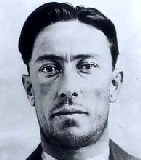
Colin Campbell Ross
Murderer ? George David Silva
Mass murderer · Australia · 1911
George David Silva (1884–1912) was an Australian multiple murderer. Silva was o…
6 victims
George David Silva
Mass murderer · Australia · 1911
George David Silva (1884–1912) was an Australian multiple murderer. Silva was o…
6 victims
 Alfred Packer
Murderer ? · USA · 1874
Alfred Packer was convicted of cannibalism after killing and eating five compan…
5 victims
Alfred Packer
Murderer ? · USA · 1874
Alfred Packer was convicted of cannibalism after killing and eating five compan…
5 victims
 Arnold Sodeman
Serial killer · Australia · 1930
Arnold Karl Sodeman (12 December 1899 – 1 June 1936), also known as the School-…
4 victims
Arnold Sodeman
Serial killer · Australia · 1930
Arnold Karl Sodeman (12 December 1899 – 1 June 1936), also known as the School-…
4 victims
 Gary Krist
Murderer ? · USA · 1959
Gary Krist Gary Steven Krist (born April 29, 1945) lived part of his childhood…
4 victims
Gary Krist
Murderer ? · USA · 1959
Gary Krist Gary Steven Krist (born April 29, 1945) lived part of his childhood…
4 victims
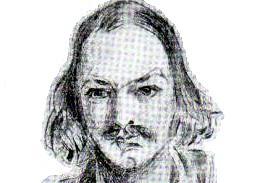 Thomas Wainewright
Murderer ? · United Kingdown / France · 1828
Thomas Wainewright was also known as Thomas Griffiths Wainewright. He was born…
4 victims
Thomas Wainewright
Murderer ? · United Kingdown / France · 1828
Thomas Wainewright was also known as Thomas Griffiths Wainewright. He was born…
4 victims
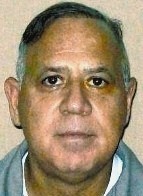 Lamont Underwood
Murderer ? · USA · 1994
Lamont Claxton Underwood, known as “L.C.,” was a former Salisbury policeman. Pr…
2 victims
Lamont Underwood
Murderer ? · USA · 1994
Lamont Claxton Underwood, known as “L.C.,” was a former Salisbury policeman. Pr…
2 victims
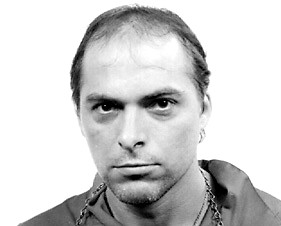 John Matthew Stephenson
Murderer · USA · 1996
John Matthew Stephenson was sentenced to death on June 17, 1997. He was on deat…
3 victims
John Matthew Stephenson
Murderer · USA · 1996
John Matthew Stephenson was sentenced to death on June 17, 1997. He was on deat…
3 victims
 Alva Curry
Murderer · USA · 1991
Alva Curry was executed by lethal injection in Texas on January 28, 2003, and w…
2 victims
Alva Curry
Murderer · USA · 1991
Alva Curry was executed by lethal injection in Texas on January 28, 2003, and w…
2 victims
 Edward Earl Johnson
Murderer · USA · 1979
Edward Earl Johnson (1961 – May 20, 1987) was an African American convicted mur…
1 victim
Edward Earl Johnson
Murderer · USA · 1979
Edward Earl Johnson (1961 – May 20, 1987) was an African American convicted mur…
1 victim
 Bartolomeo Gagliano
Serial killer · Italy · 1981
Bartolomeo Gagliano was mentally ill and was serving time for multiple murders…
3 victims
Bartolomeo Gagliano
Serial killer · Italy · 1981
Bartolomeo Gagliano was mentally ill and was serving time for multiple murders…
3 victims
 Bradley Stone
Mass murderer · USA · 2014
Bradley W. Stone was 35 and was an ex-husband of Nicole Stone. He was also desc…
6 victims
Bradley Stone
Mass murderer · USA · 2014
Bradley W. Stone was 35 and was an ex-husband of Nicole Stone. He was also desc…
6 victims
 Eliseo Hernandez Moreno
Spree killer · USA · 1983
Eliseo Hernandez Moreno was executed by lethal injection in Texas on March 4, 1…
6 victims
Eliseo Hernandez Moreno
Spree killer · USA · 1983
Eliseo Hernandez Moreno was executed by lethal injection in Texas on March 4, 1…
6 victims
- Gender
- male
- Country
- Australia
- Location
- Melbourne, Victoria, Australia
- Date of birth
- October 11, 1892
- Age at first offence
- 29
- Characteristics
- rape, miscarriage of justice
- Victim profile
- Nell Alma Tirtschke, known as Alma, 12
- Method of murder
- Strangulation
- Date(s) of murder
- December 30, 1921
- Years active
- 1921
- Date of arrest
- January 12, 1922
- Status
-
Executed
Executed by hanging at Melbourne Gaol on April 24, 1922; posthumously pardoned on May 27, 2008
Timeline
- 5 March 1920 — Ross asked Lily Mae Brown to marry him and produced a revolver after she refused.
- April 1921 — The Ross family returned to Melbourne and bought a wine shop in the Eastern Arcade.
- 13 October 1921 — A saloon customer was robbed in the saloon's outdoor lavatory and shot during a struggle.
- 30 December 1921 — Twelve year old Alma Tirtschke was sent on an errand and failed to return.
- 31 December 1921 — Alma's naked body was found in Gun Alley.
- 12 January 1922 — Police arrested Colin Ross for murder.
- 20 February 1922 — The trial began.
- 24 April 1922 — Ross was executed by hanging at Melbourne Gaol.
- 1993 — Kevin Morgan began researching the murder and execution.
- 1995 — Kevin Morgan traced the hair exhibit to an archive.
- 1998 — Tests using modern forensic techniques found the hairs did not come from the same person.
- 23 October 2006 — Victorian Attorney General Rob Hulls wrote to Chief Justice Marilyn Warren with a 31-page petition asking her to consider a plea of mercy for Ross.
- 27 May 2008 — The Governor of Victoria granted the pardon.
- 27 May 2008 — Governor David de Kretser signed the pardon and Attorney-General Rob Hulls formally announced the decision in Parliament during question time.
Background
Colin Campbell Eadie Ross (11 October 1892 – 24 April 1922) was an Australian wine-bar owner executed for the rape and murder of a child in what became known as The Gun Alley Murder. Efforts were made to clear his name after his execution, and later re-examination of old evidence with modern forensic techniques supported the view that Ross was innocent. The pardon granted in 2008 was described as the first case in Victoria's legal history of a posthumous pardon.
Ross was born in North Fitzroy, Melbourne, the third of five children born to Thomas and Elizabeth Ross. Thomas Ross died in 1900, leaving his wife to care for the five young children, including one who was newly born. None of the children were well educated, as each left schooling as early as possible to find work to help support the family. Ross began working at a local quarry at the age of 11. He later worked as a labourer and then as a wardsman at the Broadmeadows army hospital.
In 1920, Elizabeth Ross became the manager of the Donnybrook Hotel, 30 kilometres north of Melbourne, with Colin as partner and another of her sons, Ronald, as licensee. During this time, Colin Ross began a relationship with Lily Mae Brown, who worked in a Melbourne hotel.
Early relationship dispute and charges
On 5 March 1920, Ross asked Brown to marry him. When she refused, he produced a revolver. Ross followed her onto a tram and continued to threaten her until she agreed to meet him later in the day. Brown instead contacted the police, and a plain clothes detective was present when she kept her appointment with Ross later in the evening.
Ross was charged with using threatening words and for carrying firearms without permission. On the charge of using threatening words, he was sentenced to 14 days imprisonment, alongside a 12 month good behaviour bond, and he was fined for carrying the firearm.
Wine saloon and customers
In April 1921, the Ross family returned to Melbourne. Colin Ross, with his brothers Stanley and Ronald, bought a wine shop in the Eastern Arcade, in the business centre of Melbourne. With the purchase of the shop, renamed "The Australian Wine Saloon", the Ross brothers continued the employment of its barmaid, Ivy Matthews.
Matthews later commented that the saloon had previously attracted a quiet and respectable clientele, but that the Ross brothers were willing to serve anyone, resulting in it soon being frequented by alcoholics and criminals. Other tenants in the building resented the intrusion of Ross's customers; they drank to excess and vomited and urinated in the arcade and made lewd comments to passing women.
Armed robbery in the saloon and related proceedings
On 13 October 1921, one of the saloon's customers was robbed in the saloon's outdoor lavatory. During a struggle with his assailant, the customer was shot. His wound was not serious, but he was unable to give an account of events to police due to the large amount of alcohol he had consumed.
An investigation revealed that the assailant was a young English traveller, Frank Walsh, who had spent most of his money and who had been approached by Colin Ross to rob the customer on the understanding that the proceeds would be shared between them. Ross and Walsh were arrested and charged with armed robbery.
Ross's comments to police incriminated Ivy Matthews, who had until that point refused to discuss the matter. Following a visit by Elizabeth Ross, Matthews began to speak on Ross's behalf while referring to herself as the saloon's manager and drawing money from the saloon's account. Ross made no further attempt to draw Matthews to the attention of police.
Ross was acquitted of his charge, while Walsh was sentenced to six months hard labour. Following Colin Ross's acquittal, Stanley Ross confronted Ivy Matthews and dismissed her from her position.
The victim: Nell Alma Tirtschke
The victim Nell Alma Tirtschke, known as Alma, was born on 14 March 1909 at a remote mining in Western Australia. She was the first child of Charles Tirtschke and Nell Alger. In 1911, Charles Tirtschke accepted a position with a mining company in Rhodesia, and the family moved there, where Nell gave birth to a second daughter, Viola, in 1912.
The family returned to Australia in December 1914, when during the journey Nell died of complications relating to a third pregnancy and was buried at sea. After arriving in Melbourne, Charles Tirtschke was unable to care for the children and returned to Western Australia, where he worked at the goldfields. Alma and Viola were cared for by their grandparents, Henry and Elizabeth Tirschke, assisted by their five adult daughters.
By 1921, Henry Tirschke had died, and their grandmother assumed all parental duties. Viola remembered their grandmother as a strict disciplinarian who kept close watch on both daughters. Alma was studious and well behaved and excelled in her studies at Hawthorn West Central School, but her grandmother restricted her from social activities with other students, contributing to her becoming very shy.
An uncle, John Murdoch, said of Alma Tirschke: "Though of a bright disposition, she was somewhat reserved, and did not make friends readily like some girls. She lacked the vivacious manner than encourages chance acquaintance". Viola later described Alma as "soft in speech and soft in manner".
The offence
On the afternoon of 30 December 1921, twelve year old Alma Tirtschke was sent on an errand by her aunt. She was to collect a package of meat from her uncle's butcher's shop in Swanston Street, Melbourne and take it a short distance to Collins Street to deliver it to a customer. The errand was expected to take no more than 15 minutes. When Alma, known to be reliable and obedient, failed to return home, her grandmother became alarmed. Alma was reported as missing.
Police, along with the Tirtschke family, searched through the night for Alma. Early the next morning, her naked body was found in Gun Alley, a laneway off Little Collins Street, near the address Alma had been sent to. She had been raped and strangled.
Investigation
The case became a major newspaper story, sensationalised by the Melbourne press and convincing readers that a maniac was on the loose and likely to strike again. A reward of 1250 pounds was offered for the capture of the killer; it was described as one of the greatest rewards offered in Australia at that time.
As time passed without real progress, police were criticised and subjected to public pressure to make an arrest. Investigations revealed that Alma had last been seen alive between 2.30 and 3.00pm on the afternoon of her disappearance, at the corner of Alfred Place and Little Collins Streets, near the lane in which her body was subsequently discovered.
Among numerous men interviewed was Colin Ross, described as a saloon manager. He stated that he had seen a girl matching Alma's description outside his saloon. His account closely matched that of several witnesses who had also seen her.
Ross was well known to local police due to his recent acquittal on a charge relating to his involvement in the shooting and robbing of one of his customers. Despite Ross's cooperation, police began to interview him in greater detail. Ross was able to nominate several witnesses who had seen him tending his saloon on the afternoon of Alma's death and would confirm he had not left the premises. Police remained convinced he had killed Alma.
On 12 January 1922, police arrested Ross for murder.
Arrest
Ross was arrested on 12 January 1922 for murder.
Trial
The trial began on 20 February 1922. The public fascination with the case intensified as newspapers published news of Ross's arrest. Ross told his lawyers, family and friends that he had nothing to fear as an innocent man.
John Harding, detained in prison at the time "at the Governor's pleasure", testified that Ross had confided in him in prison and admitted his guilt. Harding had a previous conviction for perjury. Ivy Matthews, a prostitute, testified in court that Ross had confessed the crime to her. Julia Gibson, who worked as a fortune-teller under the name "Madame Gurkha", also testified that Ross confessed.
The prosecution offered forensic evidence in the form of several strands of hair obtained from Alma Tirtschke shortly before her funeral. A detective testified that on the day of Ross's arrest, he noticed several strands of "golden hair" on a blanket in Ross's house; the strands were later removed and examined by the state government analyst, Charles Price, described as a trained chemist with little previous experience in the new field of forensic science.
Price testified that he compared the hairs under a microscope and concluded that the hair found in Ross's house was a light auburn colour, while Alma's hair was a dark red. He measured the diameter of the hairs and concluded that they were of a different thickness. Price then commented that the hairs on Ross's blanket had most likely fallen from the head of a regular visitor, such as Ross's girlfriend, but after a long testimony he stated he believed the hairs were "derived from the scalp of one and same person." The judge accepted the contradiction without comment.
Ross's barrister, Thomas Brennan, protested and requested that a further examination be carried out by a more qualified person, but the judge refused.
The jury found Ross guilty of murder. He was sentenced to death by hanging. Ross's legal representatives were convinced of his innocence but found public opinion strongly against him, and news of his death sentence was met with public celebration.
Ross's representative sought to obtain the right to appeal but was refused by the judge, who stated that Ross's guilt had been proven beyond doubt. Brennan sought leave to appeal to the Privy Council in England, but the application was refused.
During this time, Ross received a letter in prison from a man who did not give his name but admitted he had killed Alma. The man said that although he was consumed by guilt, he was not willing to come forward because it would cause grief to his family. Brennan later wrote that he believed the letter to have been authentic.
On the eve of his execution, a letter was sent to his lawyer; it was later believed to have been written by the real killer.
Sentencing
Ross was sentenced to death by hanging after the jury found him guilty of murder.
Execution
Before his execution, Ross wrote a farewell letter to his family in which he wrote: 'The day is coming when my innocence will be proved.'
Ross composed himself with dignity for a quiet but resolute statement from the scaffold. He said: 'I am now face to face with my Maker, and I swear by Almighty God that I am an innocent man. I never saw the child. I never committed the crime, and I don't know who did. I never confessed to anyone. I ask God to forgive those who have sworn my life away, and I pray God to have mercy on my poor darling mother, and my family.'
Ross was executed on 24 April 1922 at Melbourne Gaol in a particularly gruesome manner. A new four-strand rope was used for the first time in an Australian execution and proved to be a failure because the knot of the noose did not run freely. Authorities had decided to experiment with a four-stranded rope rather than the usual three-stranded European hemp.
Ross did not die immediately because his spinal cord was fractured rather than severed. Although his windpipe was torn and obstructed by his destroyed larynx, he continued with rasping breaths and convulsed on the rope. Three times Ross bent his knees and flexed his arms as he battled his killer bonds before succumbing. A prison report later ruled that such a rope must never be used again.
Appeals
Ross attempted to appeal his conviction. His representative sought the right to appeal but it was refused by the judge, who stated that Ross's guilt had been proven beyond doubt. Brennan sought leave to appeal to the Privy Council in England, but his application was refused.
Aftermath
Attempts to clear his name
Thomas Brennan became consumed with his failure to save Colin Ross and later wrote a book, The Gun Alley Tragedy, attempting to establish that Ross had been hanged for a crime he did not commit. Brennan attracted supporters, but this was not enough to persuade the Victorian government to have the case re-examined, and over the following years interest waned except among ardent supporters.
Re-examination and modern forensic testing
In 1993, Kevin Morgan, a former school-teacher, became interested in Ross's case and began researching the events surrounding the murder of Alma Tirtschke and execution of Colin Ross. He read handwritten notes in the Bible Colin Ross had kept with him in prison, preserved by his family following his death. Morgan was moved by notations in which Ross wrote of false witnesses, noting that Ross wrote them without expecting anyone else to read them.
Morgan examined interview records and court transcripts and discovered information that had been kept from the court at the time, including testimony of six reliable witnesses who placed Ross inside his saloon for the entire afternoon of Alma's murder. Morgan also found that a cab driver, Joseph Graham, had heard screams coming from a building in Collins Street at 3.00pm within the time frame in which Ross had been verified as being in the saloon. Graham's interview had been disregarded by police, and he had not been called to give evidence. Following Ross's arrest, Graham attempted to have his story told through a solicitor but was not permitted to present his version of events in court.
Morgan also noted that the witnesses against Ross were of dubious character and could have been motivated to present false testimony. Harding's sentence was reduced after he stated that Ross had confessed to him in prison. Morgan stated that Ivy Matthews and Julia Gibson had shared the reward money. Morgan observed that a closer examination of Charles Price's long testimony regarding the hair samples seemed to support Ross's innocence.
Two years after Morgan began researching the case, he found a file in the Office of the Public Prosecutions containing the original hair samples, which had been thought lost. Morgan pursued a legal fight for the right to submit the hair samples for DNA testing and finally won the right in 1998. Dr. Bentley Atchison of the Victoria Institute of Forensic Medicine found that the hairs did not come from the same person, thereby disproving with certainty the most damning piece of evidence presented at Colin Ross's trial. Morgan stated that the findings were confirmed by a second series of testing conducted by an independent agency.
Mercy petition and pardon
On 23 October 2006, Victorian Attorney-General Rob Hulls wrote to the Chief Justice, Marilyn Warren, with a 31-page petition asking her to consider a plea of mercy for Ross. The Governor of Victoria granted a pardon on 27 May 2008, described as the first posthumous pardon in Victoria's legal history.
The family of Alma Tirtschke believed that the pardon did not go far enough and that Ross should be exonerated. In a Fairfax Radio interview, Alma Tirtschke's second cousin recounted how her grandmother had been preoccupied with the murder and said: " She didn't say who was the right man but she said the wrong man was hung ".
In a later interview on the Nine Network's A Current Affair program, the family stated they believed the true murderer was a family member.
John Silvester’s report for TheAge.com.au stated that Governor David de Kretser signed the pardon and that Attorney-General Rob Hulls formally announced the decision in Parliament during question time. The report stated that the pardon followed an unprecedented inquiry by Victorian Supreme Court judges Bernard Teague, Phil Cummins and John Coldrey. Those judges found Ross was the victim of a miscarriage of justice and concluded: "There has been a miscarriage of justice" and that new evidence showed the case against Ross was flawed.
The report stated the formal re-examination began when relatives of Alma Tirtschke and Colin Ross signed a petition of mercy after learning fresh evidence showed the executed man had been wrongly convicted. The report stated that the Crown case alleged that Ross, 28, persuaded the young girl to enter his wine saloon in the Eastern Arcade in Bourke Street, where he allegedly gave her alcohol before raping and strangling her. The report stated that a new investigation ruled out any link between Ross and the only physical evidence said to connect him to the crime—hairs found on a blanket at the suspect's home, which the jury was told came from the scalp of the victim. The report stated that in 1995 Kevin Morgan traced the exhibit to an archive and pushed for the hair to be re-examined using modern technology.
The report described that, in 1998, testing found the hairs were not from the same scalp and a second test by Australian Federal Police confirmed that the key evidence was wrong. The report stated that prosecutors used two witnesses who claimed Ross had confessed and that the jury was not told that one key prosecution witness was a convicted perjurer.
The report stated that the defence team produced alibi witnesses who swore they saw Ross at work and on a tram heading home at the time of the murder. It also stated that two years earlier, Hulls wrote to Chief Justice Marilyn Warren to ask for a re-examination to see whether the Ross conviction remained sound, and that the move to seek advice rather than a judicial determination appeared to be an Australian first. The report stated the judges unanimously concluded new evidence showed the case against Ross was flawed, and that the judges found that the Attorney-General could send the case to the Court of Appeal to seek a quashing of the conviction or could grant a pardon independently of the statutory regime.
The report stated that Mr Hulls chose to seek a pardon, signed by the Governor on Friday. It quoted Kevin Morgan as saying: "A big stain on the legal system has finally been expunged, and a shadow on two Australian families has also been lifted. "That justice has finally been done for the Ross and Tirtschke families after 86 years is a tremendous outcome." It quoted Alma Tirtschke's niece, Bettye Arthur, as saying: "It is a tragedy for everybody that the actual perpetrator was not caught, and an innocent man lost his life." and: "That shadow has gone." It also quoted Hulls as saying: "The pardon is a tribute to the families of Colin Campbell Ross and Alma Tirtschke for their persistence. "These families have come together to right a historical wrong. "I trust the pardon will provide some relief from the suffering that this terrible human tragedy has caused the Ross and Tirtschke families, and allow these wounds to heal."
In the Fairfax Radio interview, the murdered girl's second cousin, identified as Joan, told Fairfax Radio that her grandmother had said: and described the prosecution narrative as not making sense to Kevin Morgan.
The report quoted Joan as saying: "A pardon means, 'I am forgiving you for something you have done'. Shouldn't it rather be an exoneration, which means, 'I accept you didn't do this in the first place'?" It quoted Victorian Premier John Brumby as saying: "Science in particular has proven beyond reasonable doubt that he could not have committed that crime" and: "if you went back through every single case and you had the evidence still around to scientifically test, forensically test, there may well be some other cases," and that it reinforced the decision to formally abolish the death penalty in Victoria in 1975. It quoted the president of the Law Institute of Victoria, Tony Burke, as saying: "Justice reverberates beyond the particular victim to the extended families and it is a good news story for those family members that this verdict will now be set aside."
Other details
Ross was also described as having run a nearby wine bar. The trial was described as short, with two failed appeals. A report stated that Alma's naked body was dumped in Melbourne's Gun Alley in 1921, and that Ross was arrested at his Maidstone home on January 12. Another report described Alma as a Hawthorn schoolgirl raped and strangled while in Melbourne shopping for her aunty. A bottle gatherer found her naked body in Gun Alley off Little Collins Street on December 31, 1921. Another report stated that Ross was convicted on the basis of a jailhouse confession and several strings of hair found on a blanket and that retesting using modern techniques undermined the prosecution evidence.
Kevin Morgan wrote the book Gun Alley: Murder, Lies and the Failure of Justice.
Betty Everett, described as Ross's niece, said her parents had not told her of the family secret, but that she read of the case in a magazine and realised the link due to resemblance between her father and Colin Ross. She said: "I had lived with this fear and doubt for most of my life, the more so as I began to have children, that perhaps I carried the genes of a murderer," and: "That shadow has gone."


Spotted an error, or have more information about this case?