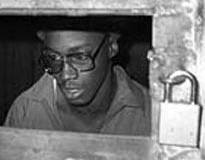
Edward Earl Johnson
Murderer Ervil LeBaron
Murderer · USA · 1972
Ervil Morrell LeBaron (1925 to August 16, 1981) was the leader of a polygamous…
35 victims
Ervil LeBaron
Murderer · USA · 1972
Ervil Morrell LeBaron (1925 to August 16, 1981) was the leader of a polygamous…
35 victims
 Brian Kevin Rosenfeld
Murderer · USA · 1985
Brian Kevin Rosenfeld Brian Kevin Rosenfeld was sentenced to three concurrent l…
23 victims
Brian Kevin Rosenfeld
Murderer · USA · 1985
Brian Kevin Rosenfeld Brian Kevin Rosenfeld was sentenced to three concurrent l…
23 victims
 Marvin Gray
Murderer · USA · 1975
Marvin Gray was convicted killer who claimed responsibility for 23 slayings and…
23 victims
Marvin Gray
Murderer · USA · 1975
Marvin Gray was convicted killer who claimed responsibility for 23 slayings and…
23 victims
 Yahweh ben Yahweh
Murderer · USA · 1980
Yahweh ben Yahweh was born and legally named Hulon Mitchell Jr. (October 27, 19…
23 victims
Yahweh ben Yahweh
Murderer · USA · 1980
Yahweh ben Yahweh was born and legally named Hulon Mitchell Jr. (October 27, 19…
23 victims
 D. H. Fleenor
Murderer · USA · 1982
D. H. Fleenor D. H. Fleenor was executed by lethal injection in Indiana on Dece…
2 victims
D. H. Fleenor
Murderer · USA · 1982
D. H. Fleenor D. H. Fleenor was executed by lethal injection in Indiana on Dece…
2 victims
 Sahib Lateef Al-Mosawi
Murderer · USA · 1992
Sahib Lateef Al-Mosawi was convicted of the First Degree Murder of his wife and…
2 victims
Sahib Lateef Al-Mosawi
Murderer · USA · 1992
Sahib Lateef Al-Mosawi was convicted of the First Degree Murder of his wife and…
2 victims
 Dennis Edgecomb
Murderer · USA · 2010
Dennis Edgecomb pleaded guilty to murder at the beginning of the sentencing hea…
1 victim
Dennis Edgecomb
Murderer · USA · 2010
Dennis Edgecomb pleaded guilty to murder at the beginning of the sentencing hea…
1 victim
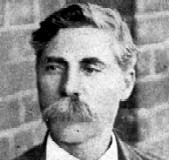 Floyd Allen
Murderer · USA · 1912
Floyd Allen (July 5, 1856 – March 28, 1913) was an American landowner and patri…
5 victims
Floyd Allen
Murderer · USA · 1912
Floyd Allen (July 5, 1856 – March 28, 1913) was an American landowner and patri…
5 victims
 Peter Lucas Moses
Murderer · USA · 2010
Peter Lucas Moses led a small sect called the Black Hebrews in Durham. Prosecut…
2 victims
Peter Lucas Moses
Murderer · USA · 2010
Peter Lucas Moses led a small sect called the Black Hebrews in Durham. Prosecut…
2 victims
 Barry Prudom
Murderer · United Kingdom · 1982
Barry Prudom was the prime suspect in the killings of police officers after pol…
3 victims
Barry Prudom
Murderer · United Kingdom · 1982
Barry Prudom was the prime suspect in the killings of police officers after pol…
3 victims
- Gender
- male
- Country
- USA
- Location
- Leake County, Mississippi, USA
- Date of birth
- 1961
- Age at first offence
- 18
- Characteristics
- to avoid arrest
- Victim profile
- J. J. Trest ( Walnut Grove marshal )
- Method of murder
- Shooting (.25 caliber pistol)
- Date(s) of murder
- June 2, 1979
- Years active
- 1979
- Date of arrest
- —
- Status
-
Executed
Executed by asphyxiation-gas in Mississippi on May 20, 1987; death was pronounced at 12:06 a.m. after being put to death in the gas chamber of what was then called Parchman Prison Farm
Background
Edward Earl Johnson (1961 – May 20, 1987) was an African American convicted murderer executed by the U.S. state of Mississippi. He was convicted of the murder of white policeman, J.T. Trest and the assault of a sixty-nine-year-old white woman, Sally Franklin. Throughout his 8 years on “Death Row” he continued to plead his innocence.
Johnson’s case came to international attention when he was featured in the BBC documentary Fourteen Days In May. Broadcast in 1987, it showed the last 2 weeks of Johnson’s life. The documentary started on May 6, the day Johnson learned the date of his execution was to be May 20. In interviews, he said that his confession was made under duress with police threatening him with death.
The offence
Between 2:00 a.m. and 3:00 a.m. on June 2, 1979, Johnson broke into the house of an elderly woman, Sally Franklin, in Walnut Grove, Mississippi. Franklin testified that Johnson threatened to rape her. They struggled and Franklin offered Johnson money to let her go. She tried to escape but was knocked unconscious. When Carmen Dennis, a boarder at Ms. Franklin’s home, heard the noise and came to investigate, Johnson fled.
According to Johnson’s statement, he got into his car and a police car arrived. The town marshal, J.J. Trest, got out and asked Johnson what he was doing. Johnson said “nothing” and got out his gun. Trest shined a flashlight into Johnson’s car, and Johnson jumped out and shot Trest three times in the body with a .25 caliber pistol. As Trest was falling, Johnson hit him in the head with the pistol and it flew out of his hand. Trest was groaning and moving on the ground, and Johnson took Trest’s .357 magnum and shot Trest twice in the head. Although two of the shots to Trest’s body would have been sufficient to kill him, the shots to the head were the cause of death. Medical evidence indicated that Trest likely would have remained conscious for 15 seconds after the shots to the head, and died several minutes later.
Johnson was convicted of capital murder for killing a peace officer acting in his official capacity. Miss.Code Ann. Sec. 97-3-19(2)(a) (Supp.1985).
Investigation
The appellate decision described a key witness and testimony at trial, including Franklin’s account that Johnson threatened to rape her and that they struggled. The appellate decision also described evidence about the shooting, including medical evidence about how long Trest likely remained conscious after the shots to the head.
Trial
Capital murder conviction and aggravating circumstances
The state trial court instructed the jury to consider two aggravating circumstances:
- the capital offense was committed while in flight after committing the crime of burglary or attempting to commit the crime of rape, id. Sec. 99-19-101(5)(d)
- the capital offense was especially heinous, atrocious or cruel, id. Sec. 99-19-101(5)(h)
The jury found that both aggravating circumstances were present and sentenced Johnson to death.
Direct appeal and post-conviction filings
On direct appeal, the Mississippi Supreme Court affirmed: Johnson v. State, 416 So.2d 383 (Miss.1982).
Johnson applied for leave to file a petition for writ of error coram nobis; the Mississippi Supreme Court denied it: Johnson v. Thigpen, 449 So.2d 1207 (Miss.1984).
Johnson then filed a petition for writ of habeas corpus, which the United States District Court denied: Johnson v. Thigpen, 623 F.Supp. 1121 (S.D.Miss.1985).
Appeal to the United States Court of Appeals for the Fifth Circuit
The appeal was from the United States District Court for the Southern District of Mississippi. Before CLARK, Chief Judge, REAVLEY, and WILLIAMS, Circuit Judges. CLARK, Chief Judge:
- Johnson appealed from the judgment denying his petition for writ of habeas corpus.
- He argued first that his death sentence was imposed on the basis of an unconstitutionally vague aggravating circumstance.
- Second, he contended that the state trial court unconstitutionally restricted his sentencing phase argument.
- Finally, he maintained that he was entitled at the guilt phase of his trial to an instruction on the lesser included offense of manslaughter. The court found these claims to be without merit and affirmed the judgment appealed from.
I. Vagueness challenge to “especially heinous, atrocious or cruel”
Johnson argued that the “especially heinous, atrocious or cruel” aggravating circumstance was unconstitutionally vague and overbroad. The appellate decision described procedural posture:
- This argument was not procedurally barred.
- Johnson objected at trial to the sufficiency of the evidence in support of the aggravating circumstance, and the Mississippi Supreme Court reviewed the sufficiency on appeal: Johnson v. State, 416 So.2d 383, 393 (Miss.1982).
- The United States district court addressed the constitutionality of this aggravating circumstance on the habeas petition: Johnson v. Thigpen, 623 F.Supp. 1121, 1137-38 (S.D.Miss.1985).
The appellate decision discussed Godfrey v. Georgia, 446 U.S. 420 (1980) and its reasoning about a broad construction of a similar aggravating circumstance. It also discussed Gray v. Lucas, 677 F.2d 1086 (5th Cir.1982) (cert. denied, 461 U.S. 910).
The appellate decision discussed Coleman’s limiting construction: In Coleman v. State, 378 So.2d 640 (Miss.1979), the Mississippi Supreme Court adopted a limiting construction:
“What is intended to be included are those capital crimes where the actual commission of the capital felony was accompanied by such additional acts as to set the crime apart from the norm of capital felonies--the conscienceless or pitiless crime which is unnecessarily torturous to the victim.”
and it quoted Spinkellink v. Wainwright, 578 F.2d 582, 611 (5th Cir.1978).
The appellate decision stated it agreed that since Gray, the Mississippi Supreme Court had failed to apply its limiting construction consistently. It concluded:
- The limiting construction in Gray had been adopted in Coleman.
- The limiting construction appeared now to be more honored in breach than observance.
Despite that conclusion, the appellate decision held that the broad interpretation did not make imposition of the death penalty in this case unconstitutional. It explained the constitutional narrowing requirements and described Mississippi’s structure for capital murder eligibility and sentencing weighing.
It described that Mississippi limited capital murder to murders committed in eight situations, including:
- murder of a peace officer or fireman
- murder committed while under sentence of life imprisonment
- murder committed by use of an explosive device
- murder committed for remuneration
- killing committed in the course of burglary, kidnapping, arson, rape, and other sexual offenses
- killing committed in the course of felonious abuse of a child
- and murder of an elected official It also described the weighing process in Miss.Code Ann. Sec. 99-19-103 (Supp.1985).
The appellate decision stated that even ignoring the “especially heinous” construction, the case still met constitutional requirements, pointing to Johnson’s conviction for murder of a peace officer acting in his official capacity as a narrowing factor. It also stated that, if any error existed, it was state-law error not cognizable on habeas review.
III. Sentencing phase argument restriction
Johnson argued that the trial court unconstitutionally restricted the scope of his sentencing phase argument. The appellate decision summarized that the trial court sustained objections when Johnson argued:
- that the statutory definition of capital murder was arbitrary and irrational because it made the murder of a police officer capital murder while other murders were only simple murder
- that the Ten Commandments forbade killing regardless of what the legislature provides
- that the jury would think about Johnson on his execution day, while describing an execution
- that the jury could spare his life, or you can kill him
- that the jury had found Johnson guilty only beyond a reasonable doubt, not beyond all doubt
Johnson relied on Lockett v. Ohio, 438 U.S. 586 (1978) and argued the state should allow consideration of mitigating factors. The appellate decision stated that the considerations Johnson attempted to argue were not mitigating factors within Lockett and that trial court restrictions did not violate the requirements of Lockett.
The appellate decision also discussed Johnson’s argument that he should be allowed to respond to impermissible arguments by the prosecutor diminishing the jury’s responsibility, citing Caldwell v. Mississippi, 472 U.S. 320 (1985). It stated that Johnson had never challenged the propriety of the prosecutor’s argument as a separate ground of error and did not raise it as error before the appellate court. It then addressed whether Johnson was allowed to stress the jury’s responsibility in assessing the death penalty.
The appellate decision described the record as showing that the jury was told it had discretion to impose or withhold the death penalty and should exercise that discretion responsibly. It stated that sustaining an objection to Johnson’s argument that the jury could spare his life or “kill him” did not affect the overall impact of the argument.
Johnson also argued he was not permitted to argue residual doubt to the jury. The appellate decision reproduced a verbatim excerpt from Johnson’s argument dealing with residual or “whimsical” doubt:
BY MR. BROWN [Counsel for Johnson]: Now, I also want to point out that there is no jury who is infallible. There is no jury who is infallible. Not any single juror was standing there that night and saw Mr. Trest when he got shot. There is nobody in this Courtroom can say with absolute certainty that this Defendant shot and killed Mr. Trest. Nobody knows that in this Courtroom, but this Defendant. He's the only one that knows it.
BY MR. KILPATRICK: To which I object, Your Honor. This jury has returned a verdict of guilty of capital murder.
BY THE COURT: I will let him make his argument. Over-ruled.
BY MR. BROWN: Nobody knows it, in fact, if he is guilty. All right. But nobody actually knows it but that Defendant. There can't be. No jury can be infallible. No juror can say with absolute certainty that he, in fact, killed him. You listen to this evidence coming from the witness stand. There was discrepancies in the testimony. I think juror knows from that witness stand of witnesses coming from there, there were discrepancies, from both sides, of course. And with those discrepancies, now another thing, the Court allows you and permits you to bring back a verdict of guilty, if you feel that the State has proven a case beyond a reasonable doubt. But you notice, they never did say all doubt.
BY MR. KILPATRICK: To which I object, Your Honor.
BY THE COURT: Sustained.
The appellate decision stated Johnson’s ruling claim was incorrect because the same jury imposed sentence and decided guilt, and it could have considered residual doubt under the allowed argument. It also stated that the trial court had just overruled a state objection to a portion of Johnson’s residual doubt argument in which he argued that none of the jurors could be absolutely sure that he committed the murder. It held the trial court did not commit constitutional error in sustaining the state’s second objection.
IV. Manslaughter instruction
Johnson argued that his conviction was obtained unconstitutionally because the trial court failed to instruct the jury on the lesser included offense of manslaughter, citing Beck v. Alabama, 447 U.S. 625 (1980).
The appellate decision described two theories raised:
- unlawful act manslaughter instruction had been argued before the district court
- heat of passion manslaughter instruction had been argued before the appellate court
The appellate decision stated both arguments were without merit. It stated that Johnson never requested an unlawful act manslaughter instruction at trial. It also noted the Mississippi Supreme Court’s statement that there was “absolutely no evidence” that Trest sought to arrest or search appellant prior to the shooting, citing Johnson v. State, 416 So.2d 383, 387 (Miss.1982).
The appellate decision discussed procedural default for the unlawful act theory, citing:
- Engle v. Isaac, 456 U.S. 107 (1982)
- Wainwright v. Sykes, 433 U.S. 72 (1977)
For the merits, it also stated that due process requires a lesser included offense instruction only when the evidence warrants it, citing Hopper v. Evans, 456 U.S. 605 (1982), and it held that there was no evidence indicating Trest acted unlawfully and that speculation and conjecture were insufficient.
Regarding heat of passion manslaughter, the appellate decision stated Johnson did request a heat of passion manslaughter instruction. It stated that the prosecutor objected because there was no evidence to support it, and the trial court refused the instruction. It stated:
- Johnson did not testify at trial.
- Johnson’s statement, introduced as evidence, did not mention an argument.
- The only other evidence was a statement Johnson made to a trustee at the Leake County jail.
- The trustee testified that Johnson “just said that he ran up on the guy at Walnut Grove, and they got in an argument, and he shot him, and that was all.”
It held this evidence was not sufficient to require a heat of passion manslaughter instruction. It cited Mississippi law about words not reducing murder to manslaughter, quoting:
- Stevens v. State, 458 So.2d 726 (Miss.1984)
- Gaddis v. State, 207 Miss. 508, 42 So.2d 724 (1949)
V. Racial discrimination claim and procedural bar
After oral argument, Johnson sought and was granted permission to add a contention that the death penalty in Mississippi was applied unconstitutionally to blacks accused of killing whites. The appellate decision described that this issue was pending in the United States Supreme Court in McCleskey v. Kemp, 753 F.2d 877 (11th Cir.1985) (en banc), cert. granted and Hitchcock v. Wainwright, 770 F.2d 1514 (11th Cir.1985) (cert. granted).
The appellate decision stated the district court held Johnson was procedurally barred from raising the claim. It agreed, finding he did not raise it at trial or on direct appeal. It also stated the Mississippi Supreme Court held the claim procedurally barred on coram nobis: Johnson v. Thigpen, 449 So.2d 1207, 1209 (Miss.1984). It held the issue was not novel enough to provide cause for procedural default, citing Reed v. Ross, 468 U.S. 1 (1984), and it stated the claim was procedurally barred under Engle v. Isaac, 456 U.S. 107 (1982).
The appellate decision also stated that even if procedural default were excused, the claim would fail on the merits under settled circuit precedent, citing:
- Evans v. McCotter, 805 F.2d 1210 (5th Cir.1986)
- Wicker v. McCotter, 798 F.2d 155 (5th Cir.1986)
- Prejean v. Maggio, 765 F.2d 482 (5th Cir.1985)
Sentencing
The jury found two aggravating circumstances present and sentenced Johnson to death. The appellate decision reproduced the list of statutory aggravating circumstances in Miss.Code Ann. Sec. 99-19-101(5) (Supp.1985), including the aggravating circumstances enumerated as (a) through (h). It included (e) and (h) and (d) among them.
In addition, the appellate decision stated that the jury also found the aggravating circumstance that the capital offense was committed while in flight after committing the crime of burglary or attempting to commit the crime of rape. It then discussed the review problem concerning flight language and a “to the effect” phrasing in the Mississippi Supreme Court’s description.
Appeals
The United States Court of Appeals for the Fifth Circuit decided the habeas appeal after oral argument and affirmed the district court’s denial of the petition for writ of habeas corpus. It vacated the stay of execution previously granted. The disposition stated:
- AFFIRMED, STAY VACATED.
The appellate case heading included:
806 F.2d 1243
Edward Earl Johnson, Petitioner-Appellant, Cross-Appellee, v. Morris Thigpen, Commissioner, Mississippi Department of Corrections, Respondent-Appellee, Cross-Appellant.
No. 86-4210 Federal Circuits, 5th Cir. December 17, 1986
Outcome
The appellate court affirmed the judgment of the district court denying Johnson’s petition for writ of habeas corpus, and it vacated the stay of execution previously granted.
Aftermath
Execution details
Johnson was executed by asphyxiation-gas in Mississippi on May 20, 1987. He was pronounced dead at 12:06 a.m. on May 20, 1987 after being put to death in the gas chamber of what was then called Parchman Prison Farm.
The account described that it was the second execution by the state of Mississippi since the Gregg v. Georgia decision and the 72nd overall in the United States.
Additional described claims and commentary in the case narrative
Johnson continued to plead his innocence while on death row. He said in interviews that his confession was made under duress with police threatening him with death.
A would-be alibi was described as coming forward again after execution, with a claim that she said she had been with Johnson at the time of the rape and murder.

Spotted an error, or have more information about this case?