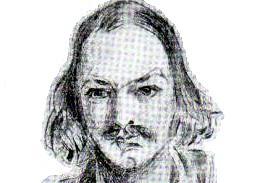
Thomas Wainewright
Murderer ?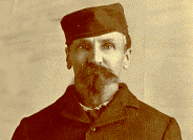 Alfred Packer
Murderer ? · USA · 1874
Alfred Packer was convicted of cannibalism after killing and eating five compan…
5 victims
Alfred Packer
Murderer ? · USA · 1874
Alfred Packer was convicted of cannibalism after killing and eating five compan…
5 victims
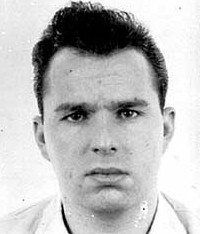 Gary Krist
Murderer ? · USA · 1959
Gary Krist Gary Steven Krist (born April 29, 1945) lived part of his childhood…
4 victims
Gary Krist
Murderer ? · USA · 1959
Gary Krist Gary Steven Krist (born April 29, 1945) lived part of his childhood…
4 victims
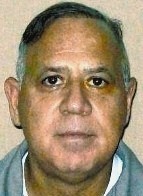 Lamont Underwood
Murderer ? · USA · 1994
Lamont Claxton Underwood, known as “L.C.,” was a former Salisbury policeman. Pr…
2 victims
Lamont Underwood
Murderer ? · USA · 1994
Lamont Claxton Underwood, known as “L.C.,” was a former Salisbury policeman. Pr…
2 victims
 Peter Alan Fell
Murderer ? · United Kingdom · 1982
Peter Alan Fell was involved in a case in which he made phone calls to police a…
2 victims
Peter Alan Fell
Murderer ? · United Kingdom · 1982
Peter Alan Fell was involved in a case in which he made phone calls to police a…
2 victims
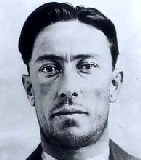 Colin Campbell Ross
Murderer ? · Australia · 1921
5 March 1920 — Ross asked Lily Mae Brown to marry him and produced a revolver a…
1 victim
Colin Campbell Ross
Murderer ? · Australia · 1921
5 March 1920 — Ross asked Lily Mae Brown to marry him and produced a revolver a…
1 victim
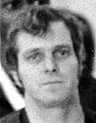 Ellis Wayne Felker
Murderer ? · USA · 1981
Ellis Wayne Felker (c. 1948 – November 15, 1996) was convicted of murder and re…
1 victim
Ellis Wayne Felker
Murderer ? · USA · 1981
Ellis Wayne Felker (c. 1948 – November 15, 1996) was convicted of murder and re…
1 victim
 Byron Smith
Murderer · USA · 2012
Byron Smith, 65, was involved in the killings of two teenage intruders in his h…
2 victims
Byron Smith
Murderer · USA · 2012
Byron Smith, 65, was involved in the killings of two teenage intruders in his h…
2 victims
 Tiffany Cole
Murderer · USA · 2005
Tiffany Cole (WF), born 12/3/81, was sentenced to death for her role in the dou…
2 victims
Tiffany Cole
Murderer · USA · 2005
Tiffany Cole (WF), born 12/3/81, was sentenced to death for her role in the dou…
2 victims
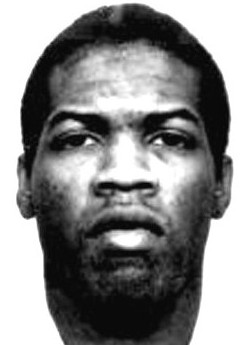 Derrick Sonnier
Murderer · USA · 1991
Derrick Sonnier lived with his girlfriend and her daughter two apartments down…
2 victims
Derrick Sonnier
Murderer · USA · 1991
Derrick Sonnier lived with his girlfriend and her daughter two apartments down…
2 victims
 Randall Scott Jones
Murderer · USA · 1987
Randall Scott Jones was indicted in the Seventh Judicial Circuit, Putnam County…
2 victims
Randall Scott Jones
Murderer · USA · 1987
Randall Scott Jones was indicted in the Seventh Judicial Circuit, Putnam County…
2 victims
 Karen Tobie
Murderer · USA · 2004
Karen Tobie was convicted of paying a man $4,000 to kill her husband, John Cata…
1 victim
Karen Tobie
Murderer · USA · 2004
Karen Tobie was convicted of paying a man $4,000 to kill her husband, John Cata…
1 victim
- Gender
- male
- Country
- United Kingdown / France
- Location
- United Kingdown / France
- Date of birth
- October 1794
- Age at first offence
- 34
- Characteristics
- poisoner, to collect insurance money
- Victim profile
- His grandfather / H is mother-in-law / H is sister-in-law / The father of a girl that he was acquainted
- Method of murder
- Poisoning ( strychnine )
- Date(s) of murder
- 1828 - 1837
- Years active
- 1828–1837
- Date of arrest
- 1837
- Status
-
Died in custody
Sentenced to transportation for life; died in Hobart Town hospital of apoplexy on 17 August 1847
Case record: Thomas Griffiths Wainewright
Thomas Wainewright was also known as Thomas Griffiths Wainewright. He was born in October 1794 and died in Hobart Town hospital of apoplexy on 17 August 1847.
Background
Wainewright was an English journalist and subject-painter. He was born at Chiswick.
He was educated by his distant relative Dr. Charles Burney.
He served as an orderly officer in the guards and as cornet in a yeomanry regiment.
Wainewright’s upbringing involved affluence and London literary society. He was orphaned when he was very young. His father’s identity was not firmly established; it was suggested that he may have been an apothecary, though it was more likely he was a lawyer and came from a family that practiced law over many years. Wainewright’s mother died giving birth to him.
Wainewright came under the care of his maternal uncle, George Griffiths. He lived in an extended family situation with his maternal grandfather at Linden House at Turnham Green, then London’s rural periphery. His maternal grandfather, Ralph Griffiths (1720–1803), was editor of The Monthly Review for many years. When Ralph Griffiths wrote his will in 1803, Wainewright’s father was already dead and Ralph Griffiths died later in 1803.
Wainewright was raised by his grandfather. At the age of eighteen, he joined the army but soon tired of the lifestyle. When he was twenty-one, in 1821, he married Eliza Frances Ward but was soon in trouble because of his extravagant lifestyle.
Mrs Abercromby, his wife’s mother, came to stay with the couple and brought with her two daughters, Helen and Madelaine.
Literary career
In 1819, Wainewright entered on a literary life and began to write for The Literary Pocket-Book, Blackwoods Magazine and The Foreign Quarterly Review.
He was closely identified with The London Magazine, to which, from 1820 to 1823, he contributed art and criticism under signatures including Janus Weathercock, Egomet Bonmot and Herr Vinkbooms.
He was a friend of Charles Lamb, who thought well of his literary productions. In a letter to Bernard Barton, Lamb styled Wainewright as “the kind, light-hearted Wainewright.”
Wainewright also practiced as an artist. He designed illustrations to Chamberlayne’s poems. From 1821 to 1825, he exhibited in the Royal Academy figure pictures, including:
- “A Romance from Undine”
- “Paris in the Chamber of Helen”
- “The Milkmaid’s Song”
He was trained by John Linnell and Thomas Phillips. He exhibited at the Royal Academy. He made illustrations for Chamberlayne’s poems.
His narrative works exhibited at the Royal Academy included “a Romance from Undine,” “Paris in the Chamber of Helen,” and “the Milkmaid’s Song.” None of these works survive.
The offence
Wainewright’s criminal history included poisoning relatives and a forgery offence.
In 1830, he insured the life of his sister-in-law in various offices for a sum of 18,000. When she died in December 1830, payment was refused by the companies on the ground of misrepresentation.
He had a quantity of strychnine in his possession while in France. It was afterwards found that he had destroyed his sister-in-law, and also his uncle, his mother-in-law and a Norfolkshire friend by poison. In one account, “this is disputed.”
In 1837, he was arrested on a charge of forging thirteen years before a transfer of stock. It also stated that he obtained £2,000 by forging the signatures of the trustees of his stock.
Investigation and imprisonment abroad
Wainewright retired to July Monarchy France (Boulogne is stated). He was seized by the authorities as a suspected person and imprisoned for six months.
He had in his possession a quantity of strychnine during that period.
He was afterwards found to have poisoned multiple people, including his sister-in-law, his uncle, his mother-in-law and a Norfolkshire friend, though this was described as disputed.
Arrest and trial
Wainewright returned to London in 1837 and was arrested at once.
He was charged with forging a transfer of stock that had occurred thirteen years before.
He was tried at the Central Criminal Court. The trial date given was 3 July 1837.
He was found guilty.
Sentencing
Wainewright was sentenced to transportation for life in Van Dieman’s Land.
Timeline
- 1830 — He insured the life of his sister-in-law in various offices for a sum of £18,000; the sister-in-law died in December 1830 and payment was refused on the ground of misrepresentation.
- December 1830 — His sister-in-law died.
- 1830 (July Monarchy France) — He retired to France and was seized by the authorities as a suspected person and imprisoned for six months; he had strychnine in his possession.
- 1837 — He returned to London and was arrested on a charge of forging (a transfer of stock).
- 3 July 1837 — He was tried at the Central Criminal Court.
- 21 November 1837 — He arrived in Hobart Town on the Susan.
- 14 November 1846 — He was granted a conditional pardon.
- 17 August 1847 — He died of apoplexy in Hobart Town hospital.
Outcome
Wainewright was found guilty of forgery and was sentenced to transportation for life.
He died of apoplexy in Hobart Town hospital.
Aftermath and legacy
His death was reported in The Britannia and Trades Advocate, Hobart Town, 26 August 1847 (p2 c3), stating: “DIED._On the 17th inst., of Apoplexy, Mr. Thomas Wainwright, artist.”
It was stated that he was buried in an unknown grave.
His life and crimes were said to have suggested fiction to Charles Dickens and Edward Bulwer-Lytton, 1st Baron Lytton, including:
- Dickens’s story of Hunted Down
- Bulwer-Lytton’s novel of Lucretia
His personality as an artist and poisoner interested latter-day writers, including Oscar Wilde in Pen, Pencil and Poison (Fortnightly Review, Jan. 1889) and A. G. Allen in T. Seccombe’s Twelve Bad Men (1894).
Biographical studies of him included:
- Janus Wethercock by Jonathan Curling (Thomas Nelson and Sons, London, 1938)
- Wainewright in Tasmania by Robert Crossland (OUP, Melbourne, 1954)
- Wainewright the Poisoner (2000) by Andrew Motion
It was suggested that, as stated by Havelock Ellis, Wainewright was never normal after a hypochondriac period and was on the verge of insanity or actually insane.
Wainewright was described as having conditional pardon granted on 14 November 1846, and he continued to serve time in the colony, initially working on a road gang before becoming an orderly in the hospital and painting portraits in the homes of his subjects.
He completed over one hundred portraits on paper using coloured wash, pencil and ink during his years in Hobart. The portraits were said to survive in public museums and private collections throughout Australia, including works that remained with families of sitters. They depicted officialdom, professionals, and members of the elite, including husbands, wives and children, of early Hobart.
It was also stated that Wainewright’s portraits were often in a Romantic Regency style, and that some were considered historically significant.
A self-portrait was completed during his period in the colony.
Spotted an error, or have more information about this case?