Lamont Underwood
Murderer ? John Kogut
Murderer ? · USA · 1984
John Kogut was a 21-year-old high school dropout and unemployed landscaper. In…
1 victim
John Kogut
Murderer ? · USA · 1984
John Kogut was a 21-year-old high school dropout and unemployed landscaper. In…
1 victim
 Joseph Amrine
Murderer ? · USA · 1985
Joseph Amrine was a death row inmate in Missouri. He was housed with the victim…
1 victim
Joseph Amrine
Murderer ? · USA · 1985
Joseph Amrine was a death row inmate in Missouri. He was housed with the victim…
1 victim
 Lemuel Prion
Murderer ? · USA · 1992
October 24, 1992 — The arms of the 21-year-old female victim were discovered in…
1 victim
Lemuel Prion
Murderer ? · USA · 1992
October 24, 1992 — The arms of the 21-year-old female victim were discovered in…
1 victim
 Michael Nawee Blair
Murderer ? · USA · 1993
Michael Nawee Blair was sentenced to death for the 1993 murder of 7-year old As…
1 victim
Michael Nawee Blair
Murderer ? · USA · 1993
Michael Nawee Blair was sentenced to death for the 1993 murder of 7-year old As…
1 victim
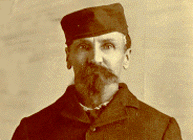 Alfred Packer
Murderer ? · USA · 1874
Alfred Packer was convicted of cannibalism after killing and eating five compan…
5 victims
Alfred Packer
Murderer ? · USA · 1874
Alfred Packer was convicted of cannibalism after killing and eating five compan…
5 victims
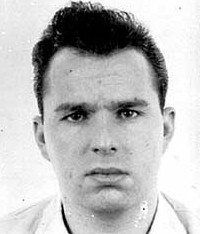 Gary Krist
Murderer ? · USA · 1959
Gary Krist Gary Steven Krist (born April 29, 1945) lived part of his childhood…
4 victims
Gary Krist
Murderer ? · USA · 1959
Gary Krist Gary Steven Krist (born April 29, 1945) lived part of his childhood…
4 victims
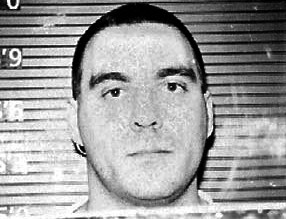 William Spranger
Murderer · USA · 1983
William Spranger was involved in the killing of a law enforcement officer. Spra…
1 victim
William Spranger
Murderer · USA · 1983
William Spranger was involved in the killing of a law enforcement officer. Spra…
1 victim
 Duane Roger Morrison
Murderer · USA · 2006
Duane Roger Morrison (c. 1952—September 27, 2006) was the lone gunman who storm…
1 victim
Duane Roger Morrison
Murderer · USA · 2006
Duane Roger Morrison (c. 1952—September 27, 2006) was the lone gunman who storm…
1 victim
 Molly Midyette
Murderer · USA · 2006
Molly Midyette was convicted of child abuse resulting in death in the 2006 deat…
1 victim
Molly Midyette
Murderer · USA · 2006
Molly Midyette was convicted of child abuse resulting in death in the 2006 deat…
1 victim
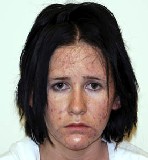 Melissa Calusinski
Murderer · USA · 2009
Melissa Calusinski worked as a daycare worker and had been a teacher’s aide at…
1 victim
Melissa Calusinski
Murderer · USA · 2009
Melissa Calusinski worked as a daycare worker and had been a teacher’s aide at…
1 victim
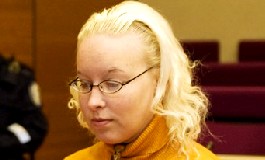 Katariina Pantila
Murderer · Finland · 2007
Katariina Meri-Tuulia Pantila was born as Katariina Hyttinen and had a first ma…
1 victim
Katariina Pantila
Murderer · Finland · 2007
Katariina Meri-Tuulia Pantila was born as Katariina Hyttinen and had a first ma…
1 victim
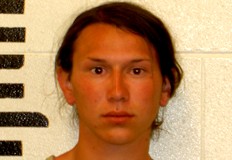 Jeremiah Berry
Murderer · USA · 2008
Jeremiah Berry was convicted after pleading guilty to the second-degree murder…
1 victim
Jeremiah Berry
Murderer · USA · 2008
Jeremiah Berry was convicted after pleading guilty to the second-degree murder…
1 victim
- Gender
- male
- Country
- USA
- Location
- Salisbury, North Carolina, USA
- Date of birth
- 1951
- Age at first offence
- 43
- Characteristics
- jealousy, kidnapping
- Victim profile
- Viktor Gunnarsson, 40 ( ex-girlfriend ' s new lover) / Catherine Miller ( ex-girlfriend ' s elderly mother )
- Method of murder
- Shooting
- Date(s) of murder
- January 7/10, 1994
- Years active
- 1994
- Date of arrest
- —
- Status
-
Life imprisonment
Sentenced to life in prison plus 40 years in 1997; murder conviction vacated by the Fourth Circuit Court of Appeals on January 2010 with an order to grant a new trial or release in 180 days
Background
Lamont Claxton Underwood, known as “L.C.,” was a former Salisbury policeman.
Prosecutors contended that Underwood was jealous of Viktor Gunnarsson and viewed Gunnarsson as a romantic rival for Kay Weden, Underwood’s former fiancée.
The offence
Underwood was convicted in 1997 in Watauga County Superior Court for the 1993 kidnapping and murder of Viktor Gunnarsson.
Viktor Gunnarsson was a 40-year-old Swedish citizen who was a resident of Lakewood Apartments off Statesville Boulevard.
Prosecutors contended that Underwood stalked, spied on and harassed Kay Weden, then kidnapped Gunnarsson from his home and took him to a secluded area along the Blue Ridge Parkway in Watauga County. Prosecutors contended that Underwood then shot and killed Gunnarsson.
The state also contended that three days later Underwood shot and killed Weden’s mother, Catherine Miller, at her Westcliffe home off U.S. 70. Underwood was never tried for Miller’s death.
Investigation
Viktor Gunnarsson’s nude body was found near the Blue Ridge Parkway on Jan. 7, 1994. He had been shot in the head and neck.
The Fourth Circuit Court of Appeals rendered an opinion on Dec. 23, 2009 and cited mishandling of several issues, including the defense’s opening remarks and trial strategy.
The Fourth Circuit opinion included the following passage:
“the defense (attorneys) essentially inflicted a fatal wound to the credibility of their own case.”
The Fourth Circuit opinion also quoted and criticized the defense attorney promises to the jury:
“It could not have been sound trial strategy for defense counsel to have created such high, unattainable expectations in the jury by promising to present exculpating evidence. To be sure, defense counsel gained no tactical advantages by making the promise. “Thus, counsel's whetting of the jury's appetite with the promise of a confession with eye witness testimony which counsel knew or should have known was not exculpating, at the very least was irresponsible. By taking the approach which they used here, defense counsel actually enabled the state to strengthen its circumstantial case É.”
The Fourth Circuit opinion continued:
“would find it quite difficult to imagine a more illogical, unreasonable strategy than to promise a jury exculpatory evidence of this nature and then fail both to present it and to effectively explain its omission. É Defense counsels' conduct was deficient and prejudicial É”
The Fourth Circuit opinion noted the initial closing argument:
“quite interestingly, included a monologue on the origins and development of our Nation's jury system.”
Trial
Underwood was convicted in 1997 in Watauga County Superior Court for kidnapping and murder of Viktor Gunnarsson.
Underwood was represented by Boone attorneys Bruce Kaplan and Chester Whittle.
In the 27-page opinion, the Fourth Circuit Court repeatedly cited the defense attorneys’ opening remarks to the jury promising:
- “that they had a confession from someone else who claimed to have killed Gunnersson;”
- “that another witness (Terry Osborne, then Rowan County Clerk of Court) saw someone else outside of Miller's house at the time of the murder and a composite sketch had been made that didn't look like Underwood;”
- “that an eyewitness saw someone near where Gunnarsson's body was found in Deep Gap, and that when the witness saw Underwood in a lineup with six other men, he told investigators the person he saw was not in the lineup.”
When the state rested its case, the defense declined to put on any evidence.
A prosecutor went through the list of promises made by the defense, asking where the promised witnesses and the evidence were.
During the trial, the judge allowed witnesses to testify about mitochondrial DNA, described as DNA found outside the nucleus of a cell. The DNA test was described as crucial to prosecutors in linking hair found in Underwood’s trunk with Gunnarsson’s blood.
The trial drew international attention because Gunnarsson had been accused and later cleared in the 1986 assassination of Swedish Prime Minister Olof Palme.
The Discovery Channel aired a documentary on the investigation after Underwood was convicted.
Sentencing
Underwood was sentenced to life imprisonment.
He was also described as serving a life sentence plus 40 years.
Appeals
The state Supreme Court upheld Underwood’s conviction in October of 2000.
In 2001, Underwood filed a motion in Watauga County Superior Court seeking appropriate relief, contending he was subjected to ineffective assistance by shortcomings of his counsel, including failing to call key witnesses.
On Aug. 30, 2004, the state Court of Appeals denied the petition.
Underwood then appealed to the Fourth Circuit Court of Appeals.
On Dec. 23, 2009, the Fourth Circuit ordered that Underwood be granted a new trial or be released from jail in 180 days.
Outcome
In January 2010, a federal court vacated the 13-year-old murder conviction of a former Salisbury policeman, ordering Underwood be granted a new trial or be released from jail in 180 days.
Aftermath
Underwood was described as now 58 and as currently in the Marion Correctional Center.
Other details
Underwood was described as a resident of Lake Drive, Salisbury.
The victim was Viktor Gunnarsson.
Viktor Gunnarsson was described as being “between 3 and 4 December 1993” at the time of death being placed between those dates.
The victim’s background relating to the Olof Palme assassination was discussed:
- Gunnarsson had been arrested on February 28, 1986, in Stockholm, Sweden, for the assassination of Olof Palme, but was quickly released after a dispute between the police and prosecuting attorneys.
- Gunnarsson had connections to extremist groups and was described as a member of the European Workers Party, the Swedish branch of the LaRouche movement, for a year before being kicked out in 1985.
- The extent of his connection to the latter group was described as having signed a petition they were circulating on the streets of Stockholm.
- Pamphlets hostile to Palme from the party were found in his home outside Stockholm.
- Gunnarsson’s nearly naked body was described as found in a wooded area called Deep Gap about 86 miles from his apartment in Salisbury, North Carolina.
- Gunnarsson was said to have been shot twice in the head with a “.22 caliber” firearm.
The victim’s murder was featured on Court TV’s “Forensic Files” and Discovery Channel’s “The New Detectives”.
Spotted an error, or have more information about this case?