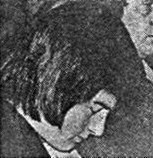
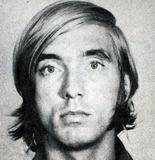
Mark Rowntree
Spree killer Michael Robert Ryan
Spree killer · United Kingdom · 1987
Michael Robert Ryan was an unemployed local labourer. He lived in Hungerford, B…
16 victims
Michael Robert Ryan
Spree killer · United Kingdom · 1987
Michael Robert Ryan was an unemployed local labourer. He lived in Hungerford, B…
16 victims
 Daniel Gonzalez
Spree killer · United Kingdom · 2004
Daniel Gonzalez (1980 - 9 August 2007) was an offender who was sentenced to lif…
4 victims
Daniel Gonzalez
Spree killer · United Kingdom · 2004
Daniel Gonzalez (1980 - 9 August 2007) was an offender who was sentenced to lif…
4 victims
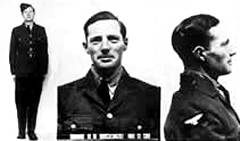 Gordon Cummins
Spree killer · United Kingdom · 1942
Gordon Frederick Cummins was called “The Count” due to his claims of noble birt…
4 victims
Gordon Cummins
Spree killer · United Kingdom · 1942
Gordon Frederick Cummins was called “The Count” due to his claims of noble birt…
4 victims
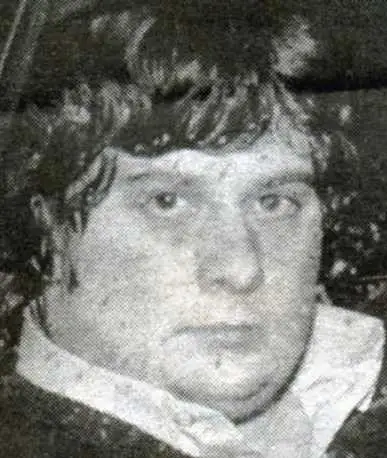 Kevin Weaver
Spree killer · United Kingdom · 1987
Kevin Weaver was sentenced to closed psychiatric confinement on March 28, 1988.…
4 victims
Kevin Weaver
Spree killer · United Kingdom · 1987
Kevin Weaver was sentenced to closed psychiatric confinement on March 28, 1988.…
4 victims
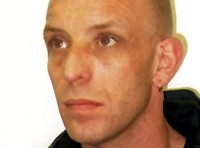 Mark Hobson
Spree killer · United Kingdom · 2004
Mark Hobson was a British spree killer who killed his girlfriend and her twin s…
4 victims
Mark Hobson
Spree killer · United Kingdom · 2004
Mark Hobson was a British spree killer who killed his girlfriend and her twin s…
4 victims
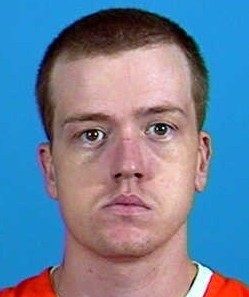 Kevin Don Foster
Murderer · USA · 1996
Kevin Don Foster was born Kevin Donald Bates on June 16, 1977, in Amarillo, Tex…
1 victim
Kevin Don Foster
Murderer · USA · 1996
Kevin Don Foster was born Kevin Donald Bates on June 16, 1977, in Amarillo, Tex…
1 victim
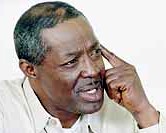 Robert E. Williams
Murderer · USA · 1977
Robert E. Williams was executed by electrocution in Nebraska on December 2, 199…
3 victims
Robert E. Williams
Murderer · USA · 1977
Robert E. Williams was executed by electrocution in Nebraska on December 2, 199…
3 victims
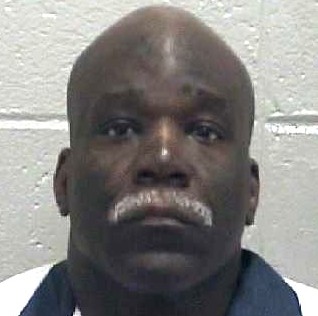 Michael Anthony Cohen
Murderer · USA · 1985
Michael Anthony Cohen, 40, was sentenced to death in Glynn County in December 1…
1 victim
Michael Anthony Cohen
Murderer · USA · 1985
Michael Anthony Cohen, 40, was sentenced to death in Glynn County in December 1…
1 victim
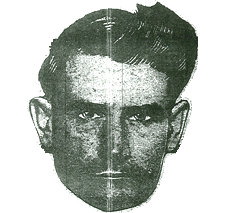 Henry Lee Moore
Serial killer · USA · 1911
Henry Lee Moore was sentenced to life in prison in Missouri in 1913. He was rel…
26 victims
Henry Lee Moore
Serial killer · USA · 1911
Henry Lee Moore was sentenced to life in prison in Missouri in 1913. He was rel…
26 victims
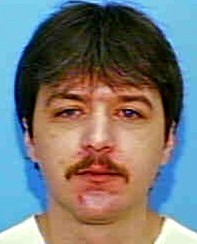 Herman Dale Ashworth
Murderer · USA · 1996
Herman Dale Ashworth was convicted of aggravated murder and aggravated robbery…
1 victim
Herman Dale Ashworth
Murderer · USA · 1996
Herman Dale Ashworth was convicted of aggravated murder and aggravated robbery…
1 victim
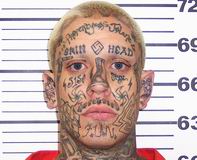 Curtis Allgier
Murderer · USA · 2007
Curtis Michael Allgier (born August 25, 1979) was a white supremacist skinhead…
1 victim
Curtis Allgier
Murderer · USA · 2007
Curtis Michael Allgier (born August 25, 1979) was a white supremacist skinhead…
1 victim
- Gender
- male
- Country
- United Kingdom
- Location
- Bingley, West Yorkshire, England, United Kingdom
- Date of birth
- 1956
- Age at first offence
- 19
- Characteristics
- mentally ill, torture, rape
- Victim profile
- Grace Adamson, 85 / Stephen Wilson, 16 / Barbara Booth, 24, and her three years old son Alan
- Method of murder
- St abbing with knife
- Date(s) of murder
- December 31, 1975 - January 7, 1976
- Years active
- 1975–1976
- Date of arrest
- January 7, 1976
- Status
-
Pleaded guilty to four counts of manslaughter on the ground of diminished responsibility in June 1976; ordered to be committed to Rampton Secure Hospital for an indefinite period
Background
Mark Rowntree (born 1956 in Bradford, Yorkshire) was a British spree killer. He was diagnosed as suffering from schizophrenia. He had been raised in a wealthy family of the English middle class. His school years passed without any problems and with his marks, he could easily get in any college. He thought he had passed enough time in school and figured he was ready for “real life”. He was satisfied with a job as a bus driver. During his puberty, he was rejected by a girl, which confused him so much that he became convinced of the fact he would always be a failure to women. This inferiority complex eventually caused a misogynism, which kept on growing. In December 1975, he committed four murders within hardly a week.
Other details
Rowntree was committed to a mental hospital after he admitted killing four people at random in the town of Bingley, West Yorkshire, during late 1975 and early 1976. He was ordered to be committed to Rampton Secure Hospital for an indefinite period, but was later based at the Hutton Unit, a secure mental health facility based at St. Luke’s Hospital in Middlesbrough. He was one of the longest serving patients in any British psychiatric/secure hospital. He gave a full confession to his crimes and complained that he had not managed to reach five victims, “the body count of his hero, Donald Neilson”. Donald Neilson was also described as “The Black Panther”.
The offence
Rowntree killed people at random in the town of Bingley, West Yorkshire, during late 1975 and early 1976. In December 1975, he committed four murders, described as having been committed because “he was in need for it”. On December 31 1975, Rowntree stabbed widow Grace Adamson to death. He then celebrated with a beer at the local pub. A few days later, he killed sixteen-year-old Mark Wilson at a bus stop. Wilson died in hospital, although he was first able to give a description of his attacker to the police. Rowntree also visited prostitute Barbara Booth at her home and stabbed her to death, along with her three-year-old son Alan. Before he returned home, the police were waiting for him, armed with the description given by the second victim. He was said to have introduced himself as a police officer when he went to Grace Adamson’s house. After the woman opened the door, he pushed her inside and pulled a knife. He stabbed her several times in the chest. The woman dropped dead and Rowntree bought himself a beer in a pub nearby. When he attacked the boy at the bus stop, he pulled his knife and stabbed him. The deadly wounded body fell down and Rowntree made himself scarce. A bit further, he took a cab home. Wilson was still alive when he was found at the bus stop. He was taken to hospital but died a few days later. Rowntree was described as having butchered Barbara Booth’s three-year-old son “to get rid of a possible witness”.
Investigation
Wilson was first able to give a description of his attacker to the police. It appeared that Rowntree had committed a double murder that day involving Barbara Booth. It was stated that, via an ad, Rowntree had met a woman who wanted to be a model, and he had taken her to Leeds to plan a photo shoot; in reality he had other plans with her. A cab driver remembered Rowntree’s face when a well matching image of Rowntree was showed on TV. The cab driver reported it to the police and guided the investigators to Rowntree’s house. Rowntree was taken into custody, and he did not resist when he was arrested.
Trial
In June 1976, Rowntree was put on trial in Leeds. He did not deny the murders but pleaded only to be guilty of manslaughter because he did not realize what he had done wrong. The plaintiff agreed to declare Rowntree insane and the judge directed him indefinitely to a severely guarded mental home. Rowntree pleaded guilty to four counts of manslaughter on the ground of diminished responsibility at Leeds Crown Court in June 1976. He gave a full confession to his crimes and complained that he had not managed to reach five victims.
Sentencing
Rowntree was diagnosed as suffering from schizophrenia. He was ordered to be committed to Rampton Secure Hospital for an indefinite period.
Outcome
Rowntree’s disposition was described as “Ruled insane; indefinite committal to asylum, 1976”. He was now based at the Hutton Unit, a secure mental health facility based at St.
Timeline
- December 31 1975 — Rowntree stabbed widow Grace Adamson to death and then bought a beer at the local pub.
- Late 1975 / early 1976 (few days later) — Rowntree killed sixteen-year-old Mark Wilson at a bus stop; Wilson later died in hospital.
- June 1976 — Rowntree pleaded guilty to four counts of manslaughter on the ground of diminished responsibility at Leeds Crown Court and was ordered to be committed to Rampton Secure Hospital for an indefinite period.
Quotations
- Rowntree complained that he had not managed to reach five victims — “the body count of his hero, Donald Neilson”.
- The motive for the murders was described as “he was in need for it”.
- He introduced himself as a police officer when he went to Grace Adamson’s house.
- Rowntree was described as having been told to have “real life” as something he thought he was ready for: “real life”.
Spotted an error, or have more information about this case?