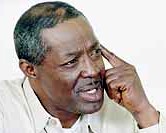
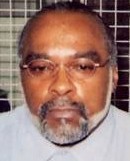
Robert E. Williams
Murderer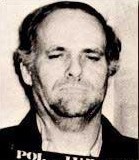 Ervil LeBaron
Murderer · USA · 1972
Ervil Morrell LeBaron (1925 to August 16, 1981) was the leader of a polygamous…
35 victims
Ervil LeBaron
Murderer · USA · 1972
Ervil Morrell LeBaron (1925 to August 16, 1981) was the leader of a polygamous…
35 victims
 Brian Kevin Rosenfeld
Murderer · USA · 1985
Brian Kevin Rosenfeld Brian Kevin Rosenfeld was sentenced to three concurrent l…
23 victims
Brian Kevin Rosenfeld
Murderer · USA · 1985
Brian Kevin Rosenfeld Brian Kevin Rosenfeld was sentenced to three concurrent l…
23 victims
 Marvin Gray
Murderer · USA · 1975
Marvin Gray was convicted killer who claimed responsibility for 23 slayings and…
23 victims
Marvin Gray
Murderer · USA · 1975
Marvin Gray was convicted killer who claimed responsibility for 23 slayings and…
23 victims
 Yahweh ben Yahweh
Murderer · USA · 1980
Yahweh ben Yahweh was born and legally named Hulon Mitchell Jr. (October 27, 19…
23 victims
Yahweh ben Yahweh
Murderer · USA · 1980
Yahweh ben Yahweh was born and legally named Hulon Mitchell Jr. (October 27, 19…
23 victims
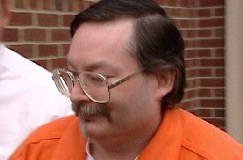 Anthony James Dick
Murderer · USA · 2006
Anthony James Dick was sentenced to death on August 22, 2007 after the shooting…
2 victims
Anthony James Dick
Murderer · USA · 2006
Anthony James Dick was sentenced to death on August 22, 2007 after the shooting…
2 victims
 Hai Hai Vuong
Murderer · USA · 1986
Hai Hai Vuong challenged the dismissal of his petition for a writ of habeas cor…
2 victims
Hai Hai Vuong
Murderer · USA · 1986
Hai Hai Vuong challenged the dismissal of his petition for a writ of habeas cor…
2 victims
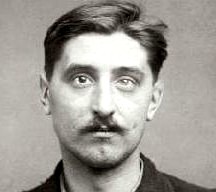 Albert Soleilland
Murderer · France · 1907
Albert Soleilland was sentenced to death on July 24, 1907 for a homicide involv…
1 victim
Albert Soleilland
Murderer · France · 1907
Albert Soleilland was sentenced to death on July 24, 1907 for a homicide involv…
1 victim
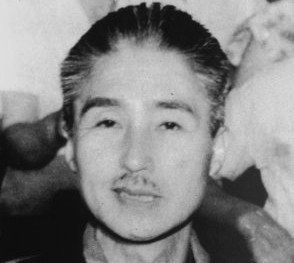 Sadamichi Hirasawa
Mass murderer · Japan · 1948
Sadamichi Hirasawa was a Japanese painter. He was also known as a tempera paint…
12 victims
Sadamichi Hirasawa
Mass murderer · Japan · 1948
Sadamichi Hirasawa was a Japanese painter. He was also known as a tempera paint…
12 victims
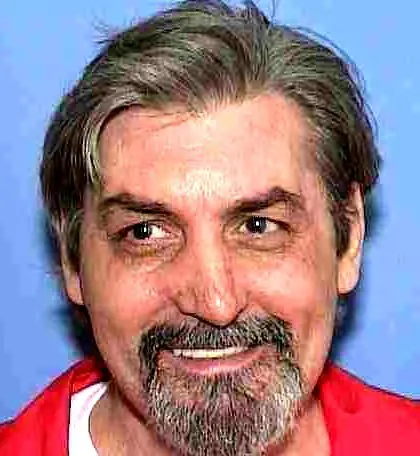 Jessie Derrell Williams
Murderer · USA · 1983
Jessie Derrell Williams was executed by lethal injection in Mississippi on Dece…
1 victim
Jessie Derrell Williams
Murderer · USA · 1983
Jessie Derrell Williams was executed by lethal injection in Mississippi on Dece…
1 victim
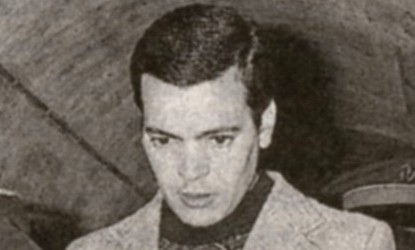 Hamida Djandoubi
Murderer · France · 1974
1968 — Hamida Djandoubi started living and working in Marseille, France, as a p…
1 victim
Hamida Djandoubi
Murderer · France · 1974
1968 — Hamida Djandoubi started living and working in Marseille, France, as a p…
1 victim
- Gender
- male
- Country
- USA
- Location
- Nebraska/Iowa, USA
- Date of birth
- 1936
- Age at first offence
- 41
- Characteristics
- rape
- Victim profile
- Patricia McGarry and Catherine Brooks / Virginia Rowe
- Method of murder
- Shooting (.22 caliber revolver)
- Date(s) of murder
- August 11/12, 1977
- Years active
- 1977
- Date of arrest
- August 18, 1977
- Status
-
Executed
Executed by electrocution in Nebraska on December 2, 1997
Case record: Robert E. Williams
Status and execution
Robert E. Williams was executed by electrocution in Nebraska on December 2, 1997.
Williams was pronounced dead at 10:23, six minutes after the first jolt of electricity was delivered.
Nebraska moved the execution to the morning, rather than the traditional just-past-midnight time, to reduce crowds outside the prison. Only a few demonstrators were at the prison an hour before the execution.
The execution was Nebraska’s first daytime execution and the first to be witnessed by a victim’s relative since the state resumed carrying out the death penalty in 1994.
One of the 10 official witnesses was Wayne Rowe, who found his wife’s nude, bloody body at their bed in 1977. Rowe made eye contact with Williams before the electrocution.
After the execution, Rowe said: "it did not take long. I have been waiting 20 years for this. I did not think it could be true."
Williams’ execution occurred shortly after the United States Supreme Court rejected his request to review the dismissal of his lawsuit alleging that the electric chair is cruel and indecent. Nebraska was one of only five states that used the electric chair.
Williams’ attorneys notified the state that no further appeals were planned; the Nebraska Pardons Board would not consider a request for a clemency hearing.
Williams expressed remorse for his crimes and apologized to his victims’ families. In one of his last interviews, he said he was tired of fighting for life and waiting for death, telling the Omaha World-Herald in an interview published Sunday that "I pray to have the measure of grace to face what lies ahead."
10 other men remained on Nebraska’s death row.
Williams became the first condemned prisoner to be executed in Nebraska that year, and the third overall since the state resumed executions in 1994. Williams also became the 71st condemned prisoner to be executed in the USA that year, and the 429th overall since America resumed executions on Jan. 17, 1977.
Background
Robert E. Williams was convicted in Lincoln in 1978 for the murders of Patricia McGarry and Catherine Brooks in 1977.
Williams had confessed to murdering three women and trying to kill a fourth during a three-day rampage in 1977 that crossed into three states.
Williams was originally sentenced to death for both murders, but one death sentence was thrown out on appeal.
The double murder was the beginning of a three-state rampage that started with another rape in Lincoln the next day and the murder of Virginia Rowe in Sioux Rapids, Iowa, the day after that.
The next day, Williams kidnapped a railroad worker and kidnapped, shot twice, raped, and dumped a St. Paul, Minn., woman, who survived.
Williams was arrested in Lincoln eight days after the double homicide.
Williams said his three-day rampage was induced by drugs and alcohol.
The offences and victims
Williams’ convictions in Nebraska involved the murders of Patricia McGarry and Catherine Brooks in Lincoln, Nebraska, and a first-degree sexual assault involving Catherine Brooks.
Catherine Brooks was found dead on the living room floor lying naked in a pool of blood. Medical examination revealed spermatozoa in her vagina and rectal tract, deposited within an hour of her death. Brooks had three bullet wounds to her head and back.
Patricia McGarry’s body was found dead on the dining room floor mortally wounded from three shots to her head and neck.
Williams’ fingerprints were found in the apartment. Rifle shells found in the apartment matched those purchased by Williams the previous night, when he also purchased a .22 revolver.
In the course of related conduct described in the case record, Williams:
- went to the apartment of another young woman in Lincoln with whom he was acquainted
- threatened to shoot the young woman with a revolver and then raped her repeatedly
- ordered the young woman and her two-year-old child to leave with him, but he let them go, after which the young woman called police
- abducted a man in a suburb of St. Paul and ordered him at gunpoint to drive into the city where the victim was later found bound and gagged in a railroad freight yard
- shot a woman in St. Paul as she was getting into her car
- drove the woman in her car to a remote area where he raped her, tied her up, and left her; she survived by getting untied and finding help at a farmhouse
In Iowa, Wayne Rowe returned home shortly after noon to find his wife, naked, sexually assaulted, and murdered on the bed.
Hairs found in her hand and on the bedspread matched Williams’ hair. A bullet recovered at this Iowa murder scene matched bullets taken from the bodies of the Nebraska victims.
Virginia Rowe’s car was gone and a shotgun which had been in the Rowes’ home was missing. Mrs. Rowe’s car was later found in St. Paul, Minnesota.
In Minnesota, Williams abducted Walter Behun and had Behun drive him to St. Paul. Behun was left bound in a caboose. Williams took Behun’s car, later found in the Como Avenue and Dale Avenue area in St. Paul.
At approximately 3 p.m. on August 13, Katherine Billings was leaving a liquor store at the intersection of Como Avenue and Dale Avenue in St. Paul when she was kidnapped by Williams. Williams shot her in the arm and behind her left ear. Billings was taken to a secluded rural area where she was sexually assaulted, bound, and left for dead.
Williams arrived by car in Chicago, Illinois on August 14 and stayed there until late August 17, then jumped on a train heading west. He arrived in Lincoln either late August 17 or early August 18 and was arrested at 4 a.m. on August 18, 1977.
Investigation and arrest
A deputy sheriff had observed Williams’ car abandoned at a park in Cherokee County, Iowa, since 10:15 p.m. the night before, and had it towed away.
Wayne Rowe discovered his wife’s naked, bloody body in their bed in 1977.
After his arrest in a railroad yard on August 18, 1977, Williams made a statement to police admitting that he shot both Brooks and McGarry in Lincoln, but denying that he raped Brooks.
The state of Nebraska charged Williams with two counts of first-degree murder and one count of first-degree sexual assault. Williams pleaded not guilty by reason of insanity.
Trial
Williams was charged with two counts of first degree murder for the killings of McGarry and Brooks and with the first degree sexual assault of Brooks.
Williams confessed to the killings but pleaded not guilty by reason of insanity or mental derangement.
Two psychiatrists, Emmet N. Kenney, M.D., and John Baldwin, M.D., testified for the State. They testified that although Williams suffered from a personality disorder, he was not insane at the time of the shootings.
Beverley T. Mead, M.D., and J. Whitney Kelley, M.D., testified for the defense. Mead testified that Williams’ perception of reality and his judgment were seriously impaired, but she opined that he knew what he was doing, knew his acts were wrong, and knew right from wrong. Kelley testified that Williams’ thinking process was distorted and that he would have known that his actions were wrong only if he had taken time to think.
Williams stated he was under the influence of alcohol, marijuana, LSD, and PCP at the time of the shootings. Both of Williams’ experts agreed that, depending on the quantity and quality of PCP and LSD ingested, effects can last for days.
Jury instruction No. 9 stated:
The defendant contends that he was insane or mentally deranged at the time he is alleged to have committed the offenses charged in the Information. Insanity is a defense recognized by law and the evidence relating thereto should be considered by you and weighed the same as any other evidence. The burden is upon the State to establish the fact of defendant's sanity beyond a reasonable doubt. If from all of the evidence you are convinced beyond a reasonable doubt that the defendant committed the act or acts charged and that at the time of the commission of the alleged crime he was of sufficient mental capacity: 1. To understand what he was doing and the nature and quality of his act; 2. To distinguish between right and wrong with respect to it; and 3. To know that such act was wrong and deserved punishment, then the defendant would be legally responsible for his acts and you should return a verdict of "guilty," although you might find that at the time he was suffering from some degree of insanity or impairment of the mind. If from the evidence or lack of evidence in this case a reasonable doubt is raised in your minds as to the defendant's mental capacity at the time of the commission of the alleged crime: 1. To understand what he was doing and the nature and quality of his act; or 2. To distinguish between right and wrong with respect to it; or 3. To know that such act was wrong and deserved punishment, it is your duty to find the defendant "not guilty by reason of insanity."
Jury instruction No. 10 stated:
Ordinarily, voluntary drug or alcohol intoxication is no justification or excuse for crime; but excessive drug or alcohol intoxication by which a person is wholly deprived of reason may prevent deliberation, premeditation or having the intent charged. If you find that the defendant was intoxicated with drugs or alcohol, that fact should be considered by you, together with all the facts and circumstances in evidence, for the purpose of determining whether or not you have a reasonable doubt that defendant was at the time in question capable of deliberation, premeditation or having the intent charged.
The jury found Williams guilty on all three counts and sentenced him to death on each of the two murder counts and to imprisonment for not less than 8 1/3 years nor more than 25 years on the sexual assault count.
Sentencing
At sentencing, a three-judge panel considered aggravating and mitigating circumstances required by Nebraska Revised Statute Sec. 29-2523.
The sentencing panel found four statutory aggravating circumstances existed: three applied to both murders and one applied solely to the murder of Catherine Brooks.
The three aggravating circumstances applying to both murders were:
- (1)(a) "The offender was previously convicted of ... a crime involving the use or threat of violence to the person, or has a substantial history of serious assaultive or terrorizing criminal activity"
- (1)(d) "The murder was especially heinous, atrocious, cruel, or manifested exceptional depravity by ordinary standards of morality and intelligence"
- (1)(e) "At the time the murder was committed, the offender also committed another murder"
The fourth aggravating circumstance applied solely to the murder of Catherine Brooks:
- (1)(b) "The murder was committed in an apparent effort to conceal the commission of a crime, or to conceal the identity of the perpetrator of a crime"
The sentencing panel found one mitigating circumstance: that Williams had an antisocial personality which, when coupled with intoxication and emotional disturbance at the time, somewhat diminished his capability to conform his conduct to the requirements of law but did not excuse him from the legal consequences of his crimes.
The sentencing panel found aggravating circumstances outweighed mitigating circumstances with respect to each murder and imposed death penalty for each count of first-degree murder.
The sentencing panel imposed a term of imprisonment lasting at least 8 1/3 years but not more than 25 years for the first-degree sexual assault count.
In its findings supporting aggravating circumstance (1)(d), the sentencing panel found:
The evidence establishes beyond a reasonable doubt that both murders in Count I and Count II of the Information were especially heinous, atrocious, cruel and manifested exceptional depravity by ordinary standards of morality and intelligence. The defendant killed both said victims who were defenseless and unresisting; that the commission of both of said murders by the defendant was totally and [sic] bereft of any regard for human life. The evidence further establishes that the victim Catherine M. Brooks was sexually abused by the defendant. (Sent. Panel's Order of Sent. and Commitment at 5, June 30, 1978.)
Post-trial motions and postconviction history
Following the verdict, Williams filed a motion for new trial alleging irregularities including denial of a fair and impartial trial and due process by misconduct of certain jurors during trial. The sole basis for the motion for new trial’s generic allegation of juror misconduct was telephone conversations counsel had with jurors about publication of the jurors’ names in a local newspaper. The district court found there was no misconduct of any juror during the trial.
On direct appeal, Williams raised numerous errors, none included juror misconduct, and all were found to be without merit.
Williams filed state postconviction relief actions, which were denied in earlier proceedings. In one postconviction action, the Supreme Court of Nebraska reversed in part and remanded for an evidentiary hearing; after the evidentiary hearing, the state district court denied relief and the Supreme Court of Nebraska affirmed.
Williams also sought federal habeas corpus relief. The Eighth Circuit previously described earlier federal proceedings, including that Williams’ first federal habeas application had been granted as to one death sentence but denied as to the remaining death sentence, and that Williams later unsuccessfully appealed denial of habeas corpus relief as to the murder conviction appealed.
Williams’ second federal habeas action, filed on the day of his scheduled execution in March 1995, asserted new evidence of alleged juror misconduct. He voluntarily dismissed his second federal habeas action after the Nebraska Supreme Court granted a stay of execution and ordered an evidentiary hearing on the juror misconduct issue.
Ultimately, the state courts denied Williams’ postconviction action based on alleged juror misconduct, and the death warrant issued.
Juror misconduct and postconviction evidentiary hearing
The Nebraska Supreme Court addressed whether Williams was denied a fair trial because a juror used maps to check Williams’ post-shooting “flight path” and testified that she factored this extraneous information into her predeliberation consideration of his drug-and/or alcohol-induced insanity defense.
During the postconviction evidentiary hearing, juror Barbara Boyce testified she journalized what had transpired after each day’s testimony and that the jurors were not sequestered and were not permitted to take notes.
Boyce testified:
- that she did not look at maps during deliberation
- that before deliberations and during the evidence presentation she looked at maps to verify how plausible it would be for a person under the influence to execute the specific flight path
- that as testimony evolved and questions of sanity arose, examining the maps was a factor in her consideration
- that she mentioned her map information to other jurors only while questioning other jurors’ assumptions about places, locations, or distances, and she was advised by the juror foreman that it was inappropriate
- that it was an inconsequential part to the rest of the jury
Boyce’s hearing testimony included:
A No.
...
A As things -- as testimony evolved and questions of his sanity and so forth, this was a factor in my consideration, yes.
...
A Well, it seemed to me that -- that he was -- had been very quick to extricate himself from a very difficult situation. It seemed to be a relatively complicated route, to me, and that did lead me to concur with the prosecuting evidence saying that -- or the defense saying that -- wait a minute. That he was not impaired enough to not have known what he was doing. So it seemed that what -- while there was evidence of prior drug and alcohol use, it wasn't clear to me, from the picture that was presented in all of this, how much he was actually under the influence when the crimes were committed.
...
A To the best of my recollection, the only time it came up was in my questioning other jurors' assumptions about places or where they were located or how far apart they were or other things of that nature, and when I did so I mentioned that I had specific recent information from a map, and was advised by the juror -- jury foreman that was inappropriate. But nothing more was made of it. It was a very inconsequential part, as far as the rest of the jury was concerned.
The record showed Boyce was born in Topeka, Kansas, spent most of her grade and high school years in Lawrence, Kansas, received a bachelor’s degree in French and German from the University of Kansas, and received a master’s degree in French from Johns Hopkins University. At the time of the trial, Boyce lived in Lincoln for approximately 5 years.
On cross-examination, Boyce testified she had no idea how far Omaha was from Lincoln or whether it would take 3 or 4 days to drive to Minneapolis, Minnesota, from Lincoln, and she did know the relative location of the states to one another.
At the hearing, 10 of the other 11 jurors, including the foreman, testified they did not recall any discussion about maps. Joanne Hunt Kirkpatrick testified she recalled Boyce expressing concern that jurors should be given a map so they could trace Williams’ route but did not recall Boyce saying she looked at a map.
The district court found the atlas review by Boyce brought extraneous material or information before at least one juror, but held the claim was procedurally barred because it was information available to the defendant immediately upon entry of the verdict. The district court also found beyond a reasonable doubt that the misconduct was harmless error.
The district court’s reasoning included:
Although the defendant's sanity was an issue before the jurors, his route from Lincoln, to Fremont, to Iowa, to Minnesota, to Illinois and back to Lincoln was not.... Closely reviewing the opening statements, the trial evidence, including the experts' testimony, and the closing arguments, no argument was made nor evidence adduced that connects, or can reasonably be inferred to relate, the distances between and/or locations of Lincoln; Fremont; Martin's Access; the Montgomery farm, Cornell, Iowa; the Bredvick farm; Sioux Rapids, Iowa; the Rowe farm; Fridley, Minnesota; the Behun home; St. Paul, Minnesota; the intersection of Como Avenue and Dale Avenue; the secluded area where Billings was driven; Chicago; and Lincoln, to the defendant's contention that he was insane or mentally deranged when he shot and killed McGarry and Brooks. The evidence and arguments made related to what happened at those locales, not to where those locales were in relation to each other or when the defendant was supposed to be there. In considering the material or information gathered by Boyce's misconduct, the court, pursuant to NEB. REV. STAT. § 27-606(2) (Reissue 1989), does not consider Boyce's comments about what effect, if any, that material information had on her mental processes or emotions during deliberations. As the appellate court stated in State v. Owen, 510 N.W.2d 503, 527, (Neb. App. 1993), ". . . the question of whether prejudice resulted from jury misconduct must be resolved by the trial court's drawing reasonable inferences as to the effect of the extraneous information on an average juror." After reviewing the record, the court finds that there is no reasonable possibility that the extraneous material or information secured by Boyce affected the jury's verdicts to the defendant's detriment. There was no actual prejudice and no reasonable possibility of prejudice to the defendant by Boyce's misconduct. (Emphasis omitted.)
The Nebraska Supreme Court ultimately affirmed the district court’s denial of Williams’ postconviction relief.
The Nebraska Supreme Court’s opinion addressed that its March 22, 1995 remand order directed the district court to determine whether alleged juror misconduct occurred and whether it was prejudicial. The Nebraska Supreme Court held the district court had no power to find procedural bar on remand and instead addressed merits relating to juror misconduct.
The Nebraska Supreme Court declined to consider Boyce’s testimony about the effect of the extraneous material on her mental processes or emotions during deliberations, citing Neb. Evid. R. 606(2) and concluding courts must be able to apply the rule sua sponte even without a timely objection.
The Nebraska Supreme Court held the district court did not err in not considering Boyce’s testimony and in finding Williams was not prejudiced by Boyce’s use of the maps.
The Nebraska Supreme Court concluded:
We conclude that the district court did not err in not considering Boyce's testimony or in its finding that Williams was not prejudiced by Boyce's use of the maps. Accordingly, we affirm the district court's denial of Williams' motion for postconviction relief.
Federal civil rights litigation
In the Eighth Circuit, Robert E. Williams filed a civil rights suit pursuant to 42 U.S.C. § 1983 challenging the constitutionality of death by electrocution in general and, more specifically, the constitutionality of Nebraska’s method of administering the electrical current for electrocutions.
The district court dismissed Williams’ § 1983 complaint as legally frivolous, and the Eighth Circuit affirmed.
The Eighth Circuit described Williams’ state court convictions and sentencing, and federal habeas proceedings including that Williams’ habeas petition had been denied as to one death sentence and granted as to another, with later appellate denials.
The Eighth Circuit ruled Williams’ § 1983 complaint was the functional equivalent of a successive habeas action and that Williams failed to obtain permission to file a successive habeas application.
The Eighth Circuit also stated that even if procedural barriers did not apply, Williams’ claim lacked an arguable basis in law and that constitutional challenges to electrocution had not succeeded in any American court.
The Eighth Circuit stated electrocution had never been found cruel and unusual and quoted:
Electrocution has never been found to be cruel and unusual punishment by any American court. See , e.g. , In re Kemmler , 136 U.S. at 443 -44; Ingram v. Ault , 50 F.3d 898 (11th Cir. 1995); Felker , 101 F.3d at 97; Porter [v. Wainwright] , 805 F.2d [930,] 943 n.15 [(11th Cir. 1986), cert. denied , 482 U.S. 918 (1987)]; Glass v. Louisiana , 471 U.S. 1080 (1985) (Brennan, J., dissenting from denial of certiorari) ("such claims have uniformly and summarily been rejected"). No legislatively authorized method of execution in the United States is outlawed in any jurisdiction by any currently- effective court decision. [Gomez v.]Fierro , 117 S. Ct. [285,] 285 [(1986)]; Rupe v. Wood , 863 F. Supp. 1307 (W.D. Wash. 1994), vacated as moot , 93 F.3d 1434 (9th Cir. 1996). The very practice of electrocution has been upheld by other courts within the past year, and there is no argument even plausible that there are differences in the level of "evolving decency" among the different circuits or states of the union, or over the last very few years. 118 F.3d at 464.
The Eighth Circuit also addressed Williams’ argument that Nebraska’s statute required electrocution to be accomplished by a “current of electricity” in one continuous current, and that passing more than one current would violate state law. The court held that mere violation of state law does not by itself state a claim under § 1983, and that Williams made no claim that the warden would maliciously pass more than one current, so any Eighth Amendment theory was foreclosed by Louisiana ex rel. Francis v. Resweber absent malevolence.
The Eighth Circuit concluded:
For these reasons, the district court did not err by dismissing Williams' § 1983 complaint with prejudice. Accordingly, we affirm the judgment of the district court.
Appeal from federal habeas corpus
In the Eleventh Circuit, Robert E. Williams appealed the district court’s denial of his petition for a writ of habeas corpus pursuant to 28 U.S.C. § 2254 in relation to the death sentence imposed for the murder of Catherine Brooks.
A panel of three state trial judges sentenced Williams to death by electrocution for each count of murder and to an indeterminate sentence of imprisonment not to exceed 25 years for the sexual assault.
The district court granted habeas relief for the death sentence imposed for the murder of Patricia McGarry but denied relief for the death sentence imposed for the murder of Catherine Brooks. The Eleventh Circuit affirmed the denial of habeas corpus relief as to the Catherine Brooks death sentence.
Williams raised issues on appeal including:
- whether the sentencing panel’s application of aggravating circumstance (1)(d) rendered his death sentence unconstitutional
- whether Williams’ confession was obtained in violation of Miranda rights
- whether the Nebraska proportionality review violated the Due Process Clause
- whether the death penalty in Nebraska reflected geographical bias
- whether the sentencing panel improperly considered Williams’ presentence report in applying aggravating circumstance (1)(a)
- whether death by electrocution constituted cruel and unusual punishment
The Eleventh Circuit declined to consider the proportionality review issue because it was not raised before the district court or state courts, and declined to address geographical bias and cruel and unusual punishment because Williams abandoned those issues.
For aggravating circumstance (1)(d), the Eleventh Circuit described the constitutionality challenge to Nebraska’s “especially heinous, atrocious, cruel, or manifested exceptional depravity by ordinary standards of morality and intelligence” aggravator, and stated that the sentencing panel made findings supporting both components, including that Catherine Brooks was sexually abused by Williams.
The Eleventh Circuit found constitutional error, but held the error was harmless beyond a reasonable doubt and affirmed denial of habeas relief regarding the Catherine Brooks death sentence.
In the Eleventh Circuit’s harmless error analysis, it stated:
- spermatozoa were found in Catherine Brooks’ vagina and rectal tract
- the jury convicted Williams of first-degree sexual assault
- the sexual abuse finding independently supported aggravating circumstance (1)(d)
- there was full and ample factual support for the sentencing panel’s conclusion that Williams’ conduct was aggravated because his sexual abuse of Catherine Brooks made his crime of murder “especially heinous, atrocious, cruel”
The Eleventh Circuit affirmed the judgment denying Williams a writ of habeas corpus regarding the death sentence imposed for murdering Catherine Brooks.
Chronology
- August 11, 1977 — Patricia McGarry and Catherine Brooks were found murdered in McGarry’s apartment in Lincoln, Nebraska.
- August 12, 1977 — Wayne Rowe returned home to find his wife naked, sexually assaulted, and murdered on the bed; the missing shotgun and missing car were later linked to St. Paul, Minnesota.
- August 13, 1977 — Williams abducted a man in a suburb of St. Paul and ordered him at gunpoint to drive into the city; Williams shot, raped, and left a woman in a remote area in St. Paul; Williams kidnapped Walter Behun.
- August 14, 1977 — Williams arrived in Chicago, Illinois by car and stayed until late August 17.
- August 17, 1977 — Williams jumped on a train heading west.
- August 18, 1977 — Williams returned to Lincoln, Nebraska and was arrested at 4 a.m.; after arrest, he admitted shooting both Brooks and McGarry but denied raping Brooks.
- December 2, 1997 — Williams was executed by electrocution in Nebraska; he was pronounced dead at 10:23, six minutes after the first jolt.
Spotted an error, or have more information about this case?