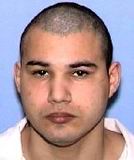
John Allen Rubio
Murderer Robert Martines Perez
Murderer · USA · 1994
Name: Robert Martines Perez · Other name used in proceedings: Robert Martinez P…
15 victims
Robert Martines Perez
Murderer · USA · 1994
Name: Robert Martines Perez · Other name used in proceedings: Robert Martinez P…
15 victims
 Billy Frank Vickers
Murderer · USA · 1993
Billy Frank Vickers Vickers was executed by lethal injection in Texas on Januar…
14 victims
Billy Frank Vickers
Murderer · USA · 1993
Billy Frank Vickers Vickers was executed by lethal injection in Texas on Januar…
14 victims
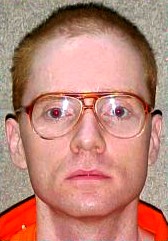 Robert Glen Jones
Murderer · USA · 1996
Defendant: Robert Glenn Jones (ADC#070566) · Co-defendant: Scott Nordstrom (ADC…
7 victims
Robert Glen Jones
Murderer · USA · 1996
Defendant: Robert Glenn Jones (ADC#070566) · Co-defendant: Scott Nordstrom (ADC…
7 victims
 Paul Luckman
Homicide · Australia · 1982
Robin Reid — Australian criminal and co-accused in the murder of 13-year-old Br…
1 victim
Paul Luckman
Homicide · Australia · 1982
Robin Reid — Australian criminal and co-accused in the murder of 13-year-old Br…
1 victim
 Damian Monroe Williams
Murderer · USA · 2000
Damian Monroe Williams (also known as Football) was born March 17, 1973. Willia…
1 victim
Damian Monroe Williams
Murderer · USA · 2000
Damian Monroe Williams (also known as Football) was born March 17, 1973. Willia…
1 victim
 Vincent Johnson
Serial killer · USA · 1999
Vincent Johnson was an American homeless crack addict. He was born January 6, 1…
6 victims
Vincent Johnson
Serial killer · USA · 1999
Vincent Johnson was an American homeless crack addict. He was born January 6, 1…
6 victims
 Carl Moseley
Murderer · USA · 1991
Carl Moseley was tried for first-degree murder. The State’s evidence included t…
2 victims
Carl Moseley
Murderer · USA · 1991
Carl Moseley was tried for first-degree murder. The State’s evidence included t…
2 victims
 Anthony Goodin
Murderer · USA · 1987
Anthony Goodin was connected with homicide in the death of Marlin Carpenter, a…
1 victim
Anthony Goodin
Murderer · USA · 1987
Anthony Goodin was connected with homicide in the death of Marlin Carpenter, a…
1 victim
 Scott Mink
Murderer · USA · 2000
Scott Andrew Mink (October 13, 1963 - July 20, 2004) lived with his elderly par…
2 victims
Scott Mink
Murderer · USA · 2000
Scott Andrew Mink (October 13, 1963 - July 20, 2004) lived with his elderly par…
2 victims
- Gender
- male
- Country
- USA
- Location
- Cameron County, Texas, USA
- Date of birth
- August 12, 1980
- Age at first offence
- 23
- Characteristics
- parricide, child killer, drug addict, mentally ill
- Victim profile
- Julissa Quezada, 3; John Esthefan Rubio, 1; and Mary Jane Rubio, 2 months (his children)
- Method of murder
- Smothering, stabbing and decapitating
- Date(s) of murder
- March 11, 2003
- Years active
- 2003
- Date of arrest
- Same day
- Status
-
Sentenced to death
Resentenced to death on July 27, 2010 after conviction and death sentence were overturned in 2007; sentenced to death on November 24, 2003
Background
John Allen Rubio was a Hispanic male born August 12, 1980. His education level was 11. He received his TDCJ number as 999462. His hair color was Black and his eye color was Brown. He was 05'06" and weighed 174.
The case involved the deaths of three children tied to John Allen Rubio and his common-law wife, Angela Camacho.
The offence
On March 11, 2003, in Cameron County, Texas, Rubio and co-defendant Camacho fatally stabbed and beheaded Rubio’s 2 month old daughter, his 1 year old son and Camacho’s 3 year old daughter.
Rubio was indicted on four counts of capital murder, including:
- one count related to the killing and decapitation of his three children: Julissa Quesada (age 3), John E. Rubio (age 14 months), and Mary Jane Rubio (age 2 months)
- and the other counts as reflected in the jury’s guilty verdict on four counts of capital murder (one charge for each child and one for the children together)
Rubio and Camacho told police they killed the children because they thought the children were possessed and they didn’t want them to grow up evil. The children were found dead at the family’s apartment after Rubio’s brother called police. The two girls had been stuffed into a plastic garbage bag, and the boy was on a bed. The bodies of three little children were described as having been found in three black trash bags pulled from a Brownsville apartment, and as dismembered.
Investigation
Rubio had given an original written confession and police reports and police report supplements.
Rubio’s videotaped statement to police included admissions that he killed his children and detailed the circumstances leading to the deaths. He described inhaling spray paint, believing in possession and demons, and describing actions taken to “cast” spirits out.
Arrest
Rubio’s brother called police after discovering what had happened at the apartment.
Trial
A jury sentenced Rubio to death four days after convicting him of capital murder for beheading his common law wife’s three children in 2003. It was the second time John Allen Rubio had been sentenced to death for the slayings.
The case came before Hidalgo County District Judge Noe Gonzalez. Before entering the sentence, Judge Gonzalez asked Rubio if there was anything he would like to say. Rubio said: “I’m sorry it all had to come to this,” and “I thank the jury for giving me a chance to show what I could.”
Jurors deliberated for about four hours. Jurors found Rubio guilty on four counts of capital murder—one charge for each child and one for the children together.
Rubio pleaded not guilty by reason of insanity, but the jury rejected that defense.
Rubio had previously been convicted and sentenced to death in 2003. A state appeals court overturned his conviction in 2007 because statements from the children’s mother, Angela Camacho, were wrongly allowed as evidence during the trial.
Camacho pleaded guilty and was serving a life sentence for her role in the slayings.
Sentencing
Rubio was sentenced to death on November 24, 2003. Jurors sentenced him to death by injection a day after convicting him of three counts of capital murder, one for each of the children he admitted killing on March 11.
In the penalty phase, Rubio delivered the request for the death penalty moments after prosecutors began their opening statements. The State District Judge Robert Garza asked Rubio: “Do you understand what you are asking for?” Rubio responded: “Yes sir,” and then:
Alfredo Padilla asked his client, “Is it your belief that God has forgiven you and you want to be with your children in heaven?”
Rubio agreed.
Prosecutor Paxton Warner said:
“Do not give this man the answer that he wants because he asked for it,” prosecutor Paxton Warner said. “What he’s trying to do now is what he’s done his entire life; he is trying to prey on you and prey on your emotions. This is not about remorse, ladies and gentlemen, once again this is all about him.”
After the 2003 conviction, Rubio pursued appeals. His conviction was overturned in 2007, and he was resentenced to death on July 27, 2010.
In the 2010 sentencing, Judge Noe Gonzalez said he had recognized that a lot of people went through what Rubio did, citing Rubio’s abusive and troubled childhood. Gonzalez also said: “I don’t know what happened, but I know what this jury found,” and “I have never seen a crime like this.”
Appeals
John Allen Rubio’s conviction and death sentence were overturned by the Texas Court of Criminal Appeals on September 12, 2007 in a 5-4 ruling.
The court said Rubio’s conviction and death sentence were improper because statements from his common-law wife Angela Camacho erroneously were allowed into evidence. The court said Rubio’s lawyers were not allowed to challenge Camacho’s statements by cross-examining her because she refused to testify. Three statements Camacho made to police—two in writing and one on videotape—were admitted. Camacho invoked her Fifth Amendment right not to testify in open court and was unavailable for cross-examination.
The appeals court held:
- The trial court erred in admitting Camacho’s statements.
- The primary issue at the guilt-innocence phase was Rubio’s state of mind because Rubio pleaded not guilty by reason of insanity to all four counts.
- The crucial evidence to rebut Rubio’s insanity contention came almost exclusively from Camacho’s statements.
The court described how Camacho’s statements contributed:
- Camacho’s second statement asserted that the reason the children were killed was because of money problems, rather than witchcraft.
- The court concluded Camacho’s statements likely contributed to the jury’s verdict of guilt such that the error clearly prejudiced Rubio’s case.
- The court sustained point of error one and reversed the verdict of guilt, remanding the cause to the trial court.
- The court did not rule on the other eleven points of error.
A dissent was written by Sharon Keller, with Lawrence Meyers dissenting from the majority ruling but not joining Keller’s opinion.
Rubio’s conviction and death sentence were reversed and the case was remanded for further proceedings.
Outcome
Rubio’s conviction and death sentence were overturned in 2007. He was resentenced to death on July 27, 2010.
Other details
Victims
The victims were:
- Julissa Quezada, age 3
- John Esthefan Rubio / John E. Rubio, age 1 / age 14 months
- Mary Jane Rubio / Mary Jane Rubio, age 2 months
Defendants and relationships
Rubio and his common-law wife Angela Camacho were co-defendants; Camacho pleaded guilty and was serving a life sentence for her role in the slayings.
Trial statements and quotations
Judge sentencing phase quotation (2003)
Rubio requested execution during the penalty phase. Judge Robert Garza asked: “Do you understand what you are asking for?” Rubio answered: “Yes sir.”
Prosecutor quotation (2003)
Prosecutor Paxton Warner said:
Camacho and police interrogations (2003 appeal opinion record)
The appeal record included verbatim excerpts from Rubio’s videotaped statement describing Julissa’s behavior and claimed possession. In the opinion:
[The appellant]: And she started talking in like, demonized - like, she was looking at me, like, weird.
[Police detective]: Give me an example of what she was saying.
A: Like (descriptive sound). She was, like, acting weird, like - I don't know. I can't do it like she did.
Q: She was only making sounds; she wasn't saying anything?
A: She was making sounds, and then she was, like - and she doesn't know English. I was, like (speaking Spanish).
Q: Who were you talking to?
A: To her. She was two people in one.
The opinion also included a question-and-answer sequence about Julissa’s communication:
[The appellant]: ...so I asked her, "Is it you, Grandma?" She said, "Yes." "What did you do with my daughter?" She goes, "She's right there," like she was inside my other girl, like Mary Jane. I said, "What do you mean? That's Mary Jane, that's not you." "No." I said to her, like, she was trying to give me - like tell me, but she couldn't say it, like, " Yo es ella, y ella es yo ."
[Police detective]: What she was trying to tell you, was that she was - A: She was in her body - Q: That your grandmother was in Julissa's body? A: Yes. Q: And Julissa's body was in - A: In Mary Jane's body. Q: - Mary Jane's body? A: Uh-huh.
The opinion included additional verbatim portions of Camacho’s videotaped statement:
[The Detective]: Were the children hungry?
[Camacho]: I would give them milk. To Julissa, I would ask her, and she would say that she was not hungry, that she was not hungry. She was unable to talk. She could not talk. She would just do like this, but she would not say anything. She couldn't say anything.
Q: And then what happened?
A: What happened? We decided the best thing to do would be to do what we did, because I would see that the children were suffering a lot.
Q: So they would not suffer?
A: Uh-huh.
Q: What type of suffering were the children having?
A: They could not sleep. They would wake up and they would be scared.
Q: Only that night?
A: No. They had been like that for a while.
It also included verbatim questions and answers about why Camacho said they were going to go away:
[Police Sergeant]: You said that you were going to go away. Why is it that you said you were going to go away?
[Camacho]: Because we were afraid. I didn't want to lose my husband again, since he had gone to jail before. I was afraid because I had never been in jail before.
Q: You felt like you were going to jail?
A: Yes, because we did something wrong.
Q: And your husband knew that he had done wrong?
A: Yes, we knew.
Q: Both of you knew that you had done wrong. What did you do that was wrong?
A: We did wrong in killing the children, in the way - in that way, with the government. I only thought that the children were not going to suffer anymore. That's the only thing I had in my mind. I didn't have in mind that we were going to jail until the end.
Q: Thank you.
Camacho quotation about money problems (2003 appeal opinion record)
Camacho’s second statement included verbatim content:
“I would like to start saying that yesterday I told the detectives that witchcraft was the reason that John and I killed our children. That was not true. The reason that we decided to kill the children was because of money problems.”
The opinion also quoted Camacho telling the jury:
“The reason that we decided to kill the children was because of money problems.”
And later in the opinion:
“known” they had “done wrong.”
Mental health and drug use assertions in trial proceedings
Psychiatrists testifying in the trial said Rubio’s chronic drug use, especially his inhaling of spray paint, contributed to the murders. Prosecutors suggested it was an overall life of depravity, including prostitution, drugs and a filthy apartment, that led to a decision to kill the children.
Prosecutors described Rubio’s position regarding mental illness, including testimony from psychiatrist Mary Anderson that his inhalation of spray paint over time may have created a psychotic state, but that he knew his actions were wrong.
Rubio’s attorneys argued he was legally insane at the time the children were killed and described his background of poverty, substance abuse and witchcraft.
Evidence of housing, finances, and events mentioned in confession excerpts
Rubio described financial difficulties including rent payments, money problems, food stamp benefits being cut off, and taking the children to a local homeless shelter the day before the murders.
He described interactions at the apartment the evening before, including his mother coming to the front door, and another tenant Lorena with a friend staying approximately twenty minutes.
He also described killing hamsters by spraying them with hairspray and flushing them down the toilet, followed by statements about Julissa acting as if something was possessing her.
Other participants and legal proceedings mentioned
A legal analyst John Blaylock and court proceedings about disqualifying the District Attorney’s Office were discussed in connection with Rubio’s ongoing appeals and hearings, including mention of an attorney, Al Padilla.
A hearing was scheduled to decide change of venue.
In the proceedings described, Rubio had been found competent to choose his attorney for the appeal.
Angela Camacho sentence and plea
Angela Camacho pleaded guilty to three counts of capital murder and received three concurrent life prison sentences instead of the death penalty. Her attorneys failed to prove she was mentally retarded and therefore ineligible for the death penalty, but the plea agreement spared her. She was eligible for parole in 40 years.

Spotted an error, or have more information about this case?