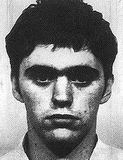
Paul Luckman
Homicide Donato Anthony Corbo
Homicide · Australia · 2011
Name: Donato Anthony Corbo · Age at time of incident: 39 · 2:30 a.m. — April 29…
3 victims
Donato Anthony Corbo
Homicide · Australia · 2011
Name: Donato Anthony Corbo · Age at time of incident: 39 · 2:30 a.m. — April 29…
3 victims
 Huan Yun Xiang
Homicide · Australia · 2002
Huan Yun “Allen” Xiang was a commerce student at Monash University. He opened f…
2 victims
Huan Yun Xiang
Homicide · Australia · 2002
Huan Yun “Allen” Xiang was a commerce student at Monash University. He opened f…
2 victims
 Matthew Milat
Homicide · Australia · 2010
Matthew Milat was convicted as a teenage relative of serial killer Ivan Milat.…
1 victim
Matthew Milat
Homicide · Australia · 2010
Matthew Milat was convicted as a teenage relative of serial killer Ivan Milat.…
1 victim
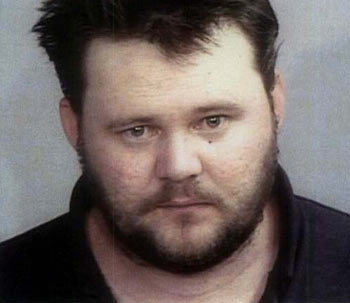 William Thomas Clare
Homicide · Australia · 2003
William Thomas Clare was a convicted killer who was also described as a paedoph…
1 victim
William Thomas Clare
Homicide · Australia · 2003
William Thomas Clare was a convicted killer who was also described as a paedoph…
1 victim
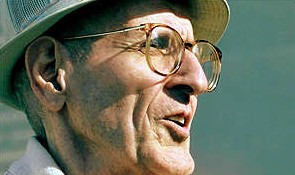 Jack Kevorkian
Homicide · USA · 1990
Jack Kevorkian (born May 26, 1928) was a controversial American pathologist. He…
130 victims
Jack Kevorkian
Homicide · USA · 1990
Jack Kevorkian (born May 26, 1928) was a controversial American pathologist. He…
130 victims
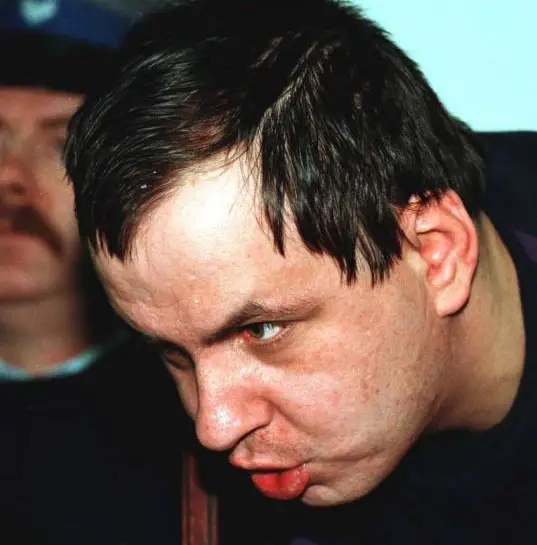 Leszec Pekalski
Homicide · Poland · 1984
1984–1992 — Leszek Pękalski was believed to have killed at least 17 people. · 1…
17 victims
Leszec Pekalski
Homicide · Poland · 1984
1984–1992 — Leszek Pękalski was believed to have killed at least 17 people. · 1…
17 victims
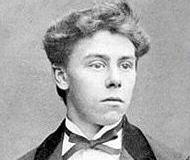 Hendrik Jut
Murderer · Netherlands · 1872
Hendrik Jut (July 19, 1851 – June 12, 1878) was a murderer from The Hague. He k…
2 victims
Hendrik Jut
Murderer · Netherlands · 1872
Hendrik Jut (July 19, 1851 – June 12, 1878) was a murderer from The Hague. He k…
2 victims
 Michael Swango
Serial killer · USA · 1981
Michael Swango (Joseph Michael Swango) was a physician and American serial kill…
60 victims
Michael Swango
Serial killer · USA · 1981
Michael Swango (Joseph Michael Swango) was a physician and American serial kill…
60 victims
 Robert Durst
Homicide · USA · 2001
Robert Alan "Bobby" Durst (born 1943) was a son of the late New York real estat…
1 victim
Robert Durst
Homicide · USA · 2001
Robert Alan "Bobby" Durst (born 1943) was a son of the late New York real estat…
1 victim
 Jacob Robida
Murderer · USA · 2006
Jacob D. Robida (June 13, 1987 – February 5, 2006) was a Massachusetts teenager…
2 victims
Jacob Robida
Murderer · USA · 2006
Jacob D. Robida (June 13, 1987 – February 5, 2006) was a Massachusetts teenager…
2 victims
 James Butler
Murderer · 2004
James Butler Jr. (born December 18, 1972 in Harlem, New York) was a former Amer…
1 victim
James Butler
Murderer · 2004
James Butler Jr. (born December 18, 1972 in Harlem, New York) was a former Amer…
1 victim
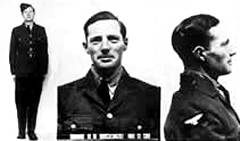 Gordon Cummins
Spree killer · United Kingdom · 1942
Gordon Frederick Cummins was called “The Count” due to his claims of noble birt…
4 victims
Gordon Cummins
Spree killer · United Kingdom · 1942
Gordon Frederick Cummins was called “The Count” due to his claims of noble birt…
4 victims
- Gender
- male
- Country
- Australia
- Location
- Queensland, Australia
- Date of birth
- November 1, 1964
- Age at first offence
- 18
- Characteristics
- juvenile (17), kidnapping, rape, torture
- Victim profile
- Peter Aston, 13
- Method of murder
- Buried alive
- Date(s) of murder
- May 4, 1982
- Years active
- 1982
- Date of arrest
- 2 days after
- Status
-
Life imprisonment
Sentenced to life in prison on November 26, 1982
Case record: Paul Luckman (later Nicole Louise Pearce)
People
- Robin Reid — Australian criminal and co-accused in the murder of 13-year-old Brisbane schoolboy Peter Aston in 1982.
- Paul Luckman — Australian military personnel and co-accused in the sexual assault, torture and murder of 13-year-old Brisbane schoolboy Peter Aston in 1982.
- Nicole Louise Pearce — the name Paul Luckman later adopted by deed poll.
- Peter Aston — 13-year-old Brisbane schoolboy; the victim who was kidnapped, sexually assaulted, tortured, and murdered in 1982.
- Terry Ryan — school friend of Peter Aston who was kidnapped and sexually assaulted; he later provided details to police.
- Robin Reid’s accomplice — identified in the case as Paul Luckman.
- Michael — Peter Aston’s brother.
- Belita Ryan — Terry Ryan’s mother.
- Sergeant Wayne King — Queensland Criminal Investigation Branch.
- Detective Senior Constable Robert Guteridge — Queensland Criminal Investigation Branch.
- Senior Constable Mark Ferguson — Tweed Heads Police Station.
- Sergeant Jack Harvison — Glen Innes Police Station.
- Senior Constable Goodall — Glen Innes Police Station.
- Constable Vincent Towns — Tenterfield Highway Patrol.
- Detective Sergeant Bob Jackson — Murwillumbah Police.
- Detective Ian “Spiro” Spiers — Murwillumbah Police.
- Detective Superintendent Mark Jackson — Brisbane Homicide Squad.
- Detective Spears — named in connection with searching the missing soldiers’ rooms.
- Detective Sergeant Peter Dunston — interviewed Robin Reid.
- Mark Ferguson — interviewed Robin Reid.
- Detective Sergeant Eric Strong — interviewed Paul Luckman.
- Detective Eric Grimmond — interviewed Paul Luckman from Casino.
- Magistrate Brian Hanrahan — presided over the committal hearing at Tweed Heads Court.
- Mr. Justice Adrian Roden — presided over the trial in the Sydney Supreme Court.
- Crown Prosecutor David Shillington QC — handled the Crown case.
- Professor Paul Wilson — criminologist and Dean of Bond University who commented on Paul Luckman’s release in 1999.
- Peter Hoskins — young soldier who provided police with information about a prior conversation involving Reid and Luckman.
- Private Robert Ponzetti — army private who was awakened and had his car stolen during the getaway.
- Private Paul Luckman — 17-year-old at the time of the getaway incident.
- Corporal Robin Reid — 34-year-old at the time of the getaway incident.
- Police officers and detectives named in connection with searching, interviews, and scene examination.
- Dr. John Follent — performed a post-mortem on the victim later that day at the Tweed Heads District Hospital.
- Scientifc investigator — took pictures during the scene tour with Reid.
- Tactical Response Group — called in to monitor everyone entering the courthouse during the committal hearing when Peter Aston’s brother went missing armed with a rifle.
Background
Robin Reid was born in Hampshire, England, and migrated to Australia with his family in 1961, where they settled in Queensland. Paul Luckman was born in Melbourne on 1 November 1964 and grew up in a broken home.
Robin Reid left school at 14 and worked as a laborer, spray-painter and salesman. He developed a passion for bows and arrows and knives of all descriptions and joined the army in 1972, eventually reaching Enoggera Army Camp where he was put in charge of assignments for privates and was known around the base as “Head-job Bob”.
Paul Luckman joined the army at 17 and within three months was transferred from Melbourne to Enoggera Army Camp. Upon arrival at Enoggera, Luckman was sent to Corporal Robin Reid for allocation of accommodation, and Reid arranged for Luckman to move in with him; the two bonded and were described as being inseparable after that point.
After Reid and Luckman’s capture, Peter Hoskins came forward and told police about a conversation he had with Reid and Luckman on the night of 18 April, a fortnight before Peter Aston was murdered. Hoskins said the conversation focused on abduction and torture and included discussion by Reid of kidnapping and torturing and sacrificing victims on a stone altar, cutting and burning victims with cigarette butts, producing knives, and demonstrating technique to Luckman in a headlock. Hoskins and the pair then went to a late-night movie.
Two days before Peter Aston was murdered, the pair had picked up another hitchhiker, John Bruce. Hoskins-related narrative stated that Reid and Luckman blindfolded and handcuffed him at gunpoint, savagely beaten him, and dropped him back at the spot where they had picked him up. Reid said he still had control of his reality and emotions in relation to John and that they let him go, while saying that the fantasies were getting stronger and that there was no feeling or satisfaction when he set out to kill Peter.
The offence
On the morning of 4 May 1982, Brisbane schoolboy Peter Aston decided to hitchhike to his hometown of Melbourne to join his brother. Peter’s school friend Terry Ryan agreed to keep him company until he reached the Gold Coast and then planned to go back home.
The boys caught the train to Beenleigh and bought some clothes before hitchhiking south down the Gold Coast highway. They encountered a yellow 4WD Daihatsu with its occupants identified as Reid and Luckman. The boys were threatened at knife and gunpoint by the two men, and they were driven over the Queensland/New South Wales border to Kingscliff, where they were forced out of the vehicle and down a secluded beach track.
Reid and Luckman then bound, sexually assaulted, and savagely beat the two boys. Terry Ryan was also forced by the two men to bash and assault his friend Peter. Peter Aston was stabbed, tortured and eventually buried alive. The narrative stated that Terry Ryan reasoned with the attackers and they agreed to drive him home.
While Terry Ryan was being driven home, he told police that the attackers said they were Satan worshippers and that they had to do it “[kill Peter Aston] for the sacrifice.”
In the narrative of Terry Ryan’s police statement, Terry described the sequence of events including being made to lay on the ground, being thumb-cuffed behind his back, watching Peter being knocked about and kicked, and being forced to perform sexual acts, including sucking Peter off and eating Peter’s pubic hair. Terry also described stabbing and shovelling actions and burial of Peter.
In Robin Reid’s statement to police, Reid said that the boys told them they’d stolen cigarettes and that the clothes were stolen. Reid said he remembered hitting Peter “I don’t know how many times or how severe but I only used my hand.” Reid said the little one asked to join and that he said “Yes,” and described the little one burning Peter with a lighted cigarette, punching holes in Peter’s ears, kicking Peter, and that Reid believed he stabbed the big one once, while Paul hit Peter with a shovel and then stabbed him and that all three helped bury him because they were told to get rid of the body.
In Paul Luckman’s statement to police, Luckman described picking up the two boys, handcuffing them and holding them at knife and gunpoint, driving them down a dirt track, and walking them about 20 meters to a patch of sand and dirt where Peter’s clothes were ripped off and described crushing of Peter’s genitals. Luckman said Reid shaved Peter around his genitals and told Terry Ryan to suck him off, and described Terry turning around and asking “Can I join in?” and receiving “Yes”. Luckman described taking Peter inland, digging a grave with a shovel, and later said he cut Peter’s throat approximately four millimeters deep and stabbed him in the shoulder, with further stabbing described and Peter dying after spitting out blood and that Bob dug a shallow hole and put Peter in there and covered him up.
Investigation
Terry Ryan immediately told his mother, Belita Ryan, who drove him to the police station to report the kidnapping and murder of his friend.
In the early hours of May 5, Terry retold his story to Sergeant Wayne King and Detective Senior Constable Robert Guteridge of the Queensland Criminal Investigation Branch. At approximately 4:45 that morning, the detectives drove Terry and his mother over the border into New South Wales to Tweed Heads Police Station, where they were joined by Senior Constable Mark Ferguson.
The narrative stated that on the boy’s instructions, police examined a garbage bin in nearby Foux Park and then examined the sink, walls, urinal and cubicle of a local public toilet. Police then proceeded south along the Coast Road until Terry told them to stop at a bush track leading east toward the ocean.
A bush track search did not initially locate the described grave, but during the search of a fourth track, detectives found fresh tire tracks, a roughly cleared area, and then a grave-sized mound of earth covered with small tree branches and twigs broken from nearby trees.
Police officers examined the mound and saw spots of blood in the sand and a large, wet, blood-soaked section in the center. The narrative stated that they found a dark sock and a knife in a sheaf and numerous chewed matchsticks at the gravesite.
A post-mortem on Peter Aston performed later that day by Dr. John Follent at the Tweed Heads District Hospital described multiple lacerations and injuries including a depressed fracture of the skull with underlying brain damage, bruising and lacerations to areas of the head and face, a partial dislocation between cervical vertebrae and fractures of vertebrae, a large stab wound to the right side of the throat with severing of the internal jugular vein and external arteries, cigarette burns, stab wounds to the shoulder and left side of the abdomen, shallow lacerations and bruising to the right loin and flank, bruising to the left buttock, scrotum and penis, hair missing from the pubic area, stab wounds to legs below the knees, and numerous other abrasions, lacerations and bruises. The post-mortem stated that sand was present in the nose, mouth, trachea and bronchial tract, most likely caused by inhalation, and that it was likely Peter Aston, after being bashed and tortured, was buried alive and died of asphyxiation.
In the narrative of investigative searches, further evidence and weapons were found in the pair’s stolen car. At the army base, police conducted a search of the room shared by Robin Reid and Paul Luckman. Police took possession of swords, spears and counted 37 knives of different shapes and sizes. Further search among gay literature and Satanism books revealed a photograph album containing clusters of men’s pubic hair taped onto pages and magazine pictures of naked and semi-naked youths tied up or in bondage positions.
Police also found dozens of books on Satanism including the Devil’s Prayer Book, the Satan’s Bible and the History of Witchcraft, as well as a notebook containing handwritten essays about leading a boy down a bush track at knifepoint and then holding him in a headlock with a knife at his throat while he undressed him.
During the interviews, police reported that Reid and Luckman told conflicting stories and tried to blame each other for the slaying and alleged the involvement of Terry Ryan.
Arrest
Robin Reid and Paul Luckman attempted to escape in a car they stole from a fellow army private at the Enoggera army base. They were apprehended on the New England Highway.
The narrative stated that acting on an anonymous telephone call informing police that the vehicle might belong to two soldiers, 17-year-old Private Paul Luckman and 34-year-old Corporal Robin “Bob” Reid, who answered the descriptions and were based at the Enoggera Army Camp, a squad of New South Wales and Queensland detectives descended upon room 29 of Barrack Block H9 to find the suspects gone.
Detective Sergeant Bob Jackson, Detective Ian “Spiro” Spiers, Detective Superintendent Mark Jackson, and other Queensland detectives were the first officers to arrive at the army camp. In the nearby car park, they found the Daihatsu 4WD. Inside the car, detectives removed three knives and a baton.
The narrative stated that after searching the rooms at the army base, news came through that Reid and Luckman were detained at Glen Innes Police Station.
Constable Vincent Towns responded to a call. Towns saw a blue Holden Sunbird traveling south and followed it until it stopped 13 kilometers north of Deep Water. After a roadblock near Deep Water, Reid and Luckman were arrested at 12.10 p.m. that day, with Reid coming out with hands in the air and Luckman found cowering on the front seat.
Trial
Reid and Luckman were formally charged with the murder of Peter Aston. Reid was also charged with threatening to inflict bodily harm on Terry Ryan.
They were refused bail and taken into custody. A committal hearing was held at Tweed Heads Court on 4 August 1982 before Magistrate Brian Hanrahan. The narrative described the committal hearing as involving massive public outrage, media coverage and death threats.
The case was transferred to the Sydney Supreme Court with a jury of three women and nine men. The trial began on 8 November 1982. Paul Luckman pleaded “not guilty” and Robin Reid pleaded “not guilty by reason of insanity.”
The narrative stated that because of the injuries to Peter Aston, the Crown Prosecutor David Shillington QC elected not to show photographs of the deceased to the jury, and the judge agreed with this strategy, stating that the jury should be spared the visual horror and instead hear the brutality from witnesses.
The trial focused on which defendant played the major role. Luckman attempted to lay blame at Reid’s feet, and Reid’s defense was described as insanity involving claims regarding bisexuality, army pressure, and an occult obsession causing voices.
Sentencing
On 26 November 1982, the jury delivered a verdict of guilty for both accused.
Mr. Justice Roden sentenced Reid and Luckman to life imprisonment. The narrative stated that Roden said their crime was “one of the most brutal and callous crimes ever to come before the courts in this state.”
Outcome
- Paul Luckman received a life sentence for the murder of Peter Aston.
- Paul Luckman and Robin Reid were convicted by the jury on 26 November 1982.
Aftermath
In 1990, Paul Luckman, described as considering himself to be female, changed his name by deed poll to Nicole Louise Pearce, commenced daily hormone treatment to grow breasts and later underwent a full sex-change operation in prison. The narrative stated that in the early nineties she was confined at Cooma near the Snowy Mountains in Southern New South Wales in a jail for male sex offenders and that in the early 1990s she was known by the name Pearce.
On 26 October 1999, she was released from the Kirkconnell Correctional Centre, a minimum security male-only facility in inland New South Wales, and the narrative stated that if surgery was ever carried out it was done after confinement at Cooma, probably after confinement at Kirkconnell.
Robin Reid was kept in protective custody for his own safety. Reid applied for re-determination of his sentence on 26 November 1998 and was re-sentenced to life imprisonment with a non-parole period of 24 years, making him eligible for parole in 2006. The narrative stated that in March 2010, Reid’s third parole application was rejected.
The narrative described Terry Ryan as suffering lasting effects and being assaulted and spat upon, and said he attended the Wilson Youth Hospital for psychiatric assessment after the trial. It stated that Terry Ryan had been in and out of prison for a variety of offences including assault and car theft, and that a pre-sentencing hearing recorded anti-authoritarian behavior, lack of anger management and alcohol and drug abuse, and reported that his mother said he still suffered from nightmares and flashbacks.
The narrative included commentary by Professor Paul Wilson about Paul Luckman’s release in 1999:
“I had severe reservations about him then, being released this early. Although it has been 15 years since I have seen him, my view then was that it was very unlikely he would change. Not so much the pedophilic tendencies, more the psychopathic tendencies that worried me. He was someone that was easily manipulated and enjoyed violence.”
Other details
Scene and evidence details (as described in the narrative)
- Police found a dark sock and a knife in a sheaf at the grave-sized mound.
- Chewed matchsticks were found at the gravesite.
- The narrative stated that investigators found sand in Peter Aston’s nose, mouth, trachea and bronchial tract and that it was most likely caused by inhalation.
- Terry Ryan said: “They got everything they had, put it in the car and drove off, and me too, and they drove me back home. While we were driving they told me that they were Satan worshippers and they had to do it [kill Peter Aston] for the sacrifice.”
- Terry Ryan said: “We are going to kill someone tonight. If not, it will be you.” and also described: “Can I join in? … It was just going on dark but the moon was very full and I could see exactly what was going on.”
- Luckman’s statement to police included: “We are going to kill someone tonight. If not, it will be you.”
- Reid’s statement to police included: “Can I say at this stage that I deeply regret doing it. It’s not something that I’m proud of and I am very sorry for my actions in this murder. It’s murder, isn’t it? I’ll say murder.”
Getaway (car theft and subsequent apprehension)
The narrative described the getaway in the early hours of May 6: Private Robert Ponzetti was awakened by someone shaking his leg. The narrative identified the offenders as 17-year-old Private Paul Luckman and 34-year-old Corporal Robin Reid, who took Ponzetti’s car by threatening him with a knife. Luckman later told Ponzetti: “That kid that was killed on the Gold Coast. That was us.” and Reid admitted: “We just did it for kicks,” and later: “We will park the car in a no-standing place so the police will find it,” and: “We are going to leave a note to notify your insurance company.”
After arriving in the Tenterfield area, the narrative stated that Luckman gave Ponzetti money and items including cigarettes and a lighter and told him to get out a few kilometers short of Tenterfield, after which Ponzetti went to a police station and told police what had happened.
Jurisdiction and courts named
- Tweed Heads Court — committal hearing held on 4 August 1982.
- Sydney Supreme Court — trial held with a jury of three women and nine men.
- Glen Innes Court — Reid and Luckman appeared following formal charges; the narrative stated the bail refusal and remand in custody and described a scene tour.
- Grafton — the narrative stated the case was transferred to the Sydney Supreme Court after being committed for trial in the New South Wales Supreme Court in Grafton.
Media depiction mentioned
The narrative mentioned that the murder of Peter Aston was depicted in a Crime Investigation Australia episode titled “Buried Alive: Luckman and Reid”.
Spotted an error, or have more information about this case?