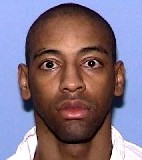
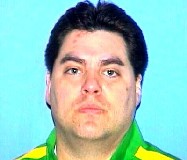
Travis Runnels
Murderer Robert Martines Perez
Murderer · USA · 1994
Name: Robert Martines Perez · Other name used in proceedings: Robert Martinez P…
15 victims
Robert Martines Perez
Murderer · USA · 1994
Name: Robert Martines Perez · Other name used in proceedings: Robert Martinez P…
15 victims
 Billy Frank Vickers
Murderer · USA · 1993
Billy Frank Vickers Vickers was executed by lethal injection in Texas on Januar…
14 victims
Billy Frank Vickers
Murderer · USA · 1993
Billy Frank Vickers Vickers was executed by lethal injection in Texas on Januar…
14 victims
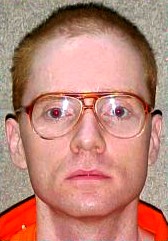 Robert Glen Jones
Murderer · USA · 1996
Defendant: Robert Glenn Jones (ADC#070566) · Co-defendant: Scott Nordstrom (ADC…
7 victims
Robert Glen Jones
Murderer · USA · 1996
Defendant: Robert Glenn Jones (ADC#070566) · Co-defendant: Scott Nordstrom (ADC…
7 victims
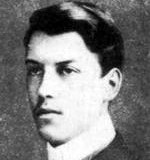 Horace Rayner
Murderer · United Kingdom · 1907
Horace Raynor was sentenced to death for the killing of William Whiteley. After…
1 victim
Horace Rayner
Murderer · United Kingdom · 1907
Horace Raynor was sentenced to death for the killing of William Whiteley. After…
1 victim
 Gesche Gottfried
Serial killer · Germany · 1813
Gesche Gottfried was born Gesche Margarethe Timm (6 March 1785 - 21 April 1831)…
15 victims
Gesche Gottfried
Serial killer · Germany · 1813
Gesche Gottfried was born Gesche Margarethe Timm (6 March 1785 - 21 April 1831)…
15 victims
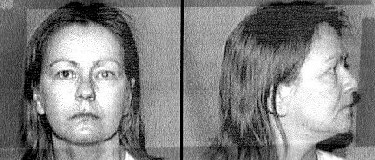 Cathy Lynn Henderson
Murderer · USA · 1994
Cathy Lynn Henderson was convicted of capital murder and sentenced to death for…
1 victim
Cathy Lynn Henderson
Murderer · USA · 1994
Cathy Lynn Henderson was convicted of capital murder and sentenced to death for…
1 victim
 Leonard J. Young
Murderer · USA · 1999
Leonard J. Young met a woman during the 1990 Christmas holidays. The two became…
2 victims
Leonard J. Young
Murderer · USA · 1999
Leonard J. Young met a woman during the 1990 Christmas holidays. The two became…
2 victims
- Gender
- male
- Country
- USA
- Location
- Potter County, Texas, USA
- Date of birth
- December 17, 1972
- Age at first offence
- 31
- Characteristics
- rape
- Victim profile
- Stanley A. Wiley, 38 (prison employee)
- Method of murder
- Cutting his throat
- Date(s) of murder
- January 29, 2003
- Years active
- 2003
- Date of arrest
- Same day
- Status
-
Sentenced to death
Sentenced to death on November 16, 2005
Identifiers
Travis Runnels (TDCJ Number: 999505). Name recorded as Travis Trevino Runnels.
Background
Travis Trevino Runnels was received with TDCJ number 999505. His date of birth was 12/17/1972. His education level was 11.
Runnels had prior prison records in Texas Department of Criminal Justice:
- TDCJ# 081244 on a five year sentence for burglary of a building from Dallas County.
- TDCJ# 782388 on a seventy year sentence for aggravated robbery from Dallas County.
Runnels was serving a 70-year term from Dallas County for aggravated robbery at the time of the capital murder.
The offence
On 01/29/2003 in Potter County, while incarcerated in the TDCJ Clements Unit, Runnels fatally stabbed Stanley Wiley, a forty year old white male who was working as an Industrial Supervisor in the unit boot factory. Wiley was a supervisor at an Amarillo prison shoe factory.
The Court of Criminal Appeals of Texas described the capital offense as occurring on January 29, 2003, while Runnels was serving time in prison for aggravated robbery, and that he killed Stanley Wiley, a supervisor at the prison boot factory. As a result, the State charged Runnels with capital murder.
Runnels did not enjoy working as a janitor at the prison boot factory. On the morning of the day of the murder, he expressed anger at the fact that he had not been transferred to being a barber as he had requested. He told fellow inmate Bud Williams that he was going to be “shipped one way or another” and that “he was going to kill someone.”
Runnels said that he would kill Wiley if Wiley said anything to him that morning. Runnels told another inmate, William Gilchrist, that he planned to hold the boot-factory plant manager hostage in the office after the other correctional officers had left. Finally, after Runnels had arrived at the boot factory, he told fellow inmate Phillip Yow that he was going to do something.
During the first shift at the boot factory, Runnels approached Wiley, raised a knife, tilted Wiley's head back, and cut his throat. Afterward, Runnels wiped the knife with a white rag and walked back toward the trimming tables.
Later, when Yow asked Runnels why he had attacked Wiley, Runnels said, “It could have been any offender or inmate, you know, as long as they was white.” In response to Yow's explanation that Runnels could get the death penalty if Wiley died, Runnels responded, “A dead man can't talk.”
Wiley did die from the injury.
The injury was later determined to be a twenty-three centimeter long neck wound that transected the external carotid artery and the internal jugular vein and extended in depth to the spine. A medical examiner found that the force required to inflict the wound was “moderate to severe.”
Investigation
Amarillo.com reported that Stanley A. Wiley was taken to the infirmary at the Clements Unit of the Texas Department of Criminal Justice and then transferred by ambulance to a hospital in Amarillo. A prison spokesman, Larry Todd, said from Austin that there were several eyewitnesses to the assault and that the State planned to file murder charges as quickly as the evidence was documented. Larry Todd said: “We have several eyewitnesses to the assault and we plan to file murder charges as quickly as the evidence is documented.”
Todd also described that investigators were gathering information and conducting both a criminal investigation and an administrative review. Todd said: “We have numerous investigators on the scene talking to witnesses and gathering information,” and: “We are conducting a criminal investigation as well as an administrative review.”
The prison, built in 1990 and with a capacity of over 4,000 inmates, was placed on lockdown.
Todd said investigators were still attempting to determine how the inmate had access to the weapon. Todd said: “We are still attempting to determine how the inmate had access to the weapon, which may have been a knife used by other inmates who trim the shoes.” Todd further explained: “It's very common those inmates are assigned the cutting tools while they are working but obviously they turn them back in at the end of the day's work.”
Arrest / custody status at time of offence
At the time of the capital murder, Runnels was incarcerated in the TDCJ Clements Unit. He was being questioned in the attack.
Amarillo.com reported that Runnels was not eligible for parole until 2025.
Trial
Plea
Runnels pled guilty.
In the Court of Criminal Appeals of Texas decision, the court stated: “Appellant pled guilty.” It further stated that, “Pursuant to the jury's answers to the punishment special issues prescribed by law, the trial judge sentenced appellant to death.”
Jury proceedings and judge’s colloquy
After the indictment was read, the trial court asked Runnels for his plea. Runnels replied that he pleaded guilty. Immediately after that response, the trial court sent the jury out of the room and engaged in the following colloquy:
THE COURT: Mr. Runnels, you have entered a plea of guilty to the offense charged in the indictment before this jury. Several things come into play at this point that I need to visit with you about. First of all, because this is a case in which the State has indicated it's - that it's seeking the death penalty, it's not a situation where any jury trial can ever be waived. You understand that?
MR. RUNNELS: Yes, sir.
THE COURT: And that's why the jury is here. However, your - your plea of guilty before the jury, you need to understand, sir, that if you persist in that plea and I find that that plea is - is voluntary and that you have done it with full knowledge of the results of your plea of guilty, I'll instruct the jury to return in accordance with your plea a finding of guilt. Do you understand that?
THE COURT: That instruction will preclude them from even having the opportunity to consider whether the State has met its burden of proof. Your plea of guilty in this case - and this doesn't differ from any other criminal case - will be all the evidence that's necessary to support a finding of guilt. Do you understand that?
THE COURT: Even though that's true, the State no doubt will put on much of the same evidence that it would have anyway in order to give the jury an idea of what this case is all about. Do you understand that?
THE COURT: But there will not be an issue of your guilt or innocence. Do you understand that?
THE COURT: You understand that you still maintain all the rights and privileges that you enjoy under the constitution and laws of the State of Texas and of the United States, but the -- with regard to the jury being able to consider guilt/innocence stage of this trial, that will not be one of them? You still have the right against self-incrimination, you know. You're not going to have to testify in this case. And I only tell you that because there have been cases in the past where people have said, "Well, my entering a plea of guilty to the jury is really, in effect, testifying, and nobody told me that I didn't have to do that." And our court of criminal appeals has said, "No, that's not the case," but -- under Texas law and the United States constitutional law, but I'm telling you that just to give you a heads up on that. All right? And you're still going to be able to, you know, call witnesses of your own, cross-examine witnesses, have all the witnesses testify in front of you. Nothing is going to change in this trial with regard to all of your rights other than the ability of the jury to require the State -- and your ability to require the State to prove their case beyond a reasonable doubt with regard to your guilt or innocence. Do you understand what I've told you?
THE COURT: Knowing that your plea of guilty, if I receive that, is going to result in you being found guilty of this case, and knowing that the State is seeking the death penalty in this case, do you really want to do this?
THE COURT: Okay. The State is still going to, as you've heard us discuss time and time again for days, they have the burden of proof with regard to the first special issue, and there will still be evidence entertained with regard to the second special issue, that being the mitigation issue. You understand that?
THE COURT: So the only thing that's going to change is that I will have to tell this jury that they must return a finding of guilt if you persist in this plea. Is that what you want to do? Do you want to persist in it?
THE COURT: Okay.
[DEFENSE COUNSEL]: Your Honor, I have a document I wish to file for the Court. I'll provide a copy, unsigned copy, but a copy to the district attorney.
Mr. Runnels, this affidavit that I've been handed says that you, having discussed the strategic and tactical aspects of a plea of guilty in this case, freely and voluntarily decided to enter this plea of guilty, and you have signed that. Is that what you fully intended to do?
THE COURT: All right. I will file that, then, among the papers of this cause.
The submitted affidavit, signed by appellant on October 26, 2005, stated: “I, TRAVIS TREVINO RUNNELS, having discussed the strategic and tactical aspects of a plea of guilty in this case, I [sic] have freely and voluntarily decided to enter a plea of guilty.”
After appellant pleaded guilty and the jury was returned to the courtroom, the trial court made the following remarks:
THE COURT: Members of the jury, the defendant has entered his plea of guilty to the charge contained in the indictment before you. I have talked with him and he persists in his plea of guilty. I have found that that plea is freely and voluntarily entered into, and because of that, at the conclusion of this case, I will instruct you to return a finding of guilty of the charges contained in the indictment in this case. That does not preclude anything about the presentation of the evidence. The State will still call witnesses, as will the defense , with regard to other factors in this case. Then both sides are interested in you having a full and complete opportunity to know everything that you can about this case in order to make an intelligent decision with regard to those special issues that we discussed that will still be put to you. Okay. Do you have any witnesses here that are to be sworn? (Pause)
THE COURT: Okay. If you folks who intend to testify this morning will please raise your right hands. (Witnesses sworn)
THE COURT: Okay. If you would step back outside, please, we'll call you in when we need you. Do not discuss anything about the case among yourselves or with others.
Defense counsel invoked the Rule, and counsel stated: “Your Honor, for the record, we will invoke the Rule. Our witnesses are under subpoena for the 31st, and they will be instructed as to the Rule.”
The record reflected that Runnels did not testify during the trial; a later juror testimony stated: “No, the defendant didn't testify during the trial.”
Trial court remarks on reasonable doubt
The trial court had made remarks during voir dire, and appellant contended they trivialized the State's burden. The decision set out the discussion that occurred:
Our laws require that every element of an offense be set out in the indictment, the written instrument upon which we go to trial. And that's the State's burden, is to prove those things to the jury beyond a reasonable doubt, to your satisfaction, beyond a reasonable doubt. There is no definition in the law of reasonable doubt. For several years, our -- back a while back, our legislature tried to -- Court of Criminal Appeals tried to define for us what reasonable doubt might be, and then ultimately discovered it's a really fluid kind of thing. It's what you personally believe. Most people agree, though, and I think these lawyers will probably tell you, that it's something way up there high. It's not a hundred percent sure, because you can't be a hundred percent sure of anything unless you were a witness to something that occurred, and even then you might have some question about it. But if you're a witness in the case, then you can't sit and judge a case, so we can't get to that point. We've got these different levels of burdens of proof of folks who bring lawsuits. And in civil cases, it's a preponderance of the evidence, which simply means the greater weight of the credible evidence presented to you. You know, more likely than not would be a way to look at that. The second level we have is called clear and convincing. That's a civil burden, too, but it's up a little step higher. It has to do with things like termination of parental rights and whether something in a divorce case is separate property as opposed to the presumption that all property on hand is community property. It's a higher burden. And even higher still is this reasonable doubt. And we all kind of agree that reasonable doubt is something that really makes you stop and think about and consider, and it needs to be something that you would -- the level you rise to to make important decisions in your life.
The Court of Criminal Appeals addressed appellant’s complaint about this language in point of error one.
Evidence described in the appellate decision
The Court of Criminal Appeals summarized evidence used in the future dangerousness analysis, including Runnels’s statements about killing and his acts at the boot factory, along with prior convictions and prison misconduct.
Sentencing
The trial judge sentenced Runnels to death pursuant to the jury’s answers to the punishment special issues prescribed by law.
The Court of Criminal Appeals affirmed the trial court’s judgment.
The case was delivered on September 12, 2007, in the Court of Criminal Appeals of Texas.
Appeals
In the Court of Criminal Appeals of Texas, the case was titled: “Travis Trevino Runnels v. The State of Texas” with court number “No. AP-75,318.” The decision stated that direct appeal to the Court was automatic and that Runnels raised twelve points of error.
The Court stated: “Finding that none of his points have merit, we affirm the trial court's judgment.”
The opinion addressed several points:
- Point of error ten: future dangerousness special issue. The Court stated it conducted a legal sufficiency review and concluded the evidence supported the jury’s affirmative answer to the future dangerousness special issue. Point of error ten was overruled.
- Points of error two and three: guilty plea voluntariness and competency inquiry. The Court overruled point of error three and overruled point of error two.
- Point of error one: reasonable doubt remark. The Court overruled point of error one.
- Points of error four through seven: remarks about defense calling witnesses. The Court overruled points of error four through seven.
- Point of error eight: Batson objection to peremptory challenge exercised by the State. The Court overruled point of error eight.
- Point of error nine: juror misconduct claim based on juror Hendrix using Runnels’s failure to present evidence as a circumstance against him. The Court overruled point of error nine.
- Point of error eleven: challenge to Article 37.071 regarding method for determining “deathworthiness.” The Court overruled point of error eleven.
- Point of error twelve: cumulative error. The Court overruled point of error twelve.
The Court of Criminal Appeals discussed the Batson issue with reference to prospective juror Tinner, describing the prosecutor’s race-neutral explanations and stating it found the first reason sufficient to uphold the trial court’s ruling.
Outcome
The Court of Criminal Appeals affirmed the trial court’s judgment and found no reversible error.
Aftermath / related details
It also reported that the prison had reported 41 serious staff assaults from 2002 through November.
The Amarillo.com report included a comparison to a prior line-of-duty death at the McConnell Unit in Beeville: Daniel Nagle, an officer at the McConnell Unit, was reported as the last corrections officer to die in the line of duty when he was fatally stabbed in December 1999. It stated that inmate Robert Lynn Pruett, already serving a life prison term for a murder in Harris County, was convicted of capital murder and sent to death row for the Nagle slaying.
Other details
Victim
Stanley A. Wiley. Age: 38 in the Amarillo.com report; described in the appellate decision as a forty year old white male. Race and gender: white male. He was a supervisor at the prison boot factory and working as an Industrial Supervisor in the unit boot factory.
Named witnesses and co-inmates mentioned
Bud Williams (fellow inmate). William Gilchrist (another inmate). Phillip Yow (fellow inmate). Juror Hendrix (juror who testified at the motion for new trial hearing).
Prior conduct in prison (as described in appellate opinion)
Runnels hit a guard in the jaw on January 19, 1999. Runnels threw urine at a guard on May 3, 2003. Runnels threw a light bulb at a guard on November 18, 2003. Runnels threw feces at a guard on June 25, 2004.
Prior convictions (as described in appellate opinion)
In 1993, Runnels was convicted of second-degree felony burglary of a building, received probation, later committed another burglary of a building the same year, and as a result received a second conviction and had probation revoked.
In 1997, Runnels was convicted of aggravated robbery, a first-degree felony, with a deadly weapon finding specifying the deadly weapon as a “firearm.”
Juror misconduct hearing (verbatim excerpts)
Juror Hendrix stated in an affidavit submitted with the motion for new trial:
I wish to state that I was concerned that we were called upon to make a decision without any defense evidence. I was concerned of who would sentence the Defendant once our decision was made. I do not recall any specific jury misconduct.
At the hearing, Hendrix testified and the following exchange was recorded:
Q. Well, did you have a concern of the defense evidence in that case? A. Yes.
Q. What was that -- A. May I --
Q. - concern? A. - express it?
I had a concern in my own mind as to, I was just wondering - I - I was concerned that there was no defense. I don't know the reason there was no defense. I don't know if there were - they - they gave us a list of - I believe it said 200 witnesses when we first started this in the questionnaire we filled out. I assumed some of the witnesses were going to be defense witnesses. I don't have any way of knowing, I just was -- I was confused why there might not be someone to testify on the defense side. I don't know if any -- maybe, as far as I know none of the witnesses on that list were defense witnesses. I don't have a problem with anything except what I was wondering in my mind.
Q. Do you recall if the defendant testified during that trial? A. No, the defendant didn't testify during the trial.
Q. What concerns, if any, did you have with that? A. That does not bother me in the least. I didn't find that the least bit unusual.
Q. When you say the word concern, could you be - could you define that? A. About what I mean?
Q. Yes. A. I came to be a juror on a trial here that carried two people's lives. We had a defendant and we had a - the - the deceased man. I assumed that - I have concern in my heart for everyone who was involved in this - in this trial who - whose lives are at stake in this trial. I have just simply felt badly that there was no one to testify in the other young man's defense, that I was going to get the opportunity to hear.
Q. Did you feel, if there was evidence, that you should have heard that? A. If there was evidence, yes, I expected to hear any kind of evidence there was, but I don't know if there was evidence. It was a heartfelt thing for me more than anything. I had no opinion against anything that happened in the trial. My heart just went out to the other young man as well, - to this young man as well. Plain and simple.
Q. If you can, were you content to make your decision, the decisions, without hearing other evidence and what came before the Court? A. Correct. I was instructed to make my decisions according to the testimony and the evidence that was presented to me in court, and that's what I did.
The prosecutor later questioned Hendrix, including the following:
Q. Okay. And do you remember -- do you remember the attorneys qualified you on your ability to hold the State to its burden of proof? A. Exactly.
Q. All right. And do you recall it being discussed during that process that the defendant didn't have any burden to prove anything, that the State still had to meet its burden? A. Correct.
Q. All right. Now, do you recall also the instruction that the State had the burden of proving that there was a probability the defendant would commit criminal acts of violence in the future? A. Yes, I do.
Q. All right. Did you hold the State to its burden in that? A. Yes, I did.
Q. Was that in any way affected by the fact that you didn't hear any defensive evidence? Did you -- A. No, sir.
Q. Okay.
When asked about the written instruction, Hendrix stated:
A. Yes, I do recall that.
And defense counsel asked Hendrix to follow up:
Q. And you are still bothered to this day that there was no defense in the case? A. I'm not bothered in the way that - I'm not doing well at explaining myself on this I don't think. I don't know quite what to do here. I simply - I don't know if there were any defense witnesses ever involved in this case. That wasn't part of what I knew as a juror. I -- I don't know who all of these witnesses on this list were supposed to testify for. The only thing I was saying is my concern was not in the way the court proceedings were held or the trial was held or any attorney or anyone in this matter handled this case. My heart went out to the defendant as well as the victim. My heart went out to the defendant that I had nothing there personally to help me on the defense side. That's simply what I meant.
Spotted an error, or have more information about this case?