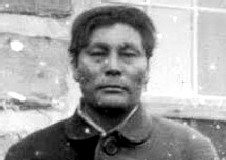
Swift Runner
Mass murderer Marc Lepine
Mass murderer · Canada · 1989
Marc Lépine committed a shooting at the École Polytechnique engineering school…
14 victims
Marc Lepine
Mass murderer · Canada · 1989
Marc Lépine committed a shooting at the École Polytechnique engineering school…
14 victims
 Roger Warren
Mass murderer · Canada · 1992
Roger Warren was convicted of 9 counts of second-degree murder in connection to…
9 victims
Roger Warren
Mass murderer · Canada · 1992
Roger Warren was convicted of 9 counts of second-degree murder in connection to…
9 victims
 Victor Ernest Hoffman
Mass murderer · Canada · 1967
Victor Ernest Hoffman (born 1946; died May 21, 2004) was found not guilty by re…
9 victims
Victor Ernest Hoffman
Mass murderer · Canada · 1967
Victor Ernest Hoffman (born 1946; died May 21, 2004) was found not guilty by re…
9 victims
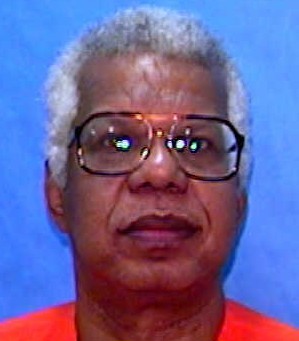 Terance Valentine
Murderer · USA · 1988
Terance Valentine was prosecuted in the Thirteenth Judicial Circuit, Hillsborou…
1 victim
Terance Valentine
Murderer · USA · 1988
Terance Valentine was prosecuted in the Thirteenth Judicial Circuit, Hillsborou…
1 victim
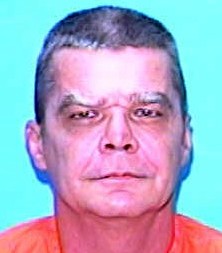 William L. Thompson
Murderer · USA · 1976
William L. Thompson was convicted and sentenced to death for the 03/30/76 kidna…
1 victim
William L. Thompson
Murderer · USA · 1976
William L. Thompson was convicted and sentenced to death for the 03/30/76 kidna…
1 victim
 Jose Angel Gutierrez
Murderer · USA · 1989
Jose Angel Gutierrez was executed by lethal injection in Texas on November 18,…
1 victim
Jose Angel Gutierrez
Murderer · USA · 1989
Jose Angel Gutierrez was executed by lethal injection in Texas on November 18,…
1 victim
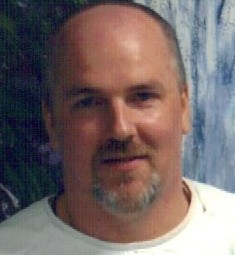 Daniel Wilson
Murderer · USA · 1991
May 4, 1991 — Daniel Wilson killed Carol Lutz by locking her in the trunk of he…
1 victim
Daniel Wilson
Murderer · USA · 1991
May 4, 1991 — Daniel Wilson killed Carol Lutz by locking her in the trunk of he…
1 victim
 Darrell Eston Lee
Murderer · USA · 1991
Darrell Eston Lee Darrell Lee and Karen Thompson were described as approaching…
1 victim
Darrell Eston Lee
Murderer · USA · 1991
Darrell Eston Lee Darrell Lee and Karen Thompson were described as approaching…
1 victim
- Gender
- male
- Country
- Canada
- Location
- Fort Saskatchewan, Alberta, Canada
- Date of birth
- ???
- Characteristics
- cannibalism
- Victim profile
- His wife and five children
- Method of murder
- Shooting - Hitting with an axe
- Date(s) of murder
- 1879
- Years active
- 1879
- Date of arrest
- May 27, 1879
- Status
-
Executed
Executed by hanging at Fort Saskatchewan on December 20, 1879
Background
Swift Runner was a Cree Indian who lived in what is now central Alberta. As a young man he received a Cree education. He married and had a family of six children. He traded with the Hudson's Bay Company. In 1875, he served as a guide for the North West Mounted Police.
Swift Runner's life ended in tragedy and notoriety. During the winter of 1878-79, a time of starvation and misery for the Cree people, he became possessed by the Windigo psychosis, described as an aberration characterized by grand delusions and cannibalistic impulses that anthropologists identified in several Canadian Indian cultures. In that period, he murdered his wife and family and cooked and ate their flesh. He was arrested, brought to trial, and hanged at Fort Saskatchewan in December 1879.
Windigo psychosis was associated with the Windigo, described as “a spirit believed by the Algonquians, Cree, and Ojibwas to take possession of vulnerable people, causing them to engage in cannibalism and other forms of antisocial behavior.” The Windigo was also described as a mythical creature in Algonquian mythology, portrayed as a malevolent cannibalistic spirit into which humans could transform or which could possess humans. Those who indulged in cannibalism were described as being at particular risk. Accounts tied the legend to reinforcement of a taboo against cannibalism.
The offence
Swift Runner was tried for murder and cannibalism. He killed and ate his wife and family. Remains of his victims were later found in the vicinity of his encampment.
During the investigation, Swift Runner showed a small grave near his camp and explained that one of his boys had died and was buried there. When the grave was opened, bones were found undisturbed. The encampment had additional human bones scattered around it. A skull was produced, identified by Swift Runner as that of his wife. Swift Runner described what had happened to the rest of his family.
The narrative of the events connected Swift Runner’s actions to Windigo possession. A Windigo was described as calling on him to consume people around him, with the spirit gradually taking control. In the same narrative, the Windigo killed and ate Swift Runner’s wife. The Windigo was described as forcing one of Swift Runner’s boys to kill and butcher his younger brother. While eating, the spirit was described as hanging Swift Runner’s infant by the neck from a lodge pole and tugging at the baby’s dangling feet. It was later shown that Swift Runner also did away with Swift Runner’s brother and his mother-in-law, though he acknowledged that she had been “a bit tough.”
During trial-related descriptions, it was said that the trial included witnesses who described the family as being in perfect health when they headed out to the woods, followed by Swift Runner coming out alone. Swift Runner told the proceedings that he could not expect to see any of his family because he was the only one left. There was no evidence presented in Swift Runner’s defence. When asked if he wanted to say anything, he responded: “I did it.”
Investigation
After Swift Runner returned from winter camp in the spring of 1879 without his wife and family, suspicion arose. When he could not give a satisfactory account of their whereabouts, his in-laws became worried. They decided to tell the North West Mounted Police.
Inspector Sévère Gagnon was given the task of investigating Swift Runner’s behavior. Gagnon and a small party of policemen trekked out to Swift Runner’s trapper camp. Swift Runner showed the grave near his camp. Gagnon and his detachment opened the grave and found bones undisturbed. Bones scattered around the encampment led to further discovery. A skull was produced and Swift Runner identified it as his wife’s.
Gagnon’s party was described as finding mutilated evidence along with the remains. The revolted Mounted Police party hauled Swift Runner and the mutilated evidence back to Fort Saskatchewan.
Police also heard stories about Swift Runner in the spring. A Cree chief said Swift Runner had “turned cannibal.” A hunter reported that Swift Runner’s entire family had been killed in the woods, but a squad of officers who went out to investigate could not find Swift Runner or his family. Swift Runner then went to the police himself in the spring, saying his wife had committed suicide and the rest of the family had died of starvation. Officers noticed that Swift Runner did not look underfed. A noted officer said, “The prisoner arrived at our camp in the spring and did not look very poor or thin or as if he had been starving.”
Suspicious of his explanation, police travelled with Swift Runner to his family’s camp north of Fort Saskatchewan. After days of searching, they found remnants of a campfire, with piles of bones and human skulls scattered nearby. Some bones were described as dry and hollow, with no marrow. A small moccasin had been stuffed inside the skull of Swift Runner’s mother, and a beading needle still stuck out of unfinished work.
Arrest
Swift Runner was arrested and brought to trial.
Trial
The trial began on August 8, 1879. The judge and jury did not view the Windigo idea in the same light as the Cree. They saw Swift Runner as a murderer, and he made no attempt to hide his guilt.
Stipendiary Magistrate Richardson sentenced Swift Runner quickly to be hanged. The jury included three “English speaking Cree half-breeds,” four men “well up in the Cree language,” and a Cree man who translated the proceedings. A leading Cree-English scholar was also brought in to observe the trial and ensure Swift Runner knew what was being said. Swift Runner sat calmly throughout testimony of witnesses. Kis-Sie-Ko-May was quoted: “He said I could not expect to see any of his family because he was the only one left.”
The death sentence was described as the first legal hanging in the Canadian Northwest Territories, described as an area that included what is now the province of Alberta. A scaffold was built especially for the execution, and an army pensioner was paid $50 to serve as hangman. Swift Runner declined to spend the night before his execution with a priest. He said: “The white man has ruined me.” He also said: “I don't think their God could amount to much.”
Some accounts described Swift Runner as having developed a taste for cannibalism years earlier, when he was forced to eat the remains of a starved hunting partner to save himself. Other accounts described him as possessed by the Windigo, described as a flesh-eating spirit that tormented him and gave him nightmares.
Sentencing
Stipendiary Magistrate Richardson sentenced Swift Runner to be hanged.
The trial resulted in a death sentence described as the first legal hanging in the Canadian Northwest Territories.
Execution
The execution was ordered to take place at 7:30 a.m. on December 20, 1879. A gallows was erected within the fort enclosure at Fort Saskatchewan.
Staff Sergeant Fred Bagley, described as a force bugler, was put in charge of the arrangements. An old army pensioner named Rogers was made hangman.
On the appointed morning, it was described as pitch black and brutally cold. Sheriff Edouard Richard was delayed by snow and weather and was flustered by his late arrival at the fort. The crowd gathered near the gallows, described as 60 people, most of whom had never seen a hanging.
With less than half an hour left, it was discovered that the crowd had taken the trap from the gallows and burned it as kindling, and that the hangman had forgotten to bring straps to bind the prisoner's arms. The sheriff and hangman rushed to get the scaffold ready again. Swift Runner was described as sitting near a fire that had been lighted nearby, joking and chatting, snacking on pemmican, while the thick noose hung loose around his neck. Swift Runner offered: “I could kill myself with a tomahawk,” and also said he could “save the hangman further trouble.”
Swift Runner was described as well-known around Fort Saskatchewan settlement and as a striking 6-foot-3 with a strapping build. One policeman described him as “as ugly and evil-looking a face as I have ever seen.” He had once been known as smart and trustworthy and had won a job as a guide for the North West Mounted Police. Another account said: “His contact with white men, however, ruined him.” It was also described that the ruination came partly from his fondness for whisky smuggled into the area disguised as medicine. Swift Runner was described as “an ugly customer to meet when on a spree,” so ugly that some called him “the terror of the whole region.”
After two hours from when Swift Runner was led to the gallows, the execution was finally ready to proceed. He was allowed to eat one final pound of pemmican before he was pinioned tightly with rope and taken to the scaffold, where a thick, black hood was placed over his head. The Daily Evening Mercury reported: “The trap fell, and Swift Runner went down with fearful force, there being a drop of five feet.” It also reported: “He died without a struggle. The body was cut down in an hour and buried in the snow outside the fort.”
Sheriff Edouard Richard wrote in a report to the government that invitations had been tendered to Indian Chiefs to assist at the execution and that some responded and declared it was done in such a way that they could no more object to that mode of execution. He wrote: “Seeing that the Indians are averse to hanging and that all sorts of rumours were afloat amongst them and half-breeds about deeds of cruelty that were to accompany the execution, invitations had been tendered to Indian Chiefs to assist at the execution,” and also wrote: “Some of them responded to the invitation and declared that it was done in such a way that they could no more object to that mode of execution.”
A witness who had watched several other executions in the United States was described as pleased with the spectacle, slapping his thigh and saying: “Boys, it was the prettiest hanging I ever seen.”
Another commentator, a California “forty-niner” named Jim Reade, was quoted as saying: “That’s the purtiest hangin’ I ever seen, and it’s the twenty-ninth!”
A separate account described that on December 20, Swift Runner was led to the scaffold. He stood over the trap, was given an opportunity to address the large crowd, acknowledged his guilt, thanked his jailers for their kindness, and then berated his guard for making him wait in the cold.
Outcome
Swift Runner was executed by hanging at Fort Saskatchewan on December 20, 1879.
Aftermath
Remains of Swift Runner’s victims were later described as being found near his camp, including piles of bones and human skulls scattered nearby.
Other details
Swift Runner was also referred to as Ka-Ki-Si-Kutchin.
The Wendigo was also described with multiple variant spellings: Windigo, Weendigo, Windago, Waindigo, Windiga, Witiko, Wihtikow, and numerous other variants.
A quote attributed to Basil Johnston was included describing how the Weendigo looked:
“The Weendigo was gaunt to the point of emaciation, its desiccated skin pulled tautly over its bones. With its bones pushing out against its skin, its complexion the ash gray of death, and its eyes pushed back deep into their sockets, the Weendigo looked like a gaunt skeleton recently disinterred from the grave. What lips it had were tattered and bloody [....] Unclean and suffering from suppurations of the flesh, the Weendigo gave off a strange and eerie odor of decay and decomposition, of death and corruption.”
The narrative also discussed Wendigo ceremonies and beliefs, including that humans could turn into Wendigos if they resorted to cannibalism or become possessed by the demonic spirit of a Wendigo, often in a dream. It also described that, in accounts of Wendigo psychosis, sufferers could ask to be executed before they could harm others. It noted that cases were described as relatively rare and that it was rarer for them to culminate in the execution of the sufferer.
References in popular culture were also provided, including that Algernon Blackwood’s 1910 story “The Wendigo” introduced the legend to horror fiction, and that Stephen King’s novel Pet Sematary used it. Other references included Wendigo and Ravenous, and episodes of Blood Ties, Charmed, Supernatural, and Haven. It also listed appearances in computer and video games, including Final Fantasy, The Legend of Dragoon, and the Warcraft Universe, and role-playing games such as Dungeons & Dragons. It stated there was a Marvel Comics character known as “Wendigo” and referenced music, including Buffy Sainte-Marie’s song “The Priests Of The Golden Bull,” which asserted that the “money junkies” of the world are Wendigos.
It was additionally stated that one well-known case involving Wendigo psychosis was that of Jack Fiddler, described as an Oji-Cree chief and shaman known for powers at defeating Wendigos. It said that in 1907, Fiddler and his brother Joseph were arrested by Canadian authorities for murder. It said Jack committed suicide, while Joseph was tried and sentenced to life in prison. It said Joseph was ultimately granted a pardon but died three days later in jail before receiving news of the pardon.
Spotted an error, or have more information about this case?