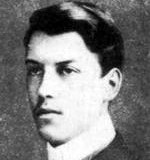
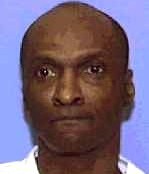
Horace Rayner
Murderer Dr. Hawley Harvey Crippen
Murderer · United Kingdom · 1910
Hawley Harvey Crippen (11 September 1862 – 23 November 1910), usually known as…
1 victim
Dr. Hawley Harvey Crippen
Murderer · United Kingdom · 1910
Hawley Harvey Crippen (11 September 1862 – 23 November 1910), usually known as…
1 victim
 Frederick Seddon
Murderer · United Kingdom · 1911
Frederick Henry Seddon (sometimes called Sedden; 1870 – 18 April 1912) was a Br…
1 victim
Frederick Seddon
Murderer · United Kingdom · 1911
Frederick Henry Seddon (sometimes called Sedden; 1870 – 18 April 1912) was a Br…
1 victim
 James Joseph Wilkens
Murderer · USA · 1986
Name: James Joseph Wilkens (also given as James Joseph Wilkens Jr.) · December…
2 victims
James Joseph Wilkens
Murderer · USA · 1986
Name: James Joseph Wilkens (also given as James Joseph Wilkens Jr.) · December…
2 victims
 Akshay Chand
Homicide · New Zealand · 2011
Akshay Anand Chand murdered Christie Alexis Lesley Marceau on 7 November 2011,…
1 victim
Akshay Chand
Homicide · New Zealand · 2011
Akshay Anand Chand murdered Christie Alexis Lesley Marceau on 7 November 2011,…
1 victim
 Jamie Reynolds
Murderer · United Kingdom · 2013
Jamie Reynolds murdered 17-year-old Georgia Williams after luring her to his ho…
1 victim
Jamie Reynolds
Murderer · United Kingdom · 2013
Jamie Reynolds murdered 17-year-old Georgia Williams after luring her to his ho…
1 victim
 Alexander Pichushkin
Serial killer · Russia · 1992
Alexander Yuryevich “Sasha” Pichushkin (Russian: Алекса́ндр Ю́рьевич Пичу́шкин,…
49 victims
Alexander Pichushkin
Serial killer · Russia · 1992
Alexander Yuryevich “Sasha” Pichushkin (Russian: Алекса́ндр Ю́рьевич Пичу́шкин,…
49 victims
 Carol Coronado
Murderer · USA · 2014
Carol Coronado, 30, lived in Torrance, California. She was the mother of Sophia…
3 victims
Carol Coronado
Murderer · USA · 2014
Carol Coronado, 30, lived in Torrance, California. She was the mother of Sophia…
3 victims
- Gender
- male
- Country
- United Kingdom
- Location
- London, England, United Kingdom
- Date of birth
- 1879
- Age at first offence
- 28
- Characteristics
- murder for hire
- Victim profile
- William Whiteley, 75 (his father?)
- Method of murder
- Shooting
- Date(s) of murder
- January 24, 1907
- Years active
- 1907
- Date of arrest
- Same day (suicide attempt)
- Status
-
Released
Sentenced to death, 1907; commuted to life in prison in 1907; released in 1919
Outcome
Horace Raynor was sentenced to death for the killing of William Whiteley. After a petition for clemency was raised and collected 200,000 signatures in the first week, the Home Secretary commuted Raynor’s sentence to one of life imprisonment. Raynor was released in 1919 on licence.
Timeline
- 24 January 1907 — Raised voices were heard coming from William Whiteley’s office; William Whiteley was shot and killed; Horace Rayner was the 27-year-old killer.
- January 1907 — George Raynor raised a clemency petition that collected 200,000 signatures in the first week.
- May 1907 — Horace Rayner appeared at the Old Bailey.
- 1911 — The new Whiteley store in Queensway was opened on 21 November 1911.
- 1919 — George Raynor was released in 1919 on licence.
The offence
On 24th January 1907 staff heard raised voices coming from William Whiteley’s office. One voice asked, “Is that your final word?” and the reply was, “Yes’ came the reply.” The first voice then said, “Then you are a dead man” and three shots rang out.
The first two bullets hit Whiteley in the head, killing him instantly. The third bullet was an unsuccessful attempt at commiting suicide by the killer, who turned out to be 27-year-old Horace Rayner. He had been found after shooting.
Investigation
The case involved unusual circumstances described as sensational, with disputes over Horace Raynor’s claimed relationship to William Whiteley.
Arrest
Horace Rayner was charged after the shooting.
Trial
Horace Rayner appeared at the Old Bailey in May 1907.
George Raynor pleaded not guilty by reason of temporary insanity. George Raynor was to maintain that Whiteley, who had preached a high moral standard to his employees, was in fact his real father.
George Raynor, the man who had brought Horace up, testified that Horace’s mother, Emily Turner, now deceased, had improperly registered the birth and that he had agreed to act as father.
Emily Turner’s sister, Louisa, caused a sensation when she gave evidence that not only had she also been Whiteley’s mistress for many years, but that she also had a child by Whiteley.
Despite the jury’s lack of conviction about the plea, the jury returned a guilty verdict. Horace Raynor was sentenced to death.
Sentencing
Horace Raynor was sentenced to death after the guilty verdict at the Old Bailey in May 1907.
A petition for clemency was raised and collected 200,000 signatures in the first week because of the unusual circumstances of the case. Public opinion was running high and the Home Secretary was unable to ignore it. The Home Secretary commuted Raynors sentence to one of life imprisonment.
Appeals
A petition for clemency was raised and collected 200,000 signatures in the first week.
Aftermath
George Raynor served twelve years before being released in 1919 on licence.
If George Raynor’s story was true, it meant that he would have on his concience for the rest of his life the fact that he killed his own father.
Other details
William Whiteley (September 29, 1831 – January 24, 1907) was a British entrepreneur of the late nineteenth and early twentieth centuries. He was the founder of Whiteleys department store.
Whiteley was born in Yorkshire in the small village of Purston, situated between Wakefield and Pontefract. His father was a prosperous corn dealer. Whiteley and his three brothers enjoyed a healthy open-air life. Whiteley left school at the age of 14 and started work at his uncle’s farm. He would have liked to have been a veterinary surgeon or perhaps a jockey but his parents had other ideas.
In 1848 Whiteley was started on a seven year apprenticeship with Harnew & Glover, the largest drapers in Wakefield. Whiteley received a ‘severe drilling in the arts and mysteries of the trade.’ In 1851 he paid his first visit to London to see the Great Exhibition. The exhibition fired his imagination, particularly the magnificent displays of manufactured goods. Whiteley had the idea that he could create a store as grand as the Crystal Palace where all these goods could be under one roof and it would make him the most important shopkeeper in the world. Wakefield was in decline and Whiteley now wanted to be something more than a small town draper.
After completion of the apprenticeship, he arrived in London with £10 in his pocket. He took a job with R. Willey & Company in Ludgate Hill, and then Morrison & Dillon’s to learn all aspects of the trade. Whiteley lived frugally. Not smoking or drinking, he was able to save up £700, enough to start his own business.
In the 1860s London was expanding rapidly. After considering Islington, he turned attention to Bayswater. He observed the number of fashionable people using Westbourne Grove and decided to open his shop there. He started his business in 1863 by opening a Fancy Goods shop at 31 Westbourne Grove, employing two girls to serve and a boy to run errands. Later one of the girls, Harriet Sarah Hall, became his wife.
In 1867 Whiteley acquired a row of shops in Westbourne Grove and turned them into 17 departments. Dressmaking started in 1868, and a house agency and refreshment room, the first ventures outside drapery, opened in 1872. By then 622 people were employed on the premises and a further 1,000 outside.
Whiteley started selling food in 1875, and a building and decorating department was added in 1876. This proved to be particularly profitable as the large stuccoed houses in the area needed regular repainting. Whiteley dubbed himself “The Universal Provider,” claiming that he could provide anything from a pin to an elephant. He met strong opposition from smaller tradesmen and also from the local authorities over grand building plans. Several bad fires in the 1880s may have been caused by opponents.
Business nonetheless prospered, aided by a delivery service extending up to 25 miles (40 km). In 1887 the store was described as 'an immense symposium of the arts and industries of the nation and of the world'. By 1890 over 6,000 staff were employed in the business, most of them living in company-owned male and female dormitories, having to obey 176 rules and working 7 am to 11 pm, six days a week.
Whiteley bought massive farmlands and erected food-processing factories to provide produce for the store and for staff catering. In 1896 he earned an unsolicited Royal Warrant from Queen Victoria - an unprecedented achievement.
In 1897 disaster struck and the store in Westbourne Grove burnt down. In his autobiography, Drawn From Memory, E. H. Shepard said the fire could be seen from Highgate Hill, and some days later when he and his friend Cyril were allowed to visit Westbourne Grove, that, “The long front of the shop was a sorry sight with part of the wall fallen and the rest blackened.”
Whiteley’s was to rise again like the Phoenix from the fire. The Lord Mayor of London in the presence of thousands opened the new store in Queensway on 21 November 1911. This was claimed to be the largest British store in the world.
Whiteley’s will left £1,000,000 with which the Whiteley Village, near Walton-on-Thames in Surrey, was created.
Spotted an error, or have more information about this case?