James Ryan O'Neill
Murderer Christopher Flannery
Murderer · Australia · 1979
Christopher Dale Flannery (1949 - missing and believed murdered ca. May 9, 1985…
12 victims
Christopher Flannery
Murderer · Australia · 1979
Christopher Dale Flannery (1949 - missing and believed murdered ca. May 9, 1985…
12 victims
 Bevan Von Einem
Murderer · Australia · 1979
Bevan Spencer von Einem (born c.1945), also known as Bevan von Einem (with the…
5 victims
Bevan Von Einem
Murderer · Australia · 1979
Bevan Spencer von Einem (born c.1945), also known as Bevan von Einem (with the…
5 victims
 Lindsay Robert Rose
Murderer · Australia · 1984
Lindsay Robert Rose was sentenced to five consecutive sentences of life impriso…
5 victims
Lindsay Robert Rose
Murderer · Australia · 1984
Lindsay Robert Rose was sentenced to five consecutive sentences of life impriso…
5 victims
 Keith Faure
Murderer · Australia · 1976
Keith George Faure was born in June 1951. He was an Australian career criminal…
4 victims
Keith Faure
Murderer · Australia · 1976
Keith George Faure was born in June 1951. He was an Australian career criminal…
4 victims
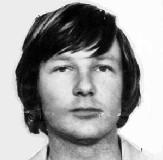 Samuel Leonard Boyd
Murderer · Australia · 1982
Samuel Leonard Boyd was sentenced to 5 consecutives sentences of life imprisonm…
4 victims
Samuel Leonard Boyd
Murderer · Australia · 1982
Samuel Leonard Boyd was sentenced to 5 consecutives sentences of life imprisonm…
4 victims
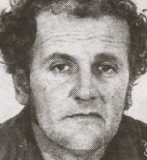 James Beauregard-Smith
Murderer · Australia · 1977
James Beauregard-Smith James George Beauregard-Smith was an Australian offender…
3 victims
James Beauregard-Smith
Murderer · Australia · 1977
James Beauregard-Smith James George Beauregard-Smith was an Australian offender…
3 victims
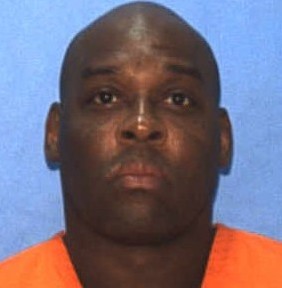 Marvin Jones
Murderer · USA · 1993
Marvin Jones (date of birth: 07/21/65) was tried in Duval County, Florida, in t…
1 victim
Marvin Jones
Murderer · USA · 1993
Marvin Jones (date of birth: 07/21/65) was tried in Duval County, Florida, in t…
1 victim
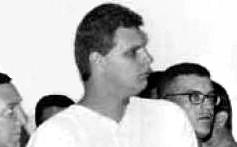 Gustavo Pissardo
Mass murderer · Brazil · 1994
Gustavo Pissardo (Flávio Craveiro) was sentenced to 63 years in prison in April…
5 victims
Gustavo Pissardo
Mass murderer · Brazil · 1994
Gustavo Pissardo (Flávio Craveiro) was sentenced to 63 years in prison in April…
5 victims
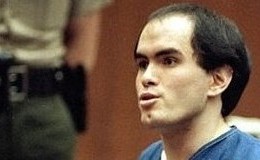 Robert John Bardo
Murderer · USA · 1989
Robert John Bardo (born January 2, 1970) was an American man who was convicted…
1 victim
Robert John Bardo
Murderer · USA · 1989
Robert John Bardo (born January 2, 1970) was an American man who was convicted…
1 victim
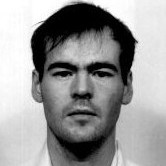 Robert Streetman
Murderer · USA · 1982
Robert Streetman was executed by lethal injection in Texas on January 7, 1988.…
1 victim
Robert Streetman
Murderer · USA · 1982
Robert Streetman was executed by lethal injection in Texas on January 7, 1988.…
1 victim
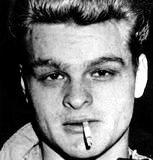 Charles Starkweather
Spree killer · USA · 1957
Charles Raymond Starkweather was born in Lincoln, Nebraska, on November 24, 193…
11 victims
Charles Starkweather
Spree killer · USA · 1957
Charles Raymond Starkweather was born in Lincoln, Nebraska, on November 24, 193…
11 victims
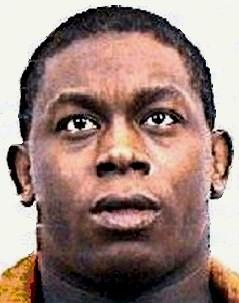 Corey Duane Hamilton
Mass murderer · USA · 1992
Corey Duane Hamilton was convicted by jury of Robbery with a Firearm (Count I)…
4 victims
Corey Duane Hamilton
Mass murderer · USA · 1992
Corey Duane Hamilton was convicted by jury of Robbery with a Firearm (Count I)…
4 victims
- Gender
- male
- Country
- Australia
- Location
- Tasmania, Australia
- Date of birth
- 1947
- Age at first offence
- 28
- Characteristics
- rape
- Victim profile
- Ricky John Smith, 9 / Bruce Colin Wilson, 9
- Method of murder
- ???
- Date(s) of murder
- February/April 1975
- Years active
- 1975
- Date of arrest
- —
- Status
-
Life imprisonment
Sentenced to life in prison 1976
Case details
James Ryan O’Neill was a Tasmanian murderer serving a life sentence. Allegations were made that he murdered a number of children in several Australian states from the mid 1960s while he was still a teenager through to the murder for which he was imprisoned in 1975. He was Tasmania’s longest-serving prisoner for a single offence.
O’Neill was the subject of a documentary titled The Fishermen, broadcast on ABC TV in October 2006. He was imprisoned in Tasmania since 1975 for the murder of Ricky John Smith.
Background
James Ryan O’Neill was born as Leigh Anthony Bridgart in Melbourne, Victoria, in about 1947 or 1948. He was educated at Brighton and Caulfield Grammar and Scotch College. He began working in real estate and then became a gun dealer associated with members of Melbourne’s underworld.
Between 1965 and 1968, Bridgart, working in the opal industry, travelled frequently between Melbourne and the South Australian mining town of Coober Pedy. He also travelled extensively in Western Australia, where, at one stage, he worked on a cattle station; documentary makers found people in the Kimberley region of Western Australia who remembered him thirty years later.
In 1969, a business partner of Bridgart’s was manipulating bullets in and out of a pistol and accidentally shot him in the head. He survived; the bullet entered his right forehead and came out of his neck, destroying most of his sense of smell and taste.
In 1971, Bridgart was charged with 12 offences involving abductions and sexual assaults of four boys in Victoria. He skipped bail and fled to Western Australia. In November 1974, he moved to Tasmania and changed his name to James Ryan O’Neill.
The offence
Murder of Ricky John Smith
In February 1975, O’Neill was on his way to a hospital to pick up his wife and newborn child when he came across Ricky John Smith. Smith was aged nine and had been sent to buy a carton of cigarettes. O’Neill murdered Smith and dumped his body in remote bushland.
O’Neill was one of many who offered to help in the search for the missing boy. During that period, he was planning another murder.
Other child abductions and the murder of Bruce Colin Wilson
Over the space of two weeks, four or five children were abducted in separate incidents but managed to escape. O’Neill then abducted Bruce Colin Wilson, aged nine, and murdered him. Wilson’s body was discovered near Risdon Vale three months after Ricky Smith’s disappearance.
Investigation
The two murders were investigated by police, including Sergeant Richard McCreadie. Eventually, O’Neill led police to where Ricky Smith’s body was hidden.
O’Neill was arrested for both murders, but following the legal practice at the time he was only tried for Ricky Smith’s murder.
Police also later formed opinions and conducted enquiries connected to allegations involving other children. Inquiries included checking backgrounds and places O’Neill had visited.
Trial
O’Neill pleaded insanity. He said that he had been punched and that a gun had been held to his head, before Sergeant McCreadie and another detective took him to where Ricky Smith’s body was hidden. Both policemen denied this.
The defence was led by W.J.E. Cox. It suggested that O’Neill may have had a personality disorder following injuries to his brain that occurred when he had been shot in the head in 1969.
After deliberating for 3½ hours, the jury found O’Neill guilty of murder and he was jailed for life.
Sentencing
He was jailed for life after being found guilty of murder relating to Ricky Smith.
He became eligible to apply for parole in 1986.
In 1991, he applied for parole but was turned down.
Appeals
O’Neill’s legal proceedings included defamation litigation relating to the documentary The Fishermen.
O’Neill v Australian Broadcasting Corporation, Roar Film Pty Ltd and Davie
The documentary was scheduled for broadcast on ABC television on 21 April 2005. O’Neill objected and sought an injunction to stop transmission on grounds of defamation.
The ABC rescheduled the broadcast for the following week, on 28 April. In the meantime, the case O’Neill v Australian Broadcasting Corporation, Roar Film Pty Ltd and Davie was heard by Supreme Court Judge Ewan Crawford on 22 April. The ruling was made public several days later.
Crawford said he could "see no aspect of public benefit in the making public of allegations that the plaintiff was responsible for the disappearance and murder of the Beaumont children or that he is suspected of being responsible." On the grounds that it would defame O’Neill, Crawford granted an interlocutory injunction against broadcast of The Fishermen in Tasmania.
The ABC’s General Counsel, Stephen Collins, said: "Mr O’Neill is sentenced to life imprisonment for the murder of a child. There is no stronger penalty that can be imposed upon any person in our society, and so it’s difficult for the ABC to see that he has a reputation which can be tarnished."
The documentary was not broadcast on 28 April. A slight satellite overlap meant that if the ABC had broadcast the documentary, around 500 houses in the north of Tasmania would have been able to receive the transmission. This would have violated the injunction against it being broadcast in Tasmania. The documentary was pulled nationwide.
On 29 August 2005, the ABC’s appeal was dismissed by a full sitting of the Tasmanian Supreme Court. The appeal was dismissed by a 2-1 majority. The court stressed that the injunction was temporary; however Justice Alan Blow said that if O’Neill’s defamation action went to trial, it might be decided that the documentary defamed him and in this case a permanent injunction might be granted. This would mean that the broadcast of the documentary in Tasmania would be permanently banned.
The ABC announced it would appeal to the High Court. The ABC said it would file the application in Sydney, but it was understood that the hearing would be held in Hobart.
On 28 September 2006, by a 4-2 margin, the High Court quashed Crawford’s ruling. The High Court said that both Crawford and two other justices of the Tasmania Supreme Court had erred. It said they had failed to take into account the importance of free speech and that if the program had been defamatory, damages would have been nominal. It overturned the injunction.
Following the High Court’s ruling, Kim Dalton, ABC’s director of television, announced that the documentary would be broadcast on ABC television on 26 October.
Outcome
O’Neill was convicted of murder and received a life sentence. The documentary The Fishermen was ultimately broadcast after the High Court quashed the injunction.
Aftermath
Documentary production and background
In the 1990s, a freelance journalist named Janine Widgery had an idea to make a documentary series about unsolved child murders. She approached retired detective Gordon Davie, who had been a detective with Victoria Police with more than 20 years’ experience. He had been involved in high profile investigations including the Russell Street bombing and the Hilton Hotel bombing. He had been a consultant to the television shows Phoenix and Janus and had won an AFI award for co-writing the script for the movie The Interview. Davie lived in Tasmania.
Davie liked the idea but felt it had no natural starting point. In 1998, however, he was intrigued by a report he read in a newspaper about O’Neill. The report said that O’Neill had been transferred to the low security Hayes Prison Farm in the Derwent Valley in 1991, and allowed to go fishing for trout in the Derwent River accompanied only by his dog. The report also said that O’Neill had had no criminal record before the two murders for which he had been jailed. Davie considered this unlikely.
Davie wrote to O’Neill and asked if he could visit. O’Neill agreed. Davie assumed the meeting would last for about an hour, but it continued for the whole day. Davie later said:
"It whet my appetite because Jim told me he’d never been in trouble with the police before, never even got a parking ticket. I spoke to Janine, I said there’s a story in this man because I don’t believe a word he’s telling me."
Davie described O’Neill as highly intelligent and immensely likeable. A friendship grew based initially around their mutual love of fishing. Davie later asked more questions about O’Neill’s background and started making notes.
After several months, Davie asked permission to tape record their conversations. O’Neill gave permission. Davie continued to visit and spoke with O’Neill for hundreds of hours over the next four years.
Other cases and patterns
The tapes were transcribed and enquiries were made at places where O’Neill said he had been. A pattern emerged: O’Neill deliberately misnamed many of the places he had visited. It was also said that children had disappeared at seven or eight of those places.
Davie and Widgery developed a documentary about O’Neill and activities they suspected, including responsibility for unsolved murders in locations around Australia they knew he had visited. Davie said afterwards:
"He is one of the most likeable men you would ever meet."
He said: On the first day of filming there were six or seven out there and at end of the day he asked what they thought of him. He said they all replied:
"'You've made a mistake, this bloke couldn't have done anything wrong', and I said, 'Don't ever forget what I said at the briefing last Friday. No matter what this man says or does, don't ever forget he's a killer.'"
Some key figures from O’Neill’s trial had gone on to greater public prominence. O’Neill’s defence lawyer, W.J.E. Cox, became Governor of Tasmania. The junior officer for the Crown, Mr D. Bugg, became Damian Bugg, QC, and became Commonwealth Director for Public Prosecutions. Sergeant McCreadie later became Tasmanian Police Commissioner. McCreadie was interviewed for the documentary and confirmed his opinion:
"He’s got a real lust for kiddies. He’s a multiple murderer."
Davie and Widgery agreed and said O’Neill was probably a serial killer. McCreadie said:
"We started to check on the background, about the places that he'd been. There were about seven or eight kiddies, who were almost copybooks, in various places around Australia, who had simply disappeared -- never to be found. That trail led through Victoria, New South Wales, Queensland, through Fitzroy Crossing and down into Western Australia. We found that he had come back through South Australia and through Adelaide at about the time that the Beaumont children had disappeared. I am not suggesting he was involved, but you couldn't discount his involvement."
McCreadie later commented:
"My personal view -- and I don't want you to say the commissioner says he's red hot for the Beaumonts -- but he could easily have been responsible for that"
Davie agreed. Davie said:
"I know O'Neill has told other people he was responsible for killing the Beaumonts, and I certainly wouldn't discount him being responsible."
A station owner in the Kimberley who remembered O’Neill from when he had been called Bridgart remembered Bridgart saying he was responsible for the disappearance of the Beaumont children.
Janine Widgery said she was convinced and after speaking to O’Neill said:
"she knew where the bodies of the Beaumont children were buried in country Victoria and wanted police to investigate."
Davie had asked O’Neill about the children and O’Neill denied having been in South Australia before 1966. Davie asked him where the road from Melbourne to Coober Pedy went. Davie said that O’Neill’s head went left and his face went scarlet and Davie knew O’Neill was going to lie. Davie said O’Neill denied murdering the Beaumont children and, quoting Davie’s account, said:
'Look, on legal advice I am not going to say where I was or when I was there'
and changed the subject.
Davie said he refused to be drawn any further. Davie wondered about his involvement and reflected on the accuracy of McCreadie’s remark that O’Neill "...was going backwards and forwards through Adelaide at a rate of knots at about that time."
Davie and Widgery’s documentary titled The Fishermen: A Journey into the Mind of a Killer was screened at the Hobart Summer Festival in January 2005. McCreadie’s remarks were widely quoted. The documentary achieved Australia-wide publicity as a new suspect for the disappearance of the Beaumont children.
Eliminated as a suspect
South Australia police were asked for their opinion. Detective Superintendent Peter Woite, the officer in charge of major crime investigations, confirmed O’Neill had been recently interviewed. Woite said:
"no evidence was found to support this person’s involvement in the disappearance of the Beaumont children. While our investigation remains active on this matter, this person has been discounted from our enquiries."
The Hobart-based newspaper The Mercury applied for permission to interview O’Neill but reported on 8 February 2005 that it had been rebuffed. Responding to the request, prisons director Graeme Barber replied in a letter on 7 February that while O’Neill was willing to be interviewed, there was a longstanding protocol within the Prison Service that inmates, particularly those sentenced for violent or sensational crimes, were not made available for media interview.
Barber said the reasons interviews were not granted included that they could distress victims, families and other people involved and could disrupt or hinder the safe running of prisons.
The documentary team for The Fisherman was granted permission to interview O’Neill after stating they would make a documentary about the worm farm in the prison and about O’Neill’s passion for fishing.
Additional commentary and descriptions
The High Court’s decision allowed broadcast after the injunction was quashed.
In discussing O’Neill’s earlier period and public perceptions, references were made to old-timers in the remote Kimberley remembering O’Neill from more than 40 years earlier, when he passed himself off variously as a Vietnam War hero, a drover, a bush lawyer and even an ASIO spy. The same commentary said there were rumours about his relationships and that he peddled an explanation for a bullet wound in his skull as having been shot by his mother’s boyfriend. It also referenced rumours that he paid for the favours of young Aboriginal girls.
Retired detective Gordon Davie was described as having been surprised by O’Neill’s account. Davie was quoted in relation to a late 1998 meeting:
"Nobody gets to 27 years of age and then begins a homicide spree."
Davie was also quoted saying:
"It whet my appetite because Jim told me he’d never been in trouble with the police before, never even got a parking ticket . . . I said there's a story in this man because I don't believe a word he's telling me."
In relation to Davie’s meetings, Davie discussed lying cues when questioned about the road from Melbourne to Coober Pedy. Davie said:
"I asked him one day, 'Where does the road run from Melbourne to Coober Pedy?' I knew his body language at this stage. You can read his body language very easily after you have spent time with him. His head went left and I knew he was going to lie. He said, 'I had to skirt around Adelaide,' and went scarlet."
Video filming and quotes from other people
The documentary’s director, Steve Thomas, was quoted as being transfixed upon meeting O’Neill:
"You have this knowledge of what this person has been locked up for, but . . . across the table he seems to be a very intelligent man, quite formidable in fact, intelligent, articulate, well-read."
Widgery was quoted in relation to how O’Neill spoke about fishing and the documentary’s framing:
"When he's talking about fishing, and this is the whole angle of the doco, he's not talking about fishing. Everywhere he talks about fishing is where children have been murdered or gone missing. His sexual gratification is reliving it. He's a charmer, and that's the scary part. We got to like him."
Thomas was quoted about using two cameras to film Davie’s interviews with O’Neill:
"For me it was really a matter of trying to record that conversation," Thomas says. "There was some stuff that we thought would be unwise to put to air for legal reasons . . . and some stuff that would have been too tabloid. " "We really tried as much as possible to confine it to this very intimate story of these two men sparring and this man on a journey to uncover the truth."
Davie was also quoted about the first day of filming and the briefing message:
"He is one of the most likeable men you would ever meet," Davie admits. "On the first day of filming there were six or seven out there (Hayes Prison Farm) and at end of the day I said, 'What do you think of him?' " "They all said, 'You've made a mistake, this bloke couldn't have done anything wrong,' and I said, 'Don't ever forget what I said at the briefing last Friday. No matter what this man says or does, don't ever forget he's a killer.'"
Parole process details
During legal wrangling over the documentary, O’Neill decided to apply for parole. Under the Criminal Code Amendment (Life Prisoners and Dangerous Prisoners) Act 1994, the parole process in Tasmania could involve resentencing to give a fixed period of detention and a non-parole period. O’Neill had never done this but had the right to do so, and it was suspected that unless he did, he could not apply for parole.
The parole board adjourned O’Neill’s case in May 2005 while it waited for advice from the Solicitor-General regarding eligibility. The Solicitor-General, Bill Bale, advised that O’Neill had the right to apply for parole even without applying for a resentencing under the Act. The parole board could not grant parole but could make a recommendation to the Cabinet.
On 24 June 2005, the parole board considered O’Neill’s case but adjourned the hearing until 8 July. O’Neill appeared before the board on 8 July, and the board adjourned again so that psychiatric and pre-parole reports could be prepared.
Allegations regarding the Beaumont children
The documentary material and interviews connected O’Neill to allegations regarding the Beaumont children, and then also described reasons investigators said he was discounted.
McCreadie said that his trail checking led to times around when the Beaumont children had disappeared, and said: "I am not suggesting he was involved, but you couldn't discount his involvement." He further commented: "My personal view -- and I don't want you to say the commissioner says he's red hot for the Beaumonts -- but he could easily have been responsible for that".
Davie and Widgery discussed wanting police to investigate where the bodies were believed to be. Davie said O’Neill denied he was in South Australia before 1966 and denied murdering the Beaumont children and also changed the subject after being asked the road question.
The arguments for involvement included that McCreadie and others thought O’Neill could have killed the Beaumont children, that he had been willing and able to murder children, that acquaintances said he admitted killing the Beaumont children, and that he had been in areas where other children went missing and often passed through Adelaide in the years 1965 to 1968. It was also noted that when questioned more exactly, he denied ever having been in South Australia at that time.
The arguments against involvement included that there was very little evidence connecting O’Neill with the Beaumont children disappearance. South Australia police said they had interviewed O’Neill and discounted him after what he told them. It stated that O’Neill’s status as a murderer and that he committed more than one murder were not in doubt, but that the evidence connecting him to the Beaumont children was described as minimal—only that he might have been in South Australia when they went missing and that he had boasted to someone in the Kimberley area of Western Australia that he had killed them. It also noted that Bevan Spencer von Einem was said to have made the same boast to someone else. It further stated that Janine Widgery said she knew where the children were buried in country Victoria, and questioned why the presumed murderer would take the trouble to drive the three children all the way out of South Australia without explanation. It added that known murder victims and the four boys O’Neill had been charged with assaulting in Victoria were all boys, and that only the youngest Beaumont child, four-year-old Grant, was a boy. Lastly, it said there were three other suspects for the disappearance of the Beaumont children.
Other details
O’Neill was described as being a convicted Tasmanian murderer and Tasmania’s longest-serving prisoner for a single offence. The documentary material also described him as having been transferred to Hayes Prison Farm and allowed to go fishing accompanied only by his dog. It also said he had been one of many offering help in the search for Ricky Smith.
The documentary-related litigation included the parties named as O’Neill v Australian Broadcasting Corporation, Roar Film Pty Ltd and Davie and decisions by Supreme Court Judge Ewan Crawford, the Tasmanian Supreme Court, and the High Court of Australia.
Spotted an error, or have more information about this case?