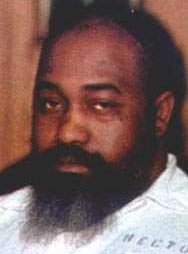
Ricky Ray Rector
Murderer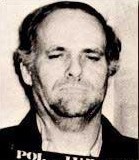 Ervil LeBaron
Murderer · USA · 1972
Ervil Morrell LeBaron (1925 to August 16, 1981) was the leader of a polygamous…
35 victims
Ervil LeBaron
Murderer · USA · 1972
Ervil Morrell LeBaron (1925 to August 16, 1981) was the leader of a polygamous…
35 victims
 Brian Kevin Rosenfeld
Murderer · USA · 1985
Brian Kevin Rosenfeld Brian Kevin Rosenfeld was sentenced to three concurrent l…
23 victims
Brian Kevin Rosenfeld
Murderer · USA · 1985
Brian Kevin Rosenfeld Brian Kevin Rosenfeld was sentenced to three concurrent l…
23 victims
 Marvin Gray
Murderer · USA · 1975
Marvin Gray was convicted killer who claimed responsibility for 23 slayings and…
23 victims
Marvin Gray
Murderer · USA · 1975
Marvin Gray was convicted killer who claimed responsibility for 23 slayings and…
23 victims
 Yahweh ben Yahweh
Murderer · USA · 1980
Yahweh ben Yahweh was born and legally named Hulon Mitchell Jr. (October 27, 19…
23 victims
Yahweh ben Yahweh
Murderer · USA · 1980
Yahweh ben Yahweh was born and legally named Hulon Mitchell Jr. (October 27, 19…
23 victims
 Russell Ellwood
Murderer · USA · 1991
Russell Ellwood was a former taxi driver. Authorities suspected him of killing…
20 victims
Russell Ellwood
Murderer · USA · 1991
Russell Ellwood was a former taxi driver. Authorities suspected him of killing…
20 victims
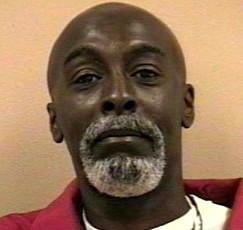 James Edward Thomas
Murderer · USA · 1986
James Edward Thomas moved into the Sir Walter Tourist Home in Raleigh, North Ca…
1 victim
James Edward Thomas
Murderer · USA · 1986
James Edward Thomas moved into the Sir Walter Tourist Home in Raleigh, North Ca…
1 victim
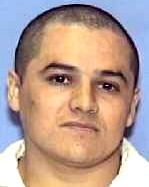 Felix Rocha Estrada
Murderer · USA · 1997
Felix Rocha Estrada was a Hispanic male with hair color not recorded, and he wa…
1 victim
Felix Rocha Estrada
Murderer · USA · 1997
Felix Rocha Estrada was a Hispanic male with hair color not recorded, and he wa…
1 victim
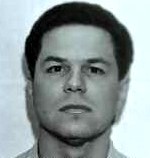 Walter LaGrand
Murderer · USA · 1982
Walter LaGrand was convicted for his role in a bungled armed robbery of the Val…
1 victim
Walter LaGrand
Murderer · USA · 1982
Walter LaGrand was convicted for his role in a bungled armed robbery of the Val…
1 victim
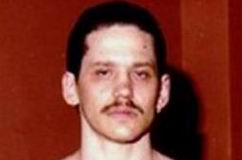 Clayton Fountain
Murderer · USA · 1974
Clayton Fountain was a former federal prisoner who was serving life imprisonmen…
5 victims
Clayton Fountain
Murderer · USA · 1974
Clayton Fountain was a former federal prisoner who was serving life imprisonmen…
5 victims
- Gender
- male
- Country
- USA
- Location
- Faulkner County, Arkansas, USA
- Date of birth
- January 12, 1950
- Age at first offence
- 31
- Characteristics
- argument, revenge
- Victim profile
- Arthur Criswell / Robert Martin ( police officer )
- Method of murder
- Shooting ( .38-caliber pistol)
- Date(s) of murder
- March 21/24, 1981
- Years active
- 1981
- Date of arrest
- March 24, 1981 ( suicide attempt )
- Status
-
Executed
Executed by lethal injection in Arkansas on January 24, 1992
Background
Ricky Ray Rector (January 12, 1950 - January 24, 1992) was executed by lethal injection in Arkansas on January 24, 1992.
Timeline
- March 21, 1981 — Rector and some friends drove to a dance hall at Tommy’s Old-Fashioned Home-Style Restaurant in Conway; after a friend was refused entry for being unable to pay the three dollar cover charge, Rector became incensed and fired a .38 pistol, wounding two and killing a third man, Arthur Criswell.
- March 22, 1981 — Rector shot and killed Arthur Criswell and wounded two others at a Conway, Arkansas restaurant.
- March 24, 1981 — Officer Bob Martin of the Conway Police Department went to the home of Rector’s mother to search for Rector as he was the prime suspect; while the officer was talking with Mrs. Rector, Rector entered the back of the house, proceeded into the living room, and fatally shot Officer Martin; moments later Rector unsuccessfully attempted suicide by shooting himself in the forehead and was taken to a hospital where his gunshot wound was cleaned and surgically closed.
- November 1982 — Rector was convicted on both counts and sentenced to death.
- January 24, 1992 — Rector was executed by lethal injection.
- March 23, 1973 — New capital punishment laws in Arkansas came into force.
- 1972 — Furman v. Georgia occurred, 408 U.S. 238 (1972).
- 1983 — Rector’s conviction for capital murder was affirmed by the Arkansas Supreme Court, Rector v. State, 280 Ark. 385, 659 S.W.2d 168 (1983).
- 1984 — The United States Supreme Court denied certiorari in Rector’s capital murder case, 466 U.S. 988 (1984).
- August 1989 — United States Medical Center for Federal Prisoners (MCFP) doctors issued a final forensic report stating Rector satisfied the competency standard contained in Ford v. Wainwright.
- February 13, 1991 — Rehearing and Rehearing En Banc was denied in 923 F.2d 570.
- January 2, 1991 — The United States Court of Appeals, Eighth Circuit decided 923 F.2d 570.
- October 12, 1990 — The case of Ricky Ray Rector, Appellant, v. Steve Clark, Attorney General, State of Arkansas; and A.L. Lockhart, Director of Arkansas Department of Correction, Appellees, was submitted.
- October 13, 1988 — Bernard Shaw asked a campaign debate question about supporting the death penalty were his wife to be raped and murdered; Michael Dukakis responded.
- 1986 — Ford v. Wainwright was decided, 477 U.S. 399 (1986).
The offence
Rector decided to rob a convenience store; the incident turned into a stand-off. Rector shot and killed a civilian and a police officer.
On March 21, 1981, Rector and some friends drove to a dance hall at Tommy’s Old-Fashioned Home-Style Restaurant in Conway. When one of Rector’s friends was refused entry after being unable to pay the three dollar cover charge, Rector became incensed and pulled a .38 pistol from his waist band. He fired several shots, wounding two and killing a third man. The third man, Arthur Criswell, died almost instantly after being struck in the throat and forehead.
After the shooting at the dance hall, Rector left the scene of the murder in a friend’s car and wandered the city for three days, alternately staying in the woods or with relatives.
On March 24, 1981, Officer Martin arrived at Rector’s mother’s home shortly after three p.m. and began chatting with Rector’s mother and sister. Shortly thereafter, Rector arrived and greeted Officer Martin. As Officer Martin turned away to continue his conversation with Mrs. Rector, Rector drew his pistol from behind his back and fired two shots into Officer Martin, striking him in the jaw and neck. Rector then turned and walked out of the house.
Moments later, after walking past Rector’s mother’s backyard, Rector put his gun to his own temple and fired. Other police officers discovered him and rushed him to a local hospital.
Rector’s killing of Officer Martin was the basis of a capital murder trial.
Investigation
A United States Court of Appeals, Eighth Circuit opinion addressed Rector’s appeal following a district court’s denial of habeas corpus relief. The opinion stated that the district court denied habeas relief and Rector appealed.
Arrest
On March 24, 1981, Rector arrived at his mother’s home and met Officer Martin. Moments later, Rector fatally shot Officer Martin and then walked out of the house. Rector then attempted suicide by shooting himself in the forehead and was taken to a hospital.
Trial
Rector was tried for the murders of Criswell and Martin. The defence attorneys argued that Rector was not competent to stand trial. After hearing conflicting testimony from experts who had evaluated Rector, Judge George F. Hartje ruled that Rector was competent to stand trial. Rector was convicted on both counts and sentenced to death.
Rector was convicted of first degree murder in the Criswell shooting. Prior to the trial, the judge found Rector competent to stand trial.
Rector’s conviction on the first degree murder charge was affirmed by the Arkansas Supreme Court in Rector v. State, 277 Ark. 17, 638 S.W.2d 672 (1982). Rector was sentenced to a life term in prison.
Rector was then tried for the capital murder of Officer Martin. Prior to this second trial, Rector was again found to be competent to stand trial. A jury found Rector guilty of the capital murder of Officer Martin and sentenced him to death on November 11, 1982.
Rector’s capital murder conviction was affirmed by the Arkansas Supreme Court in Rector v. State, 280 Ark. 385, 659 S.W.2d 168 (1983), and the United States Supreme Court denied certiorari in 466 U.S. 988, 104 S.Ct. 2370, 80 L.Ed.2d 842 (1984).
Sentencing
Rector was sentenced to death for the capital murder of Officer Martin.
The case identified Rector as being sentenced to death on November 11, 1982 following the capital murder trial.
Appeals
Rector filed a petition for writ of habeas corpus, which was twice amended.
Two issues were addressed in the habeas proceeding:
- whether Rector’s present mental ability should prevent his execution; and
- whether Rector’s mental ability at his capital murder trial was so diminished that he was unable to receive the requisite assistance of counsel so as to satisfy the sixth amendment.
The district court denied habeas relief and Rector appealed; the case proceeded through federal appellate review. The United States Court of Appeals, Eighth Circuit decided 923 F.2d 570 on January 2, 1991 and denied rehearing and rehearing en banc on February 13, 1991, affirming the district court’s denial of habeas relief.
In discussing the standard for competency to be executed, the opinion stated that Ford v. Wainwright prevented the execution of “one whose mental illness prevents him from comprehending the reasons for the penalty or its implications.” It also quoted Justice Powell:
"I would hold that the Eighth Amendment forbids the execution only of those who are unaware of the punishment they are about to suffer and why they are to suffer it."
The opinion further quoted its own reference to Ford:
"Under [Ford ], it would be a violation of the Eighth Amendment to execute someone who lacks capacity to understand the nature and purpose of the punishment about to be imposed on him."
After ordering a competency evaluation, the district court ordered Rector to undergo a competency evaluation at the United States Medical Center for Federal Prisoners (MCFP) in Springfield, Missouri.
In the final forensic report of August 1989, the examining MCFP doctors stated:
"In the opinions of the undersigned examiners, Mr. Rector satisfies the competency standard contained in Ford v. Wainwright. That is, it appears that no mental illness or defect prevents Mr. Rector from being aware of his impending execution and the reason for it. (Petitioner's exhibit 1, p. 5)."
Rector argued for the American Bar Association Criminal Justice Mental Health Standards, and the MCFP doctors found Rector would have considerable difficulty under the ABA standards, stating:
"In the opinions of the undersigned examiners, Mr. Rector would have considerable difficulty due to his organic deficits in being able to work in a collaborative, cooperative effort with an attorney. In our opinions it appears that he would not be able to recognize or understand facts which might be related to his case which might make his punishment unjust or unlawful. (Petitioner's exhibit 1, p. 5-6)."
The Eighth Circuit opinion stated that it agreed with the district court that the ABA standards had no legal effect and held that the district court had correctly selected the Ford test.
The Eighth Circuit also addressed Rector’s competency-to-stand-trial arguments and stated that testimony from lay witnesses did not impress the court when juxtaposed against qualified experts. It quoted the district court:
"When the testimony of these three witnesses is juxtaposed against the testimony of the four highly qualified experts who testified at prior to [sic] Rector's 1982 state trial, [we] are not impressed."
The Eighth Circuit concluded it found no basis to question the state court’s findings regarding competency to stand trial and affirmed the district court.
Outcome
Rector was executed by lethal injection on January 24, 1992.
Aftermath
Rector was the third person executed by the state of Arkansas since Furman v. Georgia, 408 U.S. 238 (1972), after new capital punishment laws were passed in Arkansas and came into force on March 23, 1973.
It took medical staff, with Rector’s help, more than fifty minutes to find a suitable vein in Rector’s arm. The administrator of the State Department of Corrections Medical Program stated:
“the moans did come as a team of two medical people that had grown to five worked on both sides of his body to find a vein. That may have contributed to his occasional outbursts.”
The state attributed the difficulty in finding a suitable vein to Rector’s heavy weight and his use of an antipsychotic medication. Some reported they could hear Rector moaning during the execution.
The January 25, 1992 New York Times material quoted in the record included details that the issue was a man’s life and that Rector died by lethal injection at 10:09 P.M. Central standard time, and stated that the execution was delayed by nearly an hour because medical personnel were not able to find a suitable vein in which to inject the solution. It also included statements from Roby Robertson:
"I think any intelligent politician has to make judgments on when he gets out in front of popular opinion and when you follow the community intent," said Roby Robertson, director of the Arkansas Institute of Government at the University of Arkansas at Little Rock. "I think this is one where Bill Clinton feels the people of Arkansas support the death penalty and he's not going to go against it."
The record also included quotes from Jeff Rosenzweig:
"He is, in the vernacular, a zombie," said Jeff Rosenzweig, a lawyer for Mr. Rector before the execution. "His execution would be remembered as a disgrace to the state."
It included Rector’s defence counsel comments attributed to Rosenzweig:
"My personal opinion is that in his heart of hearts he's against the death penalty," Mr. Rosenzweig said of Mr. Clinton. "In my opinion, this is a very easy way to show you're tough on crime."
The record included a quote from Mr. Gauldin:
"No one who has considered this claim and applied the prevailing legal standard has concluded that he is incompetent to be executed," Federal District Judge Henry Woods ruled Wednesday in turning down an appeal for a stay.
It also included quotes about the governor’s actions and views on death penalty politics, including comments by Merle Black:
"It's used a lot of times as a litmus test for executive leadership in Southern states," said Merle Black, a professor of politics and government at Emory University in Atlanta, "and I can't think of an example of a politician elected to a governorship in the South in recent years who has not been in favor of the death penalty."
And it included comments by Professor Robertson:
But Professor Robertson said that in the current climate most politicians are likely to err on the side of an execution rather than the side of calling one off.
It included a quote from Rosenzweig addressing the question of whether the case deserved the death penalty:
"Purely and simply, this is a measure of how civilized we are," he said. "At what level of disability do you kill people?"
The January 25, 1992 New York Times material also included references to Bill Clinton’s campaign actions and criticism relating to execution and death penalty policy, and to Michael Dukakis’s response in a debate question on October 13, 1988. It included statements about Clinton’s prison inmate policy during his returned office and the limited number of commutations since 1983 as compared to his first term.
The record further described Rector’s IQ being measured at around 70 and included an account of controversy regarding execution of people described as functionally retarded. It referenced Atkins v. Virginia and stated that in 2002 the U.S. Supreme Court banned the execution of people with mental retardation in Atkins v. Virginia, ruling that the practice constitutes cruel and unusual punishment.
Other details
Rector was identified as African-American and as having been known to have a history of mental illness concerns, including a measured IQ around 70 and claims of mental impairment after his self-inflicted gunshot wound.
A narrative described that Rector seemed incapable of understanding his pending death sentence. For his last meal, he left the pecan pie on the side of the tray, telling guards who came to take him to the execution chamber that he was saving it "for later".
The record described Rector’s injuries as destroying part of his brain. It stated:
- The trauma to Rector’s head resulted in the severance of about three inches of the left frontal pole, commonly referred to in medical terms as a frontal lobotomy.
- His lawyers said that even though he could speak, his mental capacities were so impaired that he did not know what death is or understand that the people he shot are not still alive.
- It stated that after the self-inflicted shot Rector’s frontal lobe destruction resulted in what was essentially a self-lobotomy.
The record included procedural details from the Eighth Circuit decision in 923 F.2d 570. It identified the case as “Ricky Ray Rector, Appellant, v. Lockhart, Director of Arkansas Department of Correction, Appellees,” with No. 90-1204. It listed:
- Submitted Oct. 12, 1990.
- Decided Jan. 2, 1991.
- Rehearing and Rehearing En Banc Denied Feb. 13, 1991.
- Before BOWMAN and WOLLMAN, Circuit Judges and ROSS, Senior Circuit Judge.
- The opinion was authored by ROSS, Senior Circuit Judge.
Spotted an error, or have more information about this case?