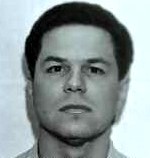
Walter LaGrand
Murderer Ervil LeBaron
Murderer · USA · 1972
Ervil Morrell LeBaron (1925 to August 16, 1981) was the leader of a polygamous…
35 victims
Ervil LeBaron
Murderer · USA · 1972
Ervil Morrell LeBaron (1925 to August 16, 1981) was the leader of a polygamous…
35 victims
 Brian Kevin Rosenfeld
Murderer · USA · 1985
Brian Kevin Rosenfeld Brian Kevin Rosenfeld was sentenced to three concurrent l…
23 victims
Brian Kevin Rosenfeld
Murderer · USA · 1985
Brian Kevin Rosenfeld Brian Kevin Rosenfeld was sentenced to three concurrent l…
23 victims
 Marvin Gray
Murderer · USA · 1975
Marvin Gray was convicted killer who claimed responsibility for 23 slayings and…
23 victims
Marvin Gray
Murderer · USA · 1975
Marvin Gray was convicted killer who claimed responsibility for 23 slayings and…
23 victims
 Yahweh ben Yahweh
Murderer · USA · 1980
Yahweh ben Yahweh was born and legally named Hulon Mitchell Jr. (October 27, 19…
23 victims
Yahweh ben Yahweh
Murderer · USA · 1980
Yahweh ben Yahweh was born and legally named Hulon Mitchell Jr. (October 27, 19…
23 victims
 Russell Ellwood
Murderer · USA · 1991
Russell Ellwood was a former taxi driver. Authorities suspected him of killing…
20 victims
Russell Ellwood
Murderer · USA · 1991
Russell Ellwood was a former taxi driver. Authorities suspected him of killing…
20 victims
 Konstantinos Fotopoulos
Murderer · USA · 1989
Konstantinos Fotopoulos was sentenced to death on November 1, 1990. Konstantino…
2 victims
Konstantinos Fotopoulos
Murderer · USA · 1989
Konstantinos Fotopoulos was sentenced to death on November 1, 1990. Konstantino…
2 victims
 Victor Kennedy
Murderer · USA · 1980
Victor Kennedy was 37 at the time of his execution. He was executed by electroc…
1 victim
Victor Kennedy
Murderer · USA · 1980
Victor Kennedy was 37 at the time of his execution. He was executed by electroc…
1 victim
 Olen Clay Gorby
Murderer · USA · 1990
Olen Clay Gorby was born on 11/27/49 and was living in a homeless shelter at th…
1 victim
Olen Clay Gorby
Murderer · USA · 1990
Olen Clay Gorby was born on 11/27/49 and was living in a homeless shelter at th…
1 victim
 Stephen Epperly
Murderer · USA · 1980
Stephen Epperly was convicted of first degree murder of Gina Renee Hall. Her bo…
1 victim
Stephen Epperly
Murderer · USA · 1980
Stephen Epperly was convicted of first degree murder of Gina Renee Hall. Her bo…
1 victim
 Susan Grund
Murderer · USA · 1992
Susan Grund was convicted of murdering her husband, James Grund, and the trial…
1 victim
Susan Grund
Murderer · USA · 1992
Susan Grund was convicted of murdering her husband, James Grund, and the trial…
1 victim
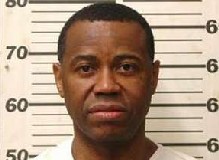 Henry Lee Jones
Murderer · USA · 2003
Henry Lee “Bam” Jones grew up without a father in Cleveland, Miss. He grew up w…
4 victims
Henry Lee Jones
Murderer · USA · 2003
Henry Lee “Bam” Jones grew up without a father in Cleveland, Miss. He grew up w…
4 victims
- Gender
- male
- Country
- USA
- Location
- Pima County, Arizona, USA
- Date of birth
- January 26, 1962
- Age at first offence
- 20
- Characteristics
- bank robbery, kidnapping
- Victim profile
- Kenneth Hartsock, 63 ( branch manager )
- Method of murder
- St abbing with a letter opener
- Date(s) of murder
- January 7, 1982
- Years active
- 1982
- Date of arrest
- Same day
- Status
-
Executed
Executed by asphyxiation-gas in Arizona on March 3, 1999
Case overview
Walter LaGrand was convicted for his role in a bungled armed robbery of the Valley National Bank in Marana, Arizona, on January 7, 1982, during which Ken Hartsock was fatally stabbed and Dawn Lopez was stabbed multiple times.
Background
Walter LaGrand and his brother Karl set fire to a golf course as youths, which did $20,000 damage, while the family lived at a military post in Texas.
As youths, Walter LaGrand and his brother Karl were convicted of the armed robbery of 3 Tucson supermarkets in a 6-day period in 1981. They were imprisoned at that point.
The case involved Walter LaGrand, 37, and his brother Karl LaGrand, 35. The brothers were German nationals, born in Germany and moved with their mother to the United States at age 3. At no time did they become citizens of the United States.
Walter LaGrand and Karl LaGrand later contacted the German consulate of their own accord, having learned of their right to consular assistance from other sources.
The offence
Shortly after 8:00 on the morning of January 7, 1982, Walter LaGrand and his brother Karl entered the Valley National Bank in Marana.
They were armed with a toy pistol. Karl tried to force Ken Hartsock, the 63-year-old branch manager, to open the vault. Hartsock could not open the vault because he had only half of the combination. Walter and Karl then forced Hartsock and Dawn Lopez, a bank clerk, into Hartsock's office and bound them.
After threatening Hartsock with a letter opener, the brothers began beating him. Hartsock died from 24 stab wounds.
Karl and Walter tried to kill Lopez by stabbing her six times, then fled the bank. Lopez survived.
Before the attack, Dawn Lopez arrived for work at approximately 8:00 a.m. When she arrived at the bank she noticed three vehicles parked in the parking lot: a motor home; a truck belonging to Ken Hartsock; and a car which she did not recognize but which she described as white or off-white with a brown top. Because Lopez believed that Hartsock might be conducting business and desire some privacy she left the parking lot and drove around Marana for several minutes. She returned and noticed Hartsock standing by the bank door with another man whom she did not recognize.
Walter LaGrand emerged from the car and asked Lopez what time the bank opened. Lopez replied, “Ten o'clock.” Lopez continued walking and went into the bank. Inside, she saw Hartsock by the vault with Karl. Karl was wearing a coat and tie and carrying a briefcase. Karl told her to sit down and opened his jacket to reveal a gun, later found to be a toy pistol.
Walter then stood by the vault. Lopez testified that Walter then said, “If you can't open it this time, let's just waste them and leave.”
Hartsock was unable to open the vault because he had only one-half of the vault combination. The bank employees told the LaGrand brothers they only knew half of the combination to the safe and would have to wait for a 3rd bank employee to report to work before it could be opened.
The LaGrands moved Lopez and Hartsock into Hartsock's office. They bound their victims' hands together with black electrical tape. Walter accused Hartsock of lying and put a letter opener to Hartsock's throat, threatening to kill him if he was not telling the truth. Lopez and Hartsock were gagged with bandannas.
Wilma Rogers, another bank employee, had arrived at the bank at approximately 8:10 a.m. Upon arriving, Rogers noticed two strange vehicles in the parking lot and, fearing something might be amiss, wrote down the license plate numbers of the two unknown vehicles. She went to a nearby grocery store and telephoned the bank. Lopez answered the phone after her gag was removed; her hands remained tied. Karl held the receiver to Lopez' ear and listened to the conversation.
Rogers asked for Hartsock but Lopez denied that he was there, which struck Rogers as odd because she had seen his truck in the bank parking lot. Rogers then told Lopez that her car headlights were still on. Rogers told Lopez that if she did not go out to turn her head-lights off, then she would call the sheriff.
After the first telephone call, the LaGrands decided to have Lopez turn off her headlights. Her hands were freed and she was told to go turn off the lights but was warned that “If you try to go--if you try to leave, we'll just shoot him and leave. We're just going to kill him and leave.” Lopez turned off the lights. Upon her return to the bank her hands were retied. Hartsock remained bound and gagged in the same chair.
Lopez was seated in a chair and turned toward a corner of the room. Lopez testified that soon thereafter she heard sounds of a struggle. Fearing Hartsock was being hurt, Lopez stood up, broke the tape around her hands, and turned to help him. Lopez testified that for a few seconds she saw Hartsock struggling with two men. Karl was behind Hartsock holding him by the shoulders while Walter was in front.
Lopez testified that Walter then came toward her and began stabbing her. Lopez fell to the floor, where she could see only the scuffling of feet and Hartsock lying face down on the floor. Lopez then heard someone twice say, “Just make sure he's dead.”
The LaGrands left the bank and returned to Tucson. Lopez was able to call for help. When law enforcement and medical personnel arrived, Hartsock was dead.
Investigators said Hartsock's throat was slashed and he suffered 23 other knife wounds, at least 6 of which could have been fatal. Lopez also was stabbed multiple times and survived.
Investigation
Law enforcement personnel quickly identified the LaGrands as suspects.
By 3:15 p.m., police traced the license plate number to a white and brown vehicle owned by the father of Walter's girl friend, Karen. The apartment where the LaGrands were staying with Karen was placed under surveillance.
Shortly thereafter Walter, Karl, and Karen left the apartment and began driving. They were followed and soon pulled over. Walter and Karl were then arrested and the car was searched.
Karen's apartment was also searched and a steak knife similar to one found at the bank was seized.
Karl's fingerprint was found at the bank. A briefcase containing a toy gun, black electrical tape, a red bandanna, and other objects was found beneath a desert bush and turned over to the police.
When questioned after their apprehension, Walter made no statements. Karl confessed to the crimes in two different statements. Karl stated that he had stabbed Hartsock and Lopez, but that Walter had not stabbed anyone and that Walter had been out of the room at the time.
Arrest
Walter and Karl were arrested after police stopped the car they were driving with Karen following surveillance of the apartment where they were staying.
Trial
A jury trial followed, and both Walter and Karl were convicted on all charges.
After considering mitigating and aggravating circumstances, the judge sentenced both defendants to death.
The Arizona Supreme Court affirmed the convictions and sentences.
The United States Supreme Court denied certiorari.
Sentencing
Both defendants were sentenced to death.
In aggravating circumstances, the court found:
- prior conviction involving violence
- pecuniary gain
- especially heinous/cruel/depraved
The court found mitigating circumstances: none sufficient to call for leniency.
Appeals
State appellate proceedings
Published opinions included:
- State v. LaGrand (Walter), 153 Ariz. 21, 734 P.2d 563 (1987)
The Arizona Supreme Court gave an account of the crimes in Walter's appeal in State v. LaGrand.
U.S. Supreme Court
The Supreme Court denied certiorari.
Federal habeas and federal appeals
The LaGrands filed post-conviction relief petitions in the Arizona Superior Court (trial court) which were denied in 1989. The Arizona Supreme Court denied review as did the United States Supreme Court, 501 U.S. 1259, 111 S.Ct. 2910, 2911, 115 L.Ed.2d 1074 (1991).
The LaGrands then filed petitions for writ of habeas corpus pursuant to 28 U.S.C. § 2254.
The district court denied relief in a series of orders:
- LaGrand v. Lewis, 883 F.Supp. 469 (D.Ariz. 1995)
- LaGrand v. Lewis, 883 F.Supp. 451 (D.Ariz. 1995)
Their timely appeals followed.
Walter and Karl appealed the district court's denial of habeas corpus petitions, and the United States Court of Appeals, Ninth Circuit affirmed.
The Ninth Circuit consolidated appeals, including:
- Karl Hinze LaGrand, Petitioner-appellant, v. Terry Stewart, * Director, Arizona Department of Corrections, Respondent-appellee.
- Walter Burnhart LaGrand, Petitioner-appellant, v.
The Ninth Circuit proceedings included:
- Argued and Submitted March 22, 1996.
- Decided Jan. 16, 1998.
- Opinion by Judge T.G. NELSON; dissent by Judge PREGERSON.
Joint issues addressed in the Ninth Circuit opinion
The LaGrands raised multiple issues jointly. The Ninth Circuit addressed, among other topics:
- Pecuniary gain as an aggravating factor, including reliance on Arizona Supreme Court reasoning and federal standards.
- Procedural default regarding the failure to notify them of consular rights under the Vienna Convention on Consular Relations.
- Constitutionality of Arizona's felony murder statute instruction rules.
- Mitigation consideration and whether a death sentence was upheld appropriately under proportionality and constitutional standards.
- Method of execution, including lethal injection as a method and claims about execution procedures and reports.
A key statement on procedurally defaulted consular-violation claims included that it was undisputed that the State of Arizona did not notify the LaGrands of their rights under the Treaty, and the claim had not been raised in any state proceeding.
The Ninth Circuit also discussed the admission and exclusion of statements and the constitutional issues raised in connection with Karl's confession.
International proceedings connected to consular rights and execution
The LaGrand case was described as a contentious case in the International Court of Justice (Germany vs. United States of America), involving Walter LaGrand and his brother Karl LaGrand.
Germany initiated proceedings after Walter's execution-related actions were underway. Germany applied for provisional measures to prevent Walter LaGrand's execution. The International Court of Justice granted Germany's request.
Hours before Walter LaGrand was due to be executed, Germany sought provisional measures proprio motu and the Court granted the request requiring the United States to prevent the execution.
Germany then initiated action in the U.S. Supreme Court for enforcement of provisional measures.
The U.S. Supreme Court held that it lacked jurisdiction with respect to Germany's complaint against Arizona due to the eleventh amendment. For the complaint against the United States, it held that the doctrine of procedural default was not incompatible with the Vienna Convention and, even if it conflicted, it had been pre-empted by later federal law, the Anti-Terrorism and Effective Death Penalty Act of 1996.
The U.S. Solicitor-General sent a letter arguing that provisional measures of the International Court of Justice were not legally binding. The U.S. Department of State also conveyed the ICJ's provisional measure to the Governor of Arizona without comment.
A clemency board recommended a stay, but the Governor rejected it and Walter was executed on March 3, 1999.
Germany later modified its complaint to allege additionally that the U.S. violated international law by failing to implement the provisional measures. It also had to modify its request for remedies because Walter had been executed.
The International Court of Justice handed down judgment on June 27, 2001, finding in favor of Germany, including that provisional measures were legally binding and that the United States violated the Vienna Convention through its application of procedural default.
The judgment described that it was the first time in the court's history it had ruled that provisional measures were binding.
Outcome
Walter LaGrand was sentenced to death and was executed by asphyxiation-gas in Arizona on March 3, 1999.
The execution was described as a pronouncement of death 18 minutes after cyanide pellets were dropped into a pan of distilled water and sulfuric acid below the black chair in which he was strapped.
The execution narrative included Walter LaGrand apologized to the families of his victims first and said:
"To all my loved ones, I hope they find peace," he said. "To all of you here today, I forgive you and I hope I can be forgiven in my next life."
As the cyanide process continued, it described Walter LaGrand coughing, shaking his head, gagging several times, and head slumping forward. It described that he did not raise his head again, though his shoulders appeared to move involuntarily over the next few minutes.
Both brothers chose the gas chamber instead of lethal injection in hopes of winning a stay on grounds that it was cruel and unusual punishment. It described that Karl LaGrand was allowed to switch to lethal injection at the last moment, and Walter refused the offer to switch to lethal injection, saying he would stick with the gas chamber regardless of the outcome.
Legal wrangling continued after an execution time described as 3 p.m. The 9th U.S. Circuit Court of Appeals issued a restraining order saying Arizona could execute LaGrand but not with gas. The U.S. Supreme Court lifted the restraining order and rejected the last two appeals on his behalf. It included a statement that Justices Stephen Breyer and John Paul Stevens dissented on LaGrand's final appeals.
Aftermath
It was stated that the case drew widespread attention in Germany, which has no death penalty, prompting repeated diplomatic protests and an appeal to an international court.
It also stated that Karl LaGrand was executed last week for the same crime.
The account stated that the last Arizona prisoner to die in the gas chamber was Donald Harding in 1992, and that after November 1992 prisoners sentenced to death would be executed by injection unless they chose gas.
Walter LaGrand trial and appeal issues (as detailed)
Exclusion of Karl's confession for Walter’s defense
Karl made two separate recorded statements. In those statements, Karl assumed sole responsibility for the attack on Ken Hartsock, saying it occurred after Mr. Hartsock kicked him in the leg. Karl said Walter did not stab anyone and that Walter was not in the room at the time.
The trial court ruled the confessions were voluntary but were taken in violation of Miranda v. Arizona. This precluded the State from introducing the confessions as evidence in the guilt phase of the trial against Karl.
The Miranda stipulation did not preclude Walter from introducing the confessions as part of his defense. Walter sought to have the confessions introduced under Arizona Rule of Evidence 804(b)(3), identical to Federal Rule of Evidence 804(b)(3). The rule was set out as:
Rule 804. Hearsay Exceptions; Declarant Unavailable
...
(b)(3) Statement against interest. A statement which was at the time of its making so far contrary to the declarant's pecuniary or proprietary interest, or so far tended to subject him to civil or criminal liability ... that a reasonable man in his position would not have made the statement unless he believed it to be true. A statement tending to expose the declarant to criminal liability and offered to exculpate the accused is not admissible unless corroborating circumstances clearly indicate the trustworthiness of the statement.
After considering Walter's request on four separate occasions, the trial court held the confessions were inadmissible at the guilt phase of the trial.
On appeal, the Arizona Supreme Court explained that the method of determining admissibility under Rule 804(b)(3) required limiting a judge’s inquiry to asking whether evidence in the record corroborating and contradicting the declarant's statement would permit a reasonable person to believe the statement could be true. The Arizona Supreme Court held:
We therefore hold that a judge's inquiry, made to assure himself that the corroboration requirement of Rule 804(b)(3) has been satisfied, should be limited to asking whether evidence in the record corroborating and contradicting the declarant's statement would permit a reasonable person to believe that the statement could be true. If a judge believes that a reasonable person could [so] conclude ... then the judge must admit the statement into evidence.
The Arizona Supreme Court concluded that it was not error for the trial court to refuse admission because evidence corroborated and contradicted Karl’s statements, and the corroboration-and-contradiction evidence did not permit a reasonable person to conclude the exculpatory statements could be true.
Walter argued that exclusion of the confessions violated the Sixth Amendment right to “present a complete defense.” In addressing this, the Ninth Circuit discussed Chambers doctrine and cited Chambers, Green, Washington, and Rock. It also discussed that the refusal to admit was based on reliability considerations and did not involve rigid or mechanistic exclusion.
The Ninth Circuit concluded there was no constitutional error in excluding Karl’s statement that Walter was not involved in the stabbing of Ken Hartsock.
Other details
Last meal
The last meal described for Walter LaGrand was:
- Six fried eggs, cooked over-easy
- 16 strips of bacon
- one large portion of hash-browns
- one pint of pineapple sherbet ice cream
- one “breakfast steak” well done
- One 16 ounce cup filled with ice
- one 7UP
- 1 Dr. Pepper
- 1 Coke
- one portion of hot sauce
- one cup of coffee
- two packets of sugar
- four Rolaids tablets
Spotted an error, or have more information about this case?