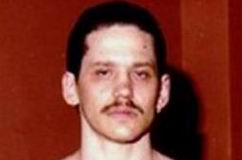
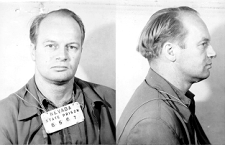
Clayton Fountain
Murderer Ervil LeBaron
Murderer · USA · 1972
Ervil Morrell LeBaron (1925 to August 16, 1981) was the leader of a polygamous…
35 victims
Ervil LeBaron
Murderer · USA · 1972
Ervil Morrell LeBaron (1925 to August 16, 1981) was the leader of a polygamous…
35 victims
 Marvin Gray
Murderer · USA · 1975
Marvin Gray was convicted killer who claimed responsibility for 23 slayings and…
23 victims
Marvin Gray
Murderer · USA · 1975
Marvin Gray was convicted killer who claimed responsibility for 23 slayings and…
23 victims
 Yahweh ben Yahweh
Murderer · USA · 1980
Yahweh ben Yahweh was born and legally named Hulon Mitchell Jr. (October 27, 19…
23 victims
Yahweh ben Yahweh
Murderer · USA · 1980
Yahweh ben Yahweh was born and legally named Hulon Mitchell Jr. (October 27, 19…
23 victims
 Charles Manson
Murderer · USA · 1969
Charles Milles Manson (born November 12, 1934) was an American criminal and mus…
9 victims
Charles Manson
Murderer · USA · 1969
Charles Milles Manson (born November 12, 1934) was an American criminal and mus…
9 victims
 Jay Kelly Pinkerton
Homicide · USA · 1979
May 15, 1986 — Jay Kelly Pinkerton was executed by lethal injection in Texas. ·…
2 victims
Jay Kelly Pinkerton
Homicide · USA · 1979
May 15, 1986 — Jay Kelly Pinkerton was executed by lethal injection in Texas. ·…
2 victims
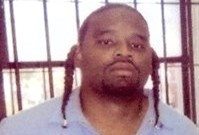 Donald Ray DeBose
Murderer · USA · 1997
Donald Ray DeBose was sentenced to death on July 21, 1999. Debose robbed a woma…
1 victim
Donald Ray DeBose
Murderer · USA · 1997
Donald Ray DeBose was sentenced to death on July 21, 1999. Debose robbed a woma…
1 victim
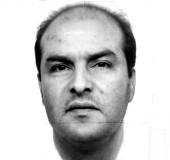 Martin Sauceda Vega
Murderer · USA · 1985
Martin Sauceda Vega was executed by lethal injection in Texas on January 26, 19…
1 victim
Martin Sauceda Vega
Murderer · USA · 1985
Martin Sauceda Vega was executed by lethal injection in Texas on January 26, 19…
1 victim
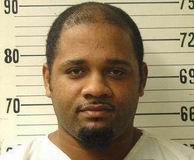 James Stout
Murderer · USA · 1995
James P. Stout and three accomplices were accused of carjacking, abducting and…
1 victim
James Stout
Murderer · USA · 1995
James P. Stout and three accomplices were accused of carjacking, abducting and…
1 victim
 Julio Gonzalez
Mass murderer · USA · 1990
Julio Gonzalez was sentenced to 174 twenty-five-year sentences (a total of 4,35…
87 victims
Julio Gonzalez
Mass murderer · USA · 1990
Julio Gonzalez was sentenced to 174 twenty-five-year sentences (a total of 4,35…
87 victims
- Gender
- male
- Country
- USA
- Location
- Philippines / Kansas/Illinois, USA
- Date of birth
- 1955
- Age at first offence
- 19
- Characteristics
- history of mental illness, member of the "texas seven
- Victim profile
- A staff sargeant / Three prisoners and one guard
- Method of murder
- Shooting / St abbing with homemade knife
- Date(s) of murder
- 1974 - 1983
- Years active
- 1974–1983
- Date of arrest
- —
- Status
-
Died in custody
Sentenced to life imprisonment; died in prison on July 12, 2004
Case overview
Clayton Fountain was a former federal prisoner who was serving life imprisonment and died in the Federal Medical Facility in Springfield, Missouri, on July 12, 2004.
Background
Fountain was born in Fort Benning, Georgia in 1955 and enlisted in the US Marine Corps in the early 70s.
He was incarcerated at the Disciplinary Barracks at Fort Leavenworth until 1976 for an alleged shooting and killing of a staff sargeant at Grande Island, Phillippines in 1974.
While in Leavenworth/Marion, Fountain was found guilty of four additional murders.
He was locked down in the SHU at the FedMed on “no human contact status,” doing life without the possibiity of parole.
In the latter years of his life, Fountain converted to Catholicism. He took several educational courses, mostly in Theology or related disciplines. He became associated with a Trappist order of Cistercian monks at Ava, Missouri, and that order postumously accepted him as a “lay brother” after his sudden and unexpected death of a heart attack.
The offence
Fountain was implicated in murders in the Control Unit at the federal penitentiary at Marion, Illinois.
Two murders involved the events described in the appeals relating to the Control Unit of Marion. The murders took place on the same October day in 1983. The record described security measures in the Control Unit, and how guards escorted Fountain and Thomas Silverstein separately, handcuffed, when leaving their cells to go to or from the recreation room, the law library, or the shower.
In the evening, Fountain was being escorted back to his cell from the recreation room. He stopped alongside the cell of another inmate and reached his handcuffed hands into the cell. When he brought them out, he was out of the handcuffs and holding a shank. Fountain attacked all three guards, killing one.
The record stated that Fountain killed Hoffman with multiple stab wounds, including some inflicted after the guard had already fallen. The record stated that Fountain injured Ditterline gravely; Ditterline survived but was permanently disabled. The record stated that Fountain inflicted lesser though still serious injuries on the third guard, Powles.
After the wounded guards had been dragged to safety, Fountain threw up his arms in the boxer's gesture of victory, and laughing walked back to his cell.
The earlier murder described in the record included the killing of an inmate in the Control Unit by Fountain and Thomas Silverstein, and it was stated that after that, both Fountain and Silverstein were serving life sentences for murder. The record also stated that for one of these killings Fountain had been convicted only of voluntary manslaughter, and that Silverstein's first murder conviction was reversed for trial error and a new trial ordered after the trial in this case.
The record also stated that before the two murders involved in the appeals, Silverstein killed another inmate, pleaded guilty to that murder, and received his third life sentence. It stated that at that point Fountain and Silverstein had each killed three people.
Investigation and prison security measures described
The prison authorities decided on additional security measures, which the record described as belatedly decided and ineffectual. Three guards would escort Fountain and Silverstein separately, handcuffed, every time they left their cells.
The record stated that the guards would not be armed, and it described a concern that prisoners might seize weapons. It also described conditions in Marion’s Control Unit, stating that prisoners were confined one to a cell for all but an hour or an hour and a half a day and were fed in their cells.
Trial
Charges, conviction, and sentencing at Fountain’s trial
A jury convicted Fountain of first-degree murder, 18 U.S.C. § 1111.
A jury convicted Fountain of lesser offenses that the record said were unnecessary to go into here.
The judge sentenced Fountain to not less than 50 nor more than 150 years in prison. The judge also ordered restitution pursuant to the Victim and Witness Protection Act of 1982, Pub. L. 97-291, 96 Stat. 1248 (codified in 18 U.S.C. §§ 3579-3580 and elsewhere).
The judge ordered restitution of $92,000 to Hoffman's estate, $98,000 to Ditterline, and nearly $300,000 to the Department of Labor. The money for the Department was described as reimbursing it for disability, medical, and funeral payments that it had made or would make to Ditterline, Powles, and Hoffman's estate. The money for Ditterline was described as compensating for past and future lost earnings not compensated for by the Department of Labor and for unreimbursed medical expenses.
Shackling of defendants and inmate witnesses
At Fountain’s trial, the judge ordered Fountain and inmate witnesses to be shackled at the ankles while in court. Curtains at the counsel tables shielded the defendants' shackles from the jury's view, but the record stated that the shackles were visible when witnesses were en route to or from the witness stand.
Fountain testified in his own trial.
Mental health request
On the day of trial, the record described a request in Silverstein’s case for a psychiatrist, and the judge refused, saying: “I don't think that is within my prerogative to do that and the court would not grant a continuance at this late date for that.”
Self-defense testimony and cross-examination
Fountain testified that he was acting in self-defense when he attacked his guards and that while he admitted that he had had a knife, he testified that it was for self-defense.
The record described that this testimony laid Fountain open to cross-examination about his prior activities with a knife, which included killing an inmate whom he stabbed 57 times, crying “die, bitch, die.”
Threats and disputed admissibility issues
The record stated that Fountain objected to testimony by a guard that two months after the murder Fountain had said to him, “what are you looking at, bitch?,” and then asked him whether, when it was his turn to die, he “would scream like the other two bitches screamed.”
Fountain argued that the alleged conversation was irrelevant and that it wasn’t even shown that he knew that another guard had been killed the day he murdered Hoffman.
Fountain testified that he knew of Clutts's murder the same day it happened. The record described the government’s argument about prison grapevine inference and also described the analysis about whether the conversation constituted an admission.
The record stated that any error would have been harmless and that the circumstances of Fountain’s attack on three guards negated any inference of self-defense.
Subpoena requests for inmates Bruscino and Gometz
Fountain complained about the court’s refusal to subpoena as witnesses inmates Bruscino and Gometz. Fountain said they would have contradicted a guard who testified that Fountain, shortly after the murder, told Bruscino, who was in the second cell down the corridor from Fountain (Gometz was in the cell between them), that “it would have been fun if he [Fountain] could have killed Hoffman, Jr.”
The judge stated: “the fact that somebody else such as Gometz and Bruscino would say that they didn't hear it, I don't think is probative of the fact that it was said or not said. And Mr. Fountain knows whether it was said or not said, and he can deny it or not and that will be up to him . . . . The Court finds itself in this position to some extent, that I notice that these witnesses repeatedly are called for almost every case, when any one of them are involved. The Court is extremely skeptical about the veracity of all of them and I am somewhat prone to believe that they testify and are willing to testify favorable to their friends on whatever occasion the circumstances require.”
The record stated that although the judge could not properly refuse witnesses “necessary to an adequate defense” merely because he thought they would lie, the record described the ground for refusal as lack of necessity.
The record also explained why Bruscino’s presence was described as unnecessary to an adequate defense and why the failure to subpoena Gometz was also described.
Sentencing
The judge sentenced Fountain to a term of not less than 50 nor more than 150 years in prison and ordered restitution of $92,000 to Hoffman's estate, $98,000 to Ditterline, and nearly $300,000 to the Department of Labor.
In the appeal, the record stated that the federal murder statute did not provide for a term of years for first-degree murder and that section 1111(b) provided for death unless capital punishment was struck out, in which event life imprisonment followed.
The appellate court stated that judges had no authority to add to the criminal penalties provided in federal statutes and that because the judge had no discretion to sentence the defendants to other than life imprisonment, their prison sentences had to be vacated with directions to sentence them to life imprisonment.
The appellate court also directed recalculation of restitution awards and inclusion of a time limit consistent with the statute.
Appeals
Parties and court
The record listed the matter as UNITED STATES OF AMERICA, Plaintiff-Appellee, v. CLAYTON FOUNTAIN, THOMAS E. SILVERSTEIN, and RANDY K. GOMETZ, Defendants-Appellants.
It stated that it was heard in the United States Court of Appeals for the Seventh Circuit, Nos. 84-1939, 84-1940, 84-1949. It stated: “February 15, 1985, Argued July 8, 1985, Decided POSNER, Circuit Judge.”
Consolidation and convictions
The record stated that the court consolidated the appeals in two closely related cases about murder of prison guards in the Control Unit of the federal penitentiary at Marion, Illinois by Fountain and Thomas Silverstein.
The record described the background of prior murders by Fountain and Silverstein, including the earlier murder of an inmate in the Control Unit.
It described the two murders on the same October day in 1983 and described Silverstein’s attack on Clutts and Fountain’s attack on Hoffmann, Ditterline, and Powles.
The appellate record stated that a jury convicted Fountain of first-degree murder and of lesser offenses.
Shackling, psychiatrist request, and other trial rulings discussed
The appellate record addressed the propriety of shackling inmate witnesses and defendants, stating that it had been permissible in extremis. It discussed a psychiatrist request in Silverstein’s case and related limits.
It addressed cross-examination and compulsory process issues including subpoenas for inmate witnesses Bruscino and Gometz.
It discussed a guard’s testimony about threats attributed to Fountain two months after the murder.
Aiding and abetting issue (Gometz)
The appellate record included an analysis of the sufficiency of the evidence to convict Gometz of aiding and abetting Silverstein’s murder of Clutts. It included discussion about the mental element required for aiding and abetting and the inference about Gometz knowing why Silverstein wanted a knife.
Sentence and restitution issues
The record addressed the unlawful nature of sentencing first-degree murder to a term of years rather than life imprisonment and directed vacatur and resentencing to life imprisonment.
It also addressed restitution under the Victim and Witness Protection Act of 1982 and addressed constitutional arguments.
The record stated that the appellate court vacated restitution awards to the extent restitution required calculations of lost future earnings that were disputed, and it held that calculating lost future earnings unduly complicated the sentencing process and was not authorized unless the amount was uncontested.
The appellate court also addressed restitution amounts relating to medical and funeral expenses and past wages, and it held no difficulty with those portions.
Outcome on appeal
The record stated: “To summarize, we affirm the convictions but vacate the sentences and remand the cases for (1) entry of sentences of life imprisonment, (2) recalculation of the restitution awards consistently with the principles laid down in this opinion, (3) inclusion in the awards of a time limit consistent with the statute.”
The record ended with: “AFFIRMED IN PART, REVERSED IN PART, AND REMANDED.”
Other appeals and related matters included in the record
The record included a separate appeals description involving UNITED STATES OF AMERICA, Plaintiff-Appellee, v. THOMAS E. SILVERSTEIN, ADOLPH REYNOSA, CLAYTON A. FOUNTAIN, and EDGAR HEVLE, Defendants-Appellants.
It listed UNITED STATES COURT OF APPEALS FOR THE SEVENTH CIRCUIT, Nos. 82-2453, 82-2454, 82-2456, 82-2457, and stated: “February 13, 1984, Argued—April 26, 1984, Decided POSNER, Circuit Judge.”
That record described the murder of an inmate at Marion Penitentiary and described gang-related background involving the Aryan Brotherhood and other groups.
Gang-related background described in the record
The record stated that Silverstein was a member of a prison gang of white men known as the Aryan Brotherhood, whose symbol was the three-leaf shamrock, and that he was a member of a three-man “commission” that governs the Aryan Brotherhood.
The record quoted an explanation of membership in the Aryan Brotherhood: “In effect what it means is you will kill somebody. They distinguish the weed [sic] from the shaft [sic]. You must have a killer instinct. This is to be among an elite and it's not for just any particular white guy.”
The record described alliances and hostility involving the Aryan Brotherhood and the Mexican Mafia.
It described how Chappelle was found dead after being attacked while Silverstein and Fountain were let out of their cells to recreate. It stated medical evidence showed Chappelle was strangled about an hour after eating by a cord held by two people as he lay on his bed with his head leaning against the bars of the cell.
The record described statements attributed to participants: “we finally got the son of a bitch,” “yoked the nigger,” “I am glad we killed him,” and “I am just sorry I had to kill him through the bars and couldn't get next to him.”
Convictions and consecutive sentencing described in the record
The record stated that the jury convicted Silverstein and Fountain of murder and sentenced them to life imprisonment.
It also stated that the jury convicted Silverstein, Hevle, and Reynosa of conspiracy to murder and that Silverstein was sentenced to 20 years in prison, while Hevle and Reynosa were sentenced to 40 years each. It stated that all the sentences were made consecutive to the other sentences the defendants were serving.
Exclusion of witness Norman Matthews and Fifth Amendment issues
The record described a key defense witness, Norman Matthews, and that his testimony was excluded.
It stated Matthews had been an inmate in C range and had been let out to recreate right after Silverstein and Fountain were returned to their cells. It described questioning about November 22, 1981, and Matthews’ statement: “It was the day I killed Chappelle.”
The record quoted defense counsel: “All right, now Mr. Matthews, you understand this is a court of law and that you are called here as a witness but you have rights under the Fifth Amendment of the Constitution of the United States not to incriminate yourself. Do you understand that?”
It quoted Matthews: “Yes.”
It then quoted Matthews again after the judge’s advisement: “maybe I should take the Fifth . . . You convinced me I should protect my rights, sir.”
The record described the judge’s actions and that the judge ruled that Matthews had a right to remain silent and instructed the jury to disregard the questions and answers.
Appeals regarding jury questions during deliberations and other issues
The record included discussion of Reynosa’s claim about the judge’s response to a jury question during deliberations. It described a jury question about testimony of August 1981 and the judge’s response, stating the jury was sent the following note: “Sorry, it is not possible to furnish the requested information. Please continue with your deliberations. Judge Foreman.”
The record stated that the judgments of conviction were affirmed.
Aftermath
Fountain died in prison at the Federal Medical Facility in Springfield, Missouri, on July 12, 2004.
In later life he converted to Catholicism, took educational courses, and became associated with a Trappist order of Cistercian monks at Ava, Missouri, which postumously accepted him as a “lay brother” after his death of a heart attack.
Spotted an error, or have more information about this case?