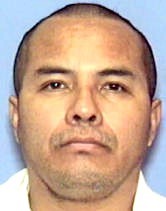
Angel Maturino Resendiz
Serial killer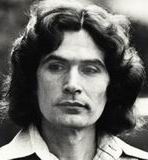 Rodney Alcala
Serial killer · USA · 1977
Rodney James Alcala (born August 23, 1943) was also known as Rodrigo Jacques Al…
100 victims
Rodney Alcala
Serial killer · USA · 1977
Rodney James Alcala (born August 23, 1943) was also known as Rodrigo Jacques Al…
100 victims
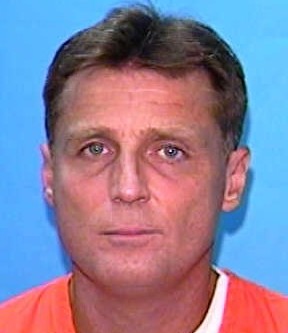 Glen Edward Rogers
Serial killer · USA · 1993
Glen Edward Rogers was a spree killer whose cross-country rampage in 1994-95 le…
70 victims
Glen Edward Rogers
Serial killer · USA · 1993
Glen Edward Rogers was a spree killer whose cross-country rampage in 1994-95 le…
70 victims
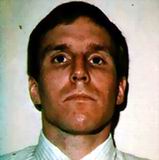 Michael Swango
Serial killer · USA · 1981
Michael Swango (Joseph Michael Swango) was a physician and American serial kill…
60 victims
Michael Swango
Serial killer · USA · 1981
Michael Swango (Joseph Michael Swango) was a physician and American serial kill…
60 victims
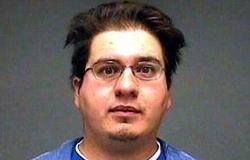 Efren Saldivar
Serial killer · USA · 1989
Efren Saldivar (born 30 September 1969) was an American serial killer who murde…
50 victims
Efren Saldivar
Serial killer · USA · 1989
Efren Saldivar (born 30 September 1969) was an American serial killer who murde…
50 victims
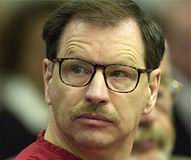 Gary Ridgway
Serial killer · USA · 1982
Gary Leon Ridgway Ridgway was born 18-February-1949 in Salt Lake City, UT. He w…
49 victims
Gary Ridgway
Serial killer · USA · 1982
Gary Leon Ridgway Ridgway was born 18-February-1949 in Salt Lake City, UT. He w…
49 victims
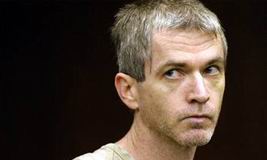 Charles Cullen
Serial killer · USA · 1984
Charles Cullen (born February 22, 1960) was a former nurse and the most prolifi…
45 victims
Charles Cullen
Serial killer · USA · 1984
Charles Cullen (born February 22, 1960) was a former nurse and the most prolifi…
45 victims
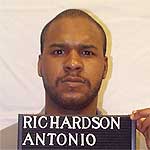 Antonio Richardson
Homicide · USA · 1991
Defendant: Antonio Richardson Co-defendants mentioned: Marlin Gray, Reginald Cl…
2 victims
Antonio Richardson
Homicide · USA · 1991
Defendant: Antonio Richardson Co-defendants mentioned: Marlin Gray, Reginald Cl…
2 victims
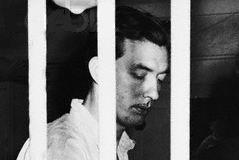 Otto Stephen Wilson
Murderer · USA · 1944
Otto Stephen Wilson was executed by asphyxiation-gas at San Quentin Prison on S…
2 victims
Otto Stephen Wilson
Murderer · USA · 1944
Otto Stephen Wilson was executed by asphyxiation-gas at San Quentin Prison on S…
2 victims
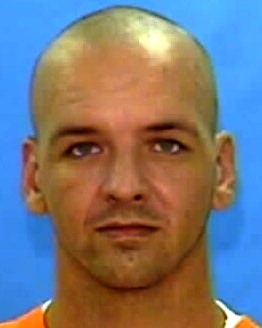 Brandy Bain Jennings
Murderer · USA · 1995
Brandy Bain Jennings was sentenced to death on December 2, 1996. He was convict…
3 victims
Brandy Bain Jennings
Murderer · USA · 1995
Brandy Bain Jennings was sentenced to death on December 2, 1996. He was convict…
3 victims
 Lisa Jo Chamberlin
Murderer · USA · 2004
Lisa Jo Chamberlin was convicted and sentenced to die by lethal injection for t…
2 victims
Lisa Jo Chamberlin
Murderer · USA · 2004
Lisa Jo Chamberlin was convicted and sentenced to die by lethal injection for t…
2 victims
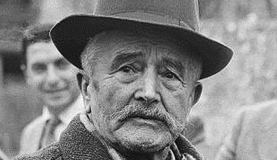 Gaston Dominici
Homicide · France · 1952
Gaston Dominici was convicted of the triple murder of three Britons in France i…
3 victims
Gaston Dominici
Homicide · France · 1952
Gaston Dominici was convicted of the triple murder of three Britons in France i…
3 victims
 Matthew Thompson
Murderer · USA · 1994
Matthew Thompson was convicted of aggravated murder, murder, felony murder, and…
2 victims
Matthew Thompson
Murderer · USA · 1994
Matthew Thompson was convicted of aggravated murder, murder, felony murder, and…
2 victims
- Gender
- male
- Country
- USA
- Location
- Texas/Illinois/Florida/Kentucky/California/Georgia, USA
- Date of birth
- August 1, 1960
- Age at first offence
- 26
- Characteristics
- rape, robbery, serial rapist, torture, drug addict, history of mental illness, mentally ill
- Victim profile
- Men and women
- Method of murder
- St abbing with knife - Beating
- Date(s) of murder
- 1986-1999
- Years active
- 1986–1999
- Date of arrest
- J uly 13, 1999 ( surrenders )
- Status
-
Executed
Executed by lethal injection in Texas on June 27, 2006
Case details
Angel Maturino Resendiz was sentenced to die for the capital murder of Dr. Claudia Benton.
Status
Angel Maturino Resendiz was scheduled to be executed after 6 p.m. on Tuesday, June 27, 2006. He was executed by lethal injection in Texas on June 27, 2006.
The offence
On Dec. 17, 1998, Angel Resendiz broke into Dr. Benton’s West University Place home and stabbed and beat her to death. Resendiz also attempted to sexually assault Dr. Benton. Resendiz took the victim’s money and left the home in the victim’s vehicle.
Procedural history
- May 2000 — A jury found Angel Resendiz guilty of capital murder and sentenced him to death.
- May 21, 2003 — The Texas Court of Criminal Appeals affirmed the conviction and sentence.
- Dec. 9, 2003 — Resendiz filed a petition for writ of certiorari with the U.S. Supreme Court.
- May 3, 2004 — The U.S. Supreme Court denied Resendiz’s petition for writ of certiorari.
- May 4, 2004 — The Texas Court of Criminal Appeals denied Resendiz’s application for state habeas corpus relief.
- May 3, 2005 — Resendiz filed an application for federal habeas relief in U.S. District Court.
- Sept. 7, 2005 — The U.S. District Court denied relief and entered final judgment.
- Nov. 15, 2005 — Resendiz filed a motion to reopen the time to file notice of appeal, or in the alternative, a request to extend the time to file notice of appeal.
- June 7, 2006 — The 5th U.S. Circuit Court of Appeals denied Resendiz’s appeal.
Criminal history and other murders heard in the punishment phase
During the punishment phase of his trial, the jury heard evidence of numerous other murders committed by Resendiz.
Holly Dunn testified that in August of 1997, Resendiz approached her and Christopher Maier near some railroad tracks in Lexington, Kentucky. Resendiz robbed Dunn and Maier. He then bound Maier’s hands and feet and gagged him. Resendiz picked up a large object and beat Maier in the head with it, crushing his skull. After murdering Maier, Resendiz sexually assaulted Dunn. He then hit her in the head with a large object and left the scene. Dunn survived, but suffered multiple facial fractures and the trauma of the sexual assault.
In October of 1998, Resendiz broke into the home of 87-year-old Leafie Mason in Hughes Springs, Texas. Resendiz killed Mason by hitting her in the head with an iron.
In May of 1999, Resendiz traveled to Weimar, Texas, and beat Skip and Karen Sirnic to death with a sledge hammer while they slept in their home. He also sexually assaulted Karen Sirnic.
In June of 1999, Resendiz broke into Noemi Dominguez’s home, sexually assaulted her, and killed her with a pickax. Resendiz stole Dominguez’s car and traveled to Schulenberg, Texas, where he killed 73-year-old Josephine Konvicka with the same pickax used on Dominguez. Resendiz left the pickax embedded in Konvicka’s head.
Also in June of 1999, Resendiz unlawfully entered 80-year-old George Morber’s home in Gorham, Illinois. Morber’s daughter, Carolyn Frederick, was with Morber when Resendiz broke in. Resendiz tied Morber to a chair and shot him in the back of the head with a shotgun. Resendiz then sexually assaulted Frederick and struck her in the head with the shotgun with such force that the shotgun broke into two pieces. Neither Morber nor Frederick survived.
George Benton was the husband of Dr. Claudia Benton.
Execution day events
Angel Maturino Resendiz was 46 at the time of execution. Witnesses to the execution included members of his family and those of four of his victims. Konvicka, the son of Josephine Konvicka, was selected to view the execution; his brother and one sister were in a waiting area at the prison during the execution.
Prior to execution, Resendiz visited with his 7-year-old daughter and his mother, then was taken from death row in Livingston to a holding cell here. Prison spokeswoman Michelle Lyons said he appeared calm. The killer declined a last meal.
The lethal drugs were administered at 7:58 p.m. Resendiz was declared dead seven minutes later in one account and pronounced dead at 8:05 p.m. in another account.
The execution was delayed as the U.S. Supreme Court deliberated over issues surrounding his case, including the humaneness of lethal injection and his competency to be executed. A state District Judge William Harmon ruled Resendiz was competent because he knew when and why he would be killed.
Resendiz made statements before his death, including the following quotations.
George Benton lashed out at the Mexican government, which had supported his appeals, and opponents of the death penalty. Benton said:
"looked like a man ... and walked like a man. But what lived within that skin was not a human being."
Benton also said that every Mexican citizen should “feel denigrated” by their government’s effort to save the killer’s life, and accused death penalty opponents of failing to comprehend the nature of evil. Benton said they could not understand the pain of telling one’s children their mother had been murdered. Benton said Claudia Benton would have aided Resendiz with food, money or advice had he simply knocked on her door and asked. Benton said the Mexican government, which opposed capital punishment, was “especially cynical” in urging imprisonment for life.
Resendiz said the following:
"I want to ask if it is in your heart to forgive me,"
"You don't have to. I know I allowed the devil to rule my life. I just ask you to forgive me and ask the Lord to forgive me for allowing the devil to deceive me. "
"I thank God for having patience with me. I don't deserve to cause you pain. You did not deserve this. I deserve what I am getting."
He chanted softly:
"Forgive me, Lord."
In another account, he said:
"Lord, forgive me. Lord, forgive me"
After lethal drugs were administered, he said a prayer in Spanish.
A claim was made that Resendiz was schizophrenic and not competent to be executed. Expert testimony stated that Resendiz did not believe the state could kill him.
Appeals and postconviction proceedings
Resendiz filed a petition for writ of certiorari with the U.S. Supreme Court on Dec. 9, 2003. The U.S. Supreme Court denied the petition on May 3, 2004.
Resendiz filed an application for state habeas corpus relief, which was denied by the Texas Court of Criminal Appeals on May 4, 2004.
Resendiz filed an application for federal habeas relief in U.S. District Court on May 3, 2005. The U.S. District Court denied relief and entered final judgment on Sept. 7, 2005.
Resendiz filed a motion to reopen the time to file notice of appeal, or in the alternative, a request to extend the time to file notice of appeal on Nov. 15, 2005. The 5th U.S. Circuit Court of Appeals denied Resendiz’s appeal on June 7, 2006.
Trial
A jury found Angel Resendiz guilty of capital murder and sentenced him to death.
In the capital murder prosecution, the jury heard evidence presented at trial and during postconviction proceedings.
The defense argued Resendiz was insane at the time he committed the homicide and sought to have a commitment based on insanity. District Judge William Harmon presided. Chief prosecutor for the state was County District Attorney John Holmes, Jr., assisted by Devon Anderson. Court-appointed defense lawyers were Allen Tanner and Rudy Duarte.
In direct examination, defense psychiatrist Dr. Bruce Cohen testified that he believed Resendiz was insane at the time he committed the capital murder in the case. The defense attempted to admit crime scene photographs relating to extraneous offenses committed by Resendiz; the trial court sustained the state’s objection.
Another psychiatrist, Dr. Ramon Laval, testified for the prosecution. The Texas Court of Criminal Appeals described his testimony as attesting that Resendiz “knew what he was doing” when he murdered Dr. Benton and others.
The Texas Court of Criminal Appeals opinion stated that on May 18, 2000, appellant was convicted of capital murder and sentenced to death based on the jury’s answers to special issues under Texas Code of Criminal Procedure Article 37.071, sections 2(b) and 2(e). The appeal resulted in the Court affirming the judgment.
Other details
Huntsville media described Resendiz as the serial killer known as the “railroad killer,” and reported that he claimed to be half-man, half-angel.
In a separate account, it was stated that police said Resendiz sneaked into Benton's home after midnight and attacked the sleeping woman, raping her, stabbing her and beating her to death with a statue. Police said her death occurred on December 17, 1998.
A further account stated Resendiz’s killings began with a murder in San Antonio in 1986 and ended in June 1999 with a double slaying in Illinois. Another account stated that his execution was delayed almost two hours while the U.S. Supreme Court considered last-day appeals and rejected them at 7:25 p.m.
A claim was made by his lawyer Jack Zimmermann that Resendiz’s case never received effective federal review due to late or failed filings. Another claim was that in late 2005, Leslie Ribnik failed to appeal a federal judge’s ruling denying a writ of habeas corpus.
A claim was made by Mayor Bill White’s crime victims advocate Andy Kahan that Resendiz was a “cold-blooded, diabolical, brutal serial killer who richly deserves his ultimate punishment.”
Kahan said:
"Within weeks of being taken into custody,"
"he began trying to use his ill-gotten fame."
Kahan said Resendiz knew the difference between right and wrong and had the mental acuity to devise dozens of aliases and elude law enforcement for months.
David Atwood countered that Resendiz was “severely mentally disturbed” and should be locked up for the rest of his life. Atwood said executing Resendiz “accomplishes nothing for the citizens of this state.” Atwood stated that Texas had executed 368 killers since 1982 when executions resumed and argued that executions “help politicians get elected and satisfy the cries for vengeance from some of its citizens.”
Opponents of the death penalty protested at the Huntsville “Walls” Unit on Tuesday evening.
Gregory Compean handled Resendiz’s funeral services.
During the manhunt accounts, it was stated that Resendiz was apprehended after eluding state police and slipping through a two-month FBI net, and that a Texas Ranger named Drew Carter met Resendiz on a bridge connecting El Paso, Texas, with Ciudad Juárez, Chihuahua, and Resendiz surrendered.
In accounts describing victims, the article identified additional victims with names, ages, places, and methods. Those additional accounts included:
- Jesse Howell, 19, bludgeoned to death with an air hose coupling, left beside some railroad tracks in Ocala, Florida.
- Wendy VonHuben, 16, raped, strangled, suffocated and buried in a shallow grave in We Hope, Florida.
- Christopher Maier and his girlfriend attacked while walking along railroad tracks near the college in Lexington, Kentucky, with Maier bludgeoned to death and his girlfriend raped and beaten.
- Norman J. “Skip” Sirnic, 46, and Karen Sirnic, 47, killed in a parsonage of the United Church of Christ in Weimar, Texas, adjacent to a railroad.
- Noemi Dominguez, 26, a schoolteacher in Houston, killed in her apartment near railroad tracks; her white Honda Civic was discovered on the International Bridge in Del Rio, Texas.
- Josephine Konvicka, 73, killed near Weimar, Texas, with a pointed garden tool.
- George Morber, Sr., 80, shot in the head with a shotgun in Gorham, Illinois, and Carolyn Frederick, 52, struck in the head with the shotgun and sexually assaulted.
Additional court-related quotations from the Texas Court of Criminal Appeals opinion included the trial court’s statements explaining exclusion of photographs:
"To see the photographs will not be any assistance to the jury, so I'm going to sustain the objection."
And:
"the only purpose for which they [the jurors] could consider the photographs was for the purpose of assessing the validity of the doctor's opinions and, quite frankly, they might consider it for, uhm, other purposes."
The Texas Court of Criminal Appeals opinion quoted the defense motion segment:
“Publicity (here) has been inflammatory and unfair and has created such hostility towards the defendant, and prejudiced the opinions of members of the community to such a degree, that it is unlikely that a verdict can be solely reached on the evidence presented at the trial.”
The Texas Court of Criminal Appeals opinion quoted relevant portions of the State’s jury argument:
"Special Issue No. 2 asked you to look at the charge. I'm sorry. Look at all the evidence again. Look at everything you've heard from the beginning. Looking at three things in particular; the circumstances of the offense, the defendant's character, and background, and his personal moral culpability. And it asked you to look at all of that stuff and see if you find anything, mitigating circumstances, and one thing we didn't talk about in voir dire that is in this charge is what a mitigating circumstance could be, which is evidence that one of you may find reducing the defendant's moral blameworthiness. That's, that's what you are supposed to go through and look for. Anything in the record that reduces his moral blameworthiness. And, once again, I want you to base this answer on the evidence, and I challenge you to find anything in the record over the last two weeks that reduces his moral blameworthiness."
A trial court alternative theory for exclusion was quoted:
“But relevant evidence may still be excluded by the court under Rule 403. If, uhm, it's, you know, cumulative, you know, needless delay, confusion of the issues, and basically it's under that rule as well.”
A quoted exchange during trial regarding Brantley testimony included:
[THE STATE]: Is there any-is the fact that the type of people that became victims of his crimes any indication about trying to avoid detection?
[BRANTLEY]: Well, that's another classic, uhm, example or element of the organized offender. They select victims that are strangers, so this random victim selection is intent on eluding law enforcement authority better, because when you consider basic law enforcement homicide investigative techniques they generally start with the victim's inner circle of friends, family, and associates in an attempt to develop a suspect pool, if you will.
[THE DEFENSE]: Excuse me, sir. At this time, judge, we're going to object to this. It's speculative and irrelevant to this case at hand.
[THE COURT]: Overruled.
[THE DEFENSE]: And, for the record, judge, we object. If the court believes it relevant, that its prejudicial value outweighs any probative value, and that our further objection is that none of this is from this witness's personal knowledge.
Spotted an error, or have more information about this case?