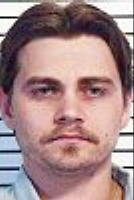
Daniel Juan Revilla
Murderer Brian Kevin Rosenfeld
Murderer · USA · 1985
Brian Kevin Rosenfeld Brian Kevin Rosenfeld was sentenced to three concurrent l…
23 victims
Brian Kevin Rosenfeld
Murderer · USA · 1985
Brian Kevin Rosenfeld Brian Kevin Rosenfeld was sentenced to three concurrent l…
23 victims
 Yahweh ben Yahweh
Murderer · USA · 1980
Yahweh ben Yahweh was born and legally named Hulon Mitchell Jr. (October 27, 19…
23 victims
Yahweh ben Yahweh
Murderer · USA · 1980
Yahweh ben Yahweh was born and legally named Hulon Mitchell Jr. (October 27, 19…
23 victims
 Russell Ellwood
Murderer · USA · 1991
Russell Ellwood was a former taxi driver. Authorities suspected him of killing…
20 victims
Russell Ellwood
Murderer · USA · 1991
Russell Ellwood was a former taxi driver. Authorities suspected him of killing…
20 victims
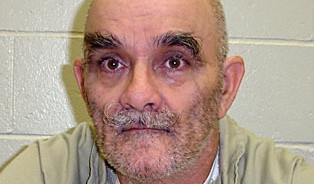 Timothy Krajcir
Serial killer · USA · 1977
Timothy Krajcir was a convicted American serial killer from Allentown, Pennsylv…
9 victims
Timothy Krajcir
Serial killer · USA · 1977
Timothy Krajcir was a convicted American serial killer from Allentown, Pennsylv…
9 victims
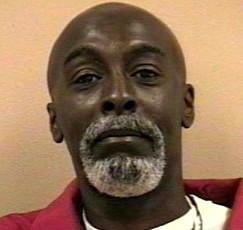 James Edward Thomas
Murderer · USA · 1986
James Edward Thomas moved into the Sir Walter Tourist Home in Raleigh, North Ca…
1 victim
James Edward Thomas
Murderer · USA · 1986
James Edward Thomas moved into the Sir Walter Tourist Home in Raleigh, North Ca…
1 victim
 Edlira Dobrushi
Murderer · Italy · 2014
Edlira Dobrushi, aged 37, killed her 3 children in their beds in Lecco near Mil…
3 victims
Edlira Dobrushi
Murderer · Italy · 2014
Edlira Dobrushi, aged 37, killed her 3 children in their beds in Lecco near Mil…
3 victims
 Roy Willard Blankenship
Murderer · USA · 1978
Roy Willard Blankenship was a white male born in 1955. He was incarcerated in G…
1 victim
Roy Willard Blankenship
Murderer · USA · 1978
Roy Willard Blankenship was a white male born in 1955. He was incarcerated in G…
1 victim
 Larry Norman Anderson
Murderer · USA · 1982
Larry Norman Anderson was convicted in a Texas court in 1983 of capital murder…
1 victim
Larry Norman Anderson
Murderer · USA · 1982
Larry Norman Anderson was convicted in a Texas court in 1983 of capital murder…
1 victim
- Gender
- male
- Country
- USA
- Location
- Jackson County, Oklahoma, USA
- Date of birth
- J uly 14, 1968
- Age at first offence
- 19
- Characteristics
- torture, child abuse, rape
- Victim profile
- Mark Gomez (13 month old baby of his teenage girlfriend)
- Method of murder
- Beating
- Date(s) of murder
- January 26, 1987
- Years active
- 1987
- Date of arrest
- Same day
- Status
-
Executed
Executed by lethal injection in Oklahoma on January 16, 2003
Case overview
Daniel Juan Revilla was convicted of first-degree child abuse murder for the January 26, 1987 murder of Mark Gomez, a 13-month-old child, in Altus. Revilla was sentenced to death. The Oklahoma Court of Criminal Appeals set January 16, 2003 as the execution date. Revilla was executed by lethal injection in Oklahoma State Penitentiary in McAlester, Oklahoma on January 16, 2003.
Timeline
- January 26, 1987 — Daniel Juan Revilla took his girlfriend, Michelle McElmurry, to the Jackson County Health Department for a checkup; Michelle’s son, Mark Gomez, was left alone at the house shared by Revilla and McElmurry. Approximately 40 minutes later Revilla ran through the lobby of the county hospital carrying Mark Gomez and yelling that he had swallowed his tongue and was not breathing.
- October 1987 — Revilla escaped from the Jackson County Jail.
- February 1988 — Revilla reportedly said he was glad to be on death row because of the privileges he had there.
- March 13, 2002 — The United States Court of Appeals for the Tenth Circuit affirmed the judgment of the district court and dismissed the appeal in other respects.
- January 16, 2003 — The Supreme Court of the United States denied a stay; Revilla was executed at 6:12 p.m. by lethal injection.
- January 17, 2003 — Media reports described that Revilla was pronounced dead at 6:12 p.m. after execution drugs were delivered; the reports also stated that the U.S. Supreme Court had rejected his last-ditch plea for a stay earlier that afternoon.
- December 4, 1987 — Revilla was sentenced to death.
- June 1987 — A sentencing delay caused by the scheduled rescheduling of execution is mentioned as occurring after a typographical error; an earlier execution date was set for January 2, 2003.
- January 2, 2003 — An execution date was originally scheduled; later the Attorney General’s office asked to reschedule it.
- November 12, 2002 — The Oklahoma Court of Criminal Appeals set January 16, 2003 as the execution date, after the Supreme Court denied Revilla’s final appeal; Attorney General Drew Edmondson requested a date November 12 after the U.S. Supreme Court denied Revilla’s final appeal.
- November 26, 2002 — The Attorney General’s office filed an amended application to inform the court of a typographical error misstating the date on which Revilla’s final appeal was denied.
- Thursday afternoon — The Supreme Court rejected Revilla’s last-ditch plea for a stay; the execution began later that day.
Background
Daniel Juan Revilla was a 34-year-old white male at the time of execution and was 18 years old when he committed the capital crime. At the time of the murder, Revilla was 18 and working on a farm. Mark Gomez was a 13-month-old white male.
Mark Gomez was the child of Revilla’s teenage girlfriend, Michelle McElmurry.
Revilla denied intentionally harming Mark. Revilla said he panicked when he found the boy wasn’t breathing and struck and accidentally scalded the child while trying to revive him. The autopsy showed swelling and bleeding of the brain and the complete severance of the liver.
The offence
On January 26, 1987, Revilla took Michelle McElmurry to the Jackson County Health Department for a checkup. Revilla left Mark Gomez, McElmurry’s son, at the Altus, Oklahoma house shared by Revilla and McElmurry.
Approximately 40 minutes later, Revilla ran through the lobby of the county hospital carrying Gomez in his arms yelling that he had swallowed his tongue and was not breathing. Subsequent attempts by hospital medical personnel were unsuccessful in reviving the unconscious infant.
Hospital personnel noticed numerous wounds and injuries to Mark Gomez’s body, including:
- bruises on his back,
- blisters on his chest,
- peeling skin on his chest and groin area,
- burns on his thighs and ear,
- lacerations on his thighs and arms.
An autopsy showed swelling and bleeding of the brain and the complete severance of the liver.
Revilla denied causing Gomez’s death. He explained that when he returned home from dropping Michelle off at the clinic, he saw Mark lying on the floor pale and appearing not to be breathing. Revilla said he attempted to revive Gomez by striking him in the abdomen. He said when Gomez gasped for air he struck him again.
Revilla said he began to panic, grabbed the child, pulled his clothes off, rushed him into the bathroom, placed him in the tub, leaned over to turn on water, and accidentally turned on hot water, scalding the infant. He said he turned the water off, wrapped Gomez in a blanket, rushed out, struck the infant’s head on the door frame, and then tripped and fell on top of Gomez onto a concrete cellar. He said he then got up and rushed Gomez to the hospital.
At trial, testimony described additional prior abuse by Revilla toward Mark:
- Revilla tried to fold Gomez up in a hide-a-bed couch.
- Revilla put Gomez in a kitchen drawer and closed the drawer.
- Revilla taunted Gomez by not letting him go to his mother, go to sleep, or play with his toys.
- Evidence showed Gomez was afraid of Revilla and would cry and refuse to leave with him.
- Revilla said he hated Gomez because he was not his child.
- Revilla slapped Gomez and threw him on the floor.
- On one occasion Revilla wrapped duct tape around Gomez’s shoulders, threw him in a bathtub of cold water, then hung him by his heels.
- On another occasion Revilla wrapped his belt around Gomez and squeezed him.
Investigation and arrest
Revilla escaped from the Jackson County Jail in October 1987. It was stated that he apparently had a girlfriend waiting for him and that the two traveled to Mexico. During the spree, Revilla managed to slip away from law enforcement officials in Wellington, Texas just a few days after his escape. Mexican authorities captured Revilla in Acapulco, Mexico, and he was extradited back to the United States.
Trial
An Oklahoma jury found Revilla guilty of first-degree child abuse murder. The jury also found two aggravating circumstances:
- “especially heinous, atrocious or cruel” conduct,
- “a probability that the defendant would commit criminal acts of violence that would constitute a continuing threat to society.”
The jury imposed death as punishment.
A Jackson County District Court jury found Revilla, who had no prior criminal record, guilty and recommended death as punishment. The judge formally imposed the death penalty on Revilla in absentia as he escaped from county jail shortly after trial.
Sentencing
Revilla was sentenced to death on December 4, 1987.
Appeals and post-conviction proceedings
After the denial of state collateral relief, Revilla filed a federal habeas corpus petition in January 1998 pursuant to 28 U.S.C. § 2254. The district court denied his petition. Revilla appealed to the United States Court of Appeals for the Tenth Circuit.
The United States Court of Appeals for the Tenth Circuit stated that:
- “we conclude Revilla is not entitled to habeas relief.”
- “Accordingly, as to all matters for which a certificate of appealability (COA) has been granted, we affirm the judgment of the district court; in all other respects, this appeal is dismissed pursuant to 28 U.S.C. § 2253(c).”
Issues addressed in the Tenth Circuit decision
Revilla’s petition raised claims including:
- that Revilla lacked the necessary culpability for capital punishment recognized in Enmund v. Florida and Tison v. Arizona,
- that trial counsel provided ineffective assistance by failing to request a psychiatric expert to rebut the State’s case on the continuing threat aggravator,
- that the “heinous, atrocious, or cruel” aggravator was not supported by the evidence and was unconstitutionally applied,
- that the “heinous, atrocious, or cruel” aggravator duplicated elements of the offense and failed to narrow the class of offenders eligible for the death penalty, as required by the Eighth Amendment,
- that the pertinent evidence was insufficient to support the continuing threat aggravator,
- that the trial court admitted improper expert testimony of personal opinion and statistical probabilities regarding the ultimate issue of guilt.
The decision also described procedural history on direct appeal and state collateral review, including that the Oklahoma Court of Criminal Appeals upheld the conviction and death sentence.
Outcome
Revilla’s final appeal was denied by the United States Supreme Court, and the Oklahoma Court of Criminal Appeals set an execution date of January 16, 2003. The Supreme Court denied a stay on the day of execution.
Revilla was executed by lethal injection at Oklahoma State Penitentiary in McAlester, Oklahoma on January 16, 2003. Media reports stated he was pronounced dead at 6:12 p.m. after executioners delivered a mix of drugs to stop his breathing and then his heart.
Aftermath
Relatives of Mark Gomez traveled to witness the execution. Reports stated that Mark’s father, Juan Gomez, and four other family members came to the prison to see Revilla die.
Juan Gomez made comments after execution including:
- “I feel that justice has finally been served -- not for me but for my son Mark,” Juan Gomez said afterward.
- “I feel that justice has finally been served,” Gomez said. “Not for me but for my son Mark.”
- “I've got pictures of him from when we were together,” Juan Gomez said. “I look back at those times and I sob. It was a short time, but it was still a good time.”
- “I wanted to witness the execution because he thought it might bring him peace.”
- “I do forgive Mr. Revilla,” Gomez said afterward.
- “He was young at the time and I don't think he realized what he did until it was too late. And I feel very sorry for his family for the loss of their son.”
- “Mark's father, Juan Gomez, said his son was a playful blue-eyed baby.”
- “The murder took place two days before he was to take custody of him, he said.”
Reports also stated that Michelle McElmurry, Mark’s mother, and two other witnesses testified that Revilla hated Mark because he was not his child, and that she described prior abuse, including that Revilla shut the baby in a kitchen drawer, folded him in a hide-a-bed, dunked him in cold water, and hung him by his ankles with duct tape.
Media reports stated that Revilla kept his face turned away and shook his head “no” when asked if he had a final statement. One report stated:
- Revilla shook his head “no” when asked if he had a final statement. Another report stated:
- “I do forgive Mr. Revilla,” Gomez said afterward.
- “He died minutes later at 6:12 p.m. from an injection of heart-stopping drugs.” Another report stated Revilla visited with his brother and grandmother and ate his requested final meal: three large hamburgers, two orders of fries, an order of jumbo shrimp, four mini pecan pies, and a large cherry Coke.
Spotted an error, or have more information about this case?