
Larry Norman Anderson
Murderer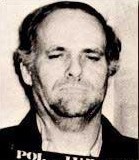 Ervil LeBaron
Murderer · USA · 1972
Ervil Morrell LeBaron (1925 to August 16, 1981) was the leader of a polygamous…
35 victims
Ervil LeBaron
Murderer · USA · 1972
Ervil Morrell LeBaron (1925 to August 16, 1981) was the leader of a polygamous…
35 victims
 Brian Kevin Rosenfeld
Murderer · USA · 1985
Brian Kevin Rosenfeld Brian Kevin Rosenfeld was sentenced to three concurrent l…
23 victims
Brian Kevin Rosenfeld
Murderer · USA · 1985
Brian Kevin Rosenfeld Brian Kevin Rosenfeld was sentenced to three concurrent l…
23 victims
 Marvin Gray
Murderer · USA · 1975
Marvin Gray was convicted killer who claimed responsibility for 23 slayings and…
23 victims
Marvin Gray
Murderer · USA · 1975
Marvin Gray was convicted killer who claimed responsibility for 23 slayings and…
23 victims
 Yahweh ben Yahweh
Murderer · USA · 1980
Yahweh ben Yahweh was born and legally named Hulon Mitchell Jr. (October 27, 19…
23 victims
Yahweh ben Yahweh
Murderer · USA · 1980
Yahweh ben Yahweh was born and legally named Hulon Mitchell Jr. (October 27, 19…
23 victims
 Russell Ellwood
Murderer · USA · 1991
Russell Ellwood was a former taxi driver. Authorities suspected him of killing…
20 victims
Russell Ellwood
Murderer · USA · 1991
Russell Ellwood was a former taxi driver. Authorities suspected him of killing…
20 victims
 Valmae Beck
Murderer · Australia · 1987
Valmae Beck Valmae Beck was sentenced to life imprisonment with a non parole pe…
1 victim
Valmae Beck
Murderer · Australia · 1987
Valmae Beck Valmae Beck was sentenced to life imprisonment with a non parole pe…
1 victim
 Ryan Dickson
Murderer · USA · 1994
Ryan Dickson was executed by lethal injection in Texas on April 26, 2007. Ryan…
2 victims
Ryan Dickson
Murderer · USA · 1994
Ryan Dickson was executed by lethal injection in Texas on April 26, 2007. Ryan…
2 victims
 Eddie Albert Crawford
Murderer · USA · 1983
Eddie Albert Crawford was a white male, born 02/09/1947, with hair color brown,…
1 victim
Eddie Albert Crawford
Murderer · USA · 1983
Eddie Albert Crawford was a white male, born 02/09/1947, with hair color brown,…
1 victim
 Lawrence Jefferson
Murderer · USA · 1985
Lawrence Joseph Jefferson (42) was convicted of felony murder during the commis…
1 victim
Lawrence Jefferson
Murderer · USA · 1985
Lawrence Joseph Jefferson (42) was convicted of felony murder during the commis…
1 victim
 Wallace Wilkerson
Murderer · USA · 1877
Wallace Wilkerson (c. 1834 – May 16, 1879) was an American stockman. He was bor…
1 victim
Wallace Wilkerson
Murderer · USA · 1877
Wallace Wilkerson (c. 1834 – May 16, 1879) was an American stockman. He was bor…
1 victim
 Steve Nunn
Murderer · USA · 2009
Stephen Rob Nunn, known as Steve Nunn, was born November 4, 1952, in Glasgow, K…
1 victim
Steve Nunn
Murderer · USA · 2009
Stephen Rob Nunn, known as Steve Nunn, was born November 4, 1952, in Glasgow, K…
1 victim
- Gender
- male
- Country
- USA
- Location
- Harris County, Texas, USA
- Date of birth
- August 30, 1952
- Age at first offence
- 30
- Characteristics
- rape, robbery, torture, abduction
- Victim profile
- Zelda Webster, 28 (bar manager)
- Method of murder
- St abbing with hunting knife
- Date(s) of murder
- March 28, 1982
- Years active
- 1982
- Date of arrest
- Same day
- Status
-
Executed
Executed by lethal injection in Texas on April 26, 1994
Case overview
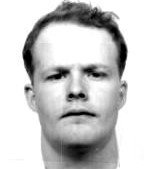
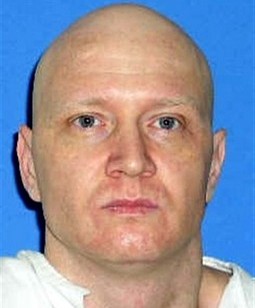
Larry Norman Anderson was convicted in a Texas court in 1983 of capital murder and sentenced to death. He was executed by lethal injection in Texas on April 26, 1994.
Anderson was convicted of rape, robbery, and murder and was sentenced to death. In the capital murder trial, the jury answered affirmatively three special issues submitted under former Tex.Code Crim.Proc.Ann. art. 37.071(b), and Anderson was sentenced to death by lethal injection.
The offence
At about 2:20 a.m. on March 30, 1982, Trooper Gary Stone was on patrol in west Harris County. Stone previously received a report about a vehicle in the area driving without its lights on, and Stone pulled Anderson over after he saw Anderson turn on his headlights while driving toward Stone’s car. Anderson’s hands and clothes were covered with blood.
Inside the bed of Anderson’s pickup truck, an overturned garbage can containing a large amount of blood was found, along with a lock-blade knife covered with blood. Inside the cab of the truck, two money bags full of money and a ski mask were found.
Anderson was arrested and taken into custody. At the police station later that morning, Anderson was asked if he knew anything about the disappearance of Zelda Lynn Webster, a manager at a nightclub near where Anderson had been residing. Webster had been reported as missing from the club earlier in the evening, and the bank bags that normally stayed behind the bar of the club were also gone.
Anderson initially declined to answer questions about Webster, but then voluntarily confessed to having killed her. Anderson stated that he had been involved in a drug transaction with Webster and that she refused to pay him. Anderson said that on the previous evening he and Webster had engaged in sexual intercourse. Anderson stated that Webster became hysterical and demanded that he return the money he had taken. Anderson confessed to having stabbed Webster and discarded her body in a remote ditch near Addicks Dam. Police discovered Webster’s body where Anderson told them it could be found. Webster had been stabbed fifteen times in the chest.
Earlier that night, police had been called out to She Lee’s Club, where Webster worked, after people had reported her missing. The owner at the time did not think it was out of the ordinary that Webster would leave the bar. Later, the owner noticed that the bags of money behind the bar were missing and that Webster’s shoes were on the ground, and then realized there could be a problem.
Anderson told police that he abducted Webster and killed her during a $5,000 drug deal that went sour. Anderson told police that he went to the bar to collect the money Webster owed him, but she refused to pay him. Anderson said that he stabbed her after Webster threatened to file rape charges against him. Anderson also admitted to having sexual intercourse with her.
In Andersen’s trial testimony at the guilt/innocence phase, Anderson elaborated on the confession given to police. Anderson testified that on the evening in question he went to the lounge to collect five thousand dollars that Webster owed him as part of a drug deal. They argued, but she agreed to get him the money. They then drove to his cousin’s house, where they engaged in sexual intercourse. Anderson then asked Webster if she was ready to get the money. She said that she was not and accused Anderson of raping her. She told him that if he did not leave her alone, she would call the police and have him sent to prison. Anderson testified that he responded that he had to have the money. Webster started walking toward a telephone, and Anderson stepped in front of her. Anderson testified that although he was upset, he and Webster agreed to go back to the lounge. On the way, Anderson convinced her to stop at his uncle’s office building, where Anderson had been staying. They went to the room where Anderson had been sleeping, and Anderson renewed his demands for payment. Webster refused and started walking toward a telephone in the next room. Anderson grabbed her, a fight ensued, and Anderson stabbed her with a knife he wore on his belt.
In his trial testimony, Anderson denied any knowledge of the money bags.
In the earlier summary material, Anderson was described as repeatedly stabbing Webster in the chest during an argument over a drug deal on March 28, 1982, and as leaving the body near Bear Creek Park in far western Harris County.
Investigation
Police searched Anderson’s truck and found two bags of money, a bloodstained knife, and a trash can containing blood in the bed of the truck. Police officers then met with Anderson’s aunt. The aunt took them to the home of Anderson’s cousin, who was away on vacation and had left Anderson a set of keys so that he could look after the house.
In the house, on top of Anderson’s jacket, officers found Webster’s purse. Inside the purse was a bank bag filled with money. The bag, and the other two found in Anderson’s pickup, were shown to belong to the lounge where Webster worked.
Bloodstains were found on the floor. Police officers discovered Webster’s body where Anderson told them it could be found.
Arrest
Stone pulled Anderson over after he saw Anderson turn on his headlights while driving toward Stone’s car. Anderson’s hands and clothes were covered with blood, and in the bed of Anderson’s pickup truck were an overturned garbage can containing a large amount of blood and a lock-blade knife covered with blood. Anderson was taken into custody.
Trial
Anderson pleaded not guilty to capital murder.
Anderson was convicted of capital murder under Tex.Penal Code Ann. Sec. 19.03 on February 14, 1983. On the same day, he was sentenced to death by lethal injection after the jury answered affirmatively the three special issues submitted under former Tex.Code Crim.Proc.Ann. art. 37.071.
Anderson did not testify at the sentencing phase of his trial.
His direct appeal was handled by attorney Joe Frank Cannon, with attorney Kristine C. Woldy also representing Anderson on appeal.
Sentencing
At the time of Anderson’s offense, the Texas capital sentencing statute required the court to sentence the defendant to death if the jury returned affirmative findings on each of the following issues:
- “(1) whether the conduct of the defendant that caused the death of the deceased was committed deliberately and with the reasonable expectation that the death of the deceased or another would result; (2) whether there is a probability that the defendant would commit criminal acts of violence that would constitute a continuing threat to society; and (3) if raised by the evidence, whether the conduct of the defendant in killing the deceased was unreasonable in response to the provocation, if any, by the deceased.” Tex.Code Crim.Proc.Ann. art. 37.071(b) (Vernon 1981).
Appeals
Anderson’s conviction and sentence were affirmed by the Texas Court of Criminal Appeals on October 9, 1985, and the United States Supreme Court denied certiorari on October 6, 1986.
Anderson v. State, 701 S.W.2d 868 (Tex.Crim.App.1985), cert. denied, 479 U.S. 870, 107 S.Ct. 239, 93 L.Ed.2d 163 (1986).
Anderson, represented by attorney Richard Alley, filed applications for a writ of habeas corpus and motions for a stay of execution in both the trial court and Southern District of Texas. The trial court rescheduled the execution date, and the federal court dismissed for failure to exhaust state remedies.
Anderson, represented by Alley, filed in the state trial court an amended application for writ of habeas corpus, alleging that he was denied effective assistance of counsel, particularly in Cannon’s manner of conducting voir dire and in his failure to request a jury charge on voluntary manslaughter. Anderson also alleged insufficient evidence to support the jury’s affirmative answers to Special Issues 1 and 3.
The trial court conducted evidentiary hearings on March 5 and 9, 1987, on questions about Cannon’s effectiveness. Anderson, Cannon, and others testified at these hearings and Anderson was represented at them by Alley.
On April 3, 1987, the Texas trial court entered an order adopting the proposed findings of fact and conclusions of law of the State of Texas. The court denied habeas corpus relief and left in place a previously ordered execution date of April 28, 1987.
The Court of Criminal Appeals denied the application for a writ of habeas corpus and a stay of execution on April 24, 1987.
On April 27, 1987, the federal district court granted a stay of execution, finding that Anderson’s claim of ineffective assistance of counsel—especially Cannon’s failure to request a charge on voluntary manslaughter—was not frivolous.
On August 28, 1988, Anderson, now represented by new counsel, filed an amended petition raising twenty-nine grounds for relief. The petition contained allegations not presented in the state proceedings, but the State expressly waived the exhaustion requirement, citing Felder v. Estelle, 693 F.2d 549 (5th Cir.1982). The district court denied the writ of habeas corpus and dismissed the cause with a written order on April 23, 1991.
Anderson’s motions for new trial and for relief from the judgment were denied, and the district court declined to issue a certificate of probable cause for appeal. The case then proceeded with full briefs and oral argument on the merits of Anderson’s 28 U.S.C. Sec. 2254 petition.
Federal appeal before the United States Court of Appeals for the Fifth Circuit
The United States Court of Appeals, Fifth Circuit case included: Larry Norman Anderson, Petitioner-appellant, v. James A. Collins, Director Texas Department of Criminal Justice, Institutional Division and Dan Morales, attorney General of the State of Texas, respondents-appellees. United States Court of Appeals, Fifth Circuit. April 1, 1994. Appeal from the United States District Court for the Southern District of Texas. Before KING, GARWOOD, and HIGGINBOTHAM, Circuit Judges.
The court affirmed the district court’s denial of habeas relief and stated: “We affirm the district court’s denial of habeas corpus relief.”
Anderson raised four primary arguments in the appeal:
- The operation of the Texas capital sentencing statute violated the Eighth and Fourteenth Amendments as construed in Penry v. Lynaugh because the jury was not permitted to consider and act upon mitigating evidence concerning his background and character.
- He was denied effective assistance of counsel.
- The trial court erred in failing to instruct the jury on voluntary manslaughter and failing to place upon the State the burden of negating the existence of sudden passion.
- The capital murder provision of the Texas Penal Code was unconstitutionally vague.
The appellate court addressed the claims, including:
- Anderson argued that traumatic and harmful experiences in his past were mitigating circumstances the jury could not consider.
- The appellate court stated that Anderson admitted he did not attempt to introduce the mitigating evidence at trial or tender it to the trial court and that Anderson lacked a valid federal Penry claim because he could not base a Penry claim on evidence that could have been, but was not, proffered at trial.
- Anderson’s ineffective assistance claims were analyzed under Strickland v. Washington.
Ineffective assistance: voir dire issues
Anderson claimed Cannon erred in failing to object during voir dire to the prosecutor’s mischaracterizations of “deliberate” as used in Special Issue 1, including alleged equivalence of “intentional” and “deliberate.” The appellate court noted that the voir dire transcripts showed the prosecutor stated there were no official definitions for the terms used in the special issues and typically said that “‘deliberate’ could be understood to mean ‘something along the lines of willful.’” The court also described varying explanations to the final five jurors and said Cannon did not object or return to the issue in his voir dire examination of those five jurors.
The appellate court also addressed Anderson’s claim that Cannon permitted improper hypothetical questions about Special Issue 3 and the prosecutor’s contention that self-defense was not a defense to capital murder. It described hypotheticals including a bank robbery with a loaded gun and a teller pulling her own gun, and that the prosecutor explained that Special Issue 3 was intended to deal with that type of situation. The appellate court described a detailed exchange during voir dire, including the following quoted exchange:
“Q Can you conceive in your own mind of a hypothetical case where that issue would definitely be raised?
A No.
Q You cannot conceive of any situation where number three would apply?
A No, sir. My feeling in this would be that, first of all, the individual, as the act occurred, it was one illegal act on top of another, and what right did he have to take a life?
Q They are not saying there that he had the right to take a life there.
A Was his actions unreasonable.
Q They are asking you in response to the provocation, if any, by the deceased.
A That is like asking us if I was a prisoner of war, would I try to escape.
Q Obviously, you would.
A You are right.
Q Let me put it this way, sir. Let me give you a hypothetical, a little different from the District Attorney's. By the way, I did understand you to say that you could see in his hypothetical case, which was way far-fetched that your response was reasonable, that the robber's response was reasonable to the provocation. Did I understand that correct, Captain?
A Based on the example that the district attorney gave, certainly, the fact that he gave, certainly.”
The appellate court summarized objections and stated it could not find a reasonable probability of prejudice from the voir dire comments.
Anderson also alleged Cannon permitted the prosecutor to give an erroneous explanation of Special Issue 2 so that stealing a paper clip or pinching someone could satisfy the “future ‘criminal acts of violence’” reference. The appellate court quoted a prosecutor’s example:
“Criminal acts of violence. If I went over and stole the Court Reporter's machine, that would be violence towards property. If I went over there and punched her,
that would be a criminal act of violence toward person. And there are varying degrees from punching someone to murder or stealing a paper clip to stealing someone's automobile or Rolls Royce.”
The appellate court stated it was not plausible the jury answered Special Issue 2 affirmatively based on a belief Anderson would commit petty crimes against property.
Ineffective assistance: instructions
Anderson claimed Cannon should have requested instructions on voluntary manslaughter, temporary insanity, and legality of the initial stop.
- For voluntary manslaughter, the appellate court discussed Tex.Penal Code Ann. Sec. 19.04(a) and stated the definition included “under the immediate influence of sudden passion arising from an adequate cause.” The court described evidence and stated that even if an instruction could have been submitted, Anderson had not shown deficiency under Strickland. The appellate court noted that the state habeas court found Cannon’s failure was a conscious decision based on trial strategy.
- For temporary insanity, the appellate court stated it was not raised by the evidence in the case and that Anderson’s cited testimony and evidence did not form the predicate for a temporary insanity instruction.
- For legality of the highway stop, the appellate court stated Cannon did challenge the initial stop at trial and the issue had been raised on direct appeal and rejected by the Court of Criminal Appeals.
Ineffective assistance: investigation and evidence
Anderson claimed Cannon failed to investigate and present various types of evidence including expert evidence of Anderson’s typically nonviolent temperament, exemplary behavior in prison, character evidence from relatives, evidence from patrons about Webster’s reputation and involvement in drug activities, evidence of Anderson’s and Webster’s business and sexual relationship, and evidence of Anderson’s family history and emotional disturbance.
The appellate court discussed evidence addressed at the state habeas hearing, including Cannon having Anderson examined by an independent psychiatrist who diagnosed Anderson as having a sociopathic personality and advised that psychiatric expert testimony would not assist. The appellate court described attempts to contact witnesses, including Anderson’s mother and the decision not to use her, and decisions regarding potential character testimony from Anderson’s father, uncle, and cousin.
The appellate court also discussed the participation in a work program for death row inmates beginning in 1984 and stated that because it related to conduct after trial, Cannon could not be delinquent for failing to investigate and present it for mitigation in sentencing.
Anderson also alleged that Cannon permitted Anderson to testify in a way that introduced facts of prior convictions of robbery and kidnapping in Arkansas. The appellate court described findings that Cannon explained the advantages and disadvantages of testifying and that Anderson decided to testify, and it said it was not unreasonable trial strategy given reliance on Webster’s behavior.
Constitutional vagueness challenge to the Texas capital murder statute
The appellate court addressed Anderson’s challenge to Tex.Penal Code Ann. Sec. 19.03(a)(2) and Anderson’s argument that the phrase “in the course of committing ... robbery” was vague.
The appellate court described Anderson’s reliance on Walton v. Arizona and its distinction from the Arizona context and discussed Texas practice and statutory definitions, including Tex.Penal Code Sec. 29.01(1) defining “In the course of committing theft” as conduct occurring in an attempt to commit, during commission, or in immediate flight after attempt or commission of theft.
The appellate court then held that Anderson’s constitutional challenge was without merit and affirmed denial of habeas relief.
Stay of execution and related claims
Anderson’s lawyers sought a stay of execution on a claim that he killed Webster during the drug deal because Webster threatened to have him attacked by a motorcycle gang; the court rejected his claim. Anderson’s lawyers also raised claims of incompetence of trial lawyer Joe Frank Cannon, including arguments that Cannon was incompetent and that questions were raised about the speediness of Cannon in execution trials and the fact that Cannon was caught sleeping in court. Anderson’s lawyers also sought understanding of why Cannon did not hire an investigator prior to Anderson’s trial in 1983.
The appellate court denied Anderson’s motion for stay of execution as well as his motion for oral argument thereon.
Outcome
The United States Court of Appeals, Fifth Circuit affirmed the judgment of the district court denying habeas relief. The court’s conclusion stated: “All of Anderson’s contentions are unavailing, and we affirm the judgment of the district court denying habeas relief.”
Anderson was executed by lethal injection in Texas on April 26, 1994.
Aftermath
Many appeals were made for Anderson’s case but none proved to be successful.
Other details
Anderson’s age was given as 41 (29). Anderson’s execution date was April 26, 1994. Anderson was described as a high school graduate or GED holder.
During trial proceedings and related hearings, the record included that:
- Anderson did not attempt to introduce alleged mitigating evidence about his background and character at trial or tender it to the trial court.
- The state habeas court held hearings on March 5 and 9, 1987, on Cannon’s effectiveness.
- The appellate analysis cited Strickland v. Washington and Penry v. Lynaugh in addressing Anderson’s claims.
In an extended discussion appended to the appellate decision, Anderson referenced alleged family background and childhood experiences including that his father was an alcoholic and schizophrenic man who was institutionalized, and that his maternal grandfather died before Anderson was twelve years old. The extended discussion also said Anderson was raised by a “religiously fanatic” grandmother who administered corporal punishment and provided no emotional support, and that Anderson’s adolescence was spent in a reform school with physical and sexual abuse, and that he became addicted to drugs and alcohol.
Spotted an error, or have more information about this case?