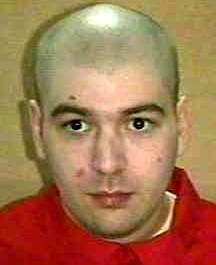
James David Rich
Murderer Brian Kevin Rosenfeld
Murderer · USA · 1985
Brian Kevin Rosenfeld Brian Kevin Rosenfeld was sentenced to three concurrent l…
23 victims
Brian Kevin Rosenfeld
Murderer · USA · 1985
Brian Kevin Rosenfeld Brian Kevin Rosenfeld was sentenced to three concurrent l…
23 victims
 Russell Ellwood
Murderer · USA · 1991
Russell Ellwood was a former taxi driver. Authorities suspected him of killing…
20 victims
Russell Ellwood
Murderer · USA · 1991
Russell Ellwood was a former taxi driver. Authorities suspected him of killing…
20 victims
 Robert Martines Perez
Murderer · USA · 1994
Name: Robert Martines Perez · Other name used in proceedings: Robert Martinez P…
15 victims
Robert Martines Perez
Murderer · USA · 1994
Name: Robert Martines Perez · Other name used in proceedings: Robert Martinez P…
15 victims
 Billy Frank Vickers
Murderer · USA · 1993
Billy Frank Vickers Vickers was executed by lethal injection in Texas on Januar…
14 victims
Billy Frank Vickers
Murderer · USA · 1993
Billy Frank Vickers Vickers was executed by lethal injection in Texas on Januar…
14 victims
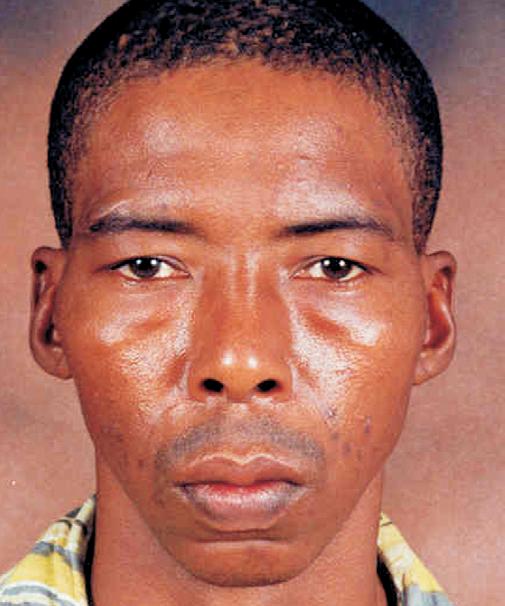 Samuel Sidyno
Spree killer · South Africa · 1998
Samuel Sidyno was a serial killer whose murders involved the Pretoria Zoo area.…
7 victims
Samuel Sidyno
Spree killer · South Africa · 1998
Samuel Sidyno was a serial killer whose murders involved the Pretoria Zoo area.…
7 victims
 Sharon Carr
Homicide · United Kingdom · 1992
Sharon Louis Carr was born 21 December 1979. She was twelve years old when she…
1 victim
Sharon Carr
Homicide · United Kingdom · 1992
Sharon Louis Carr was born 21 December 1979. She was twelve years old when she…
1 victim
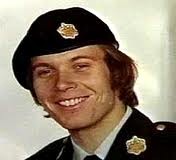 Flemming Nielsen
Murderer · Denmark · 1994
Flemming Nielsen had been a student at the university since 1986. On Tuesday, 5…
2 victims
Flemming Nielsen
Murderer · Denmark · 1994
Flemming Nielsen had been a student at the university since 1986. On Tuesday, 5…
2 victims
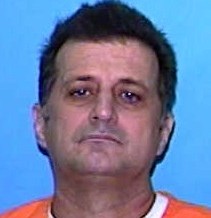 Omar Blanco
Murderer · 1982
Omar Blanco (also known as Omar Curro) was tried in the Seventeenth Judicial Ci…
1 victim
Omar Blanco
Murderer · 1982
Omar Blanco (also known as Omar Curro) was tried in the Seventeenth Judicial Ci…
1 victim
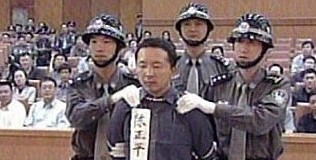 Cheng Zhengping
Mass murderer · China · 2002
Cheng Zhengping was executed on October 13, 2002. Cheng Zhengping confessed to…
42 victims
Cheng Zhengping
Mass murderer · China · 2002
Cheng Zhengping was executed on October 13, 2002. Cheng Zhengping confessed to…
42 victims
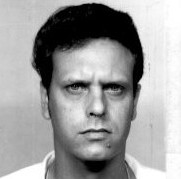 David Wayne Spence
Murderer · USA · 1982
David Wayne Spence was executed by lethal injection in Texas on April 3, 1997.…
3 victims
David Wayne Spence
Murderer · USA · 1982
David Wayne Spence was executed by lethal injection in Texas on April 3, 1997.…
3 victims
- Gender
- male
- Country
- USA
- Location
- Greene County, North Carolina, USA
- Date of birth
- May 2, 1972
- Age at first offence
- 22
- Characteristics
- rape?
- Victim profile
- ??? / Paul Sanford Gwyn (fellow inmate)
- Method of murder
- St abbing with homemade knife
- Date(s) of murder
- ??? / 1994
- Years active
- 1994
- Date of arrest
- —
- Status
-
Executed
Executed by lethal injection in North Carolina on March 26, 1999
Case record: James David Rich
James David Rich was indicted on 31 October 1994 for the first-degree murder of Paul Sanford Gwyn.
On 27 March 1995, James David Rich asked to proceed pro se. On 15 May 1995, Judge James Llewellyn allowed the request but appointed standby trial counsel. On 15 August 1995, James David Rich entered a plea of guilty to first-degree murder.
After a capital sentencing proceeding, the jury recommended a sentence of death, and the trial court sentenced James David Rich accordingly.
James David Rich was serving a life sentence for second-degree murder when he killed the victim in this case. The State’s evidence tended to show that on 8 August 1994, Paul Gwyn, an inmate at the Eastern Correctional Center in Maury, North Carolina, was stabbed to death by James David Rich, also an inmate. Gregory Bagley, another inmate, witnessed both the killing and the events leading up to the killing. Bagley testified that on the day of the killing, he, James David Rich, and a number of other inmates were in the prison yard. Bagley further stated that James David Rich had been offering to “put a hit” on someone because James David Rich did not want to stay at the Eastern prison facility. Bagley explained that, in prison jargon, to “hit” means to kill or hurt someone.
Bagley testified that James David Rich started a conversation with the victim and demanded James David Rich’s money. The victim responded that he did not know what James David Rich was talking about and that he did not have James David Rich’s money. Bagley stated that James David Rich pulled a knife out of his pants and said, “I'll kill you.” The victim then ran from James David Rich, and James David Rich chased the victim. Bagley ran behind them and watched James David Rich stab the victim at least twice in the back.
Troy Covington, a correctional officer, testified that after he was advised of the disturbance, he came upon James David Rich, who was still holding the knife, in the prison yard. Covington took custody of James David Rich and the knife.
Special Agent Alan McMahan of the State Bureau of Investigation (SBI) testified that he advised James David Rich of his Miranda rights, which James David Rich waived, and then interviewed James David Rich concerning his involvement in the stabbing of Paul Gwyn. During the interview, James David Rich confessed that he intended to kill and did stab and kill the victim.
James David Rich testified at his capital sentencing proceeding that he was frustrated by the mandatory schooling program at Eastern and decided that he would do something in order to get away from the facility. He said that he considered several plans and ultimately decided that he was going to kill someone. James David Rich said that he decided on three potential victims that he considered “unworthy of living” and finally focused on the victim.
Timeline
- 31 October 1994 — James David Rich was indicted for the first-degree murder of Paul Sanford Gwyn.
- 8 August 1994 — Paul Gwyn, an inmate at the Eastern Correctional Center in Maury, North Carolina, was stabbed to death by James David Rich.
- 27 March 1995 — James David Rich asked to proceed pro se.
- 15 May 1995 — Judge James Llewellyn allowed the request but appointed standby trial counsel.
- 15 August 1995 — James David Rich entered a plea of guilty to first-degree murder.
- 29 March 1995 — Judge Griffin announced a ruling from the bench in open court regarding the release of prison records.
- 9 February 1995 — A Rule 24 hearing was held before Judge William Griffin, Jr.
- 2 February 1995 — Judge Herbert Phillips held a pretrial hearing in open court.
- 28 August 1995 — The Superior Court sentenced James David Rich to death after the capital sentencing proceeding.
- 12 February 1997 — The appeal was heard in the Supreme Court.
- 9 May 1997 — The Supreme Court decision was filed.
- 26 March 1999 — James David Rich was executed by lethal injection in North Carolina.
Background
James David Rich was on death row for just over four years for the stabbing death in August 1994 of another inmate, Paul Gwyn. While James David Rich was serving a life sentence for murder, he stabbed a fellow inmate to death.
The offence
On 8 August 1994, Paul Gwyn, an inmate at the Eastern Correctional Center in Maury, North Carolina, was stabbed to death by James David Rich, also an inmate.
Gregory Bagley witnessed both the killing and the events leading up to the killing. Bagley testified that James David Rich demanded money, pulled a knife from his pants, said, “I'll kill you,” chased the victim after the victim ran, and stabbed the victim at least twice in the back.
Investigation
Special Agent Alan McMahan of the State Bureau of Investigation (SBI) advised James David Rich of his Miranda rights, which James David Rich waived, and then interviewed him.
Trial
James David Rich asked to proceed pro se. Judge James Llewellyn allowed the request but appointed standby trial counsel.
James David Rich entered a plea of guilty to first-degree murder on 15 August 1995.
Pro se representation, mental health evaluation, and competence
By his first assignment of error, James David Rich argued that the trial court erred when, on 29 March 1995, it conducted what he contended was a pretrial hearing in the absence of both himself and defense counsel.
During a pretrial hearing held in open court 2 February 1995, Judge Herbert Phillips announced that another pretrial hearing would be scheduled for 10 February 1995. Prior to the conclusion of the 2 February hearing, the State asked Judge Phillips to sign a subpoena for James David Rich’s prison records, and James David Rich objected. Judge Phillips ordered James David Rich’s prison records to be sent to the judge presiding at the next hearing in this case.
The next pretrial hearing was held on 9 February 1995 before Judge William Griffin, Jr., pursuant to Rule 24 of the General Rules of Practice for the Superior and District Courts. At the 9 February hearing, the State moved for James David Rich’s prison records again. The defense objected and moved to quash the subpoena on the ground that the records were confidential. Judge Griffin decided to review the records in camera to determine which materials, if any, should be divulged to the State. Judge Griffin also stated that he would not immediately release the records to the State without giving the defense an opportunity to be heard.
On 29 March 1995, Judge Griffin announced his ruling from the bench in open court. Neither James David Rich nor defense counsel was present. Judge Griffin had referred to the previously held Rule 24 hearing and underscored that defense counsel, James David Rich, and the State had been present at that hearing. Judge Griffin stated:
“All of them were present. And everybody agreed that I should take these records and review them and see if it was appropriate to release them to Mr. Jacobs [prosecutor] based upon his subpoena to Mr. Barnett [superintendent of prison records] for those records. I have completed my review of those records a month ago; however, I've been in court so much and out of the office so much I haven't had a chance to dictate an order.”
Judge Griffin then announced his ruling as follows:
“I, today, have prepared an order. I'll file it. Basically what I'm going to do is tell [the prosecutor] and [defense counsel] I'm going to seal one complete copy for the appellate courts. I have redacted from the second copy thirteen pages that I think it would be inappropriate for [the prosecutor] to receive at this time. I think, under the statute, G.S. 148-76, [the prosecutor] is entitled to his prison records; however, these thirteen pages relate to matters that might interfere with the defendant's defense in the case. I'm going to seal those thirteen pages in a separate envelope subject to review by the appellate courts or further orders of the court. [The prosecutor] is entitled to those records at some later time during the proceedings. I'm going to deliver a copy of those thirteen pages to [defense counsel]. The remaining part of the court's second set of those prison records, I'll deliver to [the prosecutor].”
The Supreme Court concluded that the announcement of the ruling in the absence of James David Rich and his counsel did not violate the Sixth Amendment right to counsel, and it found no error under the North Carolina Constitution’s confrontation clause because the right did not arise prior to the commencement of trial.
James David Rich also argued that the trial court erred by failing to instruct the jury during the capital sentencing proceeding that it could not consider the same evidence to find two submitted aggravating circumstances.
The two aggravating circumstances relied upon by the State were that the capital felony was committed by a person lawfully incarcerated, N.C.G.S. § 15A-2000(e)(1) (1988) (amended 1994), and that James David Rich had been previously convicted of a felony involving the use or threat of violence to the person, N.C.G.S. § 15A-2000(e)(3). During the capital sentencing proceeding, the State presented evidence that James David Rich had been convicted of shooting into an occupied vehicle in 1988 and of second-degree murder in 1990. He was serving a life sentence for the 1990 murder when he killed the victim in this case.
The Supreme Court concluded it did not constitute plain error to fail to give a limiting instruction when the two aggravators were supported by separate evidence.
James David Rich further argued that the trial court erred in denying him peremptory instructions on the (f)(2) and (f)(6) statutory mitigating circumstances. The mitigating circumstances were that the capital felony was committed while he was under the influence of a mental or emotional disturbance and that his capacity to appreciate the criminality of his conduct or to conform his conduct to the requirements of law was impaired, N.C.G.S. § 15A-2000(f)(2),(6).
The Supreme Court described evidence tending to negate the (f)(2) mitigating circumstance, including testimony that James David Rich planned to kill someone to get away from Eastern and evidence of substantial deliberation. It also described evidence tending to negate the (f)(6) mitigating circumstance, including statements indicating knowledge of what he had done and what would happen (“smell gas this time.”). The Supreme Court concluded the trial court properly denied peremptory instructions on both statutory mitigating circumstances.
Jury recommendations and statutory aggravators and mitigators
The Supreme Court noted that the jury found two aggravating circumstances: that the murder was committed by a person lawfully incarcerated, N.C.G.S. § 15A-2000(e)(1), and that James David Rich previously had been convicted of the two violent felonies of firing into an occupied motor vehicle and second-degree murder, N.C.G.S. § 15A-2000(e)(3).
In mitigation, one or more jurors found the statutory mitigating circumstance that the murder was committed while James David Rich was mentally or emotionally disturbed, N.C.G.S. § 15A-2000(f)(2), and that his capacity to appreciate the criminality of his conduct or to conform his conduct to the law was impaired, N.C.G.S. § 15A-2000(f)(6). Further, the jury found nine of twenty submitted nonstatutory mitigating circumstances.
Appeals and pro se mental evaluation issue
James David Rich argued that the trial court erred by allowing him to represent himself without having him evaluated by a mental health professional. The Supreme Court addressed the trial court’s discretion and discussed requirements for when an evaluation should be ordered.
The Supreme Court described that during a hearing held 15 May 1995, James David Rich wanted to have his appointed counsel removed. Judge James Llewellyn responded that he would want James David Rich evaluated to determine competence both to stand trial and to represent himself.
The Supreme Court set out exchanges from the hearing. Judge Llewellyn admonished James David Rich, stating:
“Now my personal advice to you is this: Let's go ahead and get the [mental health] evaluation and after we get that evaluation then I can more intelligently make a decision about what to do in regard to your request to fire these two lawyers. But the people that are going to be trying this case against you have been trained in every facet of first degree murder capital cases, they know the rules of evidence, they know the motions to file, they know the orders to comply with, and how to select juries, how not to pick jurors, and I assume that you don't know how to do that. Now, you may think you do. But I've been doing this for twenty-seven years and I've never seen a layperson that could keep up with what goes on in a capital murder case.”
James David Rich stated:
“But as far as a mental health evaluation, I'll waive that. I don't even want it. They didn't give me no mental health evaluation in 1990-- in 1990 when I caught this life sentence I'm doing now.”
Judge Llewellyn stated he would order James David Rich evaluated by a psychiatrist at Dorothea Dix Hospital. James David Rich responded:
“It's like this, Your Honor, I'm not going to cooperate with--I'm going to cooperate with them, and I'm not going to Dorothea Dix, and I'm not going to let no doctor come up here to evaluate me. That's--that's out. And I've got that right to choose that no matter what you, or the D.A., or anybody else says. I've got that right and it can't be violated.”
The Supreme Court also quoted James David Rich saying:
“nothing wrong with my head and I will not go to Dorothea Dix Hospital.”
Judge Llewellyn asked if he was telling the court he did not want a lawyer period. James David Rich responded:
“I don't want a lawyer period.”
Judge Llewellyn asked multiple times, and James David Rich continued to respond that he did not.
The Supreme Court described that Judge Llewellyn removed appointed counselors, stating:
“The court is of the opinion the defendant is competent to stand trial, although I question his ability to represent himself, he is adamant in that, and that he doesn't want any lawyer of any kind from anywhere to represent him. He wants to represent himself and he will be allowed to do that. I'm not going to make him go to Dorothea Dix because he's told me he wouldn't go and if he went he wouldn't cooperate with the physicians there.”
Judge Llewellyn stated that James David Rich would be allowed to proceed pro se and denied requests for a mental health evaluation at that stage, concluding that there were no circumstances showing incompetence.
Guilty plea colloquy
On 15 August 1995, Judge Ronald Stephens engaged James David Rich in colloquy regarding his decision to plead guilty. The court stated:
“You understand that at least along life's way sometimes we vacillate on what we want to do from time to time, but if the court decides that you have now made your mind up that this is the best way for you to proceed and the court accepts your plea, then once that's done, it's done? And I'm not going to do this unless I'm satisfied that you're satisfied that this is what you want to do. Once you've made that decision, an hour or two from now, we cannot undo that decision.”
James David Rich responded:
“Yes, sir.”
The court continued:
“And so the decision that you make once the court decides--and if the court decides that it is a willing and knowing decision on your part, once that has in fact been done, there will be no return to that?”
James David Rich responded:
“Yes, sir.”
The court asked:
“Do you understand that, sir?”
James David Rich responded:
“That's right.”
The court asked:
“Do you feel like that you need any additional time to either think about it or discuss it with [defense counsel] or take any additional time in consideration of what your decision is this morning?”
James David Rich responded:
“No, your honor. I don't need any more time.”
At this point, Judge Stephens accepted James David Rich’s guilty plea.
Sentencing
Greene Superior Court sentenced James David Rich to death on Aug. 28, 1995 for the murder of inmate Paul Gwyn.
Appeals
The appeal was an appeal as of right pursuant to N.C.G.S. § 7A-27(a) from a judgment imposing a sentence of death entered by Stephens (Ronald L.), J., on 28 August 1995, in Superior Court, Greene County, upon a plea of guilty of first-degree murder.
The appeal was heard in the Supreme Court 12 February 1997.
The Supreme Court decision was filed 9 May 1997.
In its proportionality review, the Supreme Court concluded: the record supported the jury’s findings of the aggravating circumstances; there was no indication the death sentence was imposed under the influence of arbitrary consideration; and it was not disproportionate compared with similar cases. The Supreme Court stated it left the death sentence undisturbed and issued a finding of “NO ERROR.”
Outcome
James David Rich’s death sentence was affirmed by the Supreme Court.
Aftermath
James David Rich was executed by lethal injection in North Carolina on March 26, 1999.
Spotted an error, or have more information about this case?