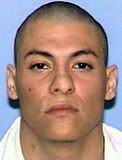
Martin Robles
Murderer Robert Martines Perez
Murderer · USA · 1994
Name: Robert Martines Perez · Other name used in proceedings: Robert Martinez P…
15 victims
Robert Martines Perez
Murderer · USA · 1994
Name: Robert Martines Perez · Other name used in proceedings: Robert Martinez P…
15 victims
 Billy Frank Vickers
Murderer · USA · 1993
Billy Frank Vickers Vickers was executed by lethal injection in Texas on Januar…
14 victims
Billy Frank Vickers
Murderer · USA · 1993
Billy Frank Vickers Vickers was executed by lethal injection in Texas on Januar…
14 victims
 Pervis Tyrone Payne
Murderer · USA · 1987
Pervis T. Payne was convicted in Shelby County of killing Charisse Christopher…
2 victims
Pervis Tyrone Payne
Murderer · USA · 1987
Pervis T. Payne was convicted in Shelby County of killing Charisse Christopher…
2 victims
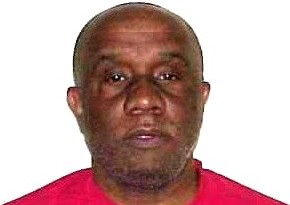 Charles Bussell
Murderer · USA · 1990
Charles Bussell (DOB 3-11-55) was sentenced to death on January 17, 1992. Busse…
1 victim
Charles Bussell
Murderer · USA · 1990
Charles Bussell (DOB 3-11-55) was sentenced to death on January 17, 1992. Busse…
1 victim
 John Edward Sansing
Murderer · USA · 1998
John Edward Sansing was convicted in Superior Court (Maricopa) of first-degree…
1 victim
John Edward Sansing
Murderer · USA · 1998
John Edward Sansing was convicted in Superior Court (Maricopa) of first-degree…
1 victim
 Laura Rogers
Murderer · USA · 2004
Laura Rogers was convicted of manslaughter after the shooting death of her husb…
1 victim
Laura Rogers
Murderer · USA · 2004
Laura Rogers was convicted of manslaughter after the shooting death of her husb…
1 victim
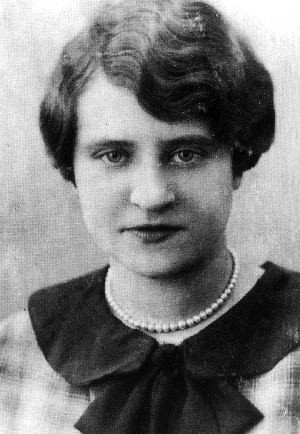 James Joseph Power
Murderer · United Kingdom · 1927
James Joseph Power was sentenced to death at Birmingham Assizes by Mr Justice S…
1 victim
James Joseph Power
Murderer · United Kingdom · 1927
James Joseph Power was sentenced to death at Birmingham Assizes by Mr Justice S…
1 victim
- Gender
- male
- Country
- USA
- Location
- Nueces County, Texas, USA
- Date of birth
- May 12, 1978
- Age at first offence
- 24
- Characteristics
- gang, alcohol, drug addict
- Victim profile
- Jesus Gonzalez, 20, and John Commisky, 19 ( rival gang members)
- Method of murder
- Shooting
- Date(s) of murder
- November 12, 2002
- Years active
- 2002
- Date of arrest
- —
- Status
-
Executed
Sentenced to death on September 23, 2003; executed by lethal injection in Texas on August 10, 2011
Defendant
Martin Robles (Hispanic male)
Background
Robles dropped out of school after the eighth grade. He was a former bus boy and laborer in Nueces County, Texas.
Robles began using marijuana and inhalants at age 10. By 14, he joined a gang for drug running and carjacking and was using acid. At 15, he was doing cocaine. He was an admitted alcoholic. While serving his sentence on a murder conviction, Robles had four disciplinary reports. Two incidents involved altercations with other inmates, one involved a failure to follow orders, and one involved his possession of a weapon, a metal rod with a sharpened point.
Robles was described as belonging to a gang called the Raza Unida, or “RU,” and as also being connected to the “Clyde Crew” gang. Evidence at trial included that he belonged to a gang that was squabbling over drug-dealing turf and feuding violently with another gang that counted the victims as members. Robles was classified by prison administrators as part of a “Security Threat Group” by prison administrators based on his gang involvement.
A female testified that a year before the trial, Robles broke into her family’s home and pistol-whipped her father after threatening the entire family.
Robles had a prior conviction for murder with a deadly weapon and a 6-year sentence from Nueces County for 1 count of murder with a deadly weapon when he was 17.
Other details
Robles was required to display a tattoo during the punishment phase. The tattoo depicted "Jesus with a demon devouring his brains." The tattoo was on his shoulder, and he was required to remove his jacket and shirt to display it.
The prosecutor described that the jury would see "some disturbing tattoos of demons and religious figures, and the most offensive tattoo, you're gonna see a tattoo on his arm - of a demon eating the brains of Christ on his arm." In closing arguments, the prosecutor argued that the tattoos were displayed "to educate you as to [the appellant's] philosophies, his belief systems, what he is about." The prosecutor stated:
[Y]ou have a demon eating the brains of Christ. There was Christ, with the crowns, and what kind of looks like grapes, and then you have a demon putting it like that. Now, I don't know what that means, but to me it's a bad thing. That to me is a philosophy. I don't know if it's satanic. . . . but it tells you something about him as a person, that ought to tell you where his belief system is.
In an Internet posting from 2004, Robles referred to himself as a gang member "with tattoos, bullet wounds, scars and a pretty smile" who had been wrongly convicted because "gang members don't win." He wrote:
"I like to fight, shoot dice, and explore the club scene," he wrote. "I like drinking on occasion and love sex. I've been incarcerated most of my adult life, so there's lots of things I've never experienced but I regret nothing."
Timeline
- 11/12/2002 — Robles and codefendant Joe David “Magic” Padron illegally entered a Corpus Christi house while occupants were asleep and shot and killed John Commisky and Jesus Gonzalez.
- 09/23/2003 — Robles was formally sentenced to death by the trial court.
- 09/08/2009 — The Fifth Circuit affirmed the federal district court’s denial of relief and denial of a certificate of appealability.
- 08/10/2011 — Robles was executed by lethal injection in Texas; he was pronounced dead at 6:21 p.m.
- 12/19/2002 — A Nueces County grand jury indicted Robles on three counts of capital murder.
- 09/02/2003 — A jury found Robles guilty of two counts of capital murder.
- 09/05/2003 — After a separate punishment hearing, the jury found that death was warranted.
- 04/26/2006 — The Texas Court of Criminal Appeals affirmed Robles’ verdict and sentence.
- 04/21/2005 — Robles filed a state application for a writ of habeas corpus.
- 06/14/2006 — The Texas Court of Criminal Appeals denied state habeas relief.
- 06/11/2007 — Robles filed a federal petition for a writ of habeas in U.S. District Court.
- 03/06/2009 — The federal district court denied relief.
- 04/06/2009 — Robles filed a notice of appeal to the 5th Circuit United States Court of Appeals.
- 09/18/2003 — Robles was formally sentenced to death by the trial court.
The offence
On November 12, 2002, in Nueces County, Robles and codefendant entered a residence in Corpus Christi in the early morning and fatally shot two occupants: John Commisky and Jesus “Chuy” Gonzalez, both Hispanic males. A third occupant, Antonio Ortiz (also referred to as Tony Ortiz), escaped the gunfire.
Robles and Padron put on dark clothing and masks before dawn on Nov. 12, 2002. They climbed a fence and entered the Corpus Christi home where Gonzalez and Commisky were asleep. Robles carried a 9 mm pistol and Padron carried an assault rifle. They opened fire.
Robles and Padron shot Commisky and Gonzalez at a distance of no more than two-and-a-half feet. Autopsies determined Gonzalez had been shot at least fifteen times, primarily in the head. Autopsies determined Commisky had been shot at least fourteen times, mostly in the back.
After the shooting stopped, Ortiz heard the men walking out, and he looked out and saw Robles and Padron getting into a maroon Chevrolet Trail Blazer and taking off their masks. The vehicle drove off. Ortiz later identified Robles in the courtroom.
Police found the bodies of the victims on a bed in the house. Ortiz ran to the back of the house after the killers left, checked to see that no one else was in the house, and called 911.
Investigation and arrest
After investigation, Robles and Padron were arrested for killing Commisky and Gonzalez.
In a conversation with another inmate following his arrest, Padron said he and Robles “went to the room and shot them two people." Another inmate overheard a conversation between Robles and Padron. Padron claimed he had killed for Robles, and Robles corrected him and stated that Padron froze at the critical moment and Robles had to go through with the killing.
Trial
Robles was convicted of two counts of capital murder for killing John Commisky and Jesus “Chuy” Gonzalez.
Jury selection
Venire member Julian Sanchez asked, "Why two lives?" During Sanchez’s voir dire, defense counsel referred to that question in an exchange that included: [Defense counsel]: What did you need to know, sir? [Sanchez]: I just - Why was [sic] two lives taken? Q: Okay. A: That's it. Q: What I think the state's evidence is gonna be is that the two people that were killed were in a gang, and - [Prosecutor]: Your Honor, I'm going to object to [defense counsel] telling this juror what my evidence is going to be in the trial, or, actually, what any of [the] evidence is gonna be in the trial. I think that's improper. [Defense counsel]: Judge, I - That's a new one on me, because any time you voir dire the jury, you've gotta give them an idea about what the evidence is gonna be, so you can get their biases and things like that. THE COURT: I don't agree with you. I think that's for opening statements. You can discuss matters, but you cain't [sic] discuss what the evidence is gonna be. [Prosecutor]: You can discuss issues, but not evidence. THE COURT: I agree. [Prosecutor]: And that, I think, is what the law is. [Defense counsel]: Well, note my - THE COURT: Rephrase - you can ask the same questions, [defense counsel], just rephrase the question. [Defense counsel]: Some of the issues in the case would be the fact that they're gonna claim that my client was in a gang, and that the two fellows that were killed we're [sic] in a gang - [Prosecutor]: Judge, that's just - THE COURT: You're doing the same thing. [Prosecutor]: - ignoring the Court's ruling, and is going around it, and I object. [Defense counsel]: Judge, if the Court is instructing me not to go into the evidence that I expect the state to show, for the purpose of voir dire, that's fine, and I won't do it, if I can get a specific instruction from the Court. THE COURT: The instruction is, do not go into specifics of what you expect the evidence to show. [Defense counsel]: Okay. THE COURT: You can go into specifics of, how do you feel about gangs, if, you know, the evidence were to show? If - Do you understand? [Defense counsel]: I understand the Court's ruling. THE COURT: I'm telling you, you can do the same thing, [defense counsel], without telling the juror, This is what we expect the evidence to show. Okay? Now, opening statements is a completely different situation. [Defense counsel]: Very well.
The trial court denied a full and fair voir dire examination claim as not preserved for review.
The trial court granted the State’s challenge for cause to venire member Angela Cox. Cox stated that she would answer the special issues so as to impose a death sentence only in cases involving a child victim or a victim who had been tortured, and in all other circumstances she would impose a life sentence. Cox restated at the close of her voir dire: "Just children and torture."
Evidentiary issues
Robles challenged admission of hearsay testimony from Robert Lara about statements made by Joe David Padron that implicated himself and Robles. Lara testified during a hearing outside the presence of the jury that he and Padron were assigned to the same cell block designated for members of the Raza Unida gang; when Padron was first brought in, Padron asked another gang member if Lara could be trusted; after being assured Lara was trustworthy, Padron began telling others that he did not understand how he had been caught so quickly and suspected Robles had "snitched." Lara testified Lara had a private conversation with Padron in which Padron told him about committing the instant offense with Robles. Lara testified Padron said that Robles picked him up in a truck or Bronco and told him they were "going to take care of business." Lara testified that they took the chain off the fence and entered through a side or back door at the kitchen, found two people lying in a bed, and started shooting, with Padron stating he was the one with the high-caliber rifle. Lara testified that Padron also told him about events leading up to the murders including a stabbing of two gang members and a drive-by shooting at a gang member's house, and that Padron said Robles said the drive-by shooting was the "last straw" and "enough was enough."
Robles also challenged limits on cross-examination and issues involving witness agreements with the State.
Tattoo evidence and compelled display
During the punishment phase, the State offered evidence of Robles’ tattoos, including the tattoo described as "Jesus with a demon devouring his brains." Robles objected and preferred to disrobe rather than rely on photographs. The trial court overruled his objections and directed him to stand and display his tattoos from counsel table.
Robles challenged the compelled display under the Fifth Amendment and challenged the use of the tattoo for future dangerousness.
The Texas Court of Criminal Appeals addressed whether the compelled display violated his rights, whether referencing the tattoo violated due process, equal protection, and freedom from cruel and unusual punishment, and whether admission violated Rule of Evidence 403.
In discussing potential harm, the court stated:
The record does not contain a photo of the tattoo. and The record does not reflect the tattoo's size, how graphic it was, how detailed, or even the distance between the jurors and the appellant as he displayed the tattoo.
The court also noted that the tattoo was mentioned in opening statement during the punishment phase and was the first order of business before the jury in the punishment phase, and was mentioned in closing arguments.
Prison disciplinary reports
Robles challenged admission of disciplinary reports contained within a penitentiary packet designated as State's Exhibit 75. The packet was reviewed before being released to the jury, and portions were redacted if necessary.
Parole law changes testimony
Robles made a motion in limine seeking to instruct the State "not to allude to any possibilities that the laws would change as far as the period of time [the appellant] would have to serve if he receives a life sentence." The motion was granted.
During punishment, Robles called Dr. Dennis Longmire, who testified about Texas parole eligibility, including: Longmire responded:
Well, I believe the law began to change around '93 - 1993. Prior to 1993, capital murderers sentenced to life, capital life, became eligible for parole in around 12 years or 15 years. In '93 there was a requirement that they be - that they spend at least 35 calendar years, and then, in '95 that became 40 calendar years, and so, at this point in time that's the current law . . ..
On cross-examination, the prosecutor asked:
Is there any guarantee, Dr. Longmire, you can offer this jury that the legislature will not reverse their position on what the minimum parole eligibility will be over the next few years? and Longmire responded: I can't guarantee what the Texas legislature will do in any case.
Robles elicited testimony on redirect that the current trend in Texas was toward harsher punishments and that there was no reason to think that a change in the parole eligibility law would apply retroactively to the appellant.
Sentencing
A Nueces County jury found Robles guilty of two counts of capital murder.
After a separate punishment hearing, the jury answered special issues under Article 37.071 sections 2(b) and 2(e) and found that death was warranted. The trial court sentenced Robles to death.
Appeals
Texas Court of Criminal Appeals (direct appeal and state habeas)
Robles filed a state application for a writ of habeas corpus on 4/21/2005, and the Texas Court of Criminal Appeals denied state habeas relief on 6/14/2006.
The Texas Court of Criminal Appeals affirmed Robles’ verdict and sentence on 4/26/2006.
In the Court of Criminal Appeals opinion, the judgment was affirmed.
Federal habeas
Robles filed a federal petition for a writ of habeas in U.S. District Court on 6/11/2007. On 3/6/2009, the federal district court denied relief. On 4/6/2009, Robles filed a notice of appeal to the 5th Circuit.
The Fifth Circuit affirmed the federal district court’s denial of relief and denial of a certificate of appealability on 9/8/2009.
Later, Robles sought a certificate of appealability, and the application was denied.
Outcome
Robles was executed by lethal injection on August 10, 2011 in Texas. He was pronounced dead at 6:21 p.m., nine minutes after the lethal drugs began flowing into his arms. When asked by the warden if he had a final statement, Robles replied: "I love you, Israel."

Spotted an error, or have more information about this case?