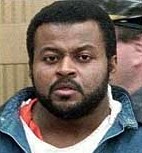
Colin Ferguson
Mass murderer Gameel Al-Batouti
Mass murderer · USA · 1999
Gameel Al-Batouti (also rendered “Gamil ElBatouty” or “El Batouty” in U.S. offi…
216 victims
Gameel Al-Batouti
Mass murderer · USA · 1999
Gameel Al-Batouti (also rendered “Gamil ElBatouty” or “El Batouty” in U.S. offi…
216 victims
 Timothy McVeigh
Mass murderer · USA · 1995
Timothy James McVeigh (April 23, 1968 – June 11, 2001) was a United States Army…
168 victims
Timothy McVeigh
Mass murderer · USA · 1995
Timothy James McVeigh (April 23, 1968 – June 11, 2001) was a United States Army…
168 victims
 Julio Gonzalez
Mass murderer · USA · 1990
Julio Gonzalez was sentenced to 174 twenty-five-year sentences (a total of 4,35…
87 victims
Julio Gonzalez
Mass murderer · USA · 1990
Julio Gonzalez was sentenced to 174 twenty-five-year sentences (a total of 4,35…
87 victims
 David Burke
Mass murderer · USA · 1987
David Augustus Burke (May 18, 1952–December 7, 1987) was an employee of USAir,…
43 victims
David Burke
Mass murderer · USA · 1987
David Augustus Burke (May 18, 1952–December 7, 1987) was an employee of USAir,…
43 victims
 George Jo Hennard
Mass murderer · USA · 1991
George Jo Hennard carried out a mass killing at a Luby’s Cafeteria in Killeen,…
23 victims
George Jo Hennard
Mass murderer · USA · 1991
George Jo Hennard carried out a mass killing at a Luby’s Cafeteria in Killeen,…
23 victims
 James Huberty
Mass murderer · USA · 1984
James Oliver Huberty was a 41-year-old unemployed security guard. He was born i…
21 victims
James Huberty
Mass murderer · USA · 1984
James Oliver Huberty was a 41-year-old unemployed security guard. He was born i…
21 victims
 Antoinette Pelzer
Murderer · USA · 2012
Antoinette Pelzer was homeless and had been diagnosed with schizophrenia. Her f…
2 victims
Antoinette Pelzer
Murderer · USA · 2012
Antoinette Pelzer was homeless and had been diagnosed with schizophrenia. Her f…
2 victims
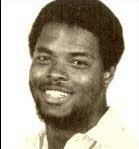 Robert Rozier
Murderer · USA · 1981
1982 — Rozier found Yahweh ben Yahweh's "Temple of Love". · 1985 — Rozier decid…
7 victims
Robert Rozier
Murderer · USA · 1981
1982 — Rozier found Yahweh ben Yahweh's "Temple of Love". · 1985 — Rozier decid…
7 victims
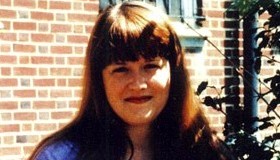 Kimberly Hricko
Murderer · USA · 1998
Kimberly Michelle Hricko — surgical technician; defendant. · Stephen Hricko — v…
1 victim
Kimberly Hricko
Murderer · USA · 1998
Kimberly Michelle Hricko — surgical technician; defendant. · Stephen Hricko — v…
1 victim
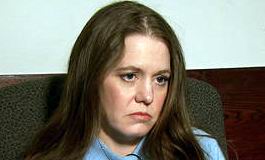 Lisa Donlon
Homicide · USA · 2010
Lisa Donlon was a mother of three boys. Her sons were 11, 13, and 15. She was h…
1 victim
Lisa Donlon
Homicide · USA · 2010
Lisa Donlon was a mother of three boys. Her sons were 11, 13, and 15. She was h…
1 victim
- Gender
- male
- Country
- USA
- Location
- Garden City, New York City, New York, USA
- Date of birth
- January 14, 1958
- Age at first offence
- 35
- Characteristics
- shooting rampage
- Victim profile
- Amy LoCicero Federici, 27; James Gorycki, 51; Mikyung Kim, 27; Theresa Magtoto, 30; Dennis McCarthy, 52, and Richard Nettleton, 34 (passengers)
- Method of murder
- Shooting (Ruger P-89 9mm pistol)
- Date(s) of murder
- December 7, 1993
- Years active
- 1993
- Date of arrest
- Same day
- Status
-
Life imprisonment
Sentenced to 6 consecutive 25-years-to-life terms on February 17, 1995
Case information
Colin Ferguson was convicted of the December 7, 1993 shooting of 25 people aboard the 5:33 pm Long Island Rail Road commuter train out of Penn Station at Merillon Avenue station in Garden City, New York, New York. He was sentenced on February 17, 1995.
Timeline
- December 7, 1993 — Colin Ferguson started firing at passengers on the 5:33 evening Long Island Rail Road commuter train as it approached the Merillon Avenue Station.
- December 8, 1993 — Ferguson was arraigned in a Long Island courtroom and committed to prison without bail.
- December 11, 1993 — Anthony J. Falanga was appointed Ferguson's attorney.
- December 18, 1993 — Ferguson asked a judge to let him replace Falanga with Colin A. Moore.
- January 5, 1994 — A report by a court-appointed psychologist and psychatrist concluded Ferguson was competent to stand trial.
- January 19, 1994 — A grand jury handed up a 93-count indictment against Ferguson.
- March 1, 1994 — William Kunstler and Ron Kuby announced they had accepted a request by Ferguson to handle his case.
- April 23, 1994 — Nassau County Judge Donald E. Belfi rejected a gag request.
- March 23, 1994 — Ferguson was attacked in jail by a group of inmates and suffered a broken nose and a swollen left eye.
- August 12, 1994 — Ferguson's trial counsel was quoted in the Associated Press: “Without a psychiatric defense, Ferguson has no defense. There was no doubt that he was there, that he fired the weapon, that he would have fired it more if he had not been wrestled to the ground. There is no doubt that Colin Ferguson, if sane, was guilty.”
- August 20, 1994 — Ferguson appeared before Belfi and rejected the lawyers' efforts to have him declared mentally unfit to stand trial.
- September 20, 1994 — Kunstler and Kuby filed notice that they would pursue an insanity defense despite the objections of their client.
- November 11, 1994 — Ferguson agreed he would stop resisting efforts to meet with a court-appointed psychiatrist.
- December 10, 1994 — Judge Belfi ruled Ferguson was competent to stand trial.
- February 17, 1995 — Ferguson was convicted and sentenced to 6 consecutive 25-years-to-life terms.
- February 18, 1995 — A jury deliberated for 10 hours before returning its verdict about 9:20 p.m. in the courtroom.
- March 25, 1995 — Ferguson was sentenced to life behind bars for shooting to death six people on a commuter train, prompting cheers from survivors.
- December 1998 — The New York Court of Appeals refused Ferguson's request for a new trial.
Background
Colin Ferguson was born in Kingston, Jamaica on January 14, 1958, to Von Herman Ferguson and May Ferguson. Von Herman Ferguson was described by Time magazine as “one of the most prominent businessmen in Jamaica.” Ferguson's family included four brothers, and they lived in a two-story home with a nanny and a housekeeper in the Kingston suburb of Havendale. Ferguson attended Calabar High School in Kingston from 1969 to 1974, where the Principal described him as a “well-rounded student” who played cricket and soccer, and Ferguson graduated in the top third of his class.
In 1978, when Ferguson was 20 years old, Von Herman Ferguson was killed in a car crash, and Ferguson's funeral was attended by government and military luminaries. Ferguson's mother died from cancer soon afterward, and the deaths destroyed the family's fortunes. Friends said the deaths deeply disturbed Ferguson. Ferguson moved to the United States in 1982 on a Visitor's Visa. Friends said he had trouble dealing with the racism in the U.S., and he felt frustrated because he could not find work outside of menial jobs.
Ferguson met Audrey Warren, an American citizen of Jamaican descent, and married her on May 13, 1986, qualifying him for permanent U.S. residence. Ferguson and Warren moved to a house in Long Island, where they often fought and police intervention was required at times. On May 18, 1988, Warren obtained an uncontested divorce from Ferguson, claiming the marriage ended because they shared “differing social views.” Acquaintances said Warren left Ferguson because he was “too aggressive or antagonistic” for her, and that the divorce was a “crushing blow” to Ferguson.
Ferguson worked doing clerical work for the Ademco Security Group in Syosset, New York, a hamlet of the North Shore of Long Island. On August 18, 1989, while standing on a stool to reach invoices from a filing cabinet, Ferguson slipped and fell, injuring his head, neck and back. The injury led to his termination. He filed a complaint with the New York State Workers Compensation Board, which reviewed the matter over the next several years.
Ferguson enrolled at Nassau Community College in East Garden City, where he made the dean's list three times. Also that year, a disciplinary hearing board found he had acted overly aggressive toward the teacher, and Ferguson was forced to leave a class. In the fall of 1990, Ferguson transferred to Adelphi University in Garden City, where he majored in business administration.
Ferguson spoke out against coexistence with whites and routinely made calls for violence and revolution. Ferguson regularly accused others around him of racism. During one occasion, Ferguson complained that a white woman in the library shouted racial epithets at him after he asked her about a class assignment, and an investigation concluded the incident never occurred. Later, Ferguson attended a symposium by a faculty member discussing her experiences in South Africa. Ferguson interrupted the professor by shouting, “We should be talking about the revolution in South Africa and how to get rid of the white people” and “Kill everybody white!” When students and teachers tried to quiet him, Ferguson started threatening them, repeatedly saying, “The black revolution will get you.” Ferguson was suspended from the school in June 1991 as a result of the threats, and although he was free to reapply after the suspension, he chose not to do so.
In 1991, Ferguson started renting a room in the Flatbush neighborhood of Brooklyn. He was unemployed. Ferguson lived around many other West Indian immigrants. Neighbors said he dressed very neatly, kept to himself and rarely smiled or spoke to anybody, except occasionally to say hello. However, his landlord Patrick Denis said Ferguson once told him, “I'm such a great person. There must be only one thing holding me back. It must be white people.”
In 1992, Warren filed a complaint with police alleging Ferguson pried open the trunk of her car. Prior to the incident, Warren had not seen him since the divorce. In February 1992, Ferguson was arrested and charged with harassing a white woman on a subway. The woman tried to sit in a vacant seat alongside Ferguson and asked him to move over, prompting Ferguson to scream at her and press his leg and elbow against her until police officers pinned him to the ground. Ferguson tried to escape the police and shouted to other nearby African Americans, “Brothers, come help me!” Ferguson sent letters to the New York City Police Commissioner and other officials complaining about his arrest, describing it as “viscous [ sic ] and racist” and claiming he was brutalized by the officers who arrested him. The New York City Transit Authority investigated and dismissed the claims.
In September 1992, Ferguson was awarded $26,250 for his workers compensation claim against Ademco Security Group. In April 1993, Ferguson insisted he was still in pain and demanded the case be reopened so he could get more money for medical treatment. In the following weeks, he visited a Manhattan law firm for a consultation with attorney Lauren Abramson. Abramson said she immediately felt uncomfortable and threatened by Ferguson, and she asked a law clerk to sit in on the meeting because “I did not want to be alone with him,” a step Abramson said she had never done before. Although Ferguson was neatly dressed during the consultation, he acted strangely and identified himself by a false name before providing his real name. Months later, Ferguson made threatening calls to members of the firm, claiming they were discriminating against him. In one call, Ferguson referenced a massacre that occurred in California. The calls prompted the lawyers to start locking their inner office doors out of fear.
Ferguson tried to have his workers compensation claim reopened by the New York State Workers Compensation Board, which reexamined the case due to his persistence but ultimately rejected the request. The board placed Ferguson on a list of potentially dangerous people security guards were to watch out for. In April 1993, Ferguson moved to California in search of new career opportunities. He unsuccessfully applied for several jobs, including a car wash where the manager laughed at him. Ferguson purchased a Ruger P-89 9mm pistol at a Turner's Outdoorsman in Long Beach for $400 after waiting the 15-day waiting period required under California's gun laws. Ferguson presented himself as a California resident by providing a driver's license he received two months earlier, with an address of the Long Beach motel where he stayed. After Ferguson was robbed by two black men, he started carrying the gun around with him in a paper bag.
Ferguson moved back to New York City in May 1993 because he told a friend he did not like competing with immigrants and Hispanics for jobs. Dennis, his Flatbush landlord, said Ferguson appeared even more unstable upon his return, speaking in the third person about “some apocryphal-type doom scenario” that included black people rising up and striking down “their pompous rulers and oppressors.” Ferguson started taking five showers a day and neighbors could be heard repeatedly chanting at night, “all the black people killing all the white people.” Denis became increasingly concerned about Ferguson's obsession with racism and apparent growing mental instability, and asked Ferguson to move out by the end of the month.
The offence
On December 7, 1993, Ferguson purchased a ticket at Pennsylvania Station in New York City and boarded the third car of the east-bound Long Island Rail Road 5:33 evening commuter train to Hicksville, along with 80 other passengers. Ferguson sat on the western end of the car while carrying his handgun and a canvas bag filled with 160 rounds of ammunition.
As the train approached the Merillon Avenue Station, Ferguson drew the gun, dropped several cartridges on the ground, stood up and began opening fire on the passengers at random. During three minutes of gunfire, Ferguson killed six people and injured another 19. Some passengers initially mistook the gunshots for caps or fireworks until a woman shouted, “He's got a gun! He's shooting people!” Ferguson walked east on the train, pulling the trigger steadily about every half second.
Several passengers tried to hide beneath their seats while others fled to the eastern end of the train and tried to go into the next car. Ferguson walked down the aisle and shot people to his right and left as he passed each seat, briefly facing each victim before firing. Ferguson repeated over and over, “I'm going to get you,” as he walked down the aisle. Other passengers farther away in the train did not realize a shooting had occurred until after the train stopped.
As a crowd of panicked passengers fled from the third car into neighboring cars, one man appeared annoyed by their unruliness and said, “Be calm,” before they forced a train door open and fled into the station. Two people were injured in the stampede.
After the train's engineer was informed of the shooting, he decided against opening the train doors right away because two of the cars were not yet at the platform. An announcement was made ordering conductors not to open the doors. However, one conductor climbed out of a train window and opened some door of the third car from the outside so panicked passengers could escape.
Ferguson emptied two 15-round magazines during the shooting. While he was reloading his third magazine, somebody yelled, “Grab him!” Passengers Michael O'Connor, Kevin Blum and Mark McEntee tackled Ferguson and pinned him to one of the train's seats, and several other passengers ran forward to grab his arms and legs and help hold him down.
While pinned, Ferguson said, “Oh God, what did I do? What did I do? I deserve whatever I get.” Andrew Roderick, an off-duty Long Island Rail Road policeman who was picking up his wife from the train, boarded the train car and handcuffed Ferguson. Ferguson was wrestled to the floor of the train by three men as he reloaded his Ruger P-89 9mm pistol for the third time, and held until the arrival of police.
Six passengers died from their injuries during the shooting: Amy Federici, a 27-year-old corporate interior designer from Mineola; James Gorycki, a 51-year-old account executive from Mineola; Mi Kyung Kim, a 27-year-old New Hyde Park resident; Maria Theresa Tumangan Magtoto, a 30-year-old lawyer from Westbury; Dennis McCarthy, a 52-year-old office manager from Mineola and husband of Carolyn McCarthy; and Richard Nettleton, a 24-year-old college student from Roslyn Heights.
Police detectives later said it appeared Ferguson had been planning the shooting for more than a week. Chief Joseph Flynn of the Long Island Rail Road police said, “This was the work of a deranged, maniacal person who for a variety of reasons decided to explode.” None of Ferguson's victims were black, although it was unclear whether any other black passengers were aboard the train.
Ferguson showed no emotion as he sat in the back of a police car. Some passengers said Ferguson's calmness was as shocking and disturbing as the violence. Upon seeing Ferguson, one of the victims became hysterical and shouted, “How can he be sitting there so calm after everything he did?”
Investigation and arrest
After arresting Ferguson, police found pieces of notebook paper in his pockets with scribbled notes with the heading “reasons for this.” One note referred to “racism by Caucasians and Uncle Tom Negroes.” The notes included a reference to “the false allegations against me by the filthy Caucasian racist female on the #1 line” and a reference to his February 1992 arrest. The notes expressed anger toward the New York State Workers Compensation Board, Asians, New York Governor Mario Cuomo, and “so-called civil right leaders such as the Rev. Herbert Daughtry, C. Vernon Mason, and Calvin Butts.”
The notes included the names and telephone numbers of the New York lieutenant governor, the attorney general's office and the Manhattan law firm Ferguson previously threatened, which Ferguson referred to as “those corrupt 'black' attorneys who not only refuse to help me but tried to steal my car.” Ferguson also indicated in his notes that he planned to wait to start the killings until after he was beyond New York City limits in respect for outgoing New York City Mayor David Dinkins and New York City Police Commissioner Raymond W. Kelly.
Officials in questioning from the Nassau County district attorney's office said Ferguson showed no remorse and was “lucid and clear and aware of what was going on.” Ferguson was arraigned on December 8, 1993, in a Long Island courtroom and did not enter a plea. He was committed to prison without bail. As he was escorted from the courthouse, a reporter asked Ferguson if he hated whites, and Ferguson replied, “It's a lie”.
Pre-trial proceedings
Anthony J. Falanga was appointed as Ferguson's attorney on December 11, 1993, and Falanga called for Ferguson to receive a psychiatric evaluation. Under New York state law, an insanity defense would require Ferguson's lawyers to prove he suffers from a mental disease or defect and, as a result, could not tell whether his actions were right or wrong.
Ferguson was placed on suicide watch in the Nassau County Jail. On December 18, Ferguson asked a judge to let him replace Falanga with Colin A. Moore, a Brooklyn-based attorney. Moore offered to represent Ferguson pro bono. Before a ruling was made, Moore held a press conference announcing he would seek a change of venue to Brooklyn, claiming it was impossible for Ferguson to receive a fair trial in a Nassau court due to a “severe underrepresentation of African-Americans on the Nassau County jury panel”. Moore later withdrew his offer, citing conflicts not explained. Ferguson told the judge he questioned Falanga's integrity, disagreed with his handling of the case and had no intention of cooperating.
Dr. Allen Reichman, a psychiatrist who interviewed Ferguson, indicated in his report that Ferguson may have been feigning mental illness when he spoke of conspiracies against him. Reichman said Ferguson's assertions were “vague and somewhat evasive,” contrasting with normally detailed and highly focused systematized paranoid delusional thinking.
On January 5, 1994, a report by a court-appointed psychologist and psychatrist concluded Ferguson was competent to stand trial.
On January 19, after three days of evidence presentation, a grand jury handed up a 93-count indictment against Ferguson that carried the possibility of up to 175 years in prison. Nassau County District Attorney Dennis Dillon said of the sentence maximum, “It's not quite infinity, but it will do.” Dillon also announced he would not agree to any plea bargain.
The indictment included two counts of murder for each slain victim: intentional murder and depraved indifference to human life. It also included 19 counts of attempted murder, 34 counts of assault, criminal possession of a weapon, intent to use the weapon, violation of civil rights of each of the 25 victims, and “intent to harass, annoy, threaten and alarm” the victims “because of their race, color or national origin.”
On March 1, William Kunstler and Ron Kuby announced they had accepted a request by Ferguson to handle his case. Kunstler said he would not collect a fee for the defense and said Ferguson had been made out to be a “pariah” by the media and public.
In April 1994, District Attorney Dillon sought a gag order for all lawyers involved in the case, arguing Kunstler and Kuby had made statements to the media that might be inadmissible during the trial and could influence potential jurors. Kunstler and Kuby argued they would have no problem finding 12 unbiased jurors and claimed Ferguson had already been publicly attacked in the press by government and police officials. Nassau County Judge Donald E. Belfi rejected the gag request on April 23, saying the impact of inflammatory statements already made by lawyers, politicians and police would fade in the months before the trial begins. Belfi warned attorneys from both sides to follow a state court professional disciplinary rule limiting comments to news organizations.
During incarceration, Ferguson complained that correction officers attacked him with milk crates and a fire extinguisher while depriving him of necessities like soap and antiperspirant spray. Ferguson said, “Of course there is no sympathy for me in the institution. When I suffered and screamed I was told that it was a good sign by the prison guards because they were hoping for my swift departure from life.” Ron Kuby argued Ferguson was frequently targeted for harassment at the Nassau County Jail and requested the U.S. Department of Justice intervene to ensure Ferguson's safety.
On March 23, while returning to his cell from the medical unit, Ferguson was attacked in jail by a group of inmates. Ferguson suffered a broken nose and a swollen left eye. Prison officials had been notified by Kuby that an assault was imminent and were in the process of following up on the warning when Ferguson was attacked. Kuby stated, “The word was out. Everyone in the institution knew he was going to be set up.” Kuby called the attack racially motivated and later alleged some jail officials and guards had advance knowledge of the impending assault. Five inmates were charged with second-degree assault for their connection in the attack: Frank Cordero, 36; Robert Drobyshewski, 24; James Doukas, 23; Marcos Flores, 30; and Edward MacKenzie, 38.
In November 1994, Ferguson's lawyers claimed prison guards taunted him with claims that the election of Governor George Pataki, a death penalty supporter, meant Ferguson would be executed if found guilty. Ferguson's lawyers claimed guards showed Ferguson the headlines of newspaper stories about Pataki and claimed he was “headed for electrocution sometime soon.” Ferguson was troubled by the claims, despite assurances from his attorneys that the death penalty could only be imposed in crimes after a capital punishment bill became law. He was not reassured until after a judge told him the same thing at the request of Kunstler.
Trial
Kunstler and Kuby proposed an insanity defense based on a psychiatric condition they termed “black rage.” Kunstler and Kuby argued Ferguson had been driven insane by racial prejudice and could not be held criminally liable for his actions even though he had committed the killings. They compared it to the utilization of the battered woman defense, posttraumatic stress disorder and the child abuse syndrome in other cases.
Kuby said Ferguson's notes carried by Ferguson on the day of his arrest demonstrated that Ferguson was motivated by rage during the shootings. Donald E. Belfi criticized Kunstler for speaking to the media about the proposed defense before it had been examined by a mental health professional, saying, “Mr. Kunstler may have many talents, but until he receives his medical degree with a specialty in psychiatry, these types of conclusions should best be left for medical experts and the triers of the facts.”
Ferguson began to claim he was not involved in the Long Island Rail Road shootings and repeatedly refused to meet with a psychiatrist chosen by Kunstler and Kuby. Ferguson told the attorneys he was receiving messages straight from God and spoke of conspiracies to destroy him by those opposed to God.
On August 12, Kunstler and Kuby asked Judge Belfi to reconsider Ferguson's competence to stand trial, claiming he was growing more delusional, paranoid and obsessive and was too mentally unbalanced to mount any kind of defense. George Peck, the prosecutor, insisted Ferguson's lack of cooperation with his lawyers was a defense tactic to avoid a trial. On August 20, Ferguson appeared before Belfi and rejected the lawyers' efforts to have him declared mentally unfit to stand trial. Ferguson spoke in a long and rambling manner, sometimes ignoring Belfi when the judge tried to interrupt him. Ferguson claimed a police officer who escorted him from the Nassau County Jail said someone else was responsible for the shooting. When asked if Ferguson understood the role of the prosecuting attorney, Ferguson responded, “To perpetrate injustices against me.” Kunstler and Kuby argued Ferguson's behavior indicated mental imbalance. Belfi refused the request to reconsider competence, citing the original psychiatric report that concluded Ferguson was able to understand the charges and was “malingering in an attempt to create an impression” he was mentally imbalanced and unable to cooperate with his attorney.
When Belfi ended the proceeding, Ferguson tried to continue talking. After he was placed into handcuffs, Ferguson shouted, “They have made it too tight”, and collapsed. He had to be dragged from the courtroom.
On September 20, Kunstler and Kuby filed notice that they would pursue an insanity defense despite objections of Ferguson. Ferguson continued to claim he was not involved in the shootings and proposed defending himself. He sent Belfi letters about disputes between Ferguson, Kunstler and Kuby, claiming he was not insane and rejecting Kunstler's and Kuby's “black rage” defense.
On November 11, Ferguson agreed he would stop resisting efforts to meet with a court-appointed psychiatrist. Judge Belfi held a third hearing and on December 10 ruled Ferguson was competent to stand trial. Belfi strongly advised Ferguson against defending himself. Ferguson said he intended to defend himself. Kuby said, “What we will have now is a complete circus. A crazy man cannot defend himself. Mr. Ferguson, evidence to the contrary, believes he is not guilty and that someone else killed all those people aboard the train.” Kuby added, “Without a psychiatric defense, Ferguson has no defense.
Ferguson's trial was described as bizarre because he cross-examined police who arrested him and victims he shot, and the trial was broadcast live by local media and Court TV. Ferguson argued the 93 counts he was charged with were related to 1993 and claimed that if the shootings had occurred in 1925 he would have been charged with only 25 counts. He admitted bringing the gun onto the train but claimed he fell asleep and another man grabbed his gun and began firing. He argued that a mysterious man named Mr. Su had information concerning a conspiracy against him. He also had found another man willing to testify that the government implanted a computer chip in Ferguson's brain, but he decided not to call him to the stand.
During cross-examination, Ferguson's questions often started with “Is it your testimony...” and forced witnesses to repeat testimony already given. When witnesses refused to answer, he often asked the judge to “admonish the witness to answer the question.” During cross-examinations, Ferguson referred to himself in the third person, including asking the victims “Did you see Colin Ferguson...” and witnesses responded “I saw you shoot me.” Legal experts said Ferguson's questions were pointless and not geared toward rebutting testimony and that by not recognizing when to object and closing arguments, he would lose his right to appeal on those grounds.
Ferguson sought to subpoena President Bill Clinton, and among witnesses he intended to call were a ballistic expert, a handwriting expert and two regular eyewitnesses, but he ultimately did not call any of these witnesses. Ferguson told Judge Belfi about an alleged conspiracy by the Jewish Defense League to kill him in prison if he was convicted. He said the prison slaying of Jeffrey Dahmer was “set up as a prelude against me”.
Ferguson was convicted on February 17, 1995 of murder for the death of the six passengers who died of their injuries. He was also convicted of attempted murder for wounding 19 passengers during the mass murder. He received 315 years and eight months to life, making his current earliest possible parole date August 6, 2309. At sentencing, Judge Donald E. Belfi promised, “Colin Ferguson will never return to society, and will spend the rest of his natural life in prison.”
Sentencing
At sentencing on February 17, 1995, Judge Donald E. Belfi called Ferguson a “selfish, self-righteous coward.” Belfi also criticized New York's Sentencing Cap Law, stating it would have capped Ferguson's sentence at 50 years had no one died in the massacre, because felonies committed on the train were part of one occurrence and all sentences would have been served concurrently.
Judge Belfi sentenced Ferguson to 6 consecutive 25-years-to-life terms, one for each murder count. The judge also sentenced him on attempted murder counts, and the combined sentence was described as 200 years in total, along with 315 years and eight months to life in other parts of the record. Ferguson was stated to be incarcerated at Attica Correctional Facility in western New York.
At sentencing, Belfi said Ferguson committed “the acts of a coward,” and also stated, “The vicious acts you committed on December 7, 1993, were the acts of a coward.” Belfi also stated, “Colin Ferguson, in my almost 21 years on the bench, I have never presided over a trial with a more selfish and selfcentered defendant.” Ferguson delivered a long allocution that included comparing his case to John the Baptist and referenced the expectation that “After his death, we can look back and say with 20-20 hindsight, 'This was a great man.'”
Appeals
Ferguson appealed his conviction, requesting legal counsel to pursue an appeal. His request for a new trial was refused by the New York Court of Appeals in December 1998. Fergusson argued in appellate briefs that he had incompetent counsel, meaning himself.
Outcome
Ferguson was convicted of murdering six passengers and injuring 19 others on the Long Island Rail Road in Garden City, New York, on December 7, 1993. He was convicted on February 17, 1995 of murder for the deaths of six passengers and attempted murder for the wounding of 19 passengers.
Aftermath
Carolyn McCarthy, whose husband Dennis McCarthy was killed and whose son Kevin McCarthy was severely injured, was subsequently elected to the United States Congress on a platform of gun control. She was motivated to run for Congress after the representative in her district Dan Frisa voted against an assault weapons bill.
Some survivors and family members of other victims also became involved in gun control efforts. McCarthy sued Olin Corporation, parent of Winchester Ammunition, under products liability and negligence theories for their manufacture of the Black Talon bullets used by Ferguson. The suit failed for numerous reasons, including that New York law placed no responsibility on manufacturers for criminal misuse of products and that legislatures, not courts, should make decisions relating to regulating weapons. The record also states that Winchester Ammunition announced it was voluntarily withdrawing Black Talon cartridges from the market one month before the Ferguson shootings.
At least a half dozen lawsuits related to the shootings were filed against the Long Island Rail Road and its parent company, the Metropolitan Transportation Authority. Carolyn McCarthy filed a $36 million damage lawsuit against the two entities, claiming they failed to provide adequate protection for passengers and should have installed metal detectors and used undercover police officers. The suit sought $1 million for Dennis McCarthy's pain and suffering, $10 million for his death and for damages to survivors, and $25 million for injuries to Kevin McCarthy.
Several regular commuters used the 5:33 Hicksville Local and returned the day after the shootings. The railroad did not discontinue the scheduled train or alter its schedule after the shootings, and the 5:33 Hicksville Local continued to operate. The car (M3 9891) in which the shootings occurred was refurbished and renumbered (to 9945) and still operated on the LIRR. Another part of the record states that the car (M3 9892) was refurbished and renumbered (to 9946) and still operated on the LIRR.
During the 1993 summer excursion season, the LIRR presented a dinner theater mystery, Murder on the Montauk Express, on its premier Friday evening train to resorts of the Hamptons and Montauk. The play was not renewed after the Ferguson murders.
Ferguson was the subject of a Saturday Night Live comedy sketch in which he, portrayed by Tim Meadows, declared “I did not shoot them, they shot me” and asked witnesses questions about shooting him while they were on the stand.
In 1994, Ferguson was apparently involved in a fistfight with fellow inmate Joel Rifkin. The brawl began when Ferguson asked Rifkin to be quiet while Ferguson was using the telephone. The New York Daily News reported the fight escalated after Ferguson told Rifkin, “I wiped out six devils [white people], and you only killed women,” to which Rifkin responded, “Yeah, but I had more victims.” Ferguson then punched Rifkin in the mouth.
A 2002 book by trial consultant Mark C. Bardwell and criminal justice professor Bruce A. Arrigo examined competency issues in the Ferguson case.
Other details
Ferguson was described as an African-Jamaican mass murderer who was convicted of murdering six people and injuring nineteen others on the Long Island Rail Road in Garden City, New York. At the time of the killings, he was described as a Permanent Resident of the U.S. with a Green Card by virtue of his marriage to an American citizen, and he was described as being incarcerated for the rest of his life.
The record includes multiple victim name spellings and arrangements: Amy LoCicero Federici, James Gorycki, Mikyung Kim, Theresa Magtoto, Denis McCarthy, and Richard Nettleton.
Ferguson was described as also being held responsible through many counts, including 93 counts he was charged with. In one account, a jury acquitted him on 25 counts of aggravated harassment and returned guilty verdicts on other charges, including multiple counts of murder, attempted murder, assault, reckless endangerment, and weapons possession.
The record includes comments attributed to officials and political figures in the aftermath. President Bill Clinton called the Ferguson shooting a “terrible human tragedy.” Clinton asked Attorney General Janet Reno to review a proposal by New York City Mayor-elect Rudy Giuliani for a national uniform licensing system for gun buyers, with background checks, tests and required renewals every two years, citing the Ferguson murders as a factor in support. Governor Mario Cuomo called the Ferguson shootings “a dramatic, spectacular slaughter” and called for stronger gun control measures. U.S. Senator Al D'Amato said the case demonstrated the need for capital punishment in New York because “that is the only fitting punishment for this cold-blooded killer”. Many people in the African American community expressed concern the shootings would lead to a backlash of violence and racial animosities against the black community. Civil rights activists Al Sharpton and Herbert Daughtry urged African Americans not to be blamed, and Sharpton criticized attempts “to demonize black and Hispanic dissatisfaction” by linking those groups to the murders.
During the trial, Ferguson's defense counsel and Ferguson made various remarks and allegations, including that Ferguson fired a gun while acting under a claim of “black rage,” that there was an alleged conspiracy to kill him in prison involving the Jewish Defense League, and that he was receiving messages straight from God.
Ferguson made a statement, “I hope somewhere down the road I will be forgotten...that I will just be able to live the life I had before, a quiet life unknown to the world.” Colin Ferguson.
Spotted an error, or have more information about this case?