Bobby Lynn Ross
Murderer Brian Kevin Rosenfeld
Murderer · USA · 1985
Brian Kevin Rosenfeld Brian Kevin Rosenfeld was sentenced to three concurrent l…
23 victims
Brian Kevin Rosenfeld
Murderer · USA · 1985
Brian Kevin Rosenfeld Brian Kevin Rosenfeld was sentenced to three concurrent l…
23 victims
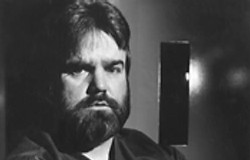 Marvin Gray
Murderer · USA · 1975
Marvin Gray was convicted killer who claimed responsibility for 23 slayings and…
23 victims
Marvin Gray
Murderer · USA · 1975
Marvin Gray was convicted killer who claimed responsibility for 23 slayings and…
23 victims
 Yahweh ben Yahweh
Murderer · USA · 1980
Yahweh ben Yahweh was born and legally named Hulon Mitchell Jr. (October 27, 19…
23 victims
Yahweh ben Yahweh
Murderer · USA · 1980
Yahweh ben Yahweh was born and legally named Hulon Mitchell Jr. (October 27, 19…
23 victims
 Russell Ellwood
Murderer · USA · 1991
Russell Ellwood was a former taxi driver. Authorities suspected him of killing…
20 victims
Russell Ellwood
Murderer · USA · 1991
Russell Ellwood was a former taxi driver. Authorities suspected him of killing…
20 victims
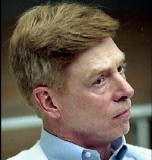 Jerry Mark
Mass murderer · USA · 1975
Jerry Mark (32 at conviction) was the brother of Leslie Mark and was convicted…
4 victims
Jerry Mark
Mass murderer · USA · 1975
Jerry Mark (32 at conviction) was the brother of Leslie Mark and was convicted…
4 victims
 Patricia Allanson
Murderer? · USA · 1974
Patricia Taylor Allanson Patricia Allanson was born in 1937. She grew up as “Pa…
3 victims
Patricia Allanson
Murderer? · USA · 1974
Patricia Taylor Allanson Patricia Allanson was born in 1937. She grew up as “Pa…
3 victims
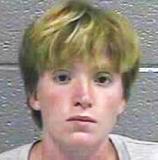 Amber Richardson
Murderer · USA · 2013
Amber Richardson was an Alderson woman convicted of conspiring to kill her husb…
1 victim
Amber Richardson
Murderer · USA · 2013
Amber Richardson was an Alderson woman convicted of conspiring to kill her husb…
1 victim
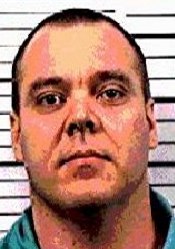 Frank Duane Welch
Murderer · USA · 1987
Name: Frank Duane Welch On February 25, 1987, Tracy Cooper arrived at his Norma…
2 victims
Frank Duane Welch
Murderer · USA · 1987
Name: Frank Duane Welch On February 25, 1987, Tracy Cooper arrived at his Norma…
2 victims
 Thomas Edward Luther
Serial killer · USA · 1970
Thomas Edward Luther was a convicted rapist who was sentenced to life in prison…
9 victims
Thomas Edward Luther
Serial killer · USA · 1970
Thomas Edward Luther was a convicted rapist who was sentenced to life in prison…
9 victims
 Nathan Ybanez
Homicide · USA · 1998
Nathan Ybanez was a 16-year-old defendant convicted of first-degree murder in h…
1 victim
Nathan Ybanez
Homicide · USA · 1998
Nathan Ybanez was a 16-year-old defendant convicted of first-degree murder in h…
1 victim
- Gender
- male
- Country
- USA
- Location
- Beckham County, Oklahoma, USA
- Date of birth
- 1958
- Age at first offence
- 25
- Characteristics
- robbery, drug addict
- Victim profile
- Steve Mahan, 30 ( Elk City Police Sgt. )
- Method of murder
- Shooting ( .25-caliber pistol)
- Date(s) of murder
- January 5, 1983
- Years active
- 1983
- Date of arrest
- Same day
- Status
-
Executed
Executed by lethal injection in Oklahoma on December 9, 1999
Case overview
Bobby Lynn Ross was convicted of the 1983 murder of Elk City Police Sgt. Steve Mahan, 30. Ross also was convicted of robbery with firearms. Two other co-defendants were convicted of second degree murder in this case.
Ross was sentenced to death for the murder conviction and to ninety-nine years imprisonment for the robbery conviction. The aggravating circumstances found by the jury included: (1) Ross knowingly created a great risk of death to more than one person; (2) the murder was especially heinous, atrocious, or cruel; (3) the murder was committed to avoid or prevent a lawful arrest or prosecution; (4) there exists a probability that Ross would commit criminal acts of violence that would constitute a continuing threat to society; and (5) the victim of the murder was a peace officer.
Ross was executed by lethal injection in Oklahoma on December 9, 1999.
Timeline
- January 5, 1983 — Bobby Lynn Ross and another man robbed Debra Jean Sandefur, the night clerk at the Los Cuartos Inn Motel in Elk City, Oklahoma; Sergeant Steven Mahan arrived on a routine check, was disarmed, and was shot three times in the head at close range; Sergeant Mahan was pronounced dead at approximately 5:30 a.m.
- January 5, 1983 (approximately 2:26 a.m.) — Two Clinton police officers stopped the vehicle in which Ross and two other men were riding for having a defective taillight and unsafe windshield; all three men were frisked, arrested, and read their Miranda rights.
- January 25, 1983 — Ross’s counsel filed an Application for Commitment alleging a doubt about Ross’s present sanity and claiming he was unable to distinguish between right and wrong, unable to understand the nature of the charges and proceedings, and unable to effectively and rationally assist in his defense.
- January 27, 1983 — The trial court granted the Application for Commitment and Ross was admitted to Eastern State Hospital for examination.
- February 18, 1983 — Dr. R.D. Garcia, Chief Forensic Psychiatrist of Eastern State Hospital, determined that Ross could fully comprehend the exact nature of the proceedings pending against him, would be able to adequately advise/assist legal counsel, was not in need of psychiatric care/treatment, should not be considered mentally ill under Oklahoma law, and that there had been no behavior indicating Ross could be considered dangerous to himself and/or others.
- October 21, 1983 — Ross was convicted of 1st-degree murder and robbery with firearms.
- October 24, 1988 — Ross filed an Application for Post-Conviction Relief in the District Court of Roger Mills County, Oklahoma.
- November 19 (year not stated) — At a failed clemency hearing before the state Pardon and Parole Board, Ross asked Mahan’s family for forgiveness and claimed he was a changed man.
- October 31, 1994 — The United States Supreme Court denied Ross’s petition for a writ of certiorari.
- December 30, 1994 — Ross filed a second Application for Post-Conviction relief in the District Court of Roger Mills County, Oklahoma.
- March 24, 1995 — The district court denied relief on Ross’s second Application for Post-Conviction relief.
- March 20, 1997 — The Oklahoma Court of Criminal Appeals affirmed the denial of relief.
- November 17, 1997 — The district court denied Ross’s habeas petition.
- December 31, 1996 — Ross filed the present habeas petition in federal district court.
- January 12, 1999 — The United States Court of Appeals for the Tenth Circuit affirmed the district court’s denial of Ross’s petition for a writ of habeas corpus.
- December 9, 1999 — Ross was executed by lethal injection in Oklahoma.
Background
Steve Mahan, 30.
Ross was 41 at the time of execution. Mahan was making a routine check when he drove up to the Los Cuartos Inn in Elk City on Jan. 5, 1983. The robbery involved motel clerk Debra Sandefur.
Ross had threatened to kill Sandefur before Mahan arrived at the motel. Ross was described as having a drug problem at the time and as having expressed remorse for the crime ever since his arrest.
The offence
In the early morning hours of January 5, 1983, Ross and another man robbed Debra Jean Sandefur, the night clerk at the Los Cuartos Inn Motel in Elk City, Oklahoma. During the robbery, Ross grabbed and pushed Ms. Sandefur and repeatedly threatened to kill her.
Before Ross left the scene, Sergeant Steven Mahan of the Elk City Police Department arrived on a routine check. Ross disarmed Sergeant Mahan and ordered him to lie down. Sergeant Mahan was shot in the head three times at close range.
Ms. Sandefur came to his aid as he lay on the ground, face down, bleeding profusely and breathing irregularly. Elk City police officers arrived and, due to the obvious severity of his injuries, drove Sergeant Mahan to the hospital before the ambulance arrived. At approximately 5:30 a.m. that same day, Sergeant Mahan was pronounced dead.
Investigation
At approximately 2:26 a.m., two Clinton police officers stopped the vehicle in which Ross and two other men were riding for having a defective taillight and unsafe windshield. All three men were frisked, arrested and read their Miranda rights.
While frisking Ross, Officer Mark Lumpkin removed a Bauer .25 caliber automatic pistol from Ross’s right front pants pocket. Ballistics tests showed that the bullets removed from Sergeant Mahan’s head were fired from the Bauer pistol taken from Ross.
Police recovered the black jacket, black pants and black tennis shoes that Ross had been wearing during the robbery and murder. A search of the vehicle revealed the two bank bags and bank deposits taken from the Los Cuartos Inn Motel, a Model 66 Smith & Wesson .357 magnum revolver with the same serial number as Officer Mahan’s duty weapon, and a loaded .25 caliber pistol.
A few hours later, Ross gave a taped statement to the police. Ross initially admitted that he committed the robbery but denied any involvement in the murder, claiming an unidentified individual appeared at the scene and killed Sergeant Mahan. However, when faced with accusations of lying, Ross admitted to Sergeant Mahan’s killing and stated:
"Yes, sir, I did [commit the murder]. There wasn't no way of getting around it. I had to live with it on my mind. I couldn't live no longer with it on my mind. Taking another man's life just for some money."
Tr. at 915-19; 921-22.
Arrest
Two Clinton police officers stopped the vehicle containing Ross and two other men at approximately 2:26 a.m. after observing a defective taillight and unsafe windshield. The officers frisked all three men, arrested them, and read their Miranda rights.
Officer Mark Lumpkin removed a Bauer .25 caliber automatic pistol from Ross’s right front pants pocket while frisking Ross.
Trial
In October 1983, Ross was convicted in the Roger Mills County District Court of first degree murder and robbery with firearms.
Ross received the death sentence for the murder conviction and ninety-nine years imprisonment for the robbery conviction.
At sentencing, the jury found five aggravating circumstances: (1) Ross knowingly created a great risk of death to more than one person; (2) the murder was especially heinous, atrocious, or cruel; (3) the murder was committed to avoid or prevent a lawful arrest or prosecution; (4) there exists a probability that Ross would commit criminal acts of violence that would constitute a continuing threat to society; and (5) the victim of the murder was a peace officer.
Sentencing
On direct appeal, Ross’s convictions and sentence were affirmed by the Oklahoma Court of Criminal Appeals in Ross v. State, 717 P.2d 117 (Okla.Crim.App.1986).
In 1992, the Oklahoma district court invalidated the “especially heinous” aggravator but, in reweighing the remaining factors, found beyond a reasonable doubt that the death penalty would have been given. The Oklahoma Court of Criminal Appeals affirmed this finding in Ross, 872 P.2d 940 (Okla.Crim.App.1994).
Appeals
Ross v. State was affirmed by the Oklahoma Court of Criminal Appeals on the direct appeal.
Ross filed a petition for a writ of certiorari with the United States Supreme Court. The Court granted the petition on June 15, 1987, and affirmed Ross’s convictions and sentences on June 22, 1988, in Ross v. Oklahoma, 487 U.S. 81, 108 S.Ct. 2273, 101 L.Ed.2d 80 (1988).
Ross filed an Application for Post-Conviction Relief in the District Court of Roger Mills County, Oklahoma, on October 24, 1988. The state district court invalidated the “especially henious, atrocious, or cruel” aggravating circumstance, but denied Ross relief and found the death penalty the appropriate punishment. The Oklahoma Court of Criminal Appeals affirmed this denial of relief on April 6, 1994 in Ross v. State, 872 P.2d 940 (Okla.Crim.App.1994).
On October 31, 1994, the United States Supreme Court denied Ross’s petition for a writ of certiorari, Ross v. Oklahoma, 513 U.S. 970, 115 S.Ct. 441, 130 L.Ed.2d 352 (1994).
Ross filed a second Application for Post-Conviction relief in the District Court of Roger Mills County on December 30, 1994. The district court denied relief on March 24, 1995, and the Oklahoma Court of Criminal Appeals affirmed that denial on March 20, 1997 in Ross v. State, No. PC-95-294 (Okla.Crim.App.1997).
Ross filed a habeas petition in federal district court on December 31, 1996. The district court denied relief on November 17, 1997 in Ross v. Ward, No. CIV-96-1074-M (W.D.Okla.1997). The district court granted a certificate of appealability on two issues:
- the alleged denial of Ross’s right to expert psychiatric or psychological assistance at both the guilt/innocence and penalty stages of trial; and
- the alleged denial of Ross’s right to an individualized sentencing determination based upon constitutionally valid aggravating circumstances.
Despite the limited certificate of appealability, Ross raised multiple issues on appeal, including the trial court’s denial of expert psychiatric or psychological assistance, effective assistance of counsel, constitutionality and sufficiency of aggravating circumstances, infirmity under the Eighth Amendment due to vacating the “especially heinous, atrocious, or cruel” aggravating circumstance, prosecution notice, evidence regarding an unadjudicated homicide, prosecutorial misconduct, and competency.
On appeal, the United States Court of Appeals for the Tenth Circuit reviewed the record and concluded Ross failed to make a substantial showing of the denial of a constitutional right required for an expanded certificate of appealability. The appellate court addressed only:
- whether the denial of Ross’s motion for appointment of expert psychiatric or psychological assistance deprived him of constitutional rights;
- whether the death sentence was unconstitutional because the aggravating circumstances used to support it were unconstitutionally interpreted and applied and insufficiently supported by the evidence; and
- whether the death sentence was infirm under the Eighth Amendment because the “especially heinous, atrocious, or cruel” aggravating circumstance was vacated.
The Tenth Circuit affirmed the district court’s denial of the habeas petition on January 12, 1999 in Bobby Lynn Ross, Petitioner-appellant, v. Ron Ward, Warden, Oklahoma State Penitentiary, Respondent-appellee, United States Court of Appeals, Tenth Circuit.
A concurring opinion by PAUL KELLY, Jr., Circuit Judge addressed certificate of appealability procedures and stated that no specific request for an expanded COA was filed, and that the brief did not indicate that such a request was being made until concluding sentences of each section.
Outcome
The United States Court of Appeals for the Tenth Circuit affirmed the district court’s denial of Ross’s petition for a writ of habeas corpus.
Ross’s clemency request was rejected by the state Pardon and Parole Board in November following a failed clemency hearing before the Board on Nov. 19. At the clemency hearing, Ross asked Mahan’s family for forgiveness and claimed he was a changed man.
Ross was executed by lethal injection early that morning at the Oklahoma State Penitentiary on December 9, 1999.
Other details
Sergeant Mahan’s relatives were scheduled to witness the execution. Charlie Price was described as a spokesman in the Attorney General’s Office.
Mahan’s daughter, Heather, wrote to the Pardon and Parole Board:
"I missed out on all the opportunities that most children had," she wrote in a letter to the board. "My father was stolen from me before I even had a chance to know him... My father was doing his job, not out trying to disrupt peoples' lives. All I ask for is justice to be served."
Elk City police Detective Jim LaFarlette raced through the darkness in a patrol car with Mahan in the back. LaFarlette said of the murder of Sgt. Steven Mahan:
"A child lost her daddy, parents lost a son and "we all under the badge were deprived of a brother," LaFarlette said Tuesday of the murder of Elk City police Sgt. Steven Mahan on Jan. 5, 1983."
LaFarlette also said:
"It will help me to know there is some justice that if you commit a cold-blooded, heinous crime like that, you will pay the penalty" assigned by a jury.
Ross was described as having sobbed on tape with the statement:
"Whatever happens to me, I deserve it," he sobbed on the tape. "I do. I deserve it."
Ross’s attorney David Autry said Ross had expressed remorse for the crime ever since his arrest and had been spending his final days talking with a chaplain.
Autry described Ross’s hope for reprieve as:
"a very long shot."
Mahan’s father, Herbert, said Ross had lived “about 10 years too long.”
LaFarlette said fellow officers found Mahan lying on the ground in a pool of blood and that the motel clerk performed CPR on the officer as they raced for help. LaFarlette said they sought a helicopter to take Mahan to an Oklahoma City hospital but it was too foggy and icy.
In support of Ross’s claim that sanity was a significant factor at trial, Ross’s counsel filed an Application for Commitment with the following statements in writing:
"[C]ause exists to believe that a doubt arises as to the present sanity of Bobby Lynn Ross " because he "presently is unable to distinguish between right and wrong;" "he does not have the present ability to understand the nature of the charges and proceedings brought against him;" and "he is presently unable to effectively and rationally assist in his defense."
The trial court granted the application on January 27, 1983. Eastern State Hospital examined Ross, and Dr. R.D. Garcia determined that Ross:
- "can fully comprehend the exact nature of the proceedings pending against him;"
- "would be able to adequately advise/assist legal counsel in the proper defense of his case;"
- "is not in need of psychiatric care/treatment ... [and is] competent to stand trial at this time;"
- "should not be considered mentally ill under Oklahoma law; and"
- "[t]here has been no behavior to indicate to the staff that Bobby Lynn Ross could be considered as dangerous to himself and or others in society."
The appellate decision noted that evidence included Ross’s confession given the same day as the murder and Dr. Garcia’s report dated less than two months after the murder.
In the concurring opinion, PAUL KELLY, Jr., Circuit Judge stated:
"No specific request for an expanded COA was filed and the cover of Mr. Ross ' brief-in-chief did not indicate that such a request was being made."
And:
"Only in the concluding sentence of each section of his brief-in-chief does Mr. Ross request a COA on each of the issues for which the district court declined to grant a COA."
Spotted an error, or have more information about this case?