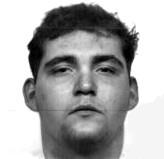
Clifton Charles Russell
Murderer Ervil LeBaron
Murderer · USA · 1972
Ervil Morrell LeBaron (1925 to August 16, 1981) was the leader of a polygamous…
35 victims
Ervil LeBaron
Murderer · USA · 1972
Ervil Morrell LeBaron (1925 to August 16, 1981) was the leader of a polygamous…
35 victims
 Brian Kevin Rosenfeld
Murderer · USA · 1985
Brian Kevin Rosenfeld Brian Kevin Rosenfeld was sentenced to three concurrent l…
23 victims
Brian Kevin Rosenfeld
Murderer · USA · 1985
Brian Kevin Rosenfeld Brian Kevin Rosenfeld was sentenced to three concurrent l…
23 victims
 Marvin Gray
Murderer · USA · 1975
Marvin Gray was convicted killer who claimed responsibility for 23 slayings and…
23 victims
Marvin Gray
Murderer · USA · 1975
Marvin Gray was convicted killer who claimed responsibility for 23 slayings and…
23 victims
 Yahweh ben Yahweh
Murderer · USA · 1980
Yahweh ben Yahweh was born and legally named Hulon Mitchell Jr. (October 27, 19…
23 victims
Yahweh ben Yahweh
Murderer · USA · 1980
Yahweh ben Yahweh was born and legally named Hulon Mitchell Jr. (October 27, 19…
23 victims
 Roy Allen Harich
Murderer · USA · 1981
Roy Allen Harich (appellant/petitioner), v. State of Florida (appellee/responde…
1 victim
Roy Allen Harich
Murderer · USA · 1981
Roy Allen Harich (appellant/petitioner), v. State of Florida (appellee/responde…
1 victim
 Kim de Gelder
Murderer · Belgium · 2009
Kim de Gelder was a Belgian aged 20 from Sinaai. He was described as a silent b…
4 victims
Kim de Gelder
Murderer · Belgium · 2009
Kim de Gelder was a Belgian aged 20 from Sinaai. He was described as a silent b…
4 victims
 Karu White
Murderer · USA · 1979
Karu White was sentenced to death on March 29, 1980 in Powell County for the mu…
3 victims
Karu White
Murderer · USA · 1979
Karu White was sentenced to death on March 29, 1980 in Powell County for the mu…
3 victims
 Nicholas Sutton
Murderer · USA · 1979
Nicholas Todd Sutton appealed directly to the Supreme Court of Tennessee his co…
2 victims
Nicholas Sutton
Murderer · USA · 1979
Nicholas Todd Sutton appealed directly to the Supreme Court of Tennessee his co…
2 victims
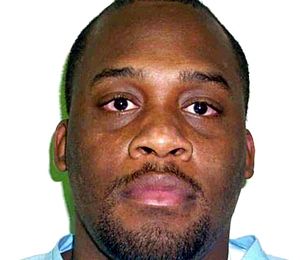 Darick Walker
Homicide · USA · 1996
Darick Demorris Walker was convicted of capital murder for the killings of two…
2 victims
Darick Walker
Homicide · USA · 1996
Darick Demorris Walker was convicted of capital murder for the killings of two…
2 victims
- Gender
- male
- Country
- USA
- Location
- Taylor County, Texas, USA
- Date of birth
- August 5, 1961
- Age at first offence
- 18
- Characteristics
- robbery
- Victim profile
- Hubert Otha Tobey, 41
- Method of murder
- St abbing with knife
- Date(s) of murder
- December 2, 1979
- Years active
- 1979
- Date of arrest
- —
- Status
-
Executed
Executed by lethal injection in Texas on January 31, 1995
Case overview
Clifton Charles Russell was sentenced to death in April 1980 for the murder of Hubert Otha Tobey in December 1979. Russell was convicted of capital murder of Hubert Otha Tobey, killed in the course of a robbery. Russell was executed by lethal injection in Texas on January 31, 1995.
Russell’s accomplice, William Battee, was serving a 60-year term for burglary and murder.
Timeline
- December 1979 — Hubert Otha Tobey was murdered in the course of a robbery.
- October 18, 1979 — Clifton Russell was charged with robbery and murder.
- April 1980 — Russell was sentenced to death.
- August 13, 1993 — The United States Court of Appeals for the Fifth Circuit affirmed the district court’s denial of Russell’s habeas petition; the decision was issued in Clifton Charles Russell, Jr., Petitioner-Appellant, v. James A. Collins, Director, Texas Department of Criminal Justice, Institutional Division, Respondent-Appellee.
- January 31, 1995 — Russell was executed by lethal injection in Texas at 12:29 a.m.
The offence
Hubert Otha Tobey, an air traffic controller, was killed in the course of a robbery on Dec. 2, 1979 in Abilene, Texas. Tobey was 41-years-old.
Russell abducted Tobey and, with accomplice William Battee, proceeded at a self-serve gas station. Russell and his accomplice slit Tobey’s throat, bashed his head, and dumped the victim’s body near an abandoned house in Southeast Abilene.
Russell and Battee were apprehending in Hobbs, New Mexico days later while driving Tobey’s blood-spattered car.
At trial, Russell was convicted of capital murder. The case described that after Russell and a companion robbed Tobey of his money and his automobile, Russell struck him over the head with a large piece of concrete and inflicted numerous knife wounds, including one to the jugular vein. The record also stated that Russell and two other men, Michael Wicker and William Battee, Jr., were arrested outside a mall for public intoxication. Police traced the car and connected it to Tobey, whose body had been discovered by then.
The police seized Battee’s tennis shoes and Russell’s pants, underwear, shirt, and shoes, all of which had blood on them. The car’s interior also contained blood stains.
Investigation and arrest
Jack Dieken was Russell’s arresting officer. At the time of Russell’s arrest, Dieken said: “He was calm and showed no remorse. He had a lot of problems.”
Russell used an alias, Charles Lacey.
Trial
Russell was tried and convicted for capital murder.
During the sentencing phase, the state introduced evidence regarding Russell’s poor reputation in the community, his tendency towards violence making him dangerous to society, and opinion testimony suggesting that he was not a likely candidate for rehabilitation.
Russell presented five witnesses, four of whom were members of various church organizations that opposed the death penalty per se. Russell’s mother, Jo Ann Lacy, testified about Russell’s troubled childhood and incidents of violence against him. She recounted an incident during which Russell’s stepfather beat him severely with a baseball bat in response to Russell’s allegations that the shooting of his mother nine months earlier by his stepfather had not been accidental. Russell required surgery to mend his broken facial bones.
Mrs. Lacy also testified that Russell did not meet his biological father until he was seven and never had a real father figure. She stated that Russell had suffered as a child because of his mixed racial parentage.
The jury affirmatively answered the first two special issues submitted pursuant to Texas law: whether the defendant acted deliberately, and whether he posed a future danger to the community. Accordingly, the judge sentenced Russell to death.
Russell’s conviction and sentence were automatically appealed to the Texas Court of Criminal Appeals, which affirmed the conviction and sentence, 665 S.W.2d 771. Russell next pursued his state habeas remedy, which was denied.
A federal habeas petition in the United States District Court for the Northern District of Texas received an evidentiary hearing. The proceedings were stayed pending the Supreme Court’s consideration of Penry v. Lynaugh; the stay was eventually lifted and the magistrate judge entered findings, conclusions, and recommendation, followed by supplemental findings. The district court adopted the report, dismissed the petition, and withdrew the stay of execution. Russell timely appealed.
Appeals
In Clifton Charles Russell, Jr., Petitioner-Appellant, v. James A. Collins, Director, Texas Department of Criminal Justice, Institutional Division, Respondent-Appellee, the United States Court of Appeals for the Fifth Circuit considered Russell’s habeas appeal.
Russell challenged the constitutionality of his sentencing proceeding that culminated in the imposition of the death penalty.
Penry claim and mitigating evidence
Russell’s Penry claim asserted that the district court erred in not granting a special instruction for mitigating evidence of his youth and troubled childhood. The state argued that a special instruction was required “upon request,” and that Russell never sought a special instruction.
The Fifth Circuit rejected the government’s procedural bar argument derived from Penry and Mayo and proceeded to the merits. The court held that:
- Russell’s age at the time of the crime was cognizable under the second special issue.
- Russell’s Penry-type claim based on mitigating evidence of a troubled childhood was barred under the non-retroactivity doctrine announced by Teague v. Lane, because Russell presented no evidence that his troubled childhood rose to the required level of abusiveness.
- Russell’s evidence describing a single episode of violence—a severe beating in the face with a baseball bat by a stepfather who then attempted unsuccessfully to shoot Russell—did not qualify as child abuse under Penry. The court described that child abuse, as generally understood, involves conduct affecting a juvenile’s moral capacity, and that Russell’s beating occurred when he was in his late teens, possibly when he was legally an adult.
The Fifth Circuit concluded there was no Eighth Amendment violation in the case.
“Deliberately” definition
Russell argued that the state court erred by not defining the word “deliberately” in the first special issue. The Fifth Circuit stated that the quoted reasoning from Penry did not advance Russell’s claim because the court had concluded Russell did not present mitigating evidence outside the scope of the special issues.
Exclusion of juror
Russell asserted that the district court erred in applying a presumption of correctness to the state court’s finding that prospective juror Norman B. Scott was properly excluded. The opinion described that Scott strongly opposed the death penalty, “did not believe in” the death penalty, and stated: “I could take the law and the evidence, but when it come to imposing the death penalty, I don't think I could do it.”
When asked whether there were circumstances under which he could assign the death penalty, the opinion recorded: “Possibly so if the murder victim was a small child, but he was not certain.”
Applying the test set forth in Witherspoon v. Illinois as clarified in Adams v. Texas and Wainwright v. Witt, the Texas Court of Criminal Appeals held that Scott had properly been discharged for cause because his testimony indicated that his views on the death penalty would have prevented or substantially impaired his performance as a juror in accordance with the instructions.
The Fifth Circuit held that the factual finding of juror bias was entitled to a presumption of correctness under 28 U.S.C. 2254(d).
Eighth Amendment and individual culpability
Russell argued that there was no evidence to prove whether the murder was committed by him or by his co-defendant Battee, or by both acting together, and contended that this violated due process and the Eighth Amendment. He also argued that the disparity between his death sentence and Battee’s sixty-year sentence for the same offense was an invidious discrimination violating the Equal Protection Clause and the Eighth Amendment as a disproportionate sentence.
The Fifth Circuit addressed Enmund v. Florida, stating it construed the Eighth Amendment as prohibiting the imposition of the death penalty against “one who neither took life, attempted to take life, nor intended to take life.”
The court found that the first special instruction asked whether the conduct of the defendant that caused the death of the deceased was committed deliberately and with the reasonable expectation that death would result.
The Fifth Circuit held that:
- The evidence submitted included Russell’s possession of the car and the presence of a large amount of blood compatible with the victim on Russell’s clothing, consistent with Russell inflicting the knife wounds himself.
- The evidence was very probative, particularly because Russell’s clothes (including his underwear) were soaked with blood.
- A reasonable jury could infer Russell’s individual culpability for the murder and determine his guilt under the first special issue.
The court rejected the claim about sentencing disparity, stating it was well established that a prosecutor has discretion to enter into plea bargains with some defendants and not others, and that absent a showing of vindictiveness or use of an arbitrary standard—neither of which Russell demonstrated—the prosecutor’s decision was not subject to constitutional scrutiny.
Disposition of the habeas appeal
The Fifth Circuit concluded that there was no reversible error and affirmed the district court’s denial of the habeas petition.
Sentencing
Russell was sentenced to death after the jury affirmatively answered the first two special issues: whether the defendant acted deliberately and whether he posed a future danger to the community.
The case reflected that Russell’s conviction and sentence were automatically appealed, affirmed by the Texas Court of Criminal Appeals, and that his state habeas remedy was denied.
Outcome
The Fifth Circuit affirmed the district court’s denial of Russell’s habeas petition.
Russell was executed by lethal injection in Texas on January 31, 1995 at 12:29 a.m.
Aftermath and personal details
Clifton Russell was 18-years-old when he murdered Hubert Tobey.
Russell was born on Aug. 5, 1961 and was described as a 212-pound, six-foot tall stocky man with brown hair and brown eyes.
The description stated he was born out of an interracial marriage, with his mother being white and his father being African American.
At the time of his arrest, he had no record of education and no former employment record.
The description also stated he had only one distinguishing feature, a tattoo on his forearm, and that he had a horrible attitude toward white people.
Russell was 33 years old at execution and had been on death row for 15 years.
Russell’s last statement was: “I would like to thank my friends and family for sticking with me through all of this. I would like to encourage my brothers to continue to run the race. I thank my Father, God in Heaven, for the grace he has granted me – I am ready.”
Russell was executed the same time in the same state as Willlie Williams.
Spotted an error, or have more information about this case?