
Nicholas Sutton
Murderer Ervil LeBaron
Murderer · USA · 1972
Ervil Morrell LeBaron (1925 to August 16, 1981) was the leader of a polygamous…
35 victims
Ervil LeBaron
Murderer · USA · 1972
Ervil Morrell LeBaron (1925 to August 16, 1981) was the leader of a polygamous…
35 victims
 Brian Kevin Rosenfeld
Murderer · USA · 1985
Brian Kevin Rosenfeld Brian Kevin Rosenfeld was sentenced to three concurrent l…
23 victims
Brian Kevin Rosenfeld
Murderer · USA · 1985
Brian Kevin Rosenfeld Brian Kevin Rosenfeld was sentenced to three concurrent l…
23 victims
 Marvin Gray
Murderer · USA · 1975
Marvin Gray was convicted killer who claimed responsibility for 23 slayings and…
23 victims
Marvin Gray
Murderer · USA · 1975
Marvin Gray was convicted killer who claimed responsibility for 23 slayings and…
23 victims
 Yahweh ben Yahweh
Murderer · USA · 1980
Yahweh ben Yahweh was born and legally named Hulon Mitchell Jr. (October 27, 19…
23 victims
Yahweh ben Yahweh
Murderer · USA · 1980
Yahweh ben Yahweh was born and legally named Hulon Mitchell Jr. (October 27, 19…
23 victims
 Adam Mayes
Murderer · USA · 2012
Adam Mayes (September 2, 1976 – May 10, 2012) was accused in the Bain murder-ki…
2 victims
Adam Mayes
Murderer · USA · 2012
Adam Mayes (September 2, 1976 – May 10, 2012) was accused in the Bain murder-ki…
2 victims
 Dayton Leroy Rogers
Serial killer · USA · 1987
Dayton Leroy Rogers was sentenced to death on June 9, 1989. He was resentenced…
8 victims
Dayton Leroy Rogers
Serial killer · USA · 1987
Dayton Leroy Rogers was sentenced to death on June 9, 1989. He was resentenced…
8 victims
 Maurizio Minghella
Serial killer · Italy · 1978
Maurizio Minghella was born in Genova on 16 luglio 1958. He lived in the Bolzan…
9 victims
Maurizio Minghella
Serial killer · Italy · 1978
Maurizio Minghella was born in Genova on 16 luglio 1958. He lived in the Bolzan…
9 victims
 Omar Thornton
Mass murderer · USA · 2010
Omar S. Thornton was 34 years old at the time of the Hartford Distributors shoo…
8 victims
Omar Thornton
Mass murderer · USA · 2010
Omar S. Thornton was 34 years old at the time of the Hartford Distributors shoo…
8 victims
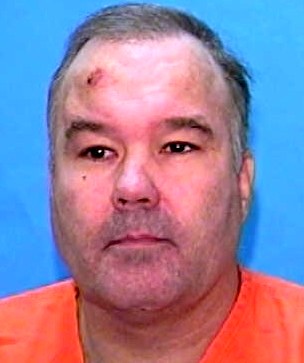 Ray Lamar Johnston
Murderer · USA · 1997
Ray Lamar Johnston was convicted in the Thirteenth Judicial Circuit, Hillsborou…
2 victims
Ray Lamar Johnston
Murderer · USA · 1997
Ray Lamar Johnston was convicted in the Thirteenth Judicial Circuit, Hillsborou…
2 victims
- Gender
- male
- Country
- USA
- Location
- Morgan County, Tennessee, USA
- Date of birth
- July 15, 1961
- Age at first offence
- 18
- Characteristics
- drugs, torture, rape?
- Victim profile
- His grandmother / Carl Estep (inmate)
- Method of murder
- St abbing with knife
- Date(s) of murder
- 1979 / January 15, 1985
- Years active
- 1979–1985
- Date of arrest
- —
- Status
-
Sentenced to death
Sentenced to life in prison in 1980; sentenced to death on March 4, 1986; death sentence affirmed on appeal; death sentence was to be carried out on the 14th day of December, 1988 unless otherwise ordered
Parties and case overview
Nicholas Todd Sutton appealed directly to the Supreme Court of Tennessee his conviction of first degree murder and the sentence of death imposed by the jury.
Sutton presented four primary issues for review: (1) whether the evidence was sufficient to support his conviction and sentence; (2) whether the statutes upon which the verdict was based were unconstitutional under the state and federal constitutions; (3) whether he was denied the right to a fair trial; and (4) whether the trial court erred in its ruling on the admissibility or exclusion of evidence.
After a careful review of the entire record and the law, the court found these issues to be without merit, and affirmed the conviction and the sentence.
Background
Nicholas Todd Sutton was jointly indicted with co-defendants Charles Freeman and Thomas Street for the murder of Carl Estep at the Morgan County Regional Correctional Facility on January 15, 1985. All four men were inmates at that facility on the day of the murder.
Freeman was acquitted by the jury.
Street was convicted of first-degree murder and sentenced to life imprisonment.
Sutton was convicted of first-degree murder and sentenced to death upon the jury’s finding of three aggravating circumstances under T.C.A. § 39-2-203(i)(2), (5) and (8). The jury found no mitigating circumstances sufficiently substantial to outweigh the aggravating circumstances.
The offence
Carl Estep was a resident of Guild 5, which was located next to Guild 6 at the Morgan County Regional Correctional Facility. The facility was composed of one-story buildings, with guilds equivalent to dormitories. Each guild had approximately 30 cells located along the outer walls. The cells were approximately 5' x 10' with a wooden door with a vertical window. The cells contained a bunk bed for two inmates and a toilet and sink. In the center of the guild was the correctional officer's station enclosed with glass. In the center also were tables and benches and open space for the inmates referred to as the dayroom area. From the correctional officer’s station, the officer could observe the cells of the inmates.
On January 15, 1985, when Carl Estep was murdered, there was no correctional officer in Guild 5 between 9:30 and 10:00 a.m. During a routine “shakedown” after 10:00 a.m., correctional officers found the body of Estep lying on the lower bunk of his cell in Guild 5.
There were signs of a struggle, and blood was observed on the wall, the bed covers, and on Estep's body. Attempts made to revive Estep proved unsuccessful.
Estep had been serving a sentence for child molesting and had been stabbed thirty-eight times in the chest and neck. Most wounds were superficial, but nine were potentially fatal, penetrating Estep’s lungs, his vena cava, and carotid artery. The examining pathologist testified that the carotid artery wound would have caused death in a matter of minutes.
There were seven defensive wounds on Estep’s hands and right arm, and a wound to the back of his head caused by a blow. The pathologist testified that from the size of the wounds two knives had been used by Estep’s attackers.
On the bottom bunk, investigating officers found two homemade knives, called “stickers” in prison jargon, which matched the wounds on Estep’s body. A later investigation of the cell uncovered a third knife hidden under a lamp beside Estep's bed.
The testimony indicated that the stabbing followed an interaction in which Estep had been described as having sold defendants “bad merchandise” (bad drugs) and had refused to refund defendants’ money, and that Estep had threatened to kill Sutton.
Investigation and evidence
The facility was then “locked down,” and all inmates in Guild 5 were interviewed.
The testimony of four inmates linked Sutton to the murder.
Harold Meadows
Harold Meadows, a resident of Guild 5, testified that he was sitting in the dayroom area when he saw Sutton and Street enter the guild and go straight to Estep’s cell. He stated that each day between 9:30 a.m. and shortly after 10:00 a.m. there was a period of five to ten minutes when no guards were in Guild 5 due to a duty change.
During this time on January 15, Meadows observed Sutton and Street enter the guild. When they entered Estep's cell, his roommate immediately came out and shortly thereafter the volume of the tv or radio increased. Meadows heard a scream, and Sutton and Street came out.
When questioned by correctional officers immediately after the incident, Meadows told them what he had seen and identified Sutton and Street from a photographic line-up.
Meadows also testified that on Sunday, January 13, he had seen Estep having a “physical Discussion” with Sutton and Street, during which Sutton held knife to Estep’s throat.
Estel Green
Estel Green, another resident of Guild 5, testified that he was standing in front of the door to his cell (#1), right next to Estep’s cell (#2), when he saw Sutton and another inmate go inside Estep’s cell.
Green went into his cell and when he came back out he saw the other men in the guild moving toward the back away from Estep’s cell. Green heard Estep “holler out. He said, 'Don't do that; please don't do that.' and then he hollered louder, he hollered, 'Somebody help me; somebody please help me.' and that was all I heard.”
Green was not able to see who left Estep's cell.
Ralph Edward Scates
Ralph Edward Scates was a resident of Guild 3, but he worked as a laundry man in Guild 1. Scates testified that he had a casual conversation with Street while Street was confined to Guild 1 for investigative purposes after the killing.
Scates testified that Street admitted: “he cut him . . . he struck him, cut his throat.”
Scates further testified that Street said homemade knives had been used and that Street had tried to flush his down the commode in his cell in Guild 6.
Scates stated that Sutton had told him: “The SB got exactly what he deserved.”
Cary Scroggins
Cary Scroggins, a resident of Guild 6, testified that Estep was a marijuana dealer at the facility and had sold the defendants some “bad merchandise” and refused to refund the defendants' money. Scroggins also testified that after the defendants took Estep's watch and some other articles, Estep threatened to kill Sutton.
Scroggins stated that on the morning of January 15 between 9:30 a.m. and 10:30 a.m., he saw Sutton, Street and Freeman come into the guild and enter Cell 2, Estep's cell. He looked through the vertical window in the door of Estep's cell, a window four inches by thirteen inches, and saw all three defendants standing in front of the bunk bed with their backs to the window.
Scroggins testified that Estep tried to get up from the bottom bunk and that Sutton and Freeman pulled knives. Sutton started to stab Estep, who screamed. Scroggins testified that Sutton “just kept on stabbing” about sixteen times.
Scroggins testified that the three defendants then washed their hands in the sink. Scroggins then moved away from the door and left and the guild before the defendants did.
Defence evidence and rebuttal
To contradict Scroggins’ testimony, Freeman presented the testimony of Gary Lumbert, Scroggins’ cellmate.
Gary Lumbert testified that Scroggins was working with him in the prison library at the time Estep was murdered.
On rebuttal, the State recalled James Worthington, the administrative assistant to the warden at the time of the killing. Worthington testified that he investigated the murder and that Lumbert told him that he was present in Guild 6 immediately after Estep had been killed.
Worthington testified that Lumbert observed Sutton and Street enter the guild, remove their clothes, and place their clothes in the laundry.
Worthington also testified that Lumbert told him that Sutton bragged “about stabbing Carol Estep twenty-some times.”
Physical evidence
On January 15, two garbage bags found outside Guild 8 were brought to Worthington. One bag contained trash and the other contained prison clothing. A telephone pass for defendant Freeman was found in one pair of the pants.
F.B.I. analysis of debris from the clothing in the garbage bag revealed a hair consistent with that of the victim on a pair of buttonfly jeans and a hair consistent with that of Charles Freeman on one of the jackets.
A forensic serologist employed by the T.B.I. testified that she identified a human blood stain matching the victim’s blood type on the sleeve of one of the jackets, one of the knives and a work shirt. She also found human blood on one of the jackets, a pair of zipper-fly blue jeans and an elastic bandage. Tests were inconclusive as to whether human blood was on the other knife.
Trial and jury findings
The defendant Sutton appealed the conviction and death sentence.
The jury found three statutory aggravating circumstances:
- the defendant was previously convicted of one or more felonies, other than the present charge, which involved the use or threat of violence to the person;
- the murder was especially heinous, atrocious, or cruel in that it involved torture or depravity of mind;
- the murder was committed by the defendant while he was in lawful custody or in a place of lawful confinement or during his escape from lawful custody or from a place of lawful confinement.
Sentencing
In reviewing the sentence of death, the court stated that it determined whether the sentence was imposed in an arbitrary fashion, whether the evidence supported the jury’s findings of statutory aggravating circumstances, whether the evidence supported the jury’s finding of the absence of mitigating circumstances sufficiently substantial to outweigh the aggravating circumstances found, and whether the sentence was excessive or disproportionate to the penalty imposed in similar cases.
The court held that the death sentence was not imposed in an arbitrary fashion and that the sentencing hearing complied with T.C.A. § 39-2-203.
The court held that the evidence supported the jury’s findings of three aggravating circumstances:
- Sutton had previously been convicted of felony first-degree murder, a crime involving the use of violence to the person;
- at the time of Estep’s murder, Sutton was incarcerated and serving a sentence for the prior first-degree murder, and was thus in lawful custody or in a place of lawful confinement;
- the multiple wounds (38), method and motive supported that the murder was especially heinous, atrocious or cruel.
The court stated that the autopsy revealed seven defensive wounds indicating Estep fought his attackers and was injured during the fatal attack, and that the victim was screaming and pleading for help during his attack.
The court held that the evidence supported the jury’s finding that there were no mitigating circumstances sufficiently substantial to outweigh the aggravating circumstances.
Sutton argued that the sentence was excessive and disproportionate to penalties in similar cases, and argued that “his is the first time in the modern era that the death penalty has been imposed for prison murder.” He also argued that the State’s proof of the actual events surrounding the death consisted only of inmate testimony.
The court held that credibility determinations and reconciliation of conflicts were for the jury, and that no two cases were alike and no two defendants were alike. It concluded that the imposition of the death penalty was neither arbitrary nor excessive or disproportionate to the penalty imposed for similar crimes.
The court ordered that the sentence of death would be carried out as provided by law on the 14th day of December, 1988 unless otherwise ordered by this Court or by other proper authority. Costs were adjudged against the defendant.
Appeals
Sufficiency of the evidence
Sutton argued the evidence was insufficient to support his first degree murder conviction and his death sentence.
The court described the standard: all conflicts in the testimony were resolved in favor of the State, and the appellate question was whether, after viewing the evidence in the light most favorable to the State, any rational trier of fact could have found the defendant guilty beyond a reasonable doubt.
The court addressed Sutton’s argument focused on the quality of the evidence and challenged the physical possibility that Scroggins could have seen the attack through the cell window.
The court stated that the photograph of the cell door introduced through James Worthington did not indisputably establish that it would have been impossible for Scroggins to have seen the attack on Estep. It stated that any inconsistencies or contradictions among the inmate witnesses were not so great that their testimony had to be discounted as a matter of law and that credibility determinations belonged to the jury.
The court concluded that based upon the testimony of Meadows, Green, Scates and Scoggins, the evidence was sufficient to support the first degree murder conviction beyond a reasonable doubt, and that the evidence was also sufficient to sustain the jury’s verdict as to the sentence.
Constitutionality of the statutes
Sutton contended that the criminal statutes underlying the verdict were unconstitutional under state and federal constitutions. The court held that the Tennessee death penalty statute was constitutional, citing State v. Melson and Houston v. State.
Sutton argued about the reliability of evidence and that the trial judge would be best suited to pass on reliability, and suggested reconsideration of the 13th juror rule from State v. Johnson.
The court held it was not the proper case to reconsider the 13th juror rule in criminal cases, and stated that in the case the trial judge, in preparing his Rule 12 Report, responded “Yes” to the question whether the trial judge as “thirteenth juror” found that the defendant was guilty beyond a reasonable doubt.
Fair trial issues
Sutton contended the trial court erred by failing to dismiss the indictment due to bad faith by the State in not promptly responding to his Rule 16 discovery motions.
The court held that the evidence in the record did not preponderate against the trial court’s finding on the motion for new trial that there was no bad faith by the State, that the defendant was not damaged by any delays, and that all matters were addressed within a reasonable time.
Sutton alleged he was denied the right to have an attorney present at his arraignment and that the trial court erred in refusing to dismiss the indictment on that basis.
The court stated that Sutton did appear at his arraignment without counsel; the trial judge entered a plea of not guilty and appointed an attorney. Sutton and Street filed a motion prior to trial to set aside the arraignment because they had been arraigned without counsel being present; the trial judge denied the motion and Sutton alleged error.
The court discussed State v. Miller, Hamilton v. Alabama, White v. Maryland, and Vitoratos v. Maxwell. It held that even assuming counsel was required at arraignment in this case, the absence of counsel did not necessarily require setting aside the conviction, because arraignment in this state informed an accused of charges, provided a copy, and called him to plead, and no substantive defenses were lost if not asserted at this stage. It held any error was harmless beyond a reasonable doubt.
Sutton also contended the trial court erred in dismissing prospective jurors during voir dire who said they could not find a death penalty.
The court cited Wainwright v. Witt and found no error under the standard described there.
Sutton further alleged denial of a fair trial because the State did not provide sufficient notice of witnesses.
Sutton alleged the defense was denied effective assistance because lists included numerous prospective witnesses, ranging from 80 to 47 names, many of whom were inmates scattered throughout the State correctional system, and most of whom the State allegedly did not intend to call.
The court found nothing in the record supported the allegation. It stated that when defense counsel pointed out problems reaching witnesses, the court granted a continuance.
Sutton alleged prosecutorial misconduct related to a knife placed on the defense table for inspection by counsel before passing it to the jury.
Sutton asserted that correctional officers’ reactions by reaching for their weapons prejudiced him and deprived him of “the physical indicia on innocence.”
The court held that the court instructed the State to have defense counsel examine the weapons at the State’s table after the incident, that the jury knew the defendants were inmates, that only one such incident occurred, and that it was not reversible error.
Evidentiary rulings
Sutton’s final issue contended that the trial court erred in admitting or excluding certain evidence to his prejudice and that the totality of errors was harmful and reversible.
The court stated it found no harmful evidentiary errors either individually or collectively.
The court addressed Sutton’s objection to admissibility of two garbage bags found outside Guide 8, holding the evidence was relevant and material because one bag contained garbage and the other contained the clothing which the proof indicated was that of the murderers. It referenced testimony that the defendants discarded their clothes after the murder and that the blood-stained clothes in the garbage bag corroborated testimony.
The court also addressed Sutton’s objection to rebuttal testimony by James Worthington that Gary Lumbert told him about the murder. The court held it was not hearsay but impeachment by prior inconsistent statements through extrinsic proof, and that the State laid a foundation through cross-examination.
The court held that each of the remaining evidentiary contentions had been considered and none warranted reversal.
Other details
Nicholas Todd Sutton had a prior sentence to life in prison in 1980.
A separate criminal status narrative stated that Sutton was sentenced to death on March 4, 1986.
The court concluded that the sentence of death would be carried out on the 14th day of December, 1988 unless otherwise ordered by the court or other proper authority.
Witnesses testified that Estep had been serving a sentence for child molesting and had been described as having sold defendants “bad merchandise” and having sold “bad drugs,” and that the interaction involved a threat to kill Sutton and involved defendants taking Estep’s watch and some other articles.

Spotted an error, or have more information about this case?